


 4 Photos
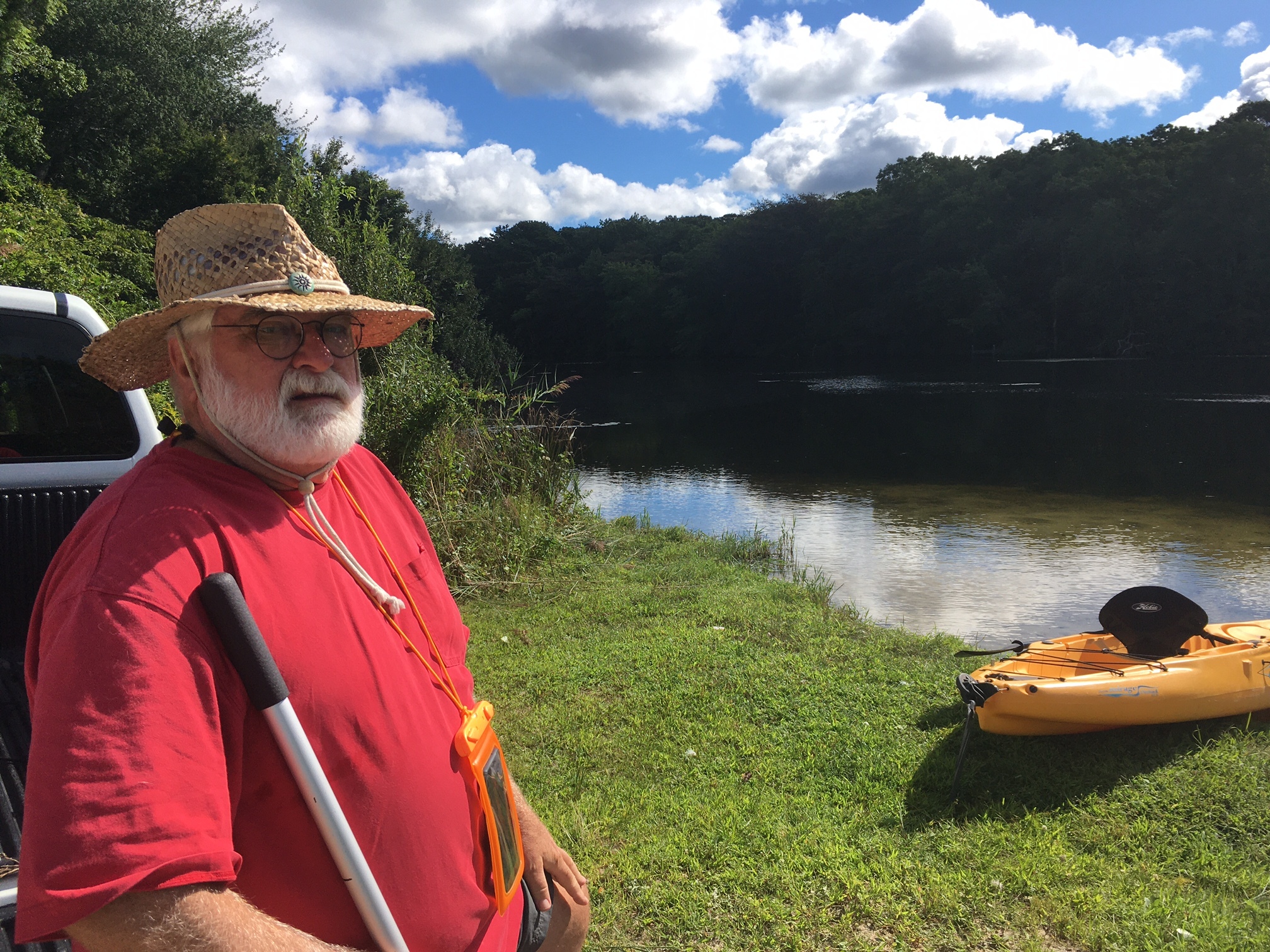
Robert Mozer gets ready to characterize East Pond in Eastport, as part of the Adopt a Pond program.
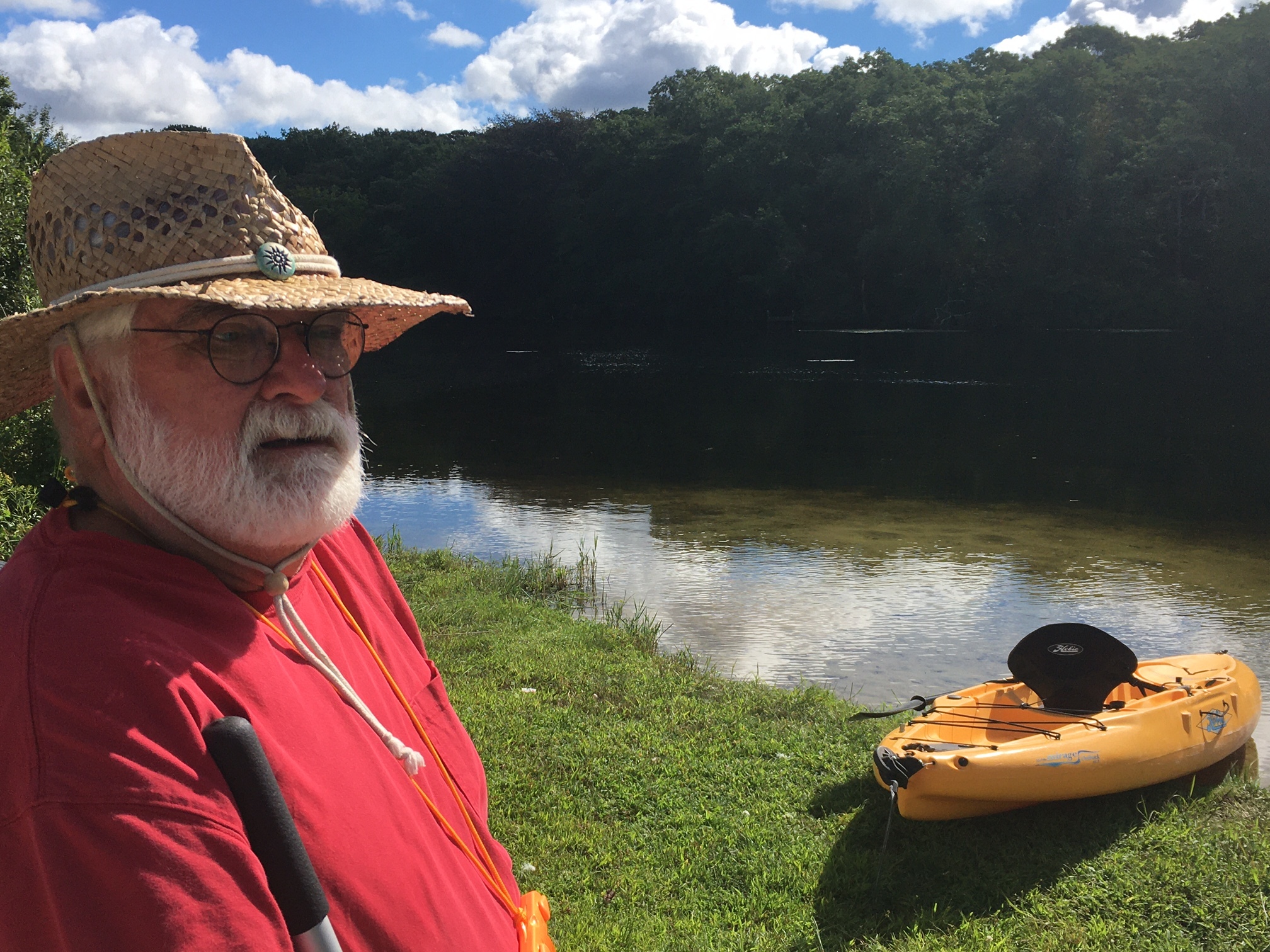
Robert Mozer at East Pond in Eastport. East Pond is among the study areas in the Adopt A Pond study KITTY MERRILL
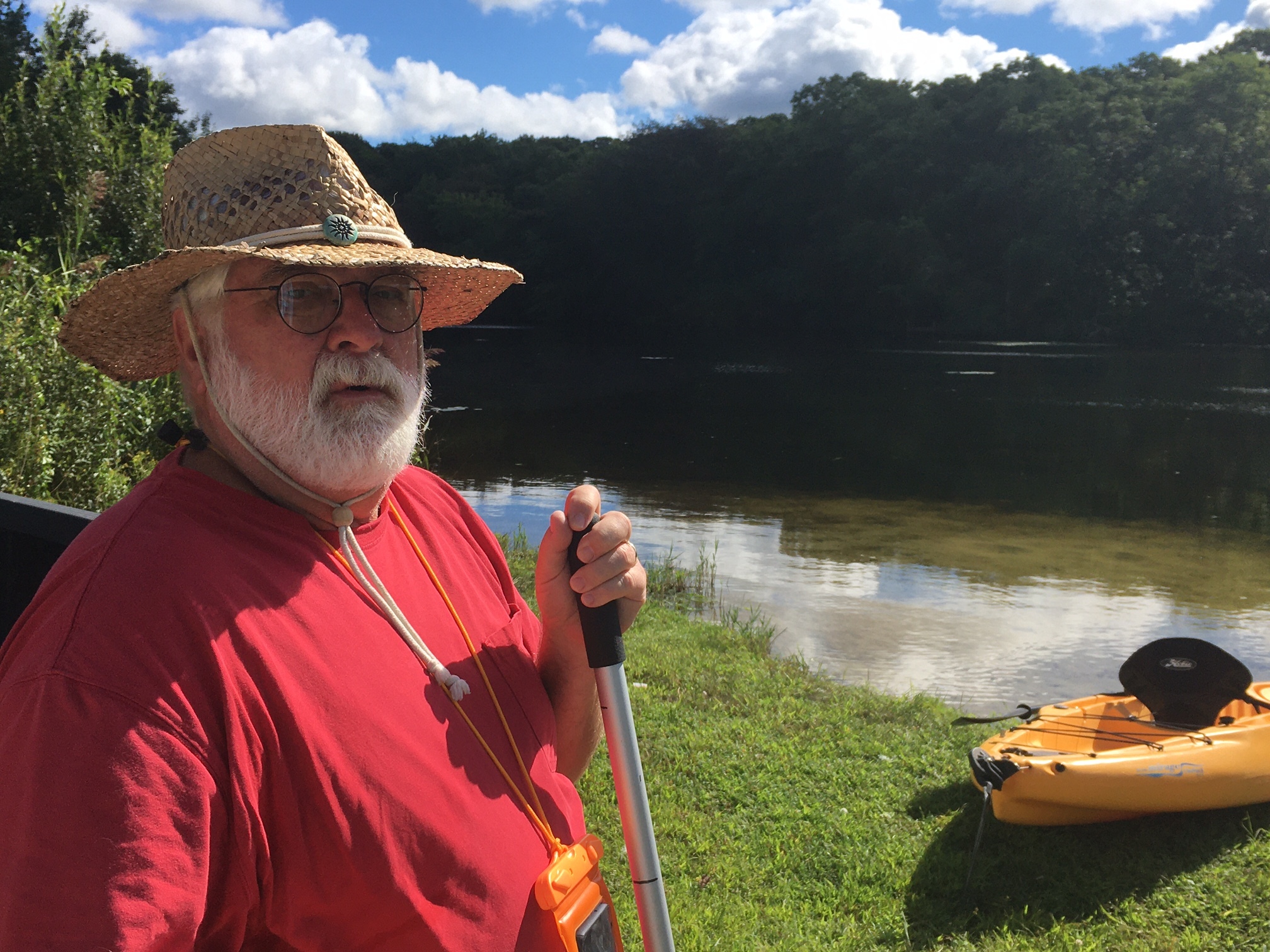
Robert Mozer at East Pond in Eastport. KITTY MERRILL
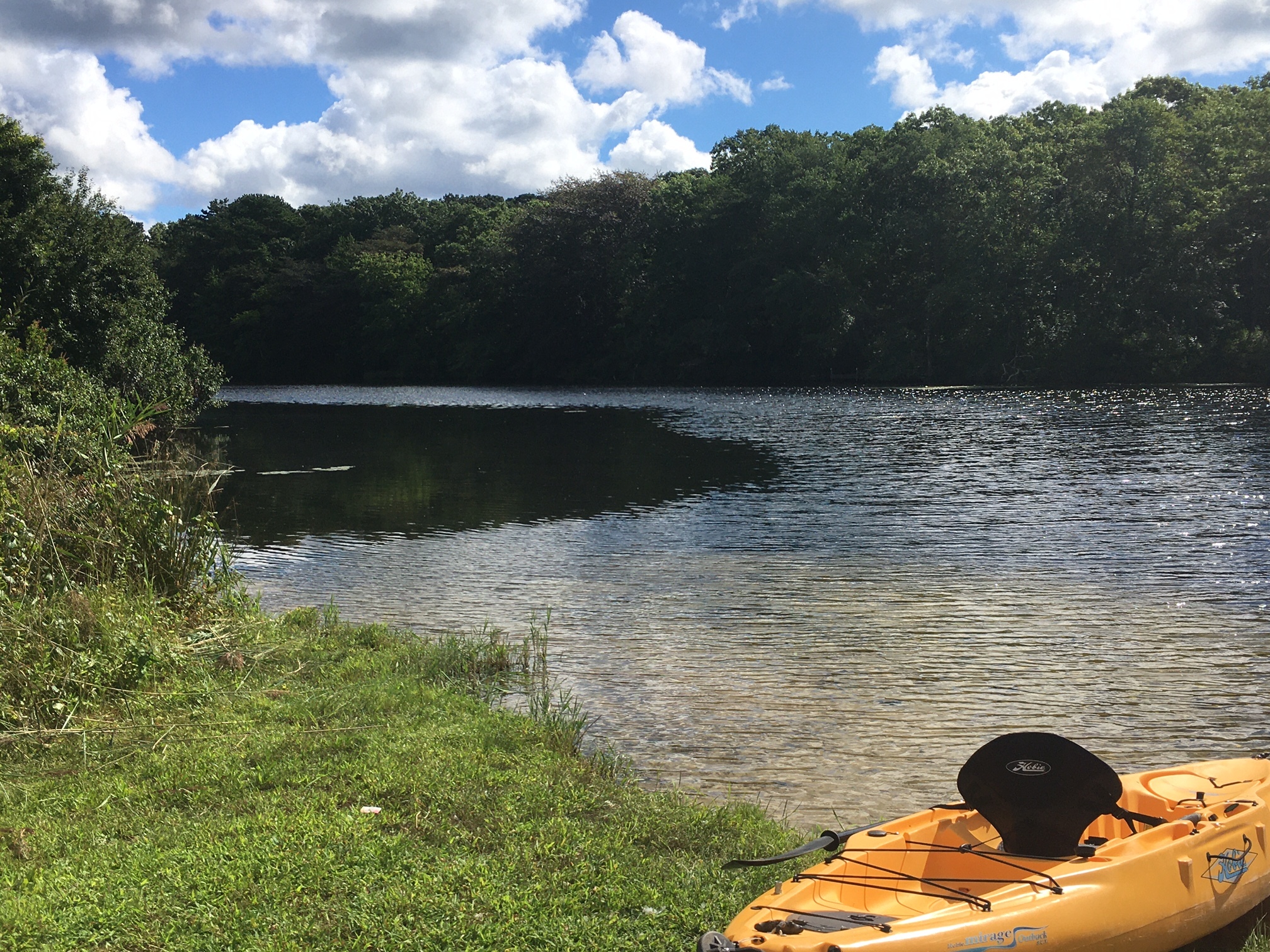
East Pond in Eastport is among the Adopt A Pond study areas. KITTY MERRILL
Sunlight danced across the surface of East Pond in Eastport, the reflection of shoreline trees and shrubs, crystal blue sky and puffy white clouds on the water, broken by the occasional jumping fish. Picturesque lily pads — the non-invasive kind, Bob Mozer was quick to note, the ones with yellow, not white, flowers are invasive — floated near a small stand of waterside weeds as the volunteer “citizen scientist” prepared to launch his kayak and begin taking water samples.
Since last spring, Mr. Mozer, a retired science teacher and environmental scientist, has partnered with the Long Island Science Center in Riverhead, and Dr. Chris Gobler’s lab at the School of Marine Sciences at Stony Brook Southampton, in an Adopt-A-Pond program to study the condition of seven freshwater ponds in western Southampton Town. Every two weeks, samples have been taken, by Mr. Mozer or an intern from the science center, and brought to the college lab for analysis.
So far, no blue green algal blooms have been detected in the study areas of West Pond, East Pond and Pepperidge Pond in Eastport, Mill Pond in Speonk, Beaverdam Pond in Westhampton, Old Ice Pond in Quogue and Wildwood Lake in Northampton.
Weighing in on the program, Dr. Gobler, an acknowledged local water quality expert, said, “I’d like to learn more.” His lab is the New York State Department of Environmental Conservation’s downstate site for monitoring harmful algal blooms in freshwater bodies and is open for receiving samples weekdays through November.
“We typically get a dozen such samples weekly,” he said. “All results are communicated to NYSDEC the same day (usually within an hour) of our receipt.”
So far, Mr. Mozer and his team haven’t detected any harmful algal blooms. But that’s not all they are looking for, according to Cailin Kaller, the Long Island Science Center’s executive director. The overall plan, she said, is to develop a base of data that can be produced as a map for public education. Analysis of the water bodies may provide information about invasive plant species as well as endangered animal species like the American eel, she added. Evidence of the latter has been detected locally, Ms. Kaller said.
On Tuesday, she and Mr. Mozer went out together collecting samples. Last week, he set out on East Pond alone in his kayak, with a pole he fashioned to take soundings. His goal is to check for algal blooms, yes, but overall, he is looking to characterize the ponds.
And he wouldn’t mind some help.
Mr. Mozer said he’s been trying to get community members involved. All that is required, he said, is putting an app on your phone called “bloomWatch.” The app was created by the Environmental Protection Agency.
“You install it on your phone and whenever you visit one of these ponds, go out and take a picture. If you see something that looks odd, you’re taking a picture of it and you’re documenting that you’re seeing something unusual,” he said.
Even a picture of clean water is a good piece of information, he said. It would help create a baseline.
The Long Island Science Center provided him with a summer intern so she could learn field work, and Mr. Mozer was able to share his experience as a field geologist with her. “We would come here every two weeks, and go to the other ponds on the other weeks,” he explained.
He’s also working with community members at the Pepperidge Lake condominium development nearby, which is “choked” with an invasive plant.
“I’m getting more involved with them,” he said, “and it’s fun when you have people who are interested. I’m going to continue sampling this through October … so far we haven’t seen any blooms.”
Toxic blue green algae is naturally present in most water bodies, the concern is when the population explodes, Mr. Mozer explained.
On his agenda for last Friday’s kayak paddle was studying the vegetation, the “macroalgae,” he said, because, “I just want to see for my own benefit.”
He looked quizzically at Community Preservation Fund water quality regulations that only make money available for remediation, as opposed to prevention and characterization of baseline conditions.
“They call it monitoring,” he said.
How do you know if there’s a problem if you haven’t characterized existing conditions, he wondered. He’d like to study the nitrate and phosphate levels in the ponds, since high levels of those two nutrients are considered by many to be responsible for harmful algal blooms.
There is a budget for “citizen science” projects, Mr. Mozer reports. Southampton Town will offer some support toward the project, as will the Long Island Science Center.
“Bob and I were talking about a couple of different projects and this really fit with our citizen science programs,” Ms. Kaller said. It also fits well, she added, with the center’s water quality assessment program. Learning of his plans and seeing how they mesh with science center interests, particularly its mission as a learning museum, “We said, ‘Let’s do this together,’” Ms. Kaller recounted.
The retired educator speaks passionately about getting youth involved in the Adopt-A-Pond program. The science center has the potential to draw students in and expand their knowledge of the local environment through the program. While a lot of the center’s programs are suited to young children and their scientific explorations, more programs could pull in high school or even college students, Mr. Mozer believes. The Adopt-A-Pond program could help a high school student complete his or her community service credit requirements, or, he said, “it could be a science project.”
“If a kid lives in this community and wants to know something about what’s going on here because he likes to fish in here, make it a science fair project,” he suggested.
“So often,” he said, “it’s just a matter of sitting and looking and seeing what’s going on.”


