


 6 Photos
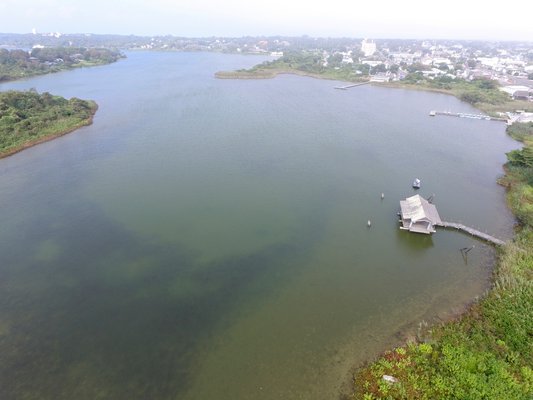
An agal Bloom in Fort Pond in Montauk.
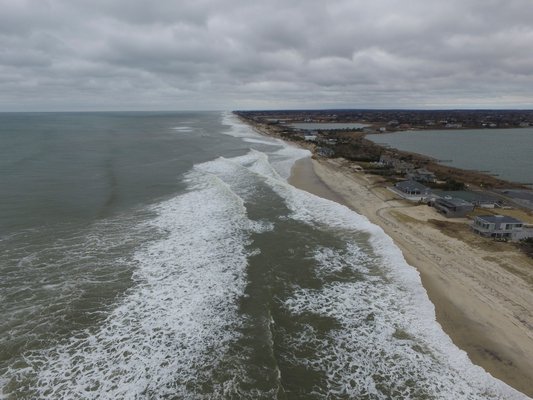
Rising sea levels are continuing to cause the erosion of East End beaches.
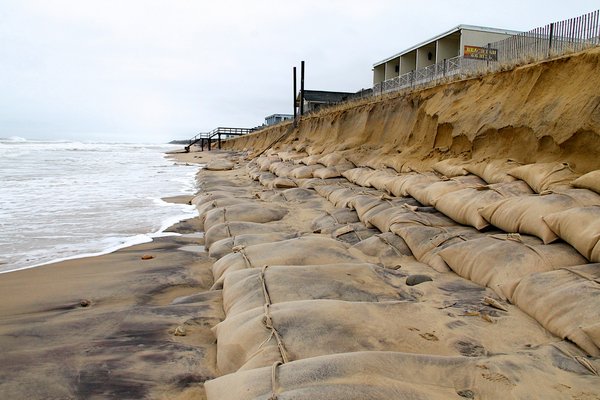
Erosion in Montauk.
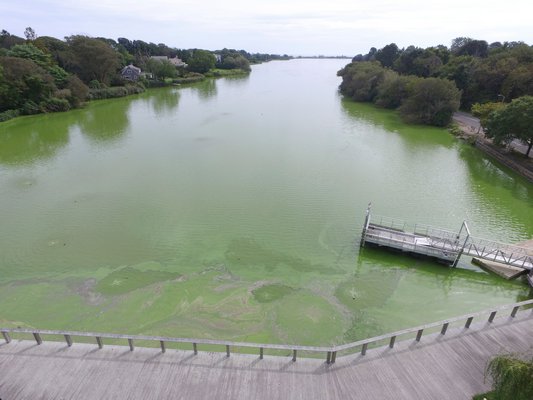
The agal bloom in Lake Agawam in Southampton Village.
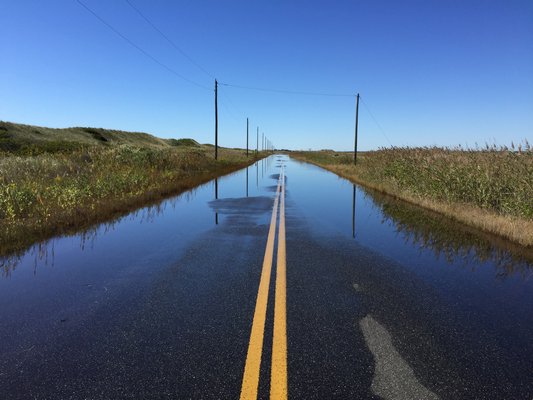
Signs of climate change can be seen often on the East End. COURTESY KEVIN MCALLISTER
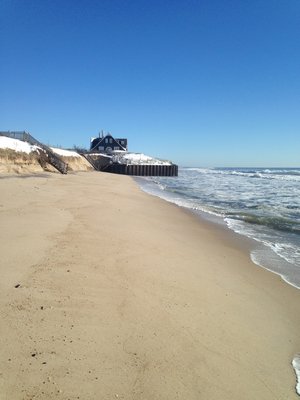
Signs of climate change can be seen often on the East End. COURTESY KEVIN MCALLISTER
The flooding on sunny days on Dune Road in East Quogue or the harmful algal blooms found in Georgica Pond in Wainscott or Lake Agawam in Southampton are no accident. The earth is warming, and it has impacts beyond warmer air temperatures, some experts agree.
As world leaders convene at the United Nations this month for the Climate Action Summit to discuss various ways to reduce greenhouse gas emissions to net zero by 2050, local environmental experts explained five ways climate change is establishing itself on the East End.
As temperatures rise due to the increased emission of greenhouse gases, animals are moving to cooler environments. Group for the East End President Bob DeLuca said the warmer temperatures are specifically disrupting winter flounder found in the Long Island Sound, as well as lobster and cod, forcing them north.
“A number of commercially viable fisheries have suffered because the warming water is not great for those critters that used to be here,” Mr. DeLuca said. “The temperature — it only takes a couple of degrees.”
Indeed, the New York State Department of Environmental Conservation’s Ocean Action Plan states that these greenhouse gases are affecting ocean ecosystems by raising temperatures and sea levels. “The OAP recognizes … the need to act in order to protect the continued viability of the goods and services the ocean provides,” the plan says.
Warmer temperatures aren’t just pushing these animals out either — they’re ushering in what are considered pest species, too. Mr. DeLuca noted that the southern pine beetle, lone star tick, deer tick and certain types of mosquito are expanding their ranges due to the longer warmer-weather seasons, which give them more of a chance to thrive.
Global sea levels are rising 3.2 millimeters per year, according to NASA, and seas off Long Island, specifically, are rising about 1 inch every 10 years. Climate change is to blame: warmer temperatures cause ice sheets and glaciers to melt, and seawater also expands as it absorbs more heat that’s trapped in the atmosphere.
While there are no frozen glaciers melting on the East End, rising sea levels can contribute to more drastic flooding on the coasts — even when there are no storms. Kevin McAllister, founder and CEO of Defend H2O, a local nonprofit dedicated to protecting Long Island’s various bodies of water, said sunny day flooding — where areas of lower elevation are overwhelmed with water during full and new moons — is a problem to watch out for.
“Obviously, the influences of sea level on the coast will be profound,” he said. “Even though we are on the ground … the frequency of the flooding and the pooling is pretty drastic.”
In 2017, Southampton Town spent $1 million to raise by just a few inches the most flood-prone sections of Dune Road in East Quogue and Hampton Bays. It’s “just purely bay water and groundwater commingling and expanding,” Mr. McAllister said, noting that flooding on that road ruined one of his trucks. “That water is flooding from below — there’s no stopping it.”
The Redwood neighborhood in Sag Harbor also floods on sunny days. “That water table is coming up — now we have a situation where lawn chemicals and, more importantly, the septic system, are now sitting in groundwater,” he said.
Warming oceans and rising sea levels are also expected to bring more destructive storms to coastal areas in New York. The Environmental Protection Agency already reports that average annual precipitation in the Northeast has increased 10 percent since 1895, and rain or snowfall from storms has increased 70 percent since the mid 1900s.
“We’re having more frequent precipitation more often, and the storms seem to be more frequent and more powerful,” Mr. DeLuca said. “All of that, if you live in a coastal area, is of course a problem.”
The Ocean Action Plan further notes that due to warming temperatures, New York’s coastline can expect more instances of flooding, erosion, property destruction as well as interference with public services.
Rising sea levels are continuing to cause the erosion of East End beaches. Often, governments take precautions by undertaking shoreline hardening projects to prevent further beach erosion and to protect property owners — but these projects don’t deal with the problem of the rising sea level outright.
“We love to walk our beaches along the bays, and if we continue this trend of armoring the shoreline, we will obliterate our beaches,” Mr. McAllister said. “Ultimately, it ends up leading to the loss of fronting beach.”
He pointed out that Noyac Bay in Sag Harbor and Gardeners Bay in East Hampton are areas prone to erosion, as well as the Montauk oceanfront, where large sandbags were installed to protect property owners.
“Coastal habitat is squeezed out between the ocean and coastal development, so your dunes and beach grass and the critters that live in there, of which some are already in trouble, they don’t have a place to go,” Mr. DeLuca said of erosion. “When you’re having local debates about more coastal development, shoreline hardening, all these kinds of things, you really have to magnify the general concern by the fact that there’s this overarching nemesis out there, which is climate change.”
Toxic blue-green algae do better in warmer water temperatures. While harmful algal blooms have been found in Suffolk County since the mid 1930s, the county’s Harmful Algal Bloom Action Plan notes that the different types of blooms and their frequency have increased and “may have reached a level unprecedented elsewhere in the United States.”
Harmful algal blooms disrupt fish and wildlife that live in these bodies of water, and also threaten public health and safety. The plan notes that from 2013 to 2016, cyanobacteria blooms were found in more lakes in Suffolk County and more often than in any other county in the state.
Lake Agawam in Southampton Village, Georgica Pond in Wainscott and Fort Pond in Montauk have all been found to have this type of toxic blue-green algae.
Addressing climate change as one person can seem overwhelming, since it’s a global issue. But local climate activist Dorothy Reilly, co-chair of the ad-hoc conservation group Drawdown East End, says there are solutions residents can start implementing themselves right now.
One is buying local food and wine to help in the fight against food waste, which is a major driver of climate change. In fact, the Food and Agriculture Organization of the United Nations reports that if food waste were its own country, it would rank third after the U.S. and China in the emission of greenhouse gases.
“Our mission is to make ‘drawdown’ a household word and get our community engaged in drawdown practices so that we are contributing to reversing global warming in a time frame that will make a difference to the whole world,” Ms. Reilly said. Drawdown East End stems from the nonprofit Project Drawdown, which focuses on solutions to reduce the emission of greenhouse gases into the atmosphere.
“We are going to have to find things that we can do individually and make some noise,” Mr. DeLuca said. “It comes down to individual actions and individual decisions.”


 Alisha Steindecker on Sep 19, 2019