


 1 Photo
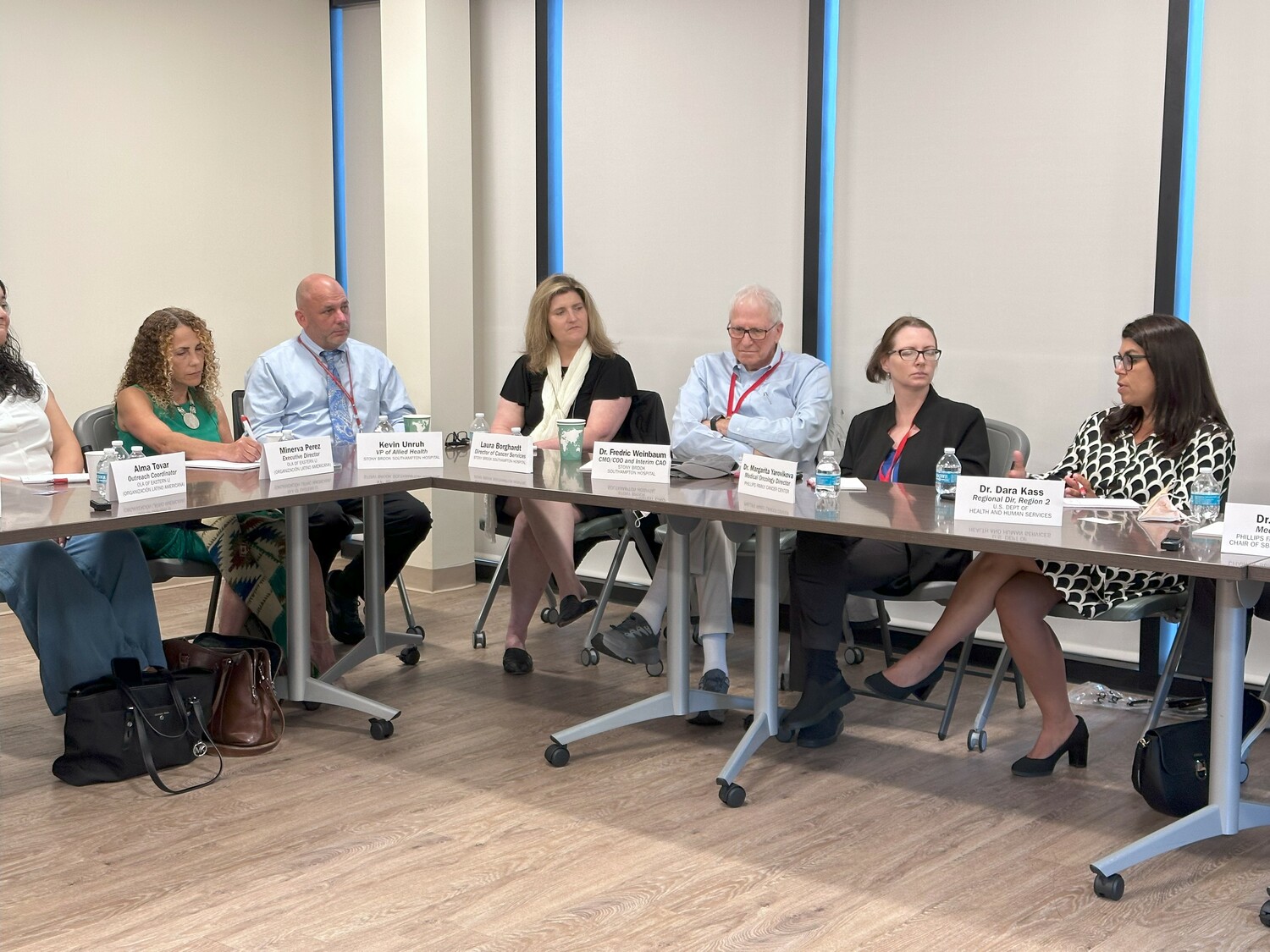
Left to right: Alma Tovar and Minerva Perez, of OLA of Eastern Long Island; Kevin Umruh, Laura Borghardt and Dr. Frederic Weinbaum of Stony Brook Southampton Hospital; Dr. Margarita Yarovikova of the Philips Family Cancer Center; and Dr. Dara Kass of the U.S. Department of Health and Human Services at the roundtable discussion. JOHN PAUL FERRANTINO
President Joe Biden’s “Cancer Moonshot” program has stopped by the East End on its way to the solar system, it seems.
Dr. Dara Kass, the regional director of the U.S. Department of Health and Human Services, participated in a roundtable discussion on Monday, August 7, with local stakeholders to learn more about cancer care on the South Fork and advertise the federal government’s latest efforts in the fight against the disease.
A former emergency medicine physician, Dr. Kass, who lives part-time in East Hampton, wanted to use the event at the Stony Brook Southampton Hospital Phillips Family Care Center in Southampton to highlight both the tremendous progress the East End has made in cancer treatment and the obstacles residents still face in seeking care.
“I want people to understand what is out here for them, being aware of what resources are at Southampton Hospital and the cancer center, which is really state of the art and is doing extraordinary work,” she said. “If I can come and talk to community-based organizations and the work that they’re doing, I can do what our administration is focused on doing, which is getting care to people when they need it.”
Members of the Ellen Hermanson Breast Center, Stony Brook Southampton Hospital, Fighting Chance, the Shinnecock Health Center, OLA of Eastern LI, the Bridgehampton Child Care and Recreational Center, and The Retreat were present at the event to share their work in advancing cancer care in their communities.
Minerva Perez, the executive director of OLA of Eastern LI, highlighted that the language barrier remains a large obstacle in receiving care.
“We cannot bridge the screening gap, even if there’s great technology without having that level of cultural understanding and linguistic understanding for working with families who oftentimes are underinsured or are dealing with such tremendous stresses around housing,” she said.
At the Shinnecock Health Center, Mercedes Barre-Williams, the site administrator, created a way for women navigating the cancer journey to find companionship.
“The idea was to have women support each other and take the fear away from getting a mammogram, if you had negative or positive results,” she said. “We created the Shinnecock Pink Shawl Project, where we come together to create shawls, representing that they are either a survivor or they know someone who is a survivor of breast cancer.”
Sometimes, though, having community members get screened in the first place can be a challenge, as Bonnie Cannon of the Bridgehampton Child Care & Recreational Center acknowledged.
“We did have a prostate screening campaign, and I’m going to be very honest, it didn’t go so well,” Cannon said. “One of the things we’re doing now is that you will set up a date and we’re going to get people available for the screening.”
The innovation in caring for the community’s well being was impressive, Kass said.
“Today’s roundtable was really one of the best I’ve ever been at,” she said. “It inspired me about the idea that a community can really come together with different perspectives on the problem.”


