


 1 Photo
After watching a paramilitary group sweep across Iraq and Syria, overtaking many large cities along the way, President Barack Obama last week publicly announced his intention to combat the group by approving extended air strikes and sending U.S. military personnel to arm and train both the Iraqi military and certain Syrian rebels—though he said he would not put American troops on the ground.
As the U.S. prepares to embark on the next leg of its nearly 13-year-long military campaign in the Middle East by fighting the group known as the Islamic State of Iraq and Syria, or ISIS, both candidates seeking to represent eastern Long Island in Congress next year said they favor military action against the group. However, the two differ in their views on what the trajectory should be for this forthcoming endeavor.
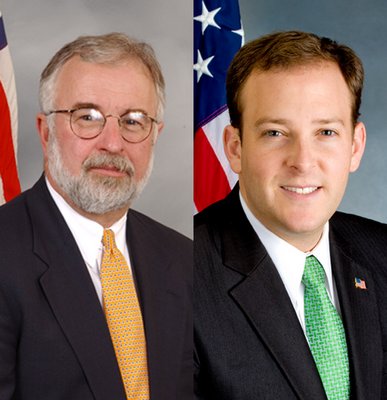
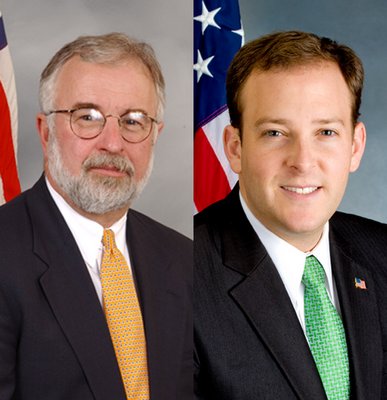
The incumbent, U.S. Representative Tim Bishop, a Democrat from Southampton, said he wants American involvement to be limited to an aid capacity—one that does not require deploying ground combat troops. His challenger, State Senator Lee Zeldin, a Republican from Shirley, said he is eager to get a U.S. military general on the ground to lead the latest operation and guide the strategy.
Speaking from the State Floor of the White House on September 10, Mr. Obama outlined a plan to “degrade and ultimately destroy” ISIS through air strikes in Iraq and Syria, ramping up intelligence efforts to cut off funding to the group, and by sending 475 American troops to the area, albeit for training and intelligence purposes rather than combat, the president insisted. The president, while maintaining that he has the right to authorize these actions autonomously, still requested congressional authorization for this strategy, and the House of Representatives is poised to vote on the issue this week, Mr. Bishop said, although he was still awaiting proposed legislation when interviewed earlier this week.
An organization of Sunni Muslims that is believed to have branched off from the terrorist group Al Qaeda, ISIS seeks to create an independent Sunni nation in the Middle East while uniting all Muslims under a unified religious state, known as a caliphate, that would be led by single, supreme leader, or caliph. After collecting large swaths of territory earlier this year, the group has drawn increased attention in recent weeks by distributing videos of their members beheading two American journalists and a British aid worker.
Mr. Zeldin, who served in the Army and was deployed to Iraq in 2006, decried Mr. Obama’s strategy as tepid and criticized him for taking too long to come up with it—the president took heat earlier this month when he told the White House press corps that the U.S. had no strategy for dealing with ISIS at the time.
“The president has had his toes in the water, and now he has his ankles in,” Mr. Zeldin said this week. “As far as having an effective strategy when it comes to destroying ISIS, you’d be foolish to think this strategy would work.
“If the right thing for all Americans to do is cross their fingers and pray,” he continued, “I would advocate for us to also consider some other options that would improve the likelihood of success.”
Specifically, Mr. Zeldin said he does not trust the Iraqi military, which has already proven unsuccessful in stopping ISIS, citing reports of some Iraqi soldiers abandoning their posts in the country’s second-largest city of Mosul when faced with an ISIS attack on June 10. He also said he does not believe the Syrian rebels have the necessary intelligence gathering capabilities to properly fight ISIS.
In summation, he said he wants the U.S. to take a more active approach—though he would not clarify if he would ever support placing additional American troops on the ground in the Middle East.
Meanwhile, Mr. Bishop, who has served in Congress since 2003, agreed that steps should have been taken sooner to halt ISIS, but said he fully supports the plan outlined by the president. In particular, Mr. Bishop said the U.S. military should not get involved in ground combat.
“A very legitimate question we should be asking each other is why U.S. troops should be put at risk when the Iraqi Army wouldn’t even stand and fight for their own country,” he said.
Mr. Bishop touted the importance of the president’s coalition of other predominantly Muslim nations, such as Turkey, Saudi Arabia, Jordan, Egypt and Qatar, that have pledged some form of help in the fight against ISIS. Mr. Bishop said it is important that this not be seen simply as the U.S. versus ISIS—or misconstrued as the U.S. versus Islam—to avoid creating more of the anti-American sentiment that birthed groups such as Al Qaeda and ISIS.
He also said the U.S. should focus on solving the root issues that have allowed for the spread of ISIS, namely the ongoing Syrian civil war and the internal strife between the Sunnis, Shiites and ethnic Kurds in Iraq.
“A big piece of being in a position to degrade ISIS is to have an inclusive government in Iraq that does not oppress and disenfranchise Sunnis, and the same in Syria,” Mr. Bishop said. “That is the fuel, if you will, that is feeding into this fire that is ISIS.”
Mr. Zeldin said he wants the president to follow in the footsteps of his predecessors, former Presidents Bill Clinton and George W. Bush, by handing over control of this situation to the Pentagon. Specifically, he said he would like the president to instate a general the likes of General David Petraeus, who was commanding officer of the Multi-National Force-Iraq from 2007 to 2008 during the Iraq War, to take command of the situation.
Mr. Zeldin praised Gen. Petraeus for orchestrating a surge of troops in 2007, a move that has been largely credited for securing the Iraqi capital of Baghdad for the U.S. More recently, Gen. Petraeus resigned from the post as director of the Central Intelligence Agency in 2012 after details of an extramarital affair he had with his biographer went public. Mr. Zeldin suggested General Lloyd Austin or General Raymond Odierno as potential candidates to head a U.S.-led military operation in Syria and Iraq.
“We’re putting way too much faith in people who don’t even punch in at the start of the day,” Mr. Zeldin said of the Iraqi military. “So the idea that these people who care a lot more about their family than they do about the United States or ISIS or, in many respects, even Iraq, to expect them to bring the fight to destroy an element that has been described as making Al Qaeda look like Boy Scouts is an entirely unrealistic expectation that will absolutely not work. That’s my concern.”


 Kyle Campbell on Sep 16, 2014