


 1 Photo
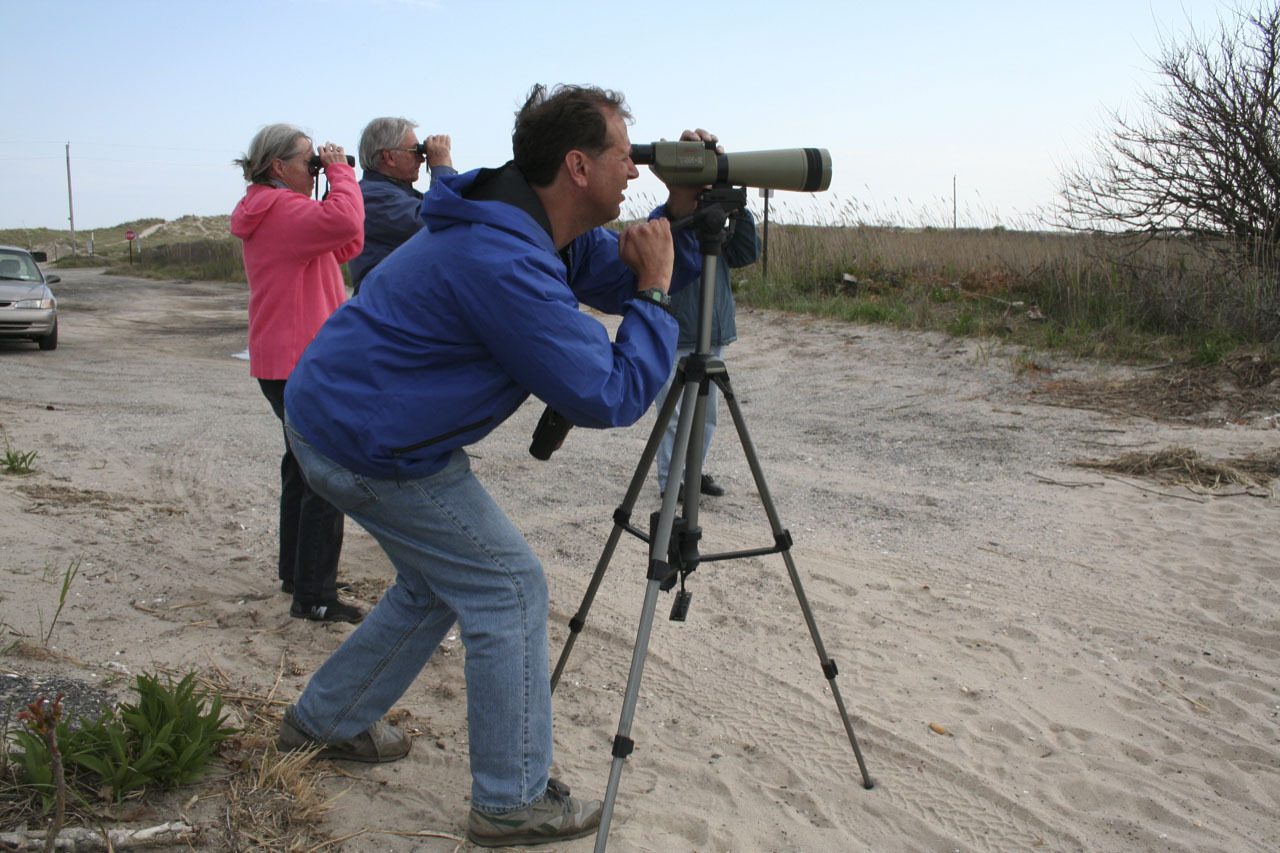
Consider joining expert birders on the 120th annual Christmas Bird Count; no experience, just binoculars, necessary. MIKE BOTTINI
Among a growing number of birding enthusiasts, the holiday season marks a tradition much different than shopping: counting birds. The 2019 holiday season marks the 120th annual Christmas Bird Count, the world’s oldest and largest wildlife survey sponsored by the National Audubon Society.
The Christmas Bird Count has a very interesting origin. During the 19th century, when birders often carried a gun to enable identification in hand, there was a traditional competition of seeing how many animals, furred or feathered and small or large, one could shoot on Christmas Day. In 1900, Frank Chapman, editor of the National Audubon Society’s journal, Bird-Lore, and ornithologist at the American Museum of Natural History, organized the Christmas Bird Count as an alternative to the wasteful killing. On December 25 of that year, 27 birders tallied 5,000 birds; this year, more than 40,000 counters are expected to tally over 60 million birds.
Census regions are defined by areas having a diameter of 15 miles, and count dates are staggered to allow avid birders the opportunity to join as many as four different counts. The East End encompasses five “count circles”: Montauk (including Amagansett, Springs and Gardiners Island); Orient (including the North Fork east of Peconic, all of Shelter Island and a portion of Noyac and Sag Harbor); Sagaponack (Three Mile Harbor and Hook Pond west to Water Mill); Central Suffolk (Riverhead, Moriches, Calverton and Westhampton Beach) and the Quogue to Water Mill area. In addition to these five census regions, or counts, there are six others on Long Island: one each in Brooklyn and Queens; north Nassau; south Nassau; Captree; and Smithtown.
Not unlike the holidays themselves, the CBC is an intense, all-day experience, and making the most of it means being organized and planning ahead. At times, it takes on the air of a military campaign, with scouts out combing the area for unusual birds the week before the designated count day, and final team assignments and strategies based on the scout reports, the day’s weather, and a knowledge of bird behavior and habitat preferences.
In order to record some of our owl species, such as great horned and screech owls, a few teams head out well before daybreak and, since there’s not enough light to use binoculars, they try to get the birds to respond to calls. Near dawn and dusk, fields and marshes are scanned for some of our “silent” owls (barn owls and short-eared owls) that might still be hunting.
Each field party has experienced birders who are familiar with the territory being censused, but novice birders are encouraged to participate. These experts enjoy sharing their knowledge and love of birds, and it is a great opportunity to improve birding skills. Participants also get to visit some beautiful areas. Bring your own binoculars, and spotting scope if you have one.
You can also do a Christmas Bird Count of your backyard feeder on the designated day and submit your findings to the count compiler for your area. Contact your area’s compiler for details (see below).
Here’s a note from Angus Wilson, the compiler for the Montauk Count: “There is a huge amount of natural and very scenic habitat to be explored. If you fancy an exciting winter adventure please join us. The more the merrier!”
Think about joining the bird count effort and starting a new holiday tradition this year.
Sagaponack: (check with Peter for date)
Contact: Peter Polshek pmaxp@well.com
Quogue to Water Mill: Sunday, December 15
Contact: Steve Biasetti sbiasetti@eastendenvironment.org
Montauk: Saturday, December 21
Contact: Angus Wilson oceanwanderers@gmail.com
Central Suffolk: Friday, December 27
Contact: Eileen Schwinn beachmed@optonline.net
Orient: Saturday, December 28
Contact: John Sepenoski johnsep@optonline.net


 Mike Bottini on Dec 9, 2019