


 2 Photos
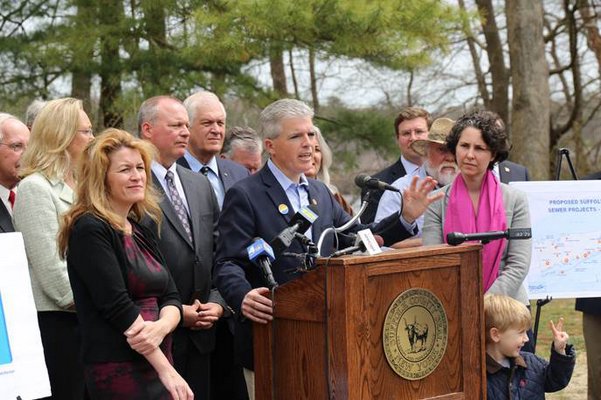
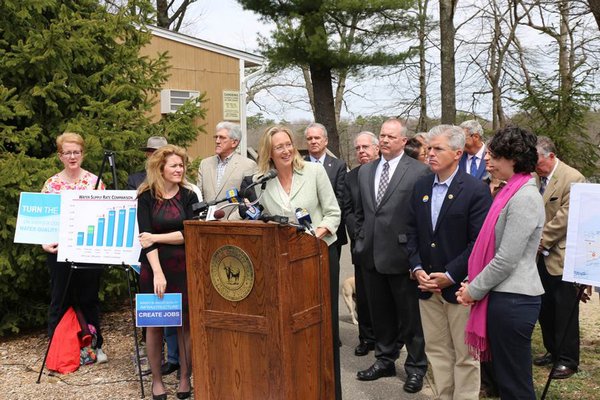
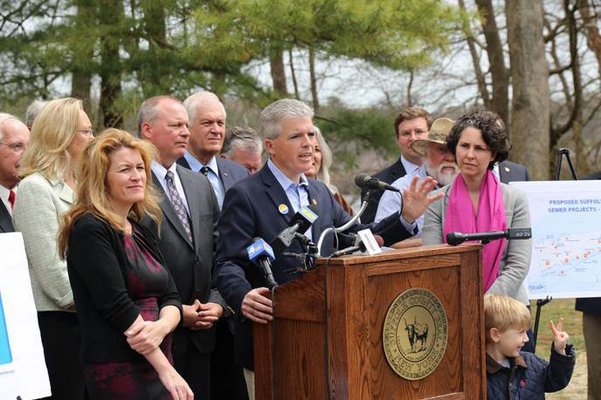
Suffolk County Executive Steve Bellone and a host of county and local officials this week pitched a proposal to impose a new water use surcharge on county residents and businesses, with the money to be used to combat water quality problems caused by residential development and outdated septic systems.
The proposal, if approved by public referendum, would charge all water users $1 for each 1,000 gallons of water used, regardless of which public authority provides the water. Mr. Bellone said it would cost the average family of four about $73 per year and would raise some $75 million for water quality improvement efforts countywide each year.
The county executive emphasized that even with the new fees, county residents would still be paying far less than the national average of $5.25 per 1,000 gallons of water.
The money raised by the new fee would go to addressing high nitrogen levels in the county’s tidal bays and creeks and freshwater ponds by improving treatment of wastewater from residential toilets. It would include funds for new sewer treatment systems covering larger areas, as well as smaller efforts to upgrade septics for individual properties and small clusters of houses.
“This referendum would literally turn the tide on Suffolk County’s water quality crisis,” County Executive Bellone said. “Governor Cuomo has made water quality a top issue in this state, establishing the Center for Clean Water Technology at Stony Brook University, funding the Long Island Nitrogen Action Plan and securing $383 million in water quality infrastructure dollars for Suffolk County. This new initiative to create a recurring revenue source for clean water infrastructure will help implement the governor’s water quality goals here in Suffolk County.”
Last year, the state founded the Center for Clean Water Technology to spur innovation of new and cheaper wastewater treatment techniques that release less nitrogen into water tables.
The county recently adopted a Comprehensive Water Resources Management Plan, which prioritized upgrading septic treatment countywide, particularly on the more than 360,000 private homes with aging and outdated cesspools and septic systems that leach nitrogen-laden wastewater into water tables.
The new fees, which the county has dubbed the Water Quality Protection Fee, would have to be created by the State Legislature and approved by a majority of voters in a public referendum. The goal is to put the referendum before voters this fall, although it could take until 2017.
Various regional officials supported the new Water Quality Protection Fee, including the South Fork’s two town supervisors.
“We have a responsibility to future generations that our water remains drinkable and our bays support marine life,” Southampton Town Supervisor Jay Schneiderman said in a statement after the announcement of the fee proposal. “Changing course is never easy, but it must be done.”
“It’s not a silver bullet,” said East Hampton Town Supervisor Larry Cantwell. “But it’s one piece of the matrix of things that have to be done to fix water quality.”


 on Apr 26, 2016