


 1 Photo
DCIM100MEDIADJI_0356.JPG
A State Supreme Court justice has shot down most of a lawsuit filed by Hampton Bays residents challenging the Southampton Town Board’s 2015 approval of the Canoe Place Inn planned development district.
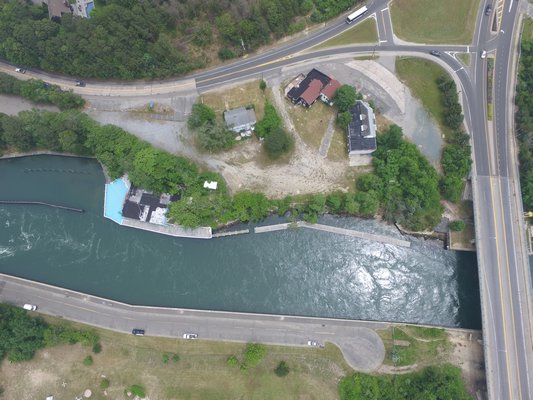
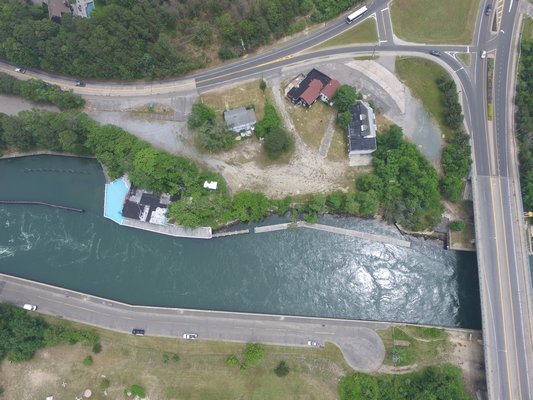
Along with a plan to renovate the historic Canoe Place Inn in Hampton Bays, developers Gregg and Mitchell Rechler of Rechler Equity Partners are looking to construct 37 townhouses on a 4.5-acre property overlooking the eastern side of the Shinnecock Canal.
The townhouses were the subject of the lawsuit filed against Southampton Town in 2015 by a group of homeowners, called the Shinnecock Neighbors, over the town’s approval of the Canoe Place Inn PDD. Along with procedural complaints, neighbors specifically opposed the siting of a sewage treatment facility in their neighborhood that sits just east of the future townhouses.
In September, a judge ruled that the lawsuit challenging the Town Board’s approval could proceed.
However, on May 23, State Supreme Court Justice Mark Cohen ruled in favor of the town on most of the arguments made by the neighbors—with one exception. He ruled that their concern regarding inadequate water supplies was legitimate, stating that it is a need that must be reviewed by the cousins as part of their Final Environmental Impact Statement.
“There is no evidence that the town undertook a hard look at this issue,” Justice Cohen wrote.
Still, he rejected all of the other claims raised by neighbors, starting with allegations that the Town Board violated the law by rezoning the property in 2015, a decision that, they charged, was inconsistent with the town’s Comprehensive Plan. The town argued that the townhouses will enhance the tourist nature of an underutilized area and provide “passive public access” to the water, all in line with the Comprehensive Plan.
The neighbors also alleged that the town did not properly examine potential impacts on traffic, or fully research the on-site septic holding tank that will be installed near the townhouses, or the leaching pool systems that will be go in near the treatment plant. Those arguments were dismissed by Justice Cohen.
Attorney Jennifer Juengst, with the Shoreham law firm of Gordon and Juengst, P.C. who are representing the plaintiffs in the lawsuit, said the neighbors absolutely" plan to appeal the decision.
She pointed to "plenty of issues" from the ruling that needed to be addressed, mainly having to do with the environment and public safety.
"We feel like the court was wrong on a number of points," Ms. Juengst said. "It's a nice project but it's in the wrong place and I think the area is going to be devastated if it gets done."
Regarding water supplies, the decision cites a letter from architects and engineers from both sides of the litigation, which noted that the Hampton Bays Water District could not meet the estimated flow demands on the east side of the canal in the event of a fire “without additional facilities.” Justice Cohen ruled that the town needs to provide a supplemental report on the issue.
“They upheld the town process on everything but that issue,” Southampton Town Attorney James Burke wrote about the prior Town Board.
Jim Morgo, a spokesman for the Rechlers, said the latest ruling serves as affirmation that the town followed proper procedures when vetting the application. He also noted that the concerns raised about water supplies was a “small” part of the ruling, though one that the Rechlers will go back and address.
According to Mr. Burke, the Rechlers must now work with the town and submit a new supplemental report that addresses the fire safety issue.
Mr. Morgo declined to provide a timetable for the inn restoration or the construction of the townhouses, adding that the final approval process was “time consuming.”
The 37 townhouses will be housed in seven buildings on the eastern side of the canal, and the development will also feature a 1,900-square-foot clubhouse, a 17-slip private marina and a public fishing platform. There will be 74 parking spaces for homeowners, though only five spaces for the public.
On the 5.6-acre property directly across the canal, work calls for the restoration of the Canoe Place Inn and transforming it into a 20-room inn with five separate guest cottages. The restored inn will also feature a restaurant and catering hall capable of accommodating up to 300 people at a time. The finished restaurant will also have 70 seats, a bar with 20 seats, and an outdoor dining area that can seat another 120 people, according to the site plan.
"


 on Jul 4, 2017