


 14 Photos
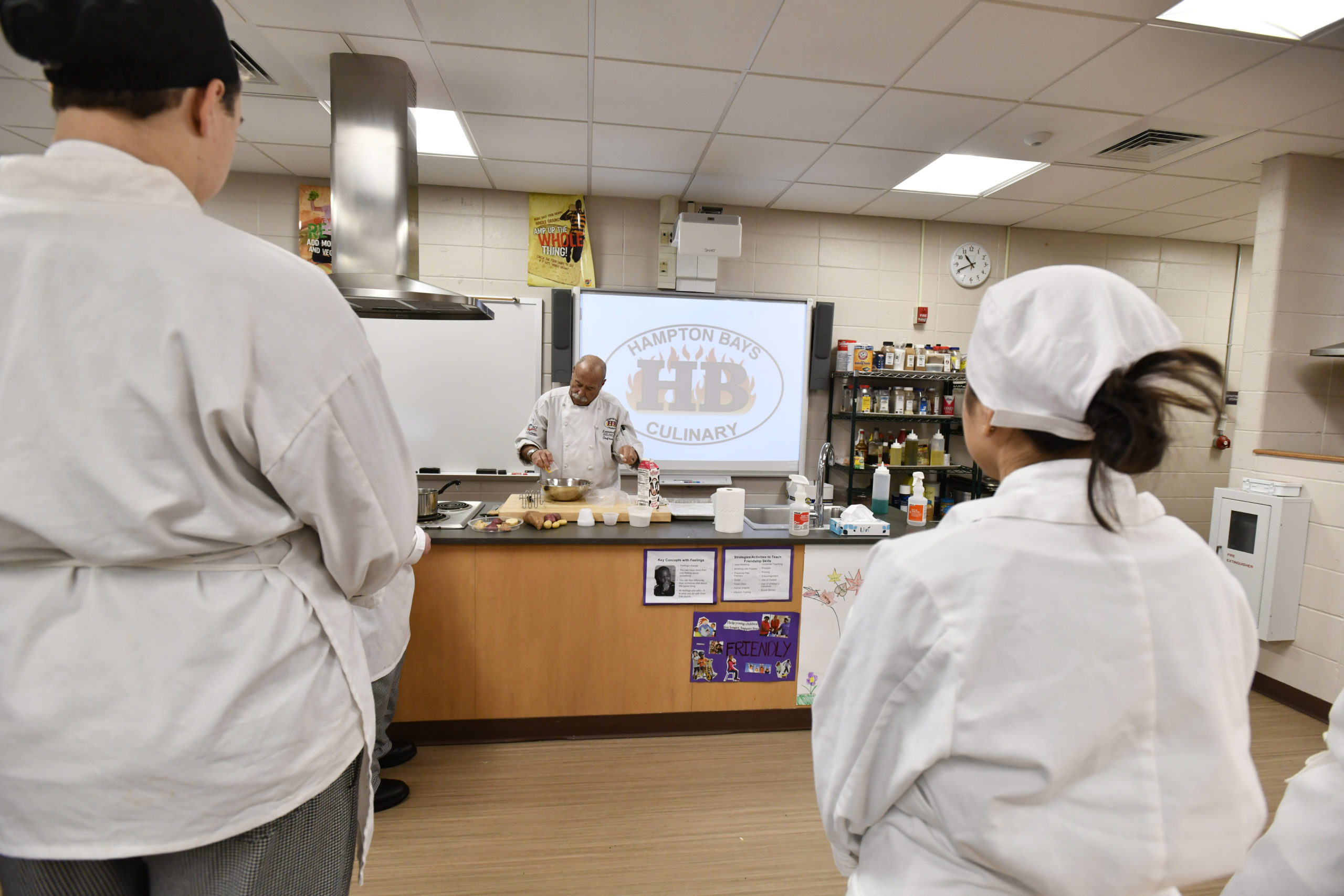
Chef Larry Weiss demonstrates the assignment during the culinary class at Hampton Bays High School on Thursday, February 6. DANA SHAW
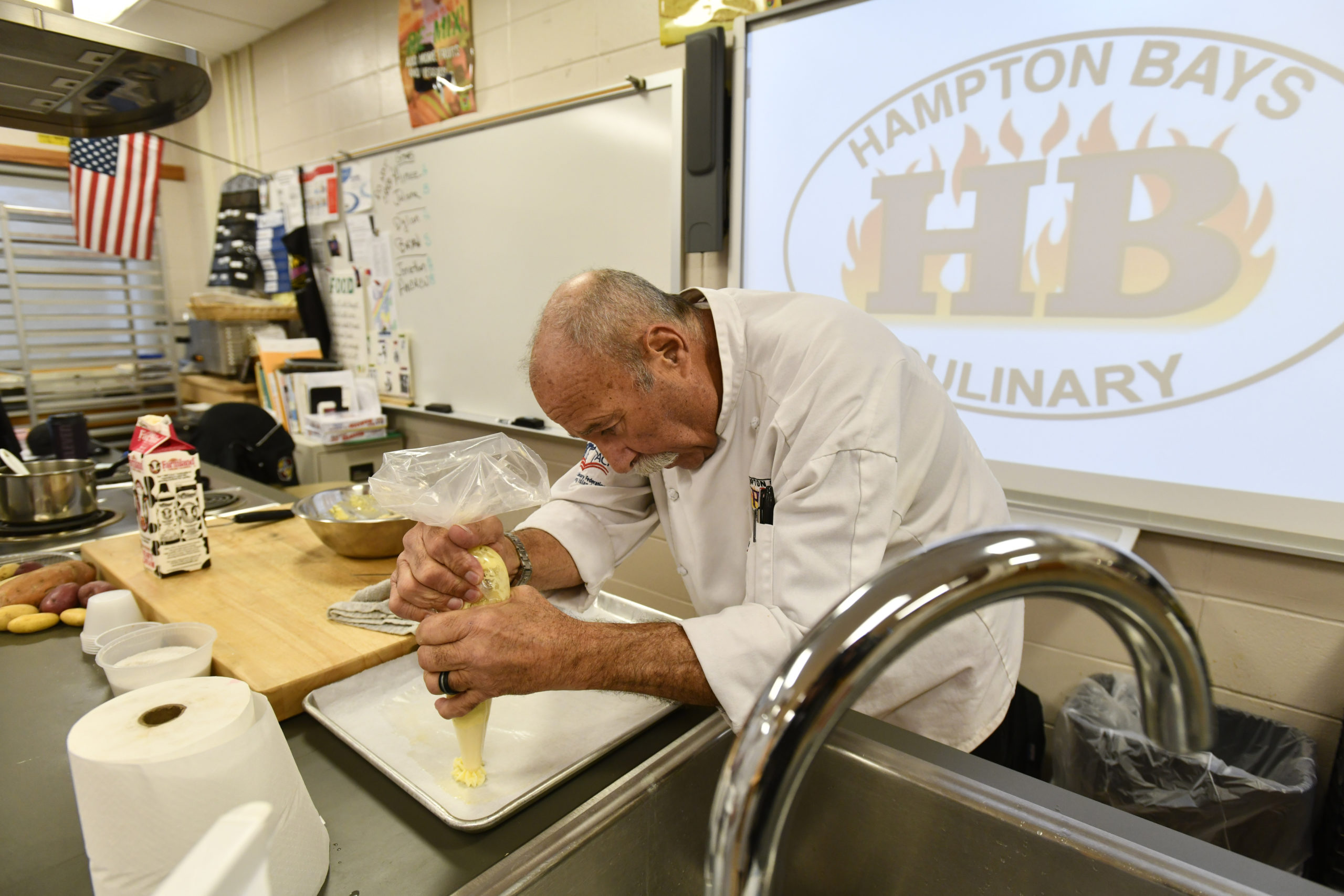
Chef Larry Weiss demonstrates the assignment during the culinary class at Hampton Bays High School on Thursday, February 6. DANA SHAW
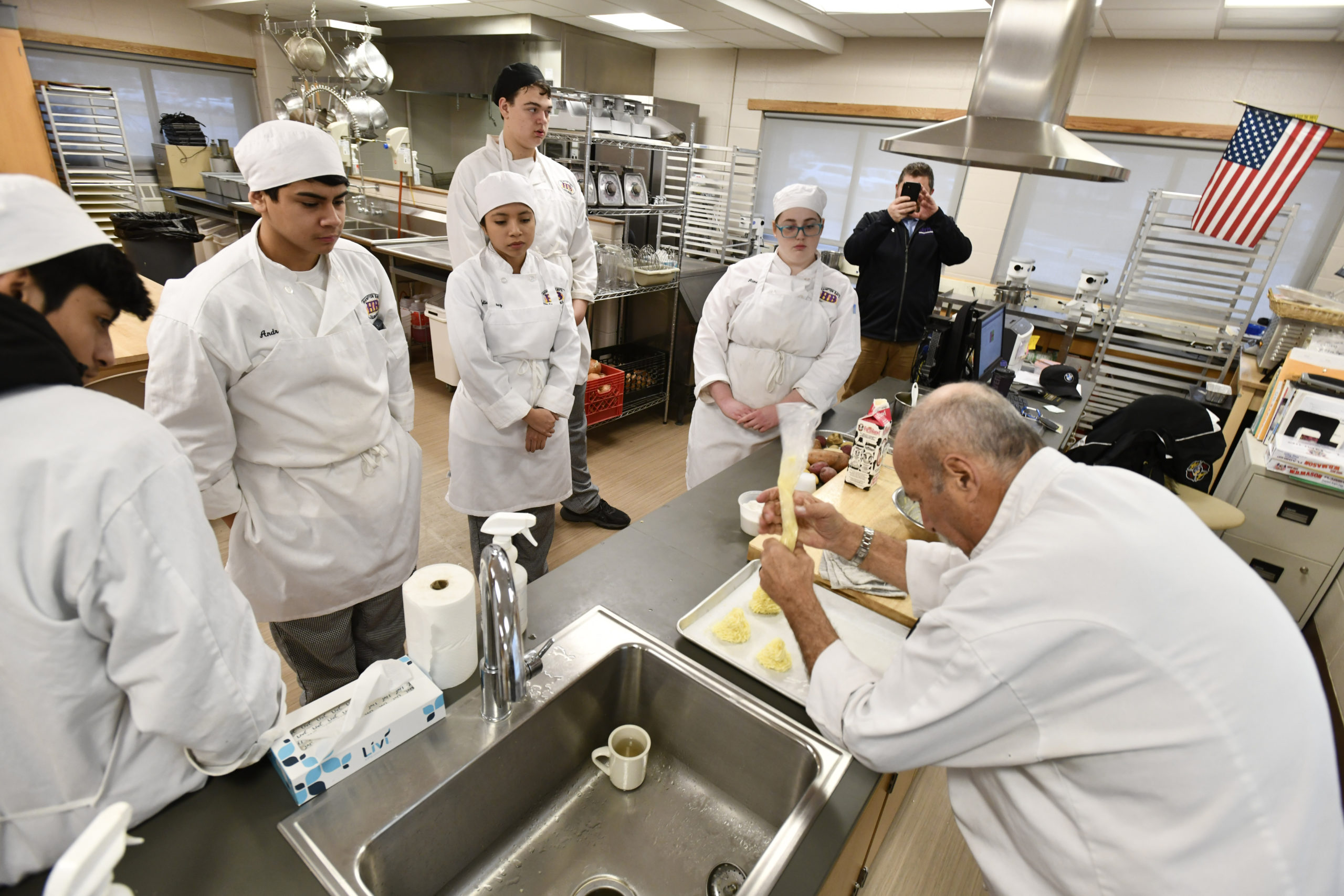
Chef Larry Weiss demonstrates the assignment during the culinary class at Hampton Bays High School on Thursday, February 6. DANA SHAW
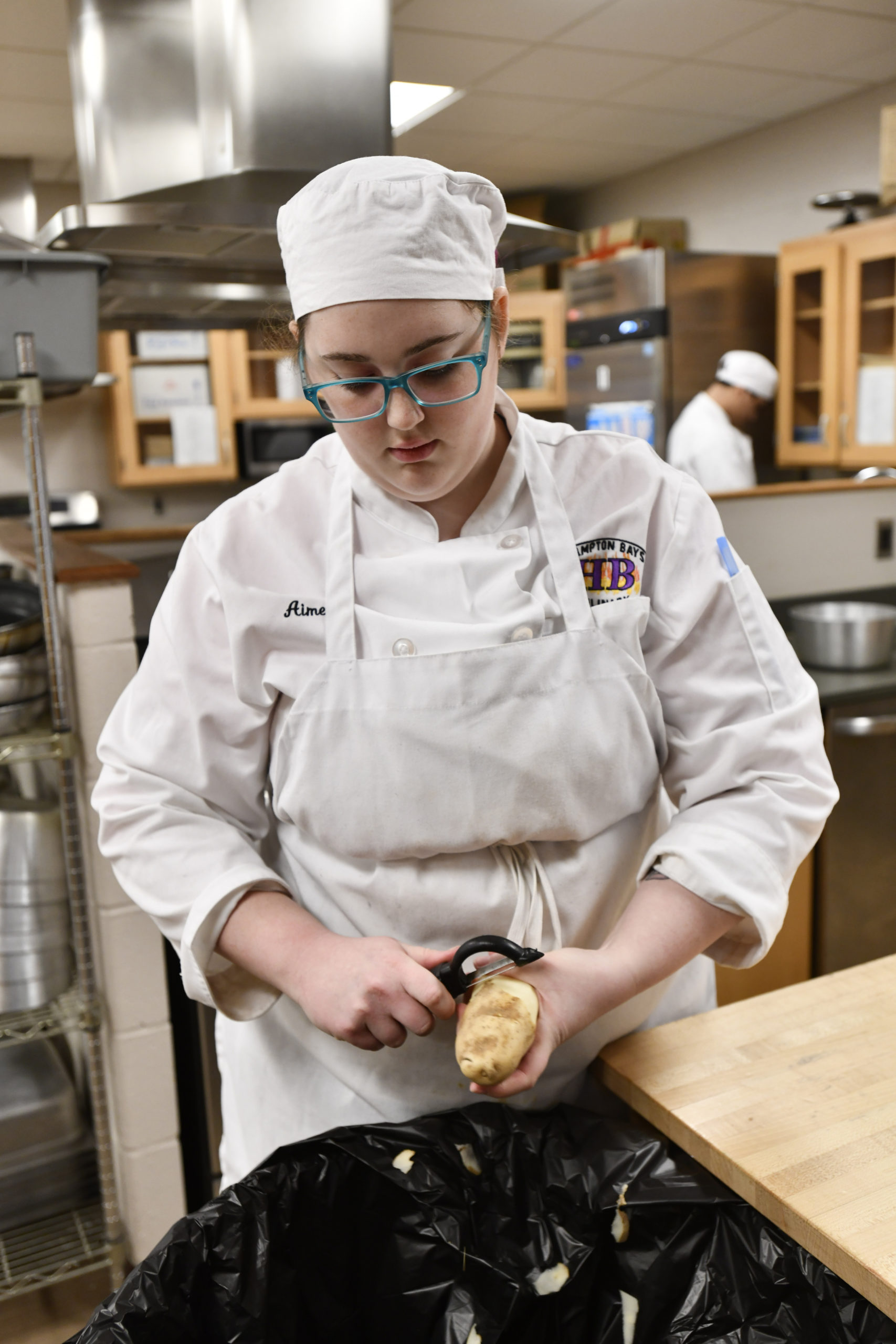
Student Aimee Pelletier works on and assignment during the culinary class at Hampton Bays High School. DANA SHAW
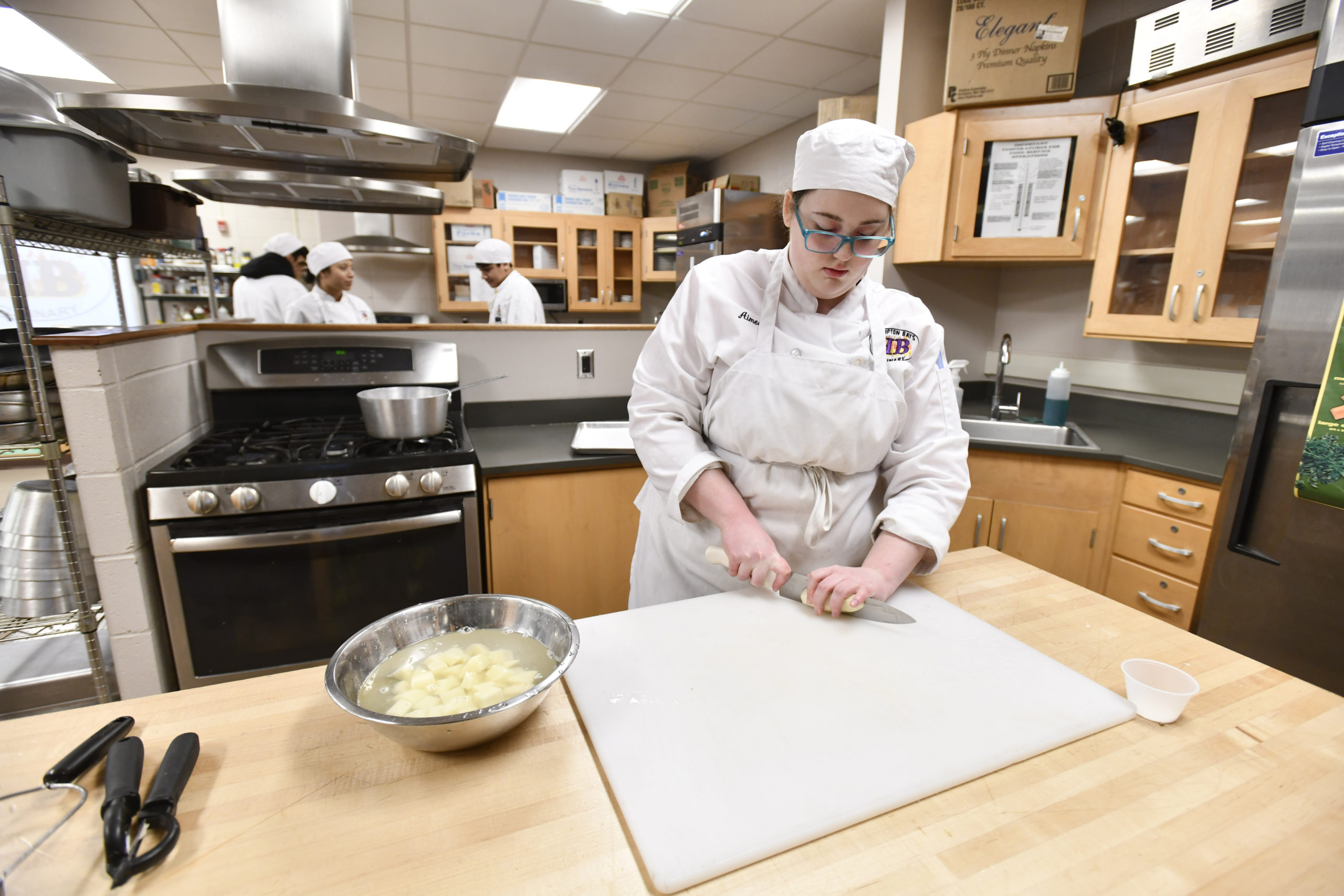
Student Aimee Pelletier works on and assignment during the culinary class at Hampton Bays High School. DANA SHAW
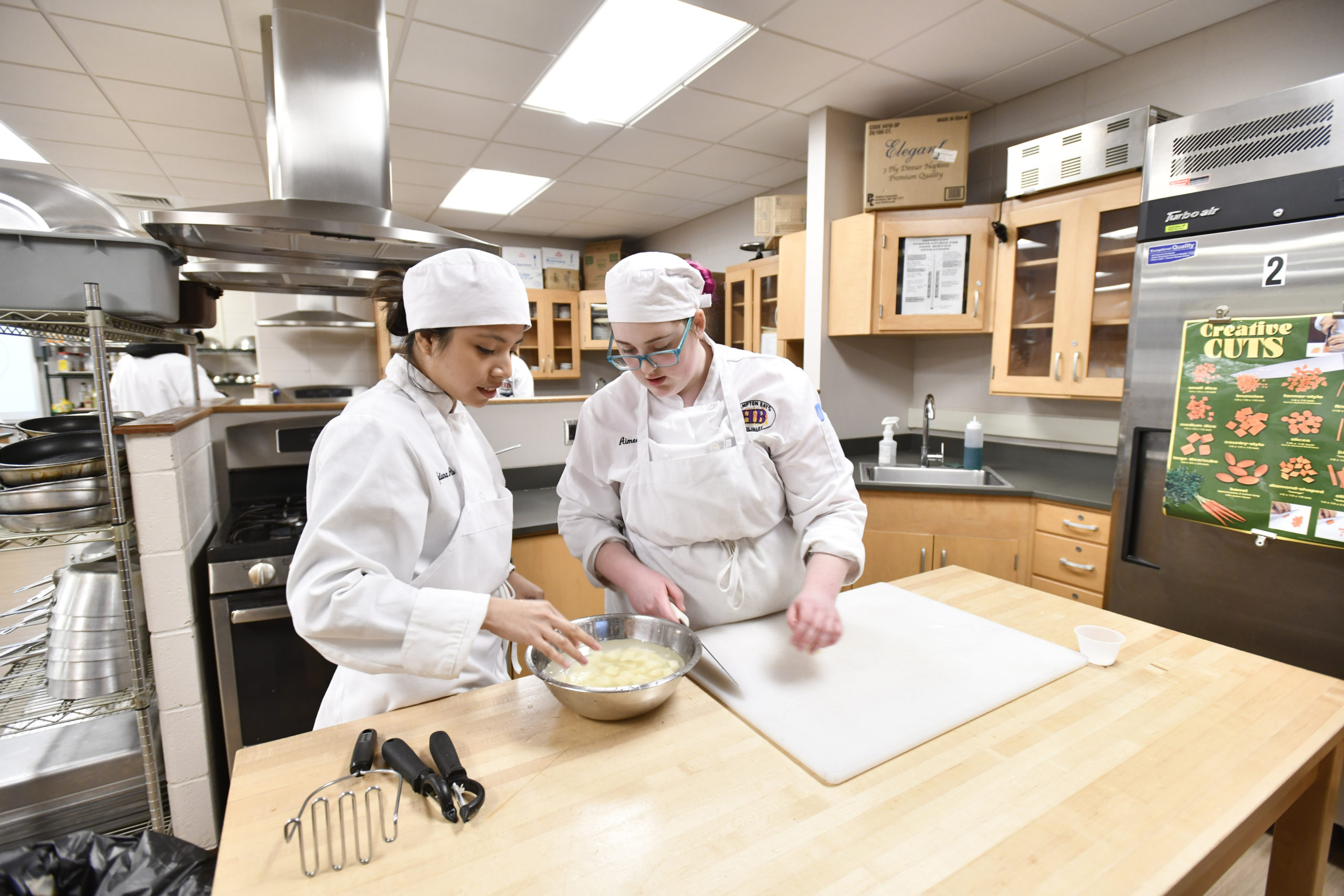
Students Aimee Pelletier and Juliana Alvarez work on and assignment during the culinary class at Hampton Bays High School. DANA SHAW
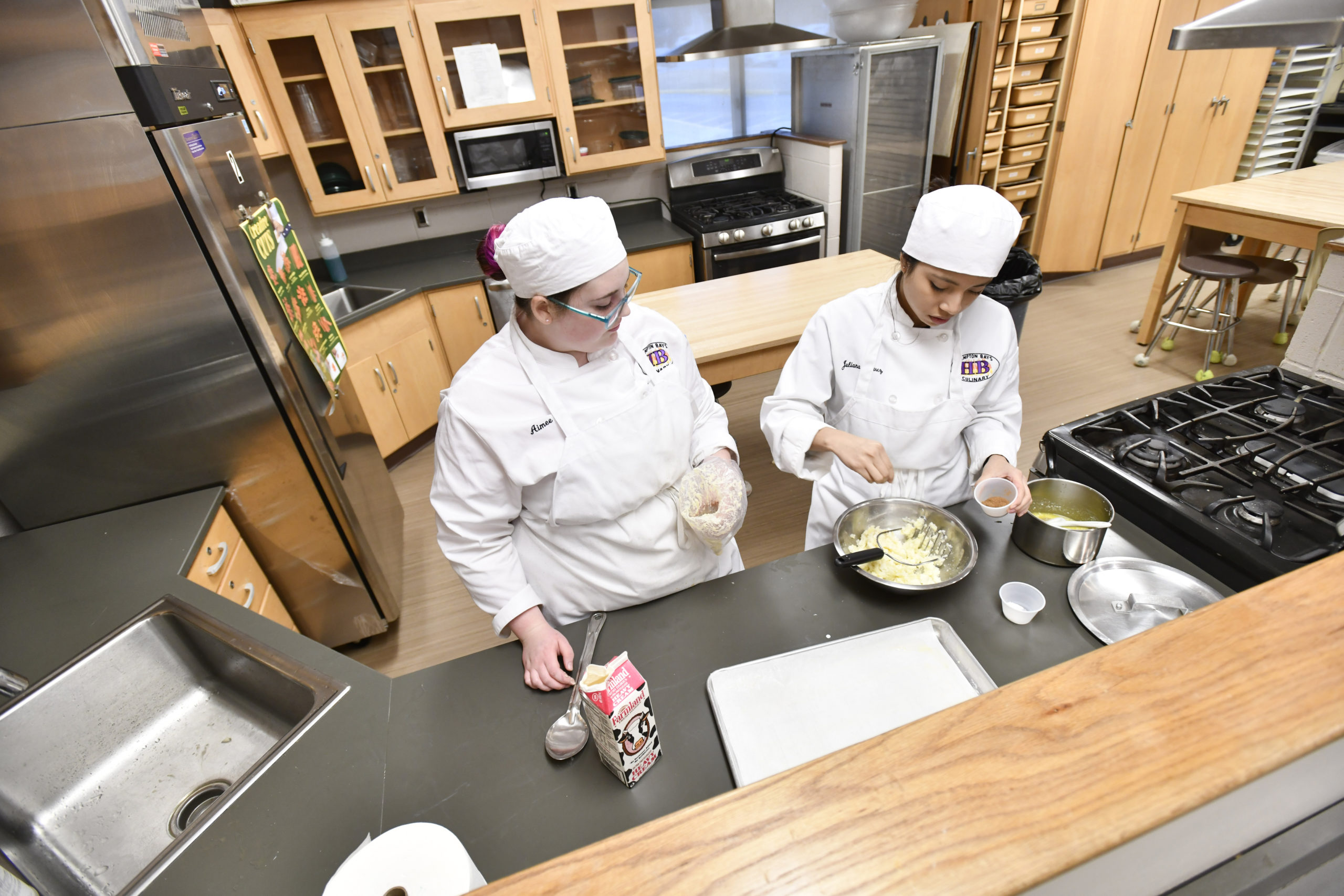
Students Aimee Pelletier and Juliana Alvarez work on and assignment during the culinary class at Hampton Bays High School. DANA SHAW
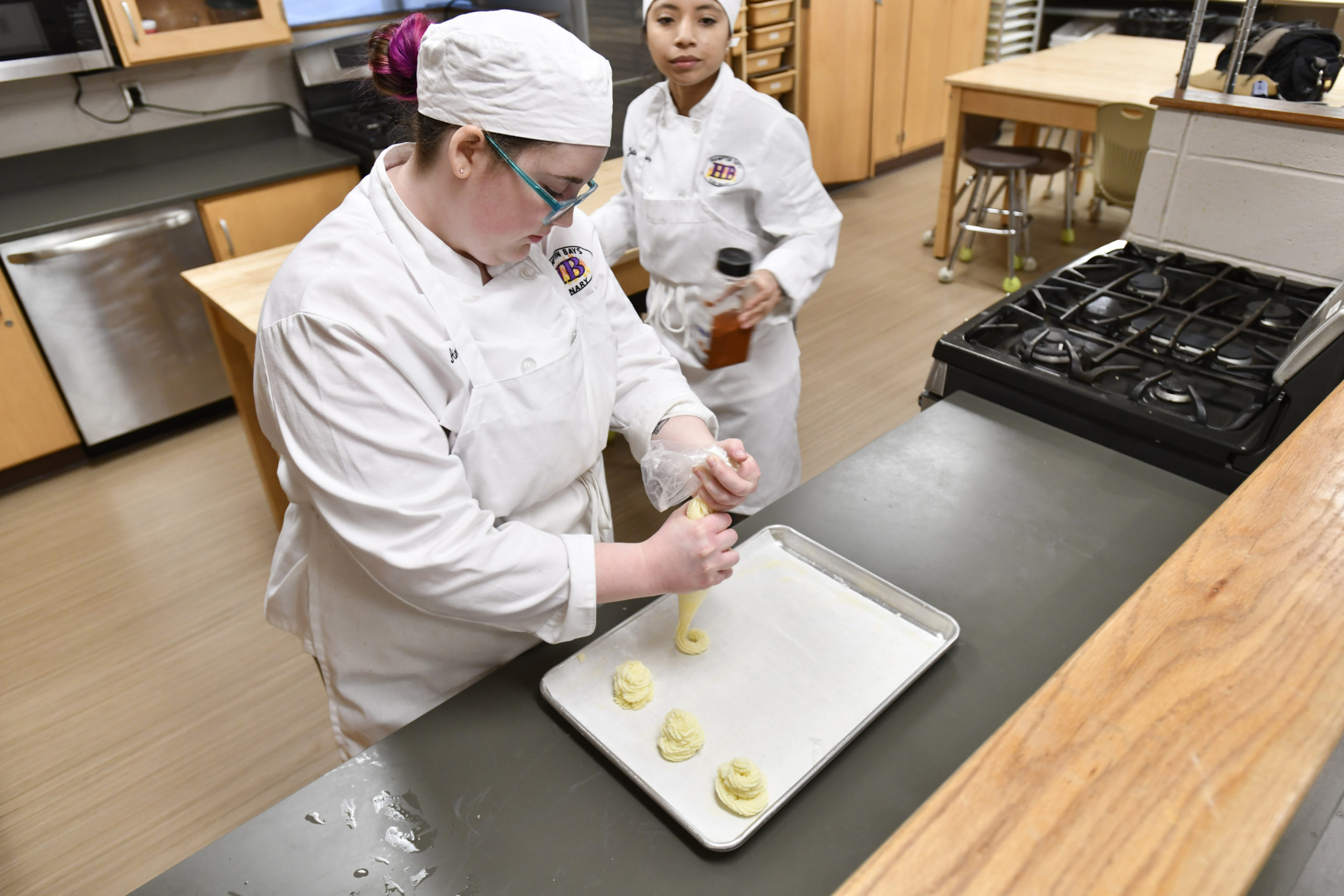
Students Aimee Pelletier and Juliana Alvarez work on and assignment during the culinary class at Hampton Bays High School. DANA SHAW
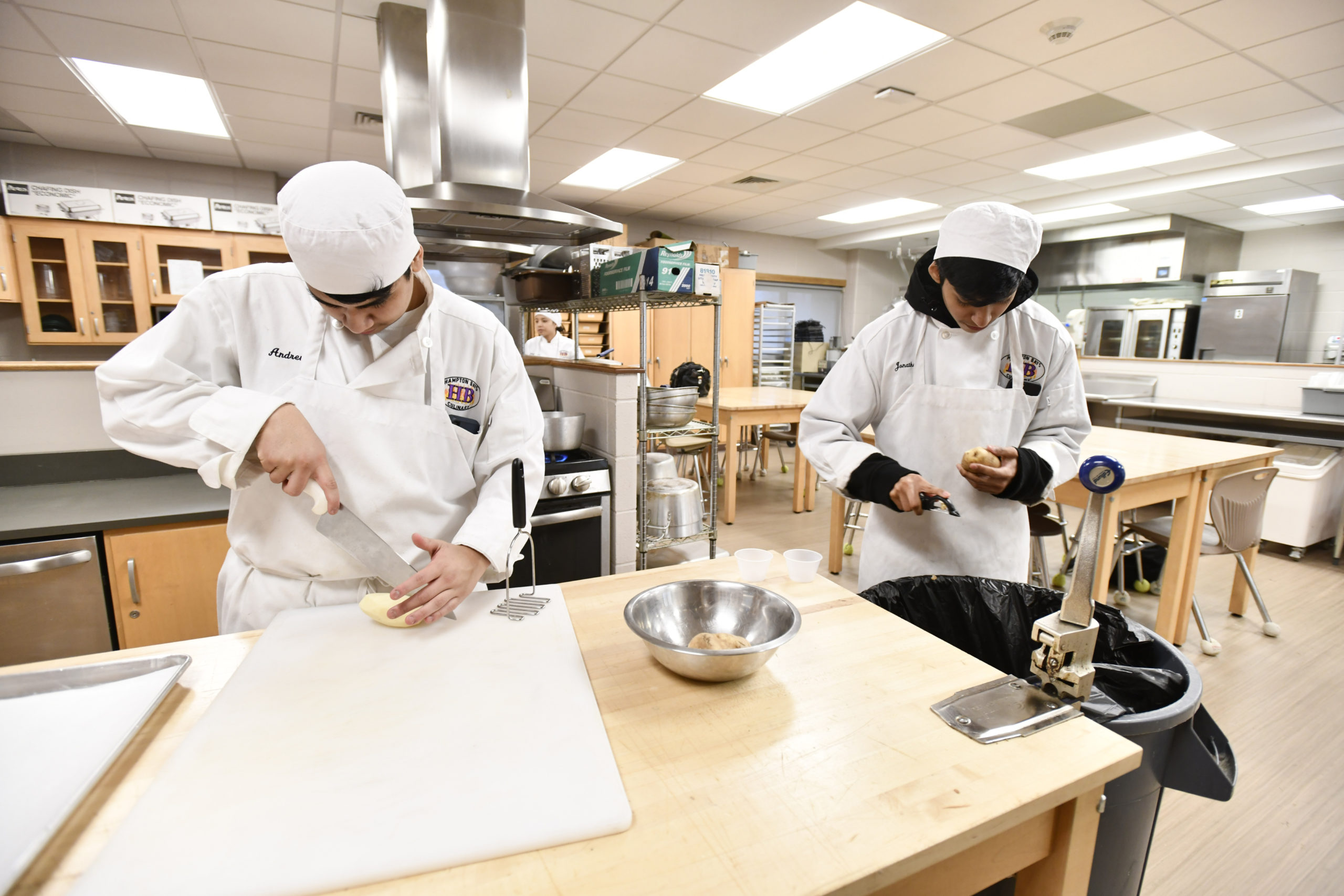
Students Andrew Avila and Jonathan Aquilar at work in the kitchen during the culinary class at Hampton Bays High School. DANA SHAW
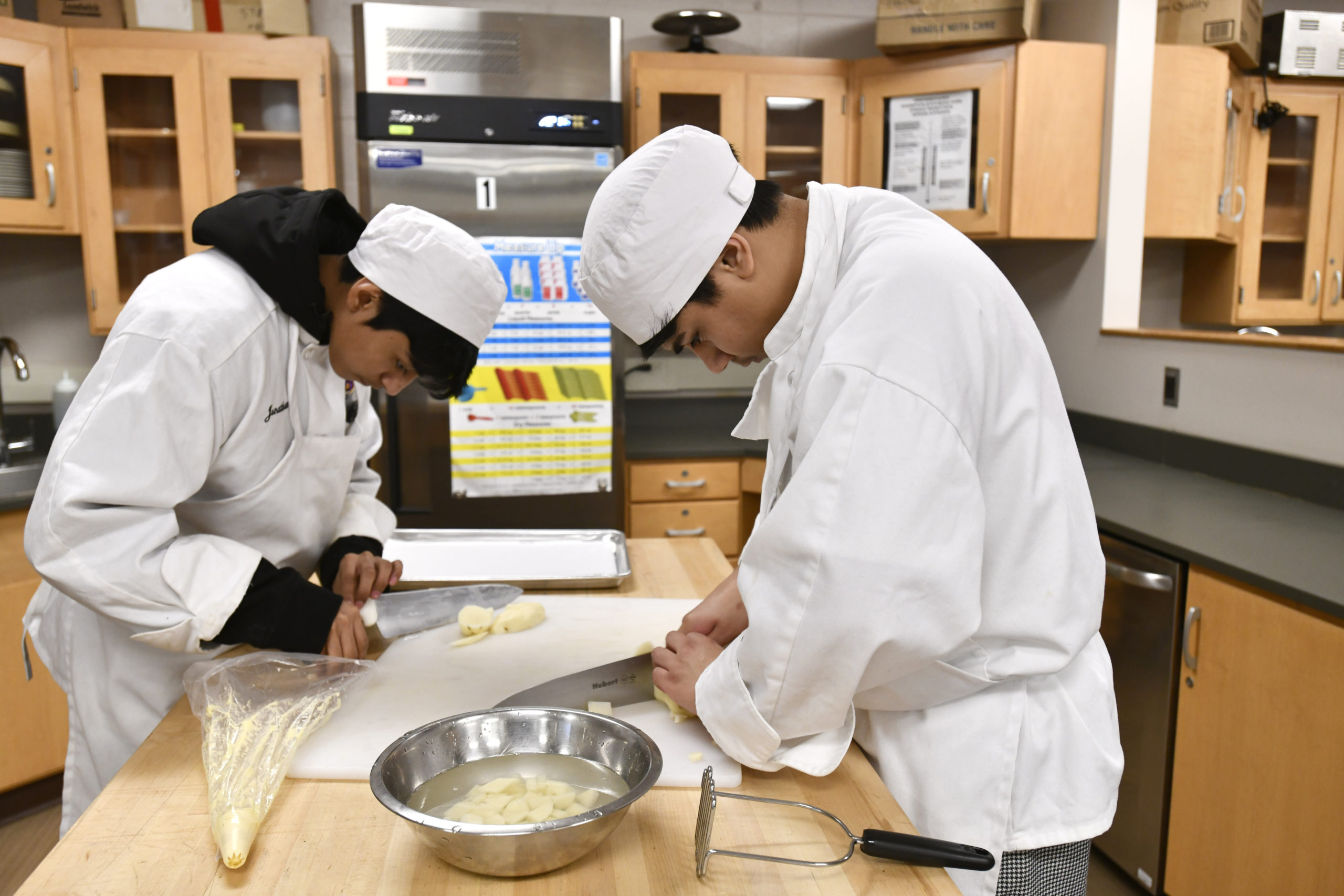
Students Andrew Avila and Jonathan Aquilar at work in the kitchen during the culinary class at Hampton Bays High School. DANA SHAW
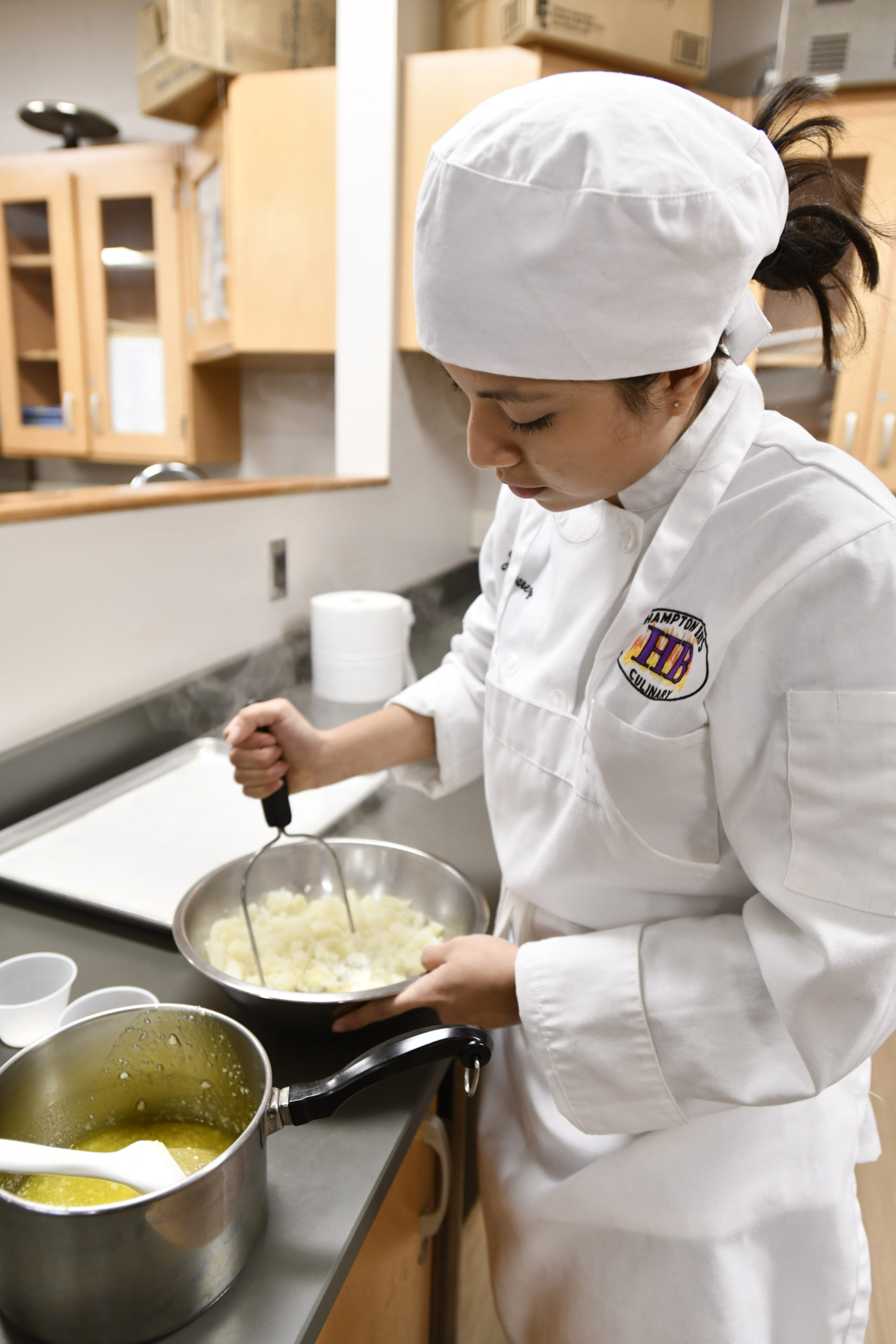
Student Juliana Alvarez works on and assignment during the culinary class at Hampton Bays High School. DANA SHAW
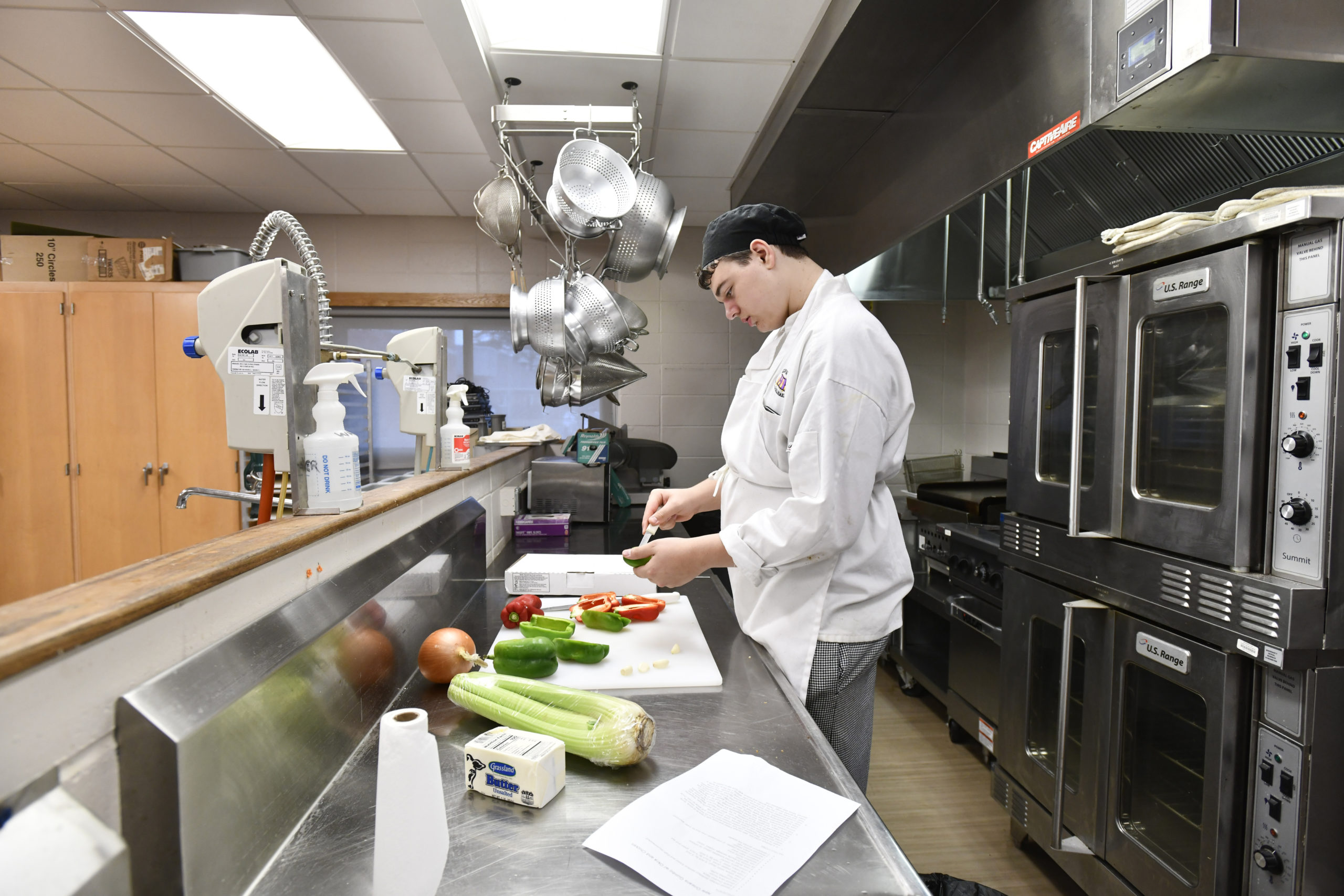
Dylan Carbone at work in the kitchen during the culinary class at Hampton Bays High School. DANA SHAW
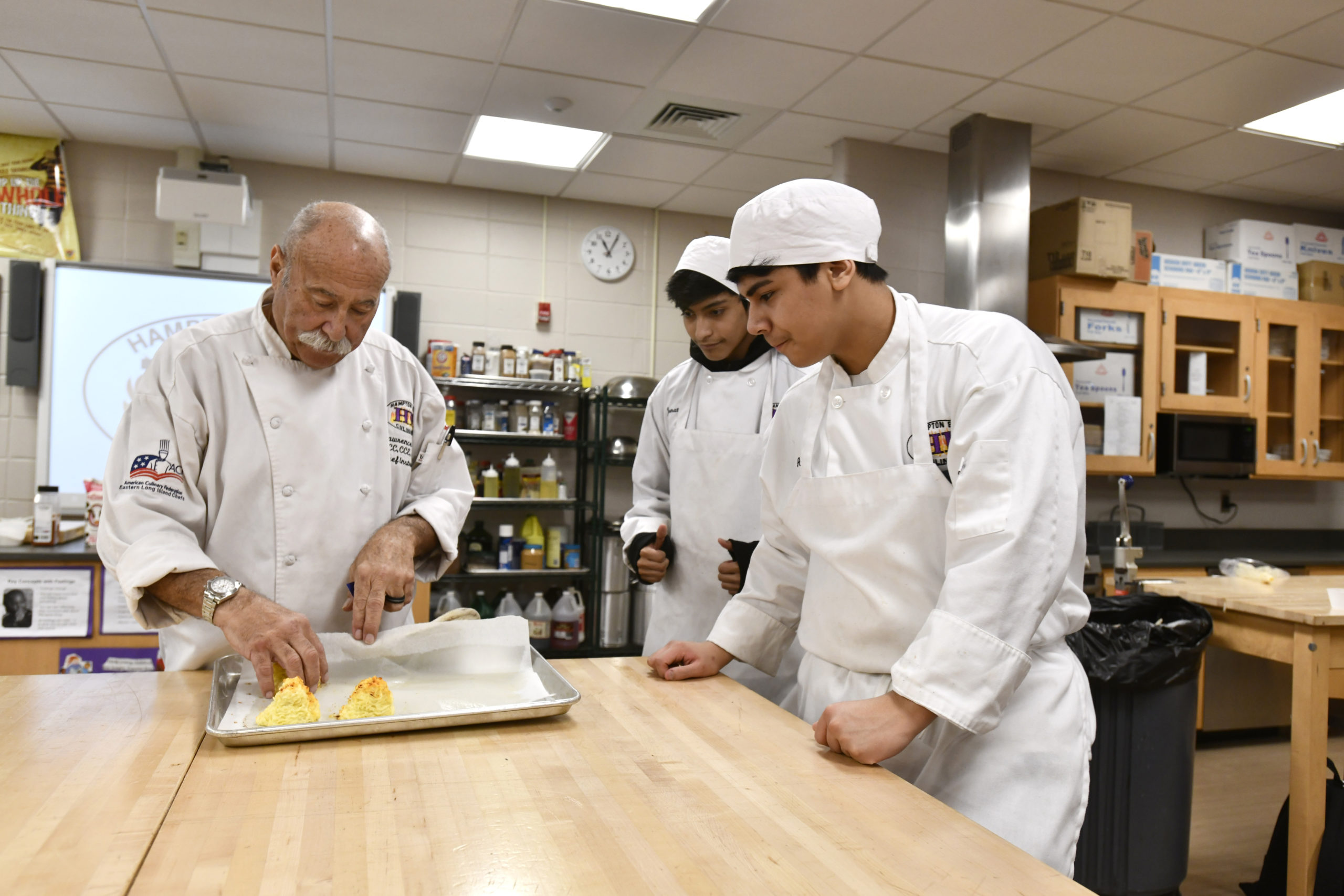
Chef Larry Weiss works with his students during the culinary class at Hampton Bays High School on Thursday, February 6. DANA SHAW
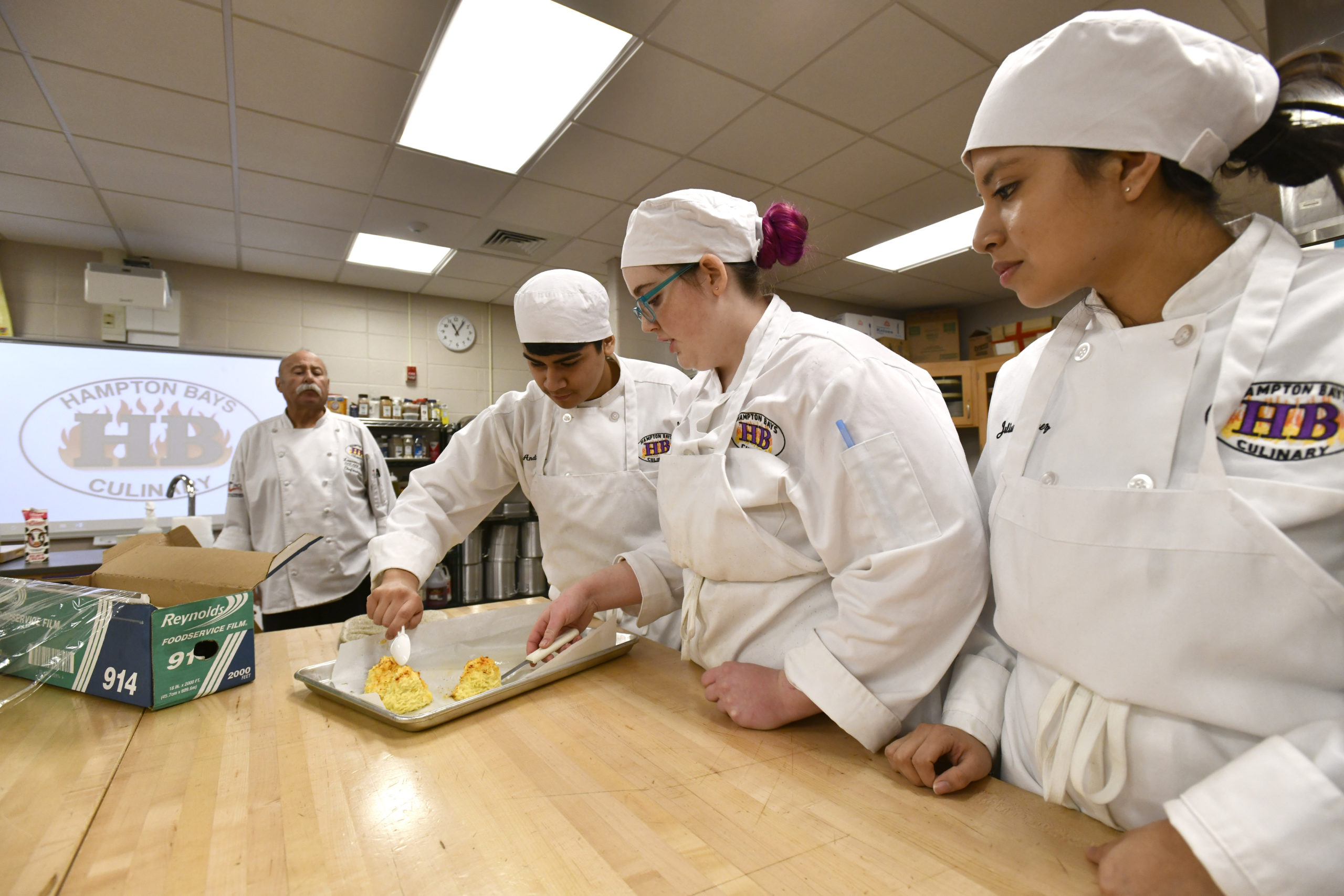
Chef Larry Weiss works with his students during the culinary class at Hampton Bays High School on Thursday, February 6. DANA SHAW
A few years ago, Hampton Bays School District administrator Eric Ferraro had an idea, a kind of riff on the eat local/shop local concept:
What if all the restaurants and catering companies and hotels on the East End could hire local kids with culinary and hospitality training, instead of having to bring in seasonal help from elsewhere?
If they could, a school-to-work movement might be as beneficial to the East End community as the farm-to-table one has been.
That idea first led Mr. Ferraro and Hampton Bays to launch a vocational training program for juniors and seniors that helps them earn college credits and professional certifications to work in the food industry. Then it spawned a new hospitality program there that also earns students college credit and training, in this case, to work in the hospitality industry.
Now, it’s also leading the East Hampton School District to follow suit with its own culinary program.
“It just makes a whole lot of sense for the region,” said Kate Fullam, executive director of the East End Food Institute, a nonprofit with a mission to promote a sustainable food system environmentally and economically. Helping local students become homegrown assets that can benefit from and be a value to the local food and hospitality industries is in keeping with that work.
“If it gives more of our kids the opportunity to stay here, which is becoming harder and harder to do, that’s well worth the effort,” Ms. Fullam said.
Gerald Hilbun, 45, director of hospitality and leadership at Rooted Hospitality Group — which owns the Rumba Island Inspired Cuisine & Rum Bar and Cowfish restaurants in Hampton Bays, Rhum in Patchogue, and Avo Taco in New Hyde Park and Doral, Florida — said the students he’s seen come out of the culinary program are very desirable job candidates. In fact, two of them have worked at Cowfish.
“We thought we’d get a couple of kids that would start at entry level, maybe as dishwashers or prep assistants. Instead, we got two employees at Cowfish who turned into absolute rock stars,” Mr. Hilbun said. “One, by the end of his second summer with us, was working a lead position on the line and went to culinary school at Johnson & Wales. The other is headed to the Culinary Institute but will be with us this summer.”
Daniel Kreig, 19, graduated from the Hampton Bays culinary program in 2018 and said the training he got helped him considerably in the workforce. “[It gave me] an edge on others my age with no experience,” he said.
Now working at 1 North Steakhouse in Hampton Bays, the aspiring chef said the program, especially instructor Larry Weiss, “definitely showed me what the industry was like.”
That kind of preparation is invaluable, he said.
Six years in, the Hampton Bays culinary program has been well-received by students and local businesses, according to Mr. Ferraro and Mr. Weiss.
Given the amount of space available, and the limitations of having just one instructor, Hampton Bays capped its culinary program at 14 students, usually evenly divided between juniors and seniors. There are more than enough kids interested to fill those slots, according to administrators. Last year, nine graduated from the track, some of whom have gone on to the Culinary Institute, among other places.
As for business interest, Hampton Bays has been working with Rooted Hospitality, the Noyac Golf Club and the developers of Canoe Place Inn, having them visit the culinary and hospitality classes, conduct demonstrations, and actually put the students to work at part-time and seasonal jobs.
“We’re trying as much as we can to build partnerships with the community,” Mr. Ferraro said.
The new hospitality program at Hampton Bays, which began this fall, was established through a partnership between the school district and Rechler Equity Partners, the developer behind the Canoe Place Inn project underway on both sides of the Shinnecock Canal. Plans call for building a 350-seat catering facility, a 20-room inn and a restaurant and taproom, creating many hospitality jobs.
The curriculum was designed to teach students about careers in the tourism and hospitality management industries while encouraging them to seek employment in those fields locally.
Two factors are fueling the burgeoning trend toward vocational training on the East End, Mr. Ferraro said. First is the fact that there are many paths to success after high school — and not all wind through lecture halls and libraries. Some are forged through commercial kitchens, hotels and museums.
Which leads to the second factor: The East End does those things pretty well, and in high volume each summer.
“This area is known for its restaurants and big special events and tourism,” he said. “The job market in those industries continues to grow.”
According to Mr. Hilbun, restaurant business increases nearly 400 percent in season, and staffing is a challenge. In fact, restaurant owners and hospitality businesses have long brought workers in from elsewhere, even abroad, to meet the demand. It’s almost a Hamptons tradition.
“If we can hire locally, we will,” he said. “We’d like to do it every year, and not just in the kitchen. We’re excited about seeing what we can do with the hospitality program … We need greeters and waitstaff, too.
“I did not go to college. And I’ve spent my whole career in the restaurant business. So it makes me really proud to live and work in a place that’s making an effort like this,” he went on to say.
The East End and the Food Institute is also interested in partnering with local vocational culinary and hospitality training program, its director said.
“We work with several businesses that process produce into products and we have a farm-to-food-pantry program that freezes minimally processed [fruits and vegetables],” Ms. Fullam said. “Our producers employ workers. And we are looking to invest in our own infrastructure and equipment. So that means we’ll be looking for additional employees, too” she said, adding, “There are a lot of possible tie-ins here.”
At East Hampton, officials are working to convert storage space next to the high school cafeteria to a commercial kitchen for the program. District administrators estimate it will take a year or two to complete. In the meantime, students who want to pursue culinary training are bused to the Board of Cooperative Educational Services in Riverhead.
The goal there is the same as in Hampton Bays: to get students “career-ready for the food industry,” Superintendent Richard Burns said recently.
Whether other area school districts follow suit remains to be seen. For now, most of the others, send students who want to pursue culinary training to BOCES.


