


 1 Photo
The Boathouses in Hampton Bays
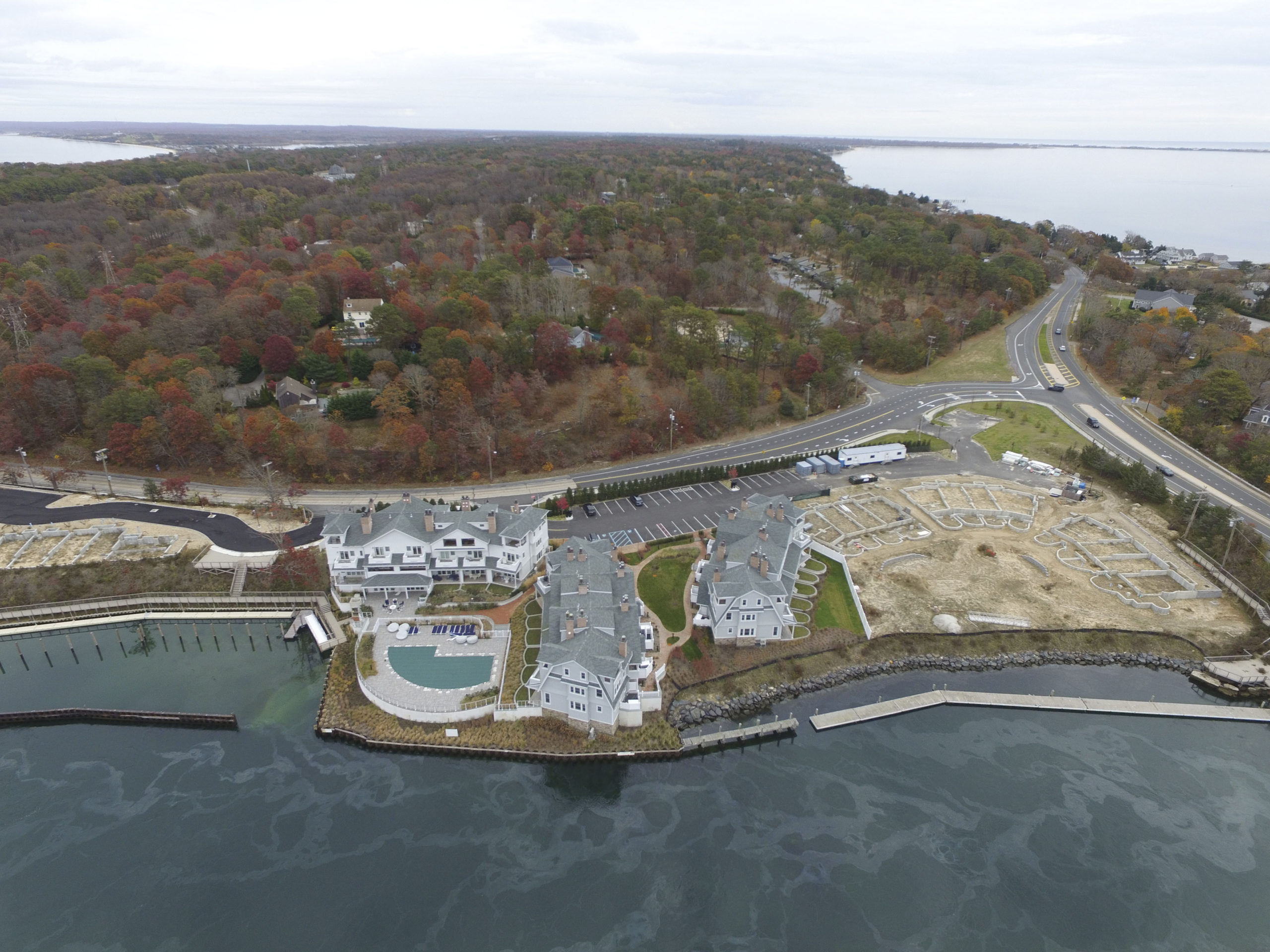
Revised legislation allowing the developers of the Canoe Place Inn and Cottages to pivot from selling their townhouses, dubbed the “Boathouses,” to including them along with the Inn’s hospitality use includes a provision that may allay worry for some Hampton Bays community members: property taxes generated by the units will remain the same.
If approved as revised, the Canoe Place Inn, Canal and Eastern Properties Maritime Planned Development District requires developers Mitchell and Gregg Rechler to make up any property tax difference the change from individually owned townhomes to luxury transient rental units may entail. The amended language reads, “Any differential in annual taxes from Townhouse Use to Resort Motel on Parcel 2 will be paid annually by the property owner as a community benefit.”
During a November presentation before the Hampton Bays Civic association, Gregg Rechler offered an update on the renovation of the historic Canoe Place Inn, and revealed the desire to alter the use of the Boathouses across Shinnecock Canal at the site described as Parcel 2 in the legislation. Rather than offer them for sale or long-term lease, he and his cousin Mitchell, managing partners of the Rechler Equity Partners, would prefer to provide them as part of the overall hospitality scheme for the development. The Canoe Place Inn will feature hotel rooms as well as separate cottages on the west side of the canal; the Boathouses would be a third type of amenity for guests.
The reasoning is articulated in the revision’s legislative intent: “Emerging from the COVID pandemic, economic realities and development trends have caused the property owner to revisit the intent of the townhouse development — namely instead of selling individual units to private owners, the applicant now seeks to utilize the townhomes as part of the branding and resort tourism package of offerings associated with the Canoe Place Inn. According to the proposal, the townhouse units would be made available as luxury resort rentals through the Canoe Place Inn, with all associated housekeeping and property maintenance occurring under one management and ownership umbrella.”
During a December 2 Southampton Town Board work session on amending the local law to allow the developers to incorporate the townhomes into the hospitality use, Town Planning and Development Administrator Janice Scherer said she believes the idea of connecting the Boathouses with CPI meets the overall goal of the MPDD — to create a showplace and tourist attraction. The place has become “a home run,” Scherer opined.
But what would the change mean for property taxes expected from the ambitious development? At the December work session, Rechler said he was working with the town’s assessors to determine the implications. The resulting plan and decision, Supervisor Jay Schneiderman said this week, is “huge.”
“I worked that out with Gregg,” he explained. “He said, ‘Look, I’m not trying to do this to pay lower taxes. I’m perfectly fine paying the taxes I would have paid had it stayed residential.’ And I said, ‘OK, we can figure that out.’”
The difference would be calculated annually, then put into a fund and distributed to the various taxing entities, Schneiderman explained. He said he was confident officials could figure out the mechanism to work out the calculation and distribution.
Last week, Gregg Rechler offered a statement via email underscoring that of the supervisor. “We deeply value and appreciate our relationship with Hampton Bays, and remain committed to fulfilling the community benefits promise made to provide property tax revenue for the Hampton Bays School District and other taxing jurisdictions,” the statement read.
“The changes being considered with the town will provide public access to the waterfront and give the Boathouses better ability to leverage the accommodations of the Canoe Place Inn. We believe this will make it an even greater asset, while simultaneously ensuring an increase in tax revenue for the community.”
A second change to the MPDD revises the original language detailing a second community benefit: public access to the Shinnecock Canal. During discussions before the original PDD was approved back in 2015, a scheme to offer access along the eastern side of the canal called for procuring easements from Suffolk County and the MTA, and a path that ran all the way to Meschutt County Park.
But the easements were not forthcoming, so the developers devised a new access map, allowing for a walking loop through the Boathouses property and along the canal. The public access easement will extend from North Shore Road over the canal property. The design includes a five-car public parking area that will be located immediately off Old Boathouse Lane, at the southern tip of the property, where the lane comes off North Road. The plans include access to a newly constructed viewing/fishing platform and there will be public access to the existing floating dock for fishing and transient boaters as well.
Approved in 2015, the Maritime PDD, by law, is required to provide a community benefit in exchange for increased density on the two properties. Public access to the canal was one benefit, and keeping the iconic CPI was a second. The Rechlers initially planned to raze the historic Canoe Place Inn, but, in face of community outcry, chose to embark upon a restoration of the 1920s building that had replaced an earlier inn constructed during 1700s. That first iteration was primarily a stagecoach rest and actually served as headquarters for British soldiers during the Revolutionary War.
A hearing on the proposed change will be held on January 25 at 1 p.m. via Zoom teleconference. Information on accessing the virtual meeting is located on the town’s website.


