


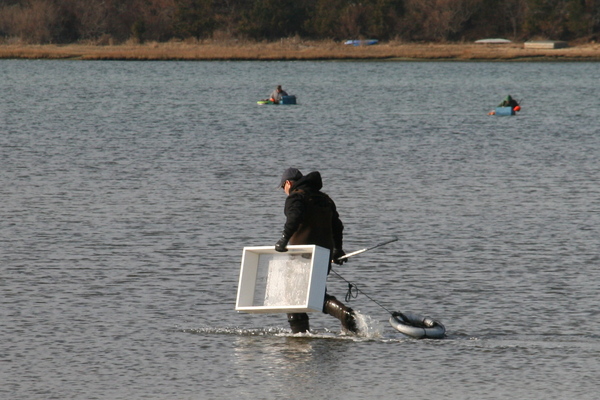
 7 Photos
Scallopers work Sammy's Beach in East Hampton Tuesday. KYRIL BROMLEY
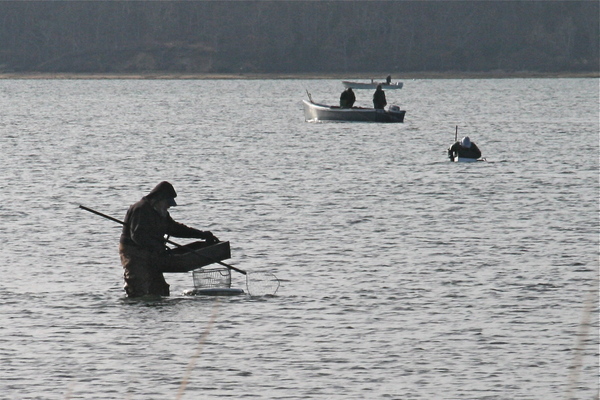
Scallopers work Sammy's Beach in East Hampton Tuesday. KYRIL BROMLEY
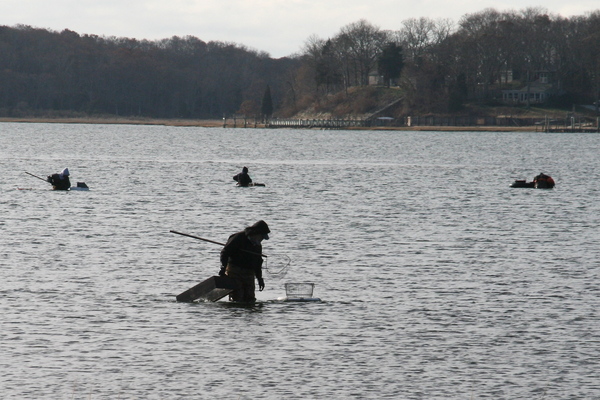
Scallopers work Sammy's Beach in East Hampton Tuesday. KYRIL BROMLEY

Scallopers work Sammy's Beach in East Hampton Tuesday. KYRIL BROMLEY

Scallopers work Sammy's Beach in East Hampton Tuesday. KYRIL BROMLEY
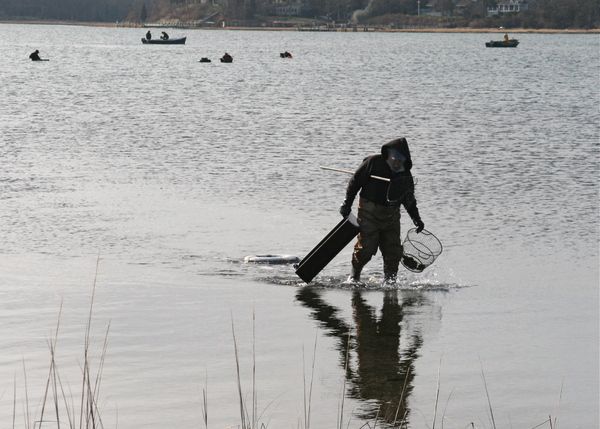
Scallopers work Sammy's Beach in East Hampton Tuesday. KYRIL BROMLEY
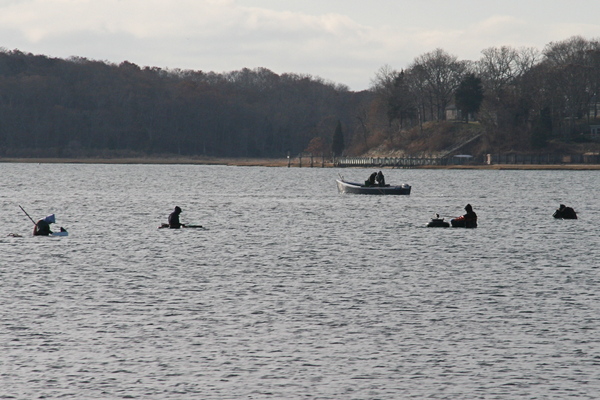
Scallopers work Sammy's Beach in East Hampton Tuesday. KYRIL BROMLEY
Hobbled by algae blooms and delayed by Hurricane Sandy, the fall bay scallop harvest got into full swing this week with the opening of East Hampton Town waters and the lifting of water quality restrictions on some of Southampton’s more productive areas.
Sentiments about how the harvest is looking have varied, with optimism to the east and dejection to the west.
When East Hampton opened its tidal harbors, primarily Three Mile Harbor, Napeague Harbor and Lake Montauk to scalloping on Monday, a week later than normal, baymen found a relative bounty—at least in light of the doomsday forecasts that had swept across the area after surveys of scallop beds in the Peconics showed a nearly 90-percent die-off over the summer.
“It’s been going pretty well,” said Charlotte Sasso, the owner of Stuart’s Seafood in Amagansett, where the early season scallops are selling for $24 per pound. “Right now, they’re getting their limits pretty quickly and they’re nice sized scallops, which is encouraging. Most are coming from Napeague Bay, that seems to be the best so far.”
Ms. Sasso said that from the reports and the relative ease with which baymen are finding scallops, she’s guessing that the season will end up being decent, possibly better than last year.
To the west, however, those predictions are far less rosy. Two weeks into the season in some parts of the Peconics, few adult, live scallops had come up in dredges at all.
“It started off very slow,” James Coronesi, the owner of Cor-J Seafood in Hampton Bays said. “There is no big bonanza this year. The red tide has hurt us.”
The opening over the weekend of Cold Spring Pond in Southampton proved to be one bright spot in the season so far, with a healthy harvest of scallops, one that looks like it will produce for at least a week or two, baymen said.
“We’ve been picking away in Cold Spring, it’s been pretty good so far,” said Jon Semlear, a bayman and Southampton Town Trustee. “The bay has been a struggle though.”
Scallops had been thought to be poised to post a stunning rebound this year, what some thought would be the final piece to a recovery of stocks after “brown tide” algae blooms nearly wiped them out in the 1980s and 1990s. But the giant numbers of young scallops observed in the spring became giant numbers of dead scallops by the end of summer. Though a cause of the widespread die-off has not been pinpointed yet, blooms of red algae are being blamed by most—the bounty coming from some of those small embayments that were not struck by the blooms now serving as damning evidence.
The low numbers of scallops from Shinnecock Bay, the Peconics and Gardiners Bay and others has been discouraging for the prospects of the 2012 season as a whole since those areas have traditionally held the large numbers of scallops that would allow harvesters to continue catching through the winter.
“Last year was a great year for us—Shinnecock was very good,” Mr. Coronesi said. “The ones that are out there are nice and big, but there’s not a lot of them. It’s going to be a tough year.”


