


 5 Photos
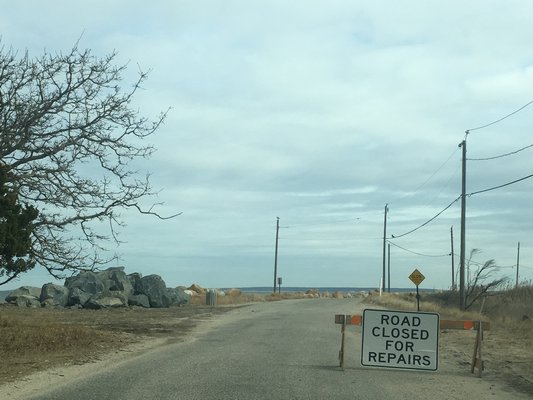
Gerard Drive in Springs in closed for road work. ELIZABETH VESPE
KRYIL BROMLEY
KYRIL BROMLEY
KYRIL BROMLEY
KYRIL BROMLEY
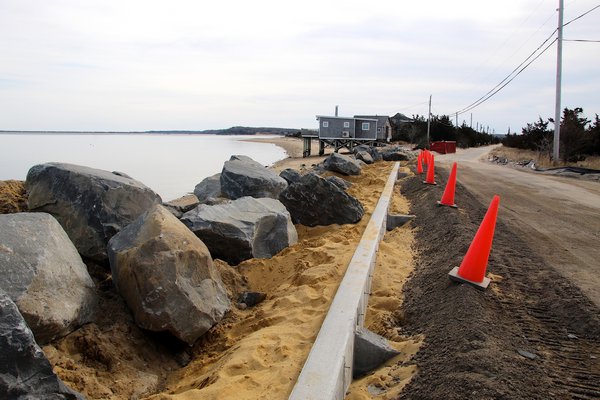
Gerard Drive in Springs, which is prone to flooding in nor’easters and storm surges, is in the process of being raised 2 feet, to 6 feet above sea level.
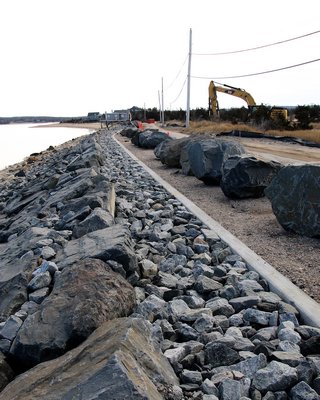
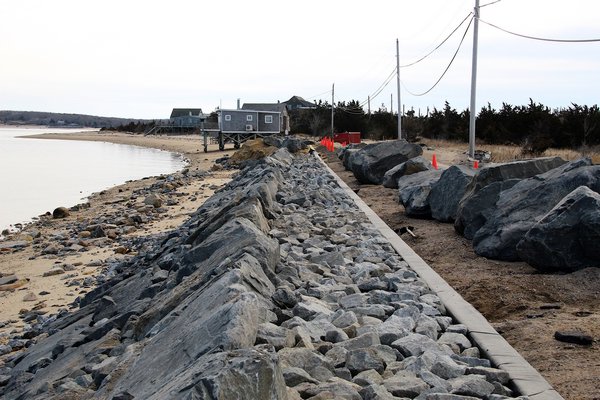
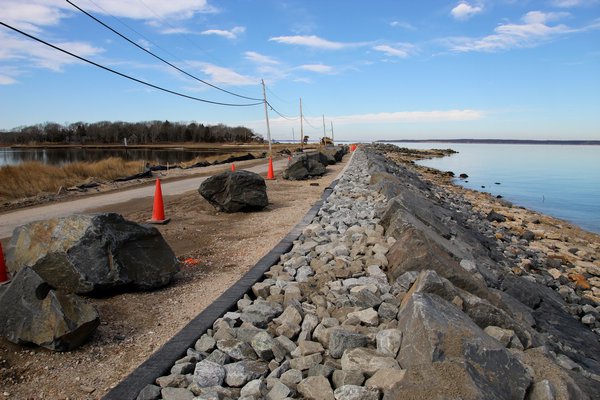
The road has been closed for repairs while East Hampton Town Highway Department crews use heavy machinery to raise the causeway and build a concrete curb and stone wall revetment to stop future flooding.
The project began in September 2018 and is slated to be completed on June 15, 2019, Superintendent of the East Hampton Highway Department Stephen Lynch said on Tuesday afternoon.
Currently, the southern side of Gerard Drive is just about finished, he said, and crews will be starting the northern side soon after, making their way up the causeway.
“We’re contracting the job ourselves to save money,” Mr. Lynch said of the Highway Department. “If we put it out to bid, the project would have cost $2.5 million to $3 million.”
When plans for the project began in 2013, town officials estimated the cost to total $865,000; however, Mr. Lynch said, when all is said and done, the total cost should end up at around $950,000.
Plans for the project were first drafted in 2013, when East Hampton Town received $865,000 in Federal Emergency Management Agency funding after Superstorm Sandy to help pay for raising the road and hardening it. The State Department of Environmental Conservation approved the project after the town agreed to remove concrete rubble and quarry stone that had been dumped along the Gerard Drive shoreline over the years to serve as wave breaks.
The Highway Department has contracts out for the machines, purchased the large boulders being used for the revetment of shoreline, and bought the sand and paving supplies for the project.
“We’re acting as our own contractor, overseeing everything,” Mr. Lynch said, noting the resulting savings to the town.
He said in order to protect residents who enjoy sightseeing and driving down Gerard Drive, the road has been closed. “We don’t want accidents or people to get hurt,” he said.
The road is being raised to the culvert, which is the structure that allows water to flow under the road. According to Mr. Lynch, storms would wash out sediment under the pavement, causing it to fall apart and make the road completely impassable. One the new curb and revetment wall have been added, rough water won’t be able to undermine the pavement, Mr. Lynch said.
“The rock revetment will be built at a slant, which takes the energy away from the water. The shoreline won’t erode under the road,” he added. “It’s going to be a lot safer.”


 Elizabeth Vespe on Feb 19, 2019