


 2 Photos
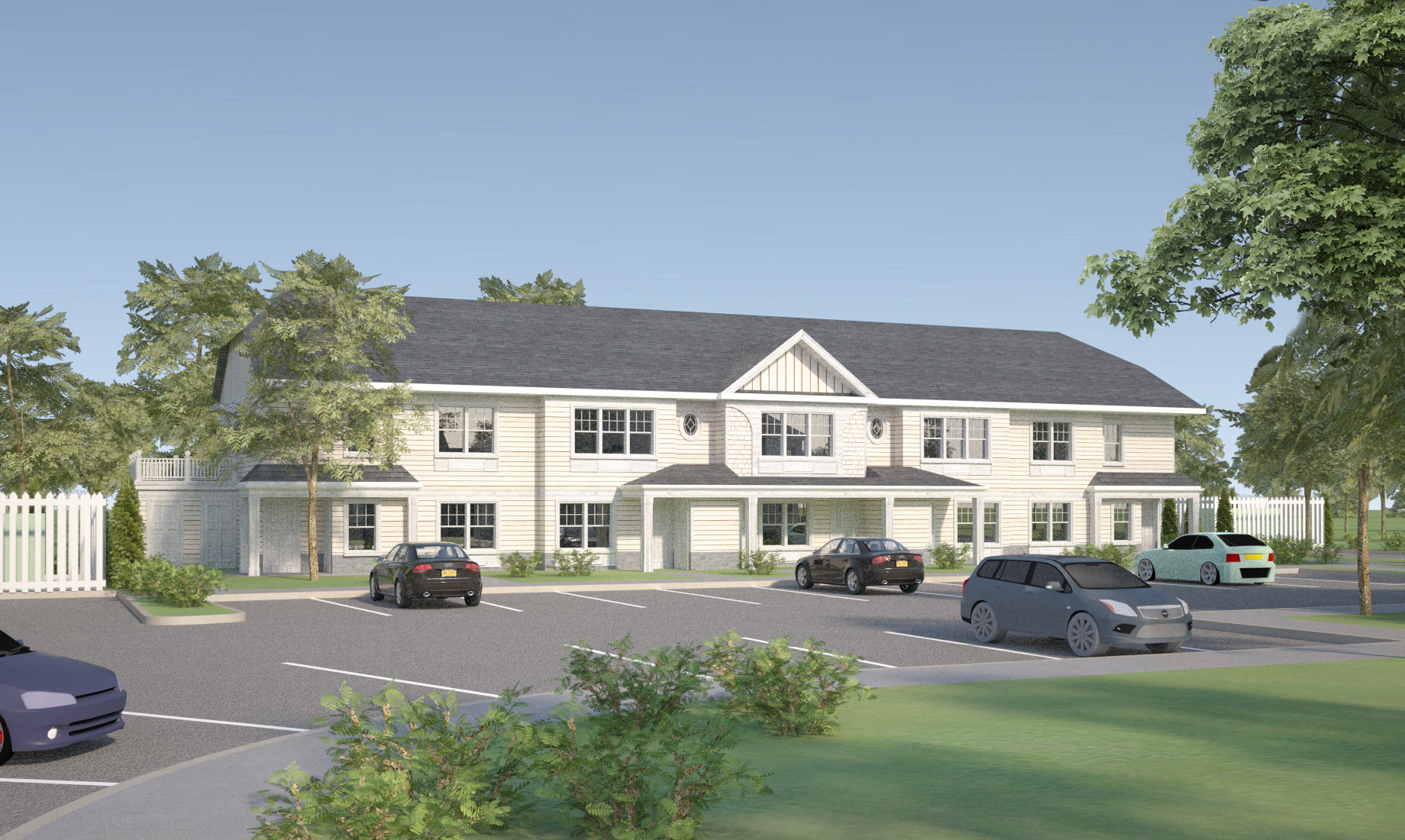
An artist's rendering of the proposed affordable development on County Road 38 in Southampton.
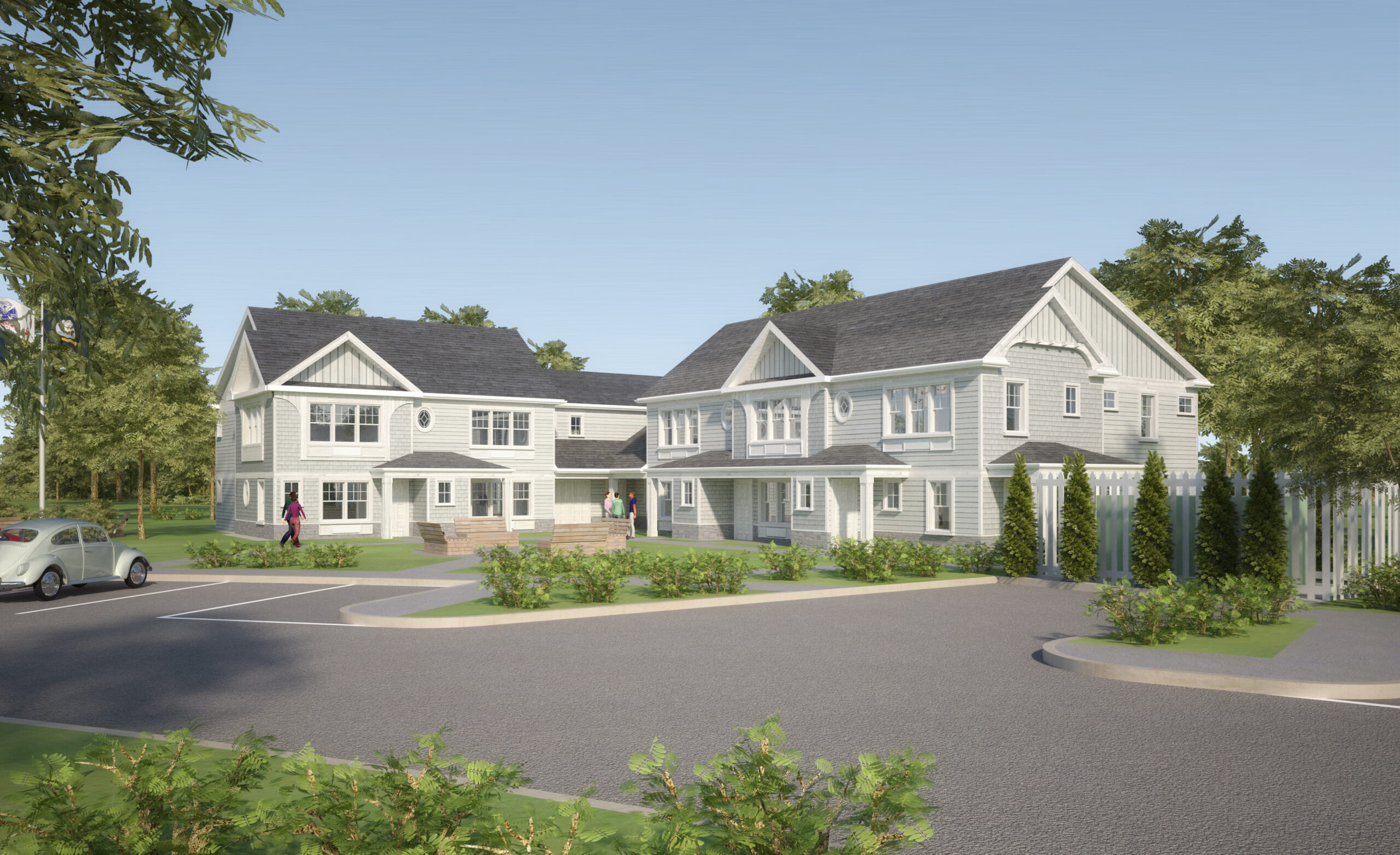
A rendering of the proposed housing development in Southampton off County Road 39.
The Southampton Town Board has accepted the developer’s first draft of a full-scale environmental review of plans to develop 5 acres off County Road 39 in Southampton with 60 affordable rental units.
It’s a major hurdle cleared for the proposal by the developer Concern Housing. Just about a year ago, the board issued a positive declaration under the State Environmental Quality Review Act; a “pos-dec under SEQRA” means a project has the potential to have adverse impacts on the environment. It calls for the compilation of a detailed Environmental Impact Statement.
The board last week accepted the draft document for the project, renamed Liberty Gardens, the DEIS, allowing the next step: public review of that document, which is available on the town website, and a public hearing. The hearing date has yet to be set.
Normally, the town’s Planning Board is the entity to look at or require a DEIS, but in this case, the developer needs a zone change from the Town Board before the proposal can go to the next stage of review.
Concern is asking to change the existing residential zoning for the acreage, located behind the Southampton Full Gospel Church, to multifamily, and increase the permitted density from six units per acre to 12. If the zone change is adopted, town planners then will review the application to subdivide the church property to allow for the development, along with the details of the development itself.
Part of the DEIS process involves what’s known as a scoping session, which affords the public the chance to weigh in about their concerns related to potential environmental impacts. The DEIS needs to address them, and propose mitigation.
Held last September, the session drew little input; most speakers underscored the need for affordable housing in general rather than focusing on impacts.
Then-councilwoman Julie Lofstad questioned the requisite traffic study. She worried that it was compiled during the COVID shutdown and didn’t reflect typical conditions.
According to Ralph Fasano, Concern’s executive director, the study has been updated.
Liberty Gardens is projected to generate 49 trips during the weekday morning a.m. peak hour, with 60 trips in the evening. It estimates 26 trips on Saturday midday, with the same for Sunday.
Based on the results of the traffic study, consultants from the firm Nelson, Pope and Voorhis said the project would not have an adverse traffic impact on the intersections they studied. They include County Road 39’s intersections at Sandy Hollow Road, North Sea Road and North Bishop’s Lane, plus at the access point to the site.
Construction is expected to take 21 months, and the developers are expected to limit noise generating work on weekends. The consultants didn’t articulate an impact to traffic during that time frame.
Additionally, when the project first debuted, the map showed an access through the Hillside Terrace neighborhood. Next, the developer thought to share access with the neighboring assisted living facility, the Hamptons Center for Rehabilitation and Nursing, but an agreement couldn’t be reached.
The iteration described in the DEIS proposes the closure of existing full access for the church just west of the site and a new full access driveway constructed to the east end of the project property to support both the proposed project and the existing church.
Liberty Gardens is designed to include five two-story residential apartment buildings. Walk-up style structures will provide wood-frame apartments with common entries. Buildings 1 and 4 will have 14 units each, Building 2 will have 12 units, and Buildings 3 and 5 will have 10 units each.
There are two laundry areas that will be located at the ends of residential structures offering card-operated systems to the occupants. There is a two-story, centrally located 6,188-square-foot community building planned. The project’s gym, computer room, staff offices and community room will be housed in the community building center. The local community would have access to the community room for select meetings and events.
To address the potential impacts to nearby waterbodies, the project will use sewage treatment, limited landscaping with managed care and best management stormwater systems. The proposed project is anticipated to generate a volume of sanitary effluent, which is greater than the allowable flow for a conventional septic system on the site, so the installation of a treatment plant is planned. Public water will hook up to an existing main.
Impacts to the ecology of the site will be largely due to the removal of existing vegetation, the DEIS notes. The site is predominantly wooded, with some 4.28 of the 5 acres set to be cleared, if the project is approved. A significant portion of the parcel will be revegetated with landscaping and grassy areas, about 2 acres worth. There are vegetative buffers designed to surround the site.
Looking at land use impacts, the DEIS puts forth that the development will be compatible with the surrounding area, noting the CR 39 corridor is developed with commercial and some residential uses.
“This use is planned in an area with supporting infrastructure and will establish a permanent use on the site that will address an established Town housing need,” the DEIS states. Neither the town’s Comprehensive Plan, nor its corridor plan makes a recommendation for the back portion of the church land where the development is proposed, the draft document points out.
Whenever a large-scale development is proposed, the impact to the local school district can be a concern. Liberty Gardens is expected to house 99 residents, and projects that eight will be school-age children.
Development of the proposed project will generate $38,000 in the first year of its taxing program, while the current property is tax exempt and adds nothing in to the town’s coffers.
It is expected that, through the Payments in Lieu of Taxes Program, the project will pay a total of $1.54 million over the 30-year life of the program, of which the majority would be allocated to the Southampton School District, according to the DEIS.
“We are happy that this long process appears to have an end in sight and are hopeful we can start building this much needed housing,” Fasano said.
Once the public has had time to review the document, a public hearing on both the DEIS and zone change will be held.
“I look forward to hearing comments from the community related to potential impacts from this proposal,” Supervisor Jay Schneiderman said this week.


