


 3 Photos
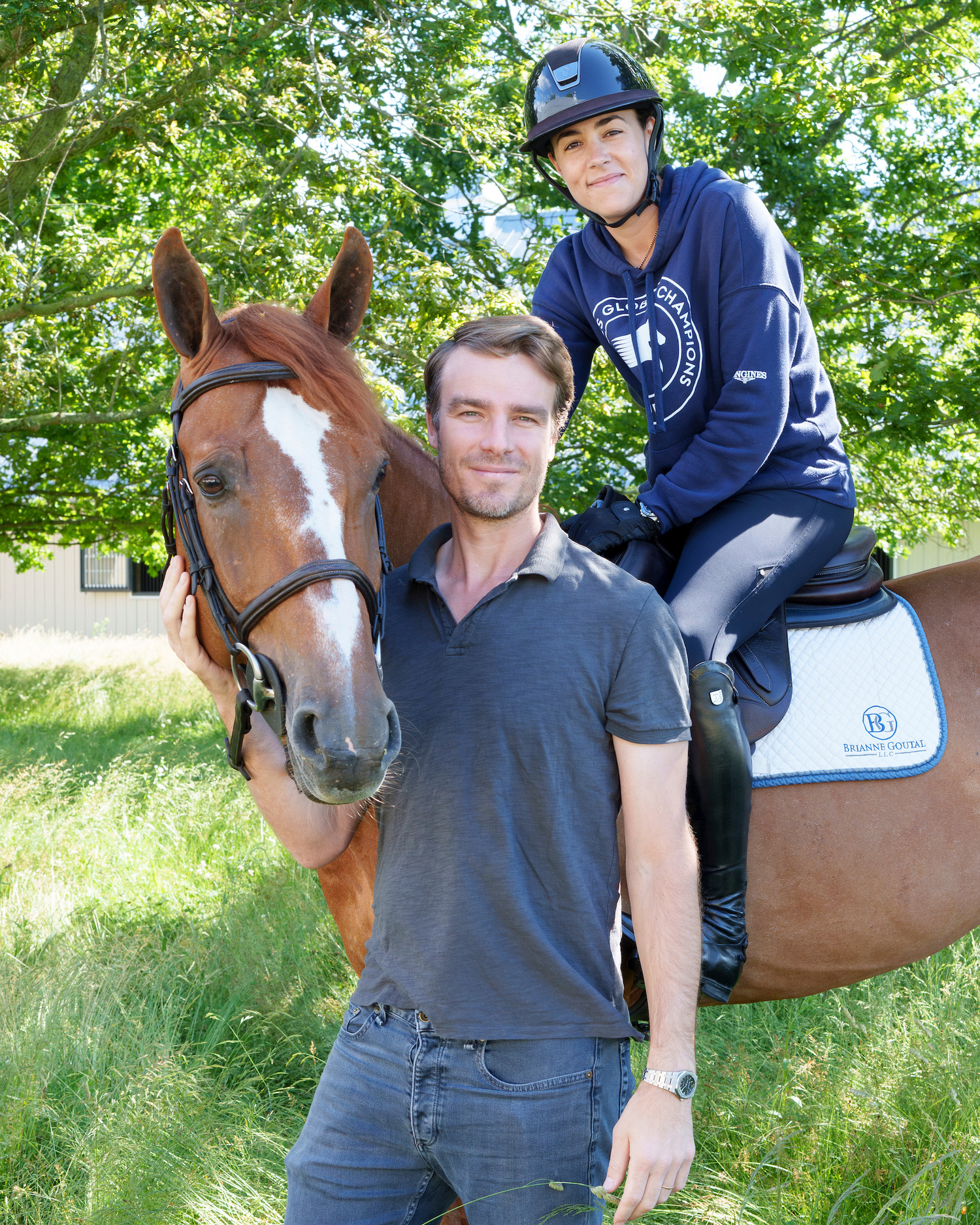
Romain Marteau and Brianne Goutal-Marteau are planning on putting together a horse show at their Two Trees Farm in Bridgehampton the week before the Hampton Classic. LORI HAWKINS
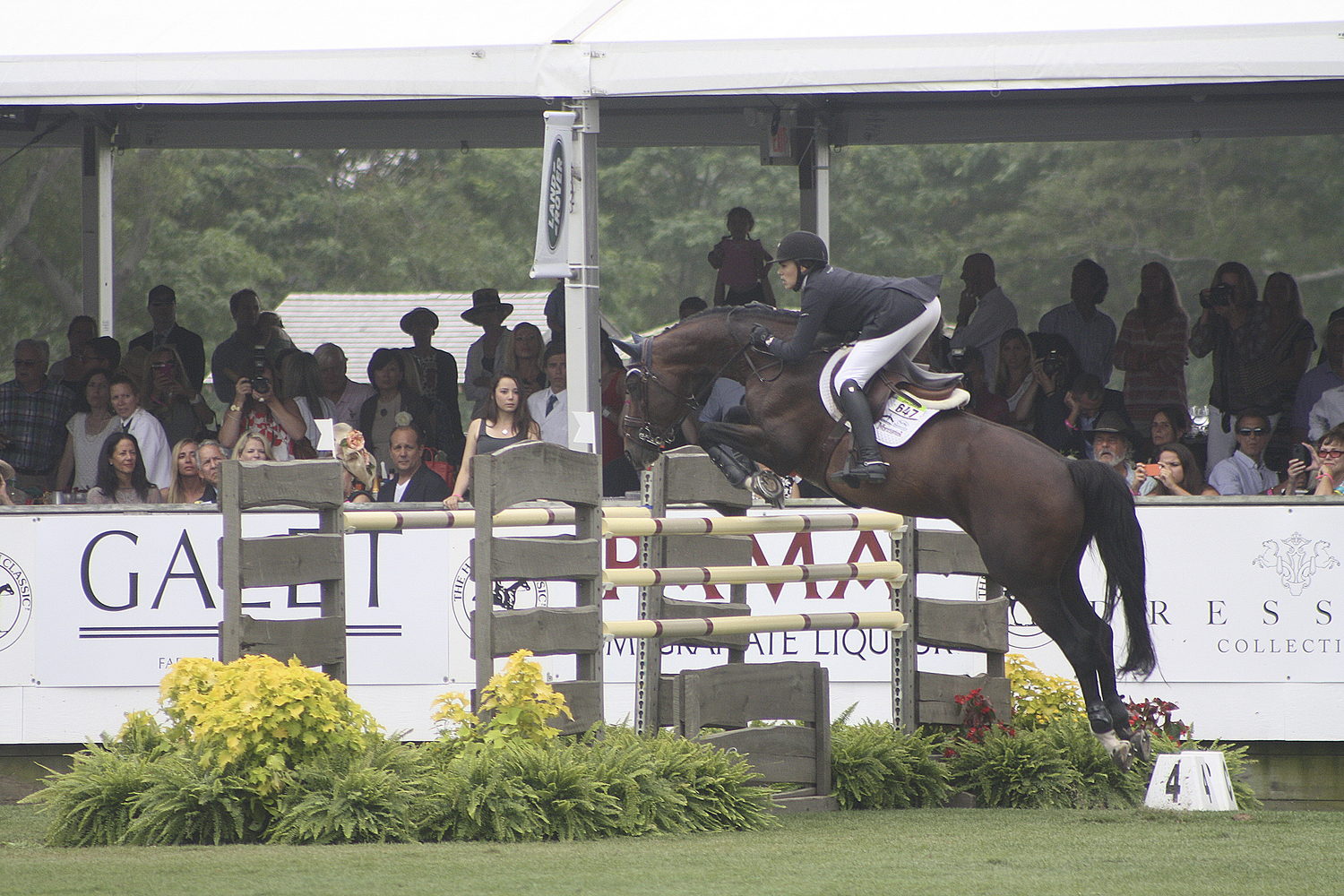
Brianne Goutal-Marteau has competed at the top level of her sport all over the world but has always been a big supporter of the East End equestrian community, and sits on the board of the Hampton Classic. She and her husband, Romain Marteau, own Two Trees Stables in Bridgehampton and want to revive the tradition of having a top-rated show series in August in the weeks before the Hampton Classic. DANA SHAW
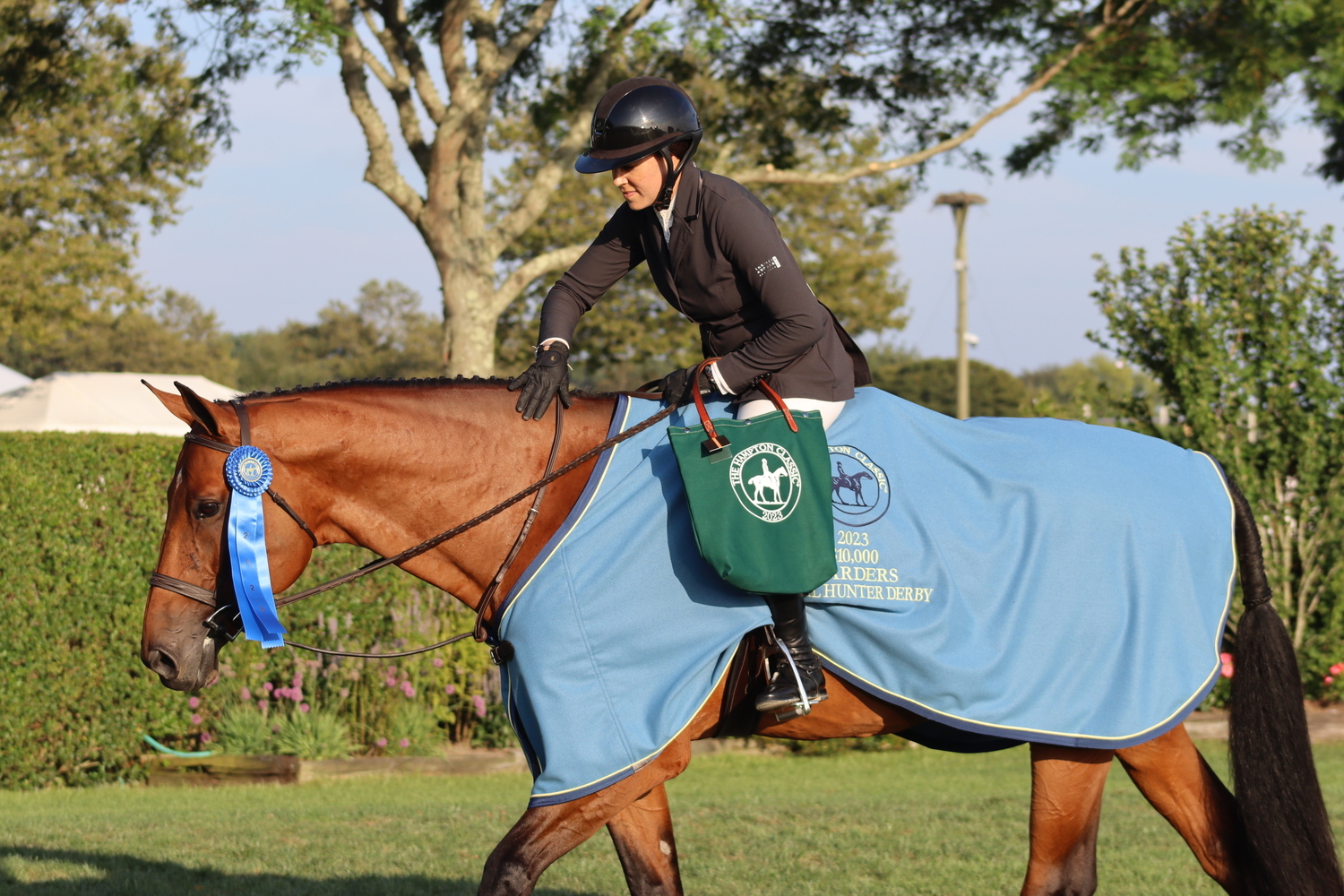
Brianne Goutal-Marteau has competed at the top level of her sport all over the world but has always been a big supporter of the East End equestrian community, and sits on the board of the Hampton Classic. She and her husband, Romain Marteau, own Two Trees Stables in Bridgehampton and want to revive the tradition of having a top-rated show series in August in the weeks before the Hampton Classic. CAILIN RILEY
Laura Bowery was slightly breathless when she set aside a few minutes for a phone call late last month.
She was in Saugerties, in upstate New York, roughly 200 miles from her riding stable, Sea Aire Farm, in Bridgehampton. Bowery, a veteran show jumper and trainer, was at the HITS-on-Hudson Horse Show Series, and was in between rounds of showing some of the 15 client-owned horses she brought to the show; that group accounts for about half the horses that are owned or leased by her clients and boarded at her East End farm.
Packing up 15 horses, and all the accompanying gear — saddles, bridles, tack trunks, fly spray, blankets, medications, boots, helmets, show jackets; the list is nearly endless — not to mention the employees who come along to take care of the horses and prep them for the show ring, is a summer-long grind that Bowery and other trainers in the area have become accustomed to over the past two decades-plus.
It is a vital part of the job for anyone who wants to run a successful riding stable on the East End, where, in order to turn a profit in a business with an incredible amount of overhead, trainers must sell and lease horses to clients who want to not only spend money on taking lessons but on horse showing as well.
Many of Bowery’s clients live on the South Fork during the summer and send their horses to Florida with her in the winter. But unlike her clients, Bowery cannot spend most of her time on the East End during the summer — because there are virtually no top-rated shows on Long Island anymore, aside from the Hampton Classic.
With a wistful sigh, she spoke about a time when it was different.
“I can remember when there were fabulous A-rated shows on Long Island,” she said. “I think it would be amazing to have more shows in the Hamptons, because it’s such a beautiful place. I’m kind of missing the old days, when we did have such nice horse shows at home.”
One equestrian couple is hoping to make that magic happen again.
Two years ago, married couple Romain Marteau and Brianne Goutal-Marteau bought Two Trees Stables on Hayground Road in Bridgehampton, after it spent years on the market. The 65-acre horse farm is expansive, with two indoor riding rings, an enormous grass field, two large polo fields, and several large barns, which are leased out to four different training operations, including Firefly Farm, run by Heidi Earle, and Gray Horse Farm, run by Lauren Gridley.
The Marteaus are something of an equestrian power couple, although they come by it naturally. They are well-known and well-respected nationally and globally in the upper levels of the hunter-jumper show world, for their commitment to the sport and for their work ethic.
Brianne Goutal-Marteau is one of the top Grand Prix riders in the world, and has been a star on the equestrian circuit since her years as a junior rider. She also has the distinction of being the first junior rider to ever win all four major equitation championships in one year, which she did in 2004. That feat was chronicled on an equestrian reality show that ran on the Animal Planet cable channel.
After her junior career ended, she managed to continue to compete at the top Grand Prix level around the world while also running a highly successful training operation, Brianne Goutal LLC, out of both New Jersey and Wellington, Florida. She has been a regular as both a competitor and trainer at the Hampton Classic for years, and sits on the Hampton Classic Board of Directors.
Her husband, Romain, a native of France, is a real estate developer but is also an accomplished horseman, having competed at a high level while growing up outside of Paris.
They work as business partners, running their extensive operations together. He is involved in many aspects of the management of their farms, and of buying and selling young horses. They own 500 stalls at farms in three different states, and also own a breeding operation in France. They are also parents to three young children, all under the age of 8.
Two Trees is the largest farm the Marteaus own, and while the horses that Brianne and her clients ride and compete with are not currently stabled there, she and her husband had a specific vision in mind when they bought the farm.
Romain spoke about that during a walk around the expansive grounds of Two Trees earlier last month.
Essentially, it’s all about preserving the tradition of the East End as a thriving equestrian community. It’s a part of the culture that’s under threat of disappearing, Marteau said, and he and his wife want to do their part to ensure that doesn’t happen.
“The horse industry in the Hamptons and Long Island used to be much bigger,” he said. “You have people who want to come here and spend their holidays and vacations here, and some who live here year round, and they want to ride horses,” he explained. “Horses and farms have always been a huge part of Long Island, and slowly but surely all the horse shows died, and these farms got bought out by developers, and more houses came.
“For us, in order to make money, we need to rent stalls and sell and lease horses,” he continued, referring to other local trainers and riding stable owners. “And people want to do that — there’s a demand for that.”
The problem, Marteau continued, is the lack of top-rated horse shows on Long Island. That vacuum forces trainers like Bowery, and her clients, to travel long distances — to Saugerties, and sometimes even as far as Kentucky and Michigan — for the kind of competition they’re seeking, which isn’t how they want to spend their summer, especially if they’re only in the area for three or four months.
“They come out here for the summer, but then they have to go elsewhere to compete,” Marteau said. “It doesn’t make a lot of sense.”
Trainers like Bowery and the many others in the area who are doing the same long and arduous slogs to horse shows upstate and farther afield all summer long are all in support of plans the Marteaus have to create a new show series at Two Trees, one that would take place at the end of the summer, over the course of two long weekends, leading into the Hampton Classic.
That model has a precedent: For many years, a show series called the North Fork Classic — despite the fact that it was not held on the North Fork — was held in North Sea, at a horse property formerly owned by trainer Bobby Ginsberg and, before him, famed Olympic gold medalist Joe Fargis. Riders from the area and across Long Island would come to compete at that show series, which provided a perfect tuneup for the Hampton Classic.
Local trainers could take even more of their clients to that show, including those who may not have had the time or energy for a 200-mile trip to upstate New York but were happy to make the much shorter drive to a local showground for a top-notch show.
The ultimate culmination of that dream, Marteau said, would be for Two Trees to become one of several horse farms in the area that would share the job of putting on a summer-long series, which would allow local riders and trainers to truly spend their summer in the Hamptons, instead of on the road.
The idea of reviving that tradition has universal support among the local equestrian community, but making it a reality is still a long way away.
Roughly two months ago, the Marteaus were hit with a stop-work order from the Town of Southampton after beginning some initial grading on creating one new riding ring with sand footing, and converting three other areas that were formerly paddocks into sand rings.
The construction of the sand rings is not something the owners sought to do simply because they wanted to host the new show series, Marteau said, but also because they needed more arenas for boarders at Two Trees to ride and take lessons, and because they wanted to improve the footing in those rings.
The days of traditional dirt riding rings, which don’t drain well, are over. Most stables have switched over to sand rings, with specially engineered footing that provides maximum comfort, stability and most importantly safety for horse and rider, greatly reducing the risk of injury for both. The sand rings provide excellent drainage as well, eliminating the problem of puddling or erosion.
The town hit the farm with the stop-work order after it was discovered they had begun some of the work without obtaining the proper permitting. Complicating issues are the fact that there are conservation easements in the area as well that require special care and attention.
During a Southampton Town Planning Board work session at the end of May, Marteau and his lawyers told the board they did not intend to bypass the permitting process, but rather had been told by other town officials and people they hired to do the work on the property that they would not need to obtain the permits to start the work. That communication breakdown led to the stop-work order, and the farm was also issued multiple violations.
They were given a list of items they needed to resolve before coming before the Planning Board again, and are also due to appear before town officials later this month in further attempts to resolve the issue.
Marteau had initially hoped to debut the show series this summer, and had even started putting the word out about the new show series on social media, alerting the equestrian community so they could circle the dates on their calendar.
That move was ultimately premature, as the town also denied the initial application put forth by the farm to host a special event. That application sought to have 3,000 spectators and attendees, but after being denied, another, more scaled down application was submitted, with less than half the number of attendees and spectators. That application is still before the board and, as it stands now, is still a long way from approval and even a public hearing.
Marteau admitted that it is now too late for a show series to come together this summer, but he is hoping they can find a way to move forward and make it happen in the near future.
Even if the Marteaus ultimately come to an agreement with the town and the stop-work order is lifted and they are able to construct the sand rings, approval to host a show there in the future is still likely to be an uphill battle. By law, they are allowed to host nine days of “special events” on the property, but much of what they want to do with regard to the show series could be stymied by covenants and restrictions that were put in place more than a decade ago, when former owner David Walentas subdivided the property.
The farm now borders a housing development, and the covenants and restrictions could make it hard to get approval for certain aspects that would be vital to running the show, like having a PA system, or having any vendors, like tack shops or food trucks, come onto the property and make sales during the show.
Marteau said he understands that during the two weekends they would put on a show series, they would need to be good neighbors and be mindful of the fact that there are homeowners nearby.
But he is also eager to keep moving forward with plans that have support of the local equestrian community, because both he and Goutal-Marteau want to see other show barns in the area continue to exist and thrive, rather than watching more and more farms be sold off and developed into more luxury homes, and equestrian facilities go out of business.
Many local riders share that feeling. Like Bowery, Nicole Adams remembers the heyday of horse showing on the East End, particularly when she was riding and competing in the early 2000s, when August was a great month of horse showing in the area. Her teenage daughters, Maxine and Ruby Boeding, both compete at a high level in the junior division, and as they rose in the ranks, the family decided to spend more time in New Jersey, in part because of the lack of horse shows in the area.
She said bringing more top-rated shows back to the area would be “incredible,” and added that she admires the Marteaus for trying to make it happen, and for caring about trying to revive the industry locally.
“They don’t have to do it,” she said. “They probably won’t make any money off of it, and it might even cost them. It’s not a business venture. It’s for the community out here. This is an industry that’s kind of dying out here, and it shouldn’t.”
While there are obstacles standing in their way currently, Marteau said he and Brianne will continue to try to make a new show series in the area a reality, and will do their best to comply with town code, and be mindful of their neighbors, so they can come to an agreement. What they’ve seen in their many years traveling not only the country but the world going to horse shows, combined with the strong equestrian tradition on the East End, gives them hope.
“There are horse shows under the Eiffel Tower and on South Beach in Miami,” he said. “There are shows all over the world — in places that are literally impossible to have shows, they have shows. We’re on Long Island, which is supposed to be horse country.
“If you can’t have a horse show there, where else are you supposed to have a show?”


 Cailin Riley on Jul 5, 2024