


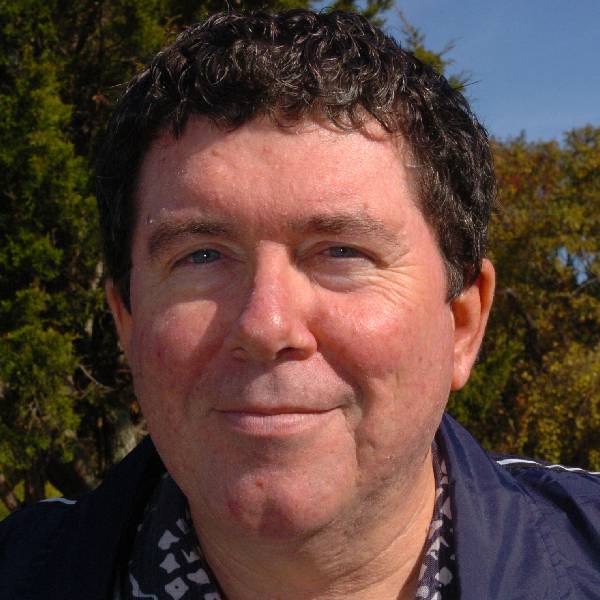
John Furness was 14 years old and a passenger on the Pelican almost 74 years ago. In a way, only now is he coming home.
For readers not familiar with the Pelican tragedy, or my book “Dark Noon,” this year achieving its 20th anniversary, a little background:
Sometimes you see a story and think it’s a good story. Less often, you see a story and think it’s a good story and you get to do something about it.
In its edition of September 1, 2001, Newsday published a piece to commemorate the 50th anniversary of the Pelican tragedy. It was an interview with Irene Stein, whose husband had perished that late-summer day off Montauk, leaving her a widow with two young children.
I clipped the piece out and stuck it in a pile … and, soon, began to do some research.
On September 1, 1951, the 42-foot Pelican, captained by Eddie Carroll, left the dock at Fishangri-la on Fort Pond Bay with 64 other people aboard. The Pelican was a “head boat,” meaning the more heads a skipper could count on his boat, the more money he made. That explains why the Pelican was so overloaded — as well as Carroll being an especially engaging and popular captain with whom anglers wanted to sail. The Pelican had the reputation of being a lucky boat.
On that sunny, mild Saturday morning, no one knew a violent and swift-moving storm was on its way.
The boats left Fort Pond Bay and fanned out to favorite fishing spots. (The charter boats, or “six-packs,” went out of Lake Montauk.) Eddie’s spot was the Frisbie Bank south and west of Montauk Point.
The Pelican proved lucky again, as the anglers reeled fish in. The downside was that the storm was fast approaching, dark clouds blotting out the sun. Yet the passengers prevailed upon Eddie to stay a little longer.
By the time Eddie insisted they head home, it was already too late.
It got worse — the port engine would not start. Gamely, with just the starboard engine, the overloaded Pelican pushed into the escalating wind. When the storm hit, the waves leaped to 6 feet, then higher. Within sight of the Montauk Lighthouse the Pelican was caught in the Rip.
An especially pertinent passage from “Dark Noon,” as those on board tried to hold on: “People sat on the deck with arms entwined; still others found ways to fasten themselves, standing, to the railing. Harold Hertzberg had taken this a step further, lashing his grandson, John Furness, to the railing on the port side of the bow with a wire fishing leader. He thought that the 14-year-old would have more protection there, especially when the Pelican turned west after the lighthouse, and he wanted to prevent the wind and waves from sweeping the youngster into the sea.”
Soon, a particularly powerful wave struck the starboard side, and the boat turned turtle. Except for 10 people trapped in the cabin, everyone except Furness was tossed into the turbulent sea. Many passengers could not swim and drowned while clinging desperately to each other.
Until his strength gave out, the doomed Captain Carroll helped people hold on to the overturned hull. Quite possibly, no one would survive.
But 19 did. A dozen were rescued by Lester Behan and his first mate, Bill Blindenhofer, aboard the Bingo II, after they witnessed the Pelican capsizing. Six others were hauled aboard the Betty Anne, a sailboat that was late seeking shelter from the storm. The 19th survivor was a man found by the U.S. Coast Guard hugging the hull.
Frank Mundus and Carl Forsberg had gone back out into the storm, and while there was no one else in the water when they arrived at the scene, they were able to use their boats to tow the Pelican back in.
At the dock, a State Police diver extricated the 10 bodies from the cabin. For all the bodies recovered, a makeshift morgue was created at an icehouse owned by the Duryea family.
The bare bones of the story were riveting, but what could help the story go beyond tragedy? One was that the Pelican event led to laws being enacted nationally that better protected boat passengers and led to many lives not being lost. Another was the way the Montauk community rallied to help the survivors and console the bereaved families.
I became fascinated by the backgrounds of the 65 people from all over the New York metropolitan area who happened to be together on the Pelican that Saturday.
And when word got around that I was working on a such a project, people reached out to help — sharing personal memories of the day or materials such as scrapbooks of clippings. Spurred on, I became a regular visitor to the basement of the Montauk Library, where at that time Robin Strong presided over the local history collection.
“Dark Noon” was published in 2005, and I probably haven’t made a penny from it, plus a screen version faded out. However, for two decades, readers have kept discovering it and are still reaching out to me.
One, a few weeks ago, was Noreen, the sister of John Furness, who, bound to the railing, had drowned when the Pelican capsized. (His grandfather also died that day.)
She had read this passage in the book’s epilogue: “There was one more passenger missing, the youngest of the victims. Nine years later, On October 29, 1960, a human skull was found near Orient Point. It was eventually identified as belonging to John Furness.”
I cannot explain how the skull was identified pre-DNA testing and why it was not then returned to the Furness family. What Noreen wanted to know was: Did her brother’s skull still exist?
Rather miraculously, and thanks to the dogged detective work of Mia Certic, director of the Montauk Historical Society, the skull has been found in the depths of the property collection kept by the Suffolk County medical examiner’s office.
Sometime in the next few days, Noreen will be visiting the Pelican tragedy memorial at the Montauk Lighthouse … and soon after that, finally, John Furness will be back home with family.
More Posts from Tom Clavin


