


 7 Photos
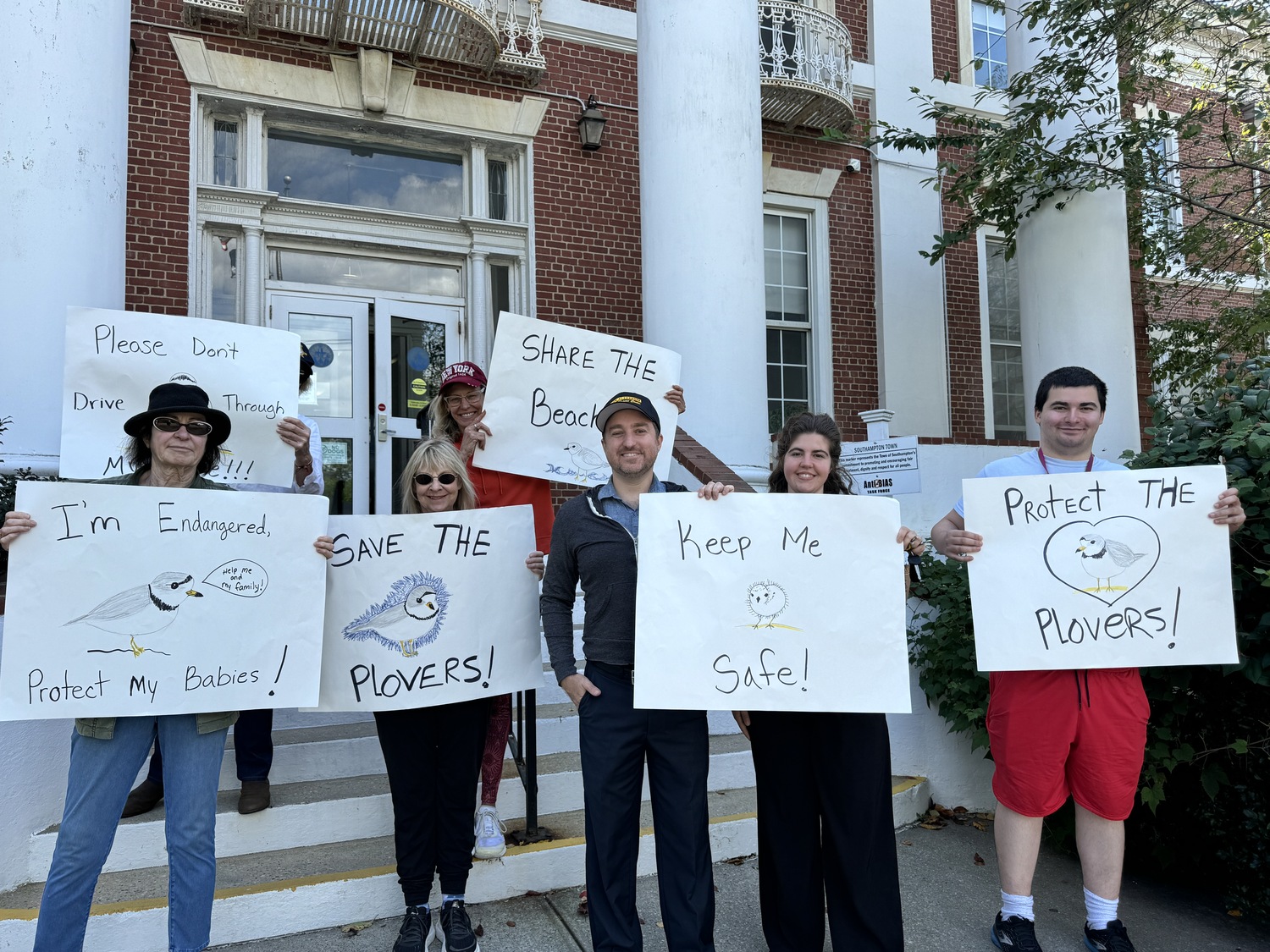
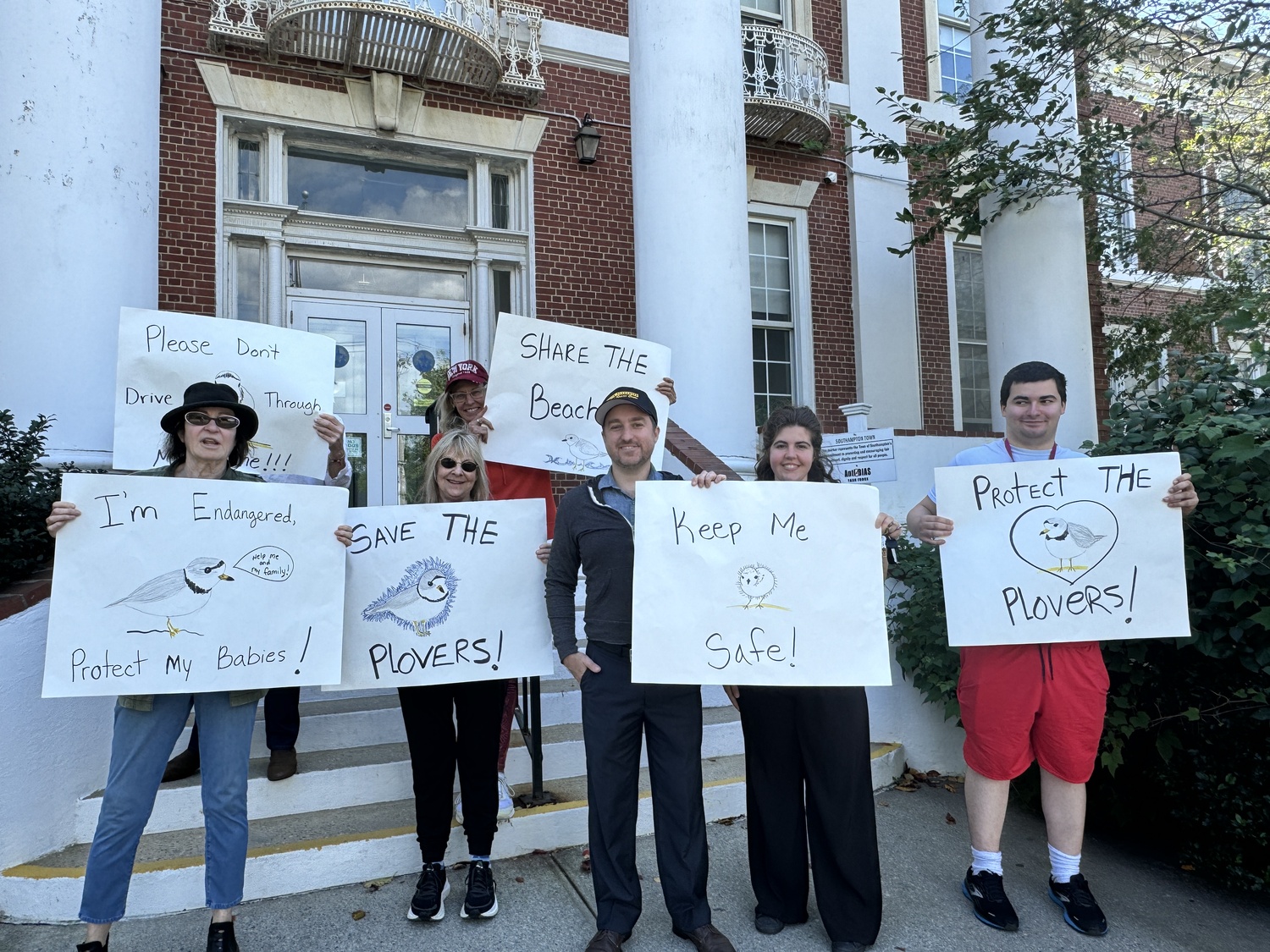
Wildlife advocates held a rally outside Southampton Town Hall on Monday, voicing support for stringent protections for piping plovers. MICHAEL WRIGHT
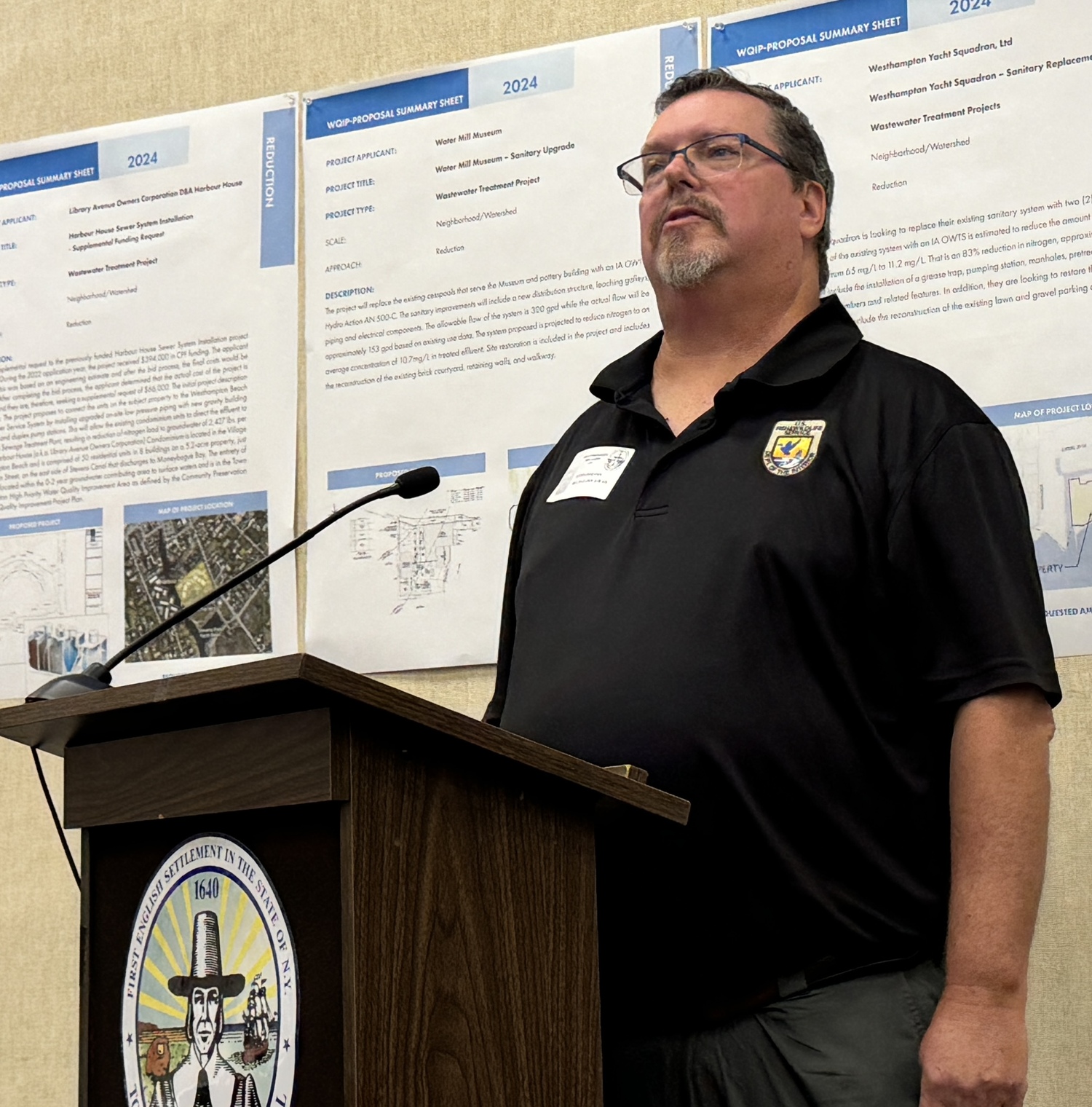
Steve Sinkevich of the U.S. Fish & Wildlife Service spoke to the Southampton Town Trustees on Monday about the piping plover protection program the Trustees oversee on Southampton's ocean beaches. MICHAEL WRIGHT
Wildlife advocates held a rally outside Southampton Town Hall on Monday, voicing support for stringent protections for piping plovers. MICHAEL WRIGHT
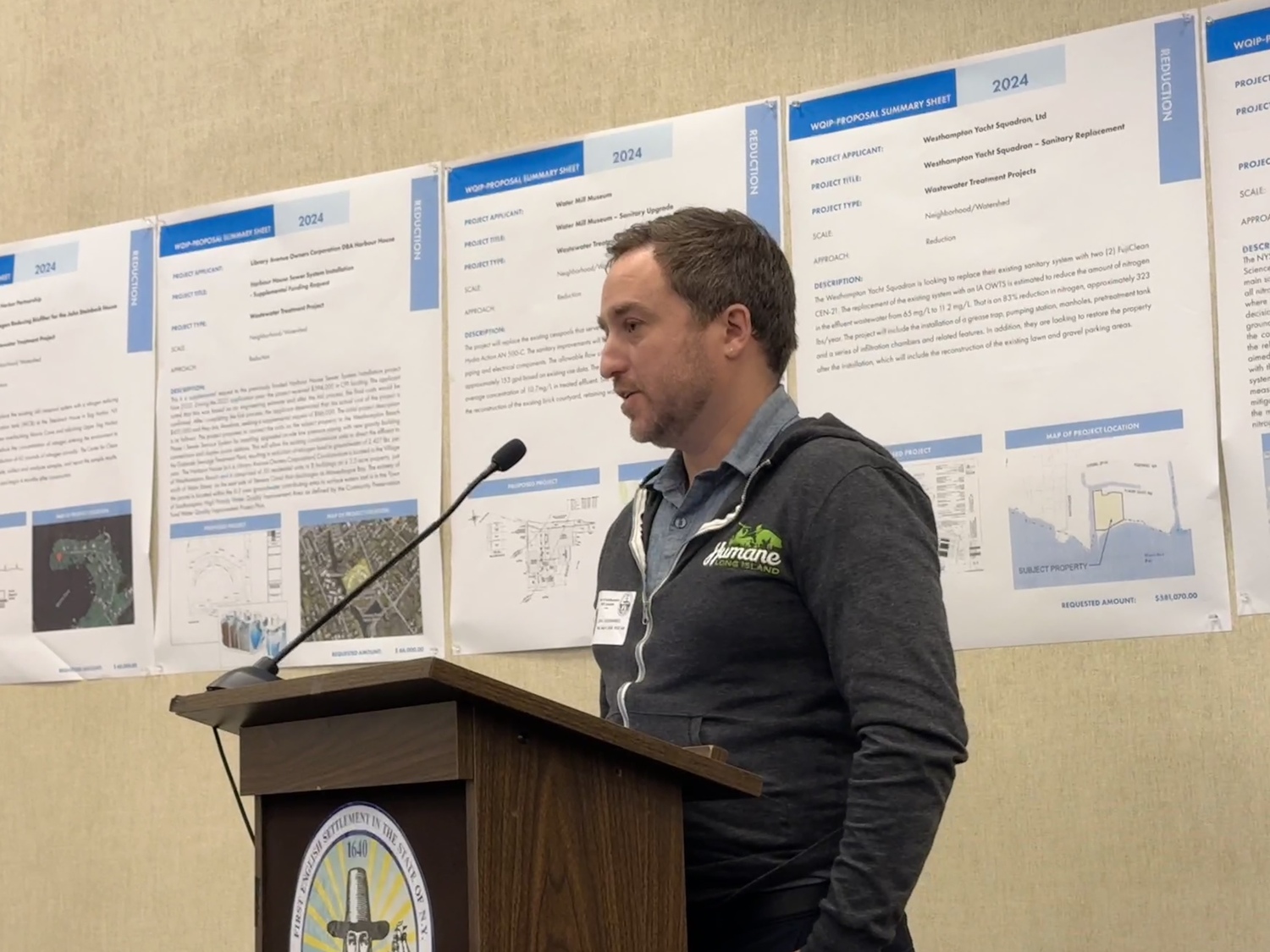
John DiLeonardo of Humane Long Island asked the Trustees not to let up on their protection efforts for piping plovers. MICHAEL WRIGHT
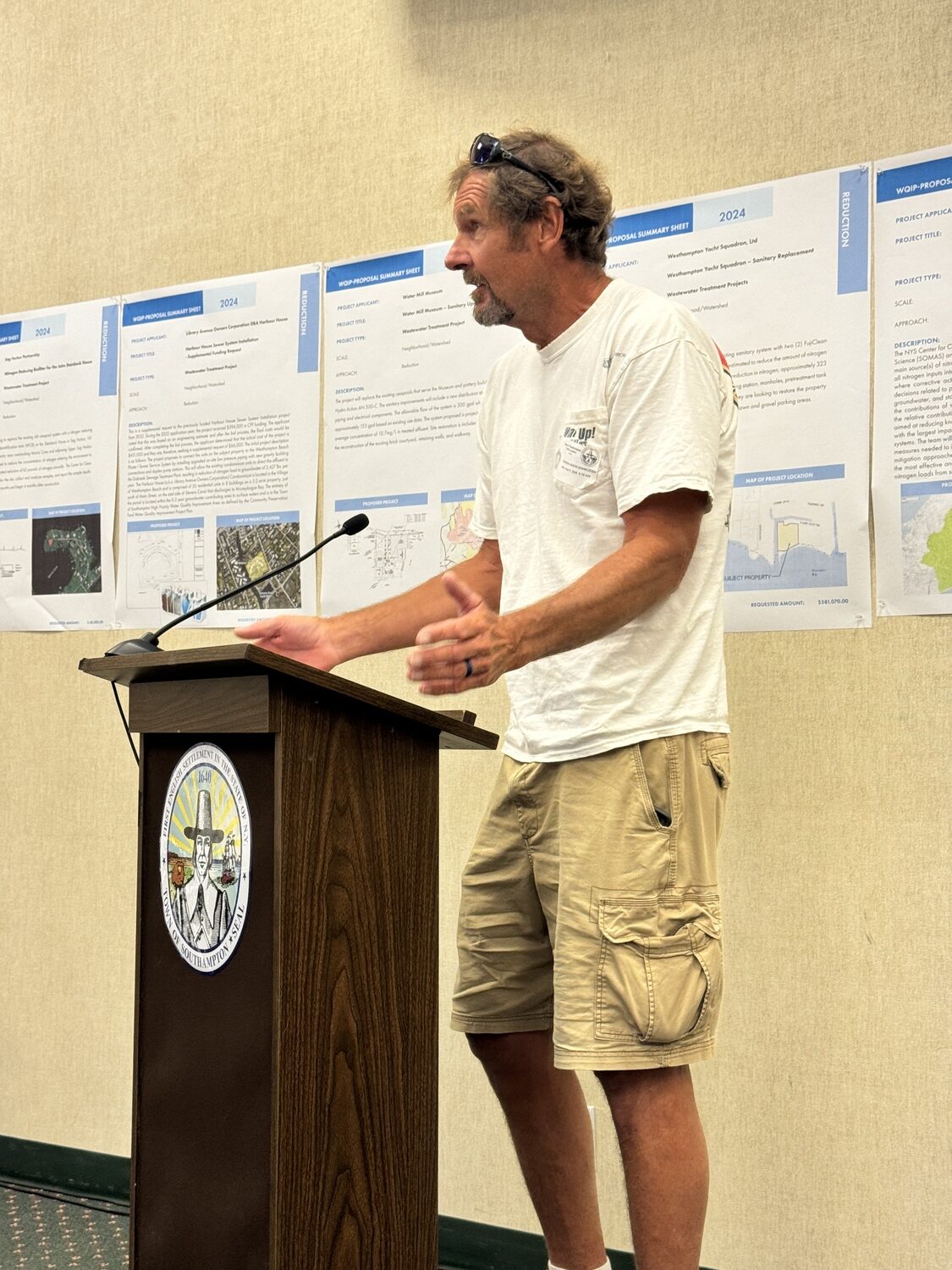
Fran Adamczeski asked the Trustees if new areas of ocean beach could be opened to 4x4 vehicles when plover nests force the closure of the Picnic Area, as the beach at the far western end of Meadow Lane in Southampton Village, where 4x4 vehicles are allowed to drive on the beach in the summer, is known. MICHAEL WRIGHT
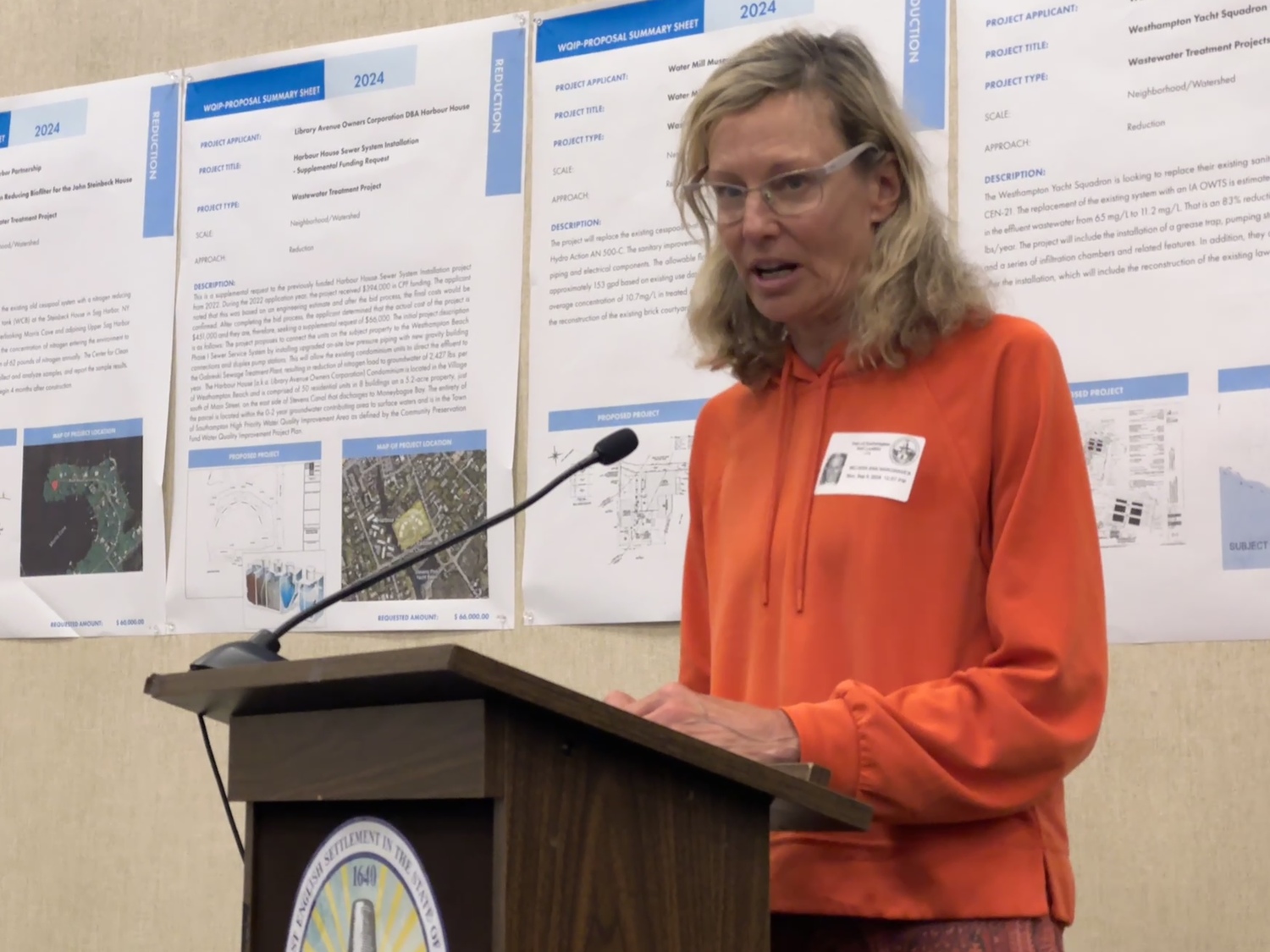
Melissa Hargraves of the Evelyn Alexander Wildlife Rescue Center in East Quogue said that protecting nature should take precedence over 4x4 access. MICHAEL WRIGHT
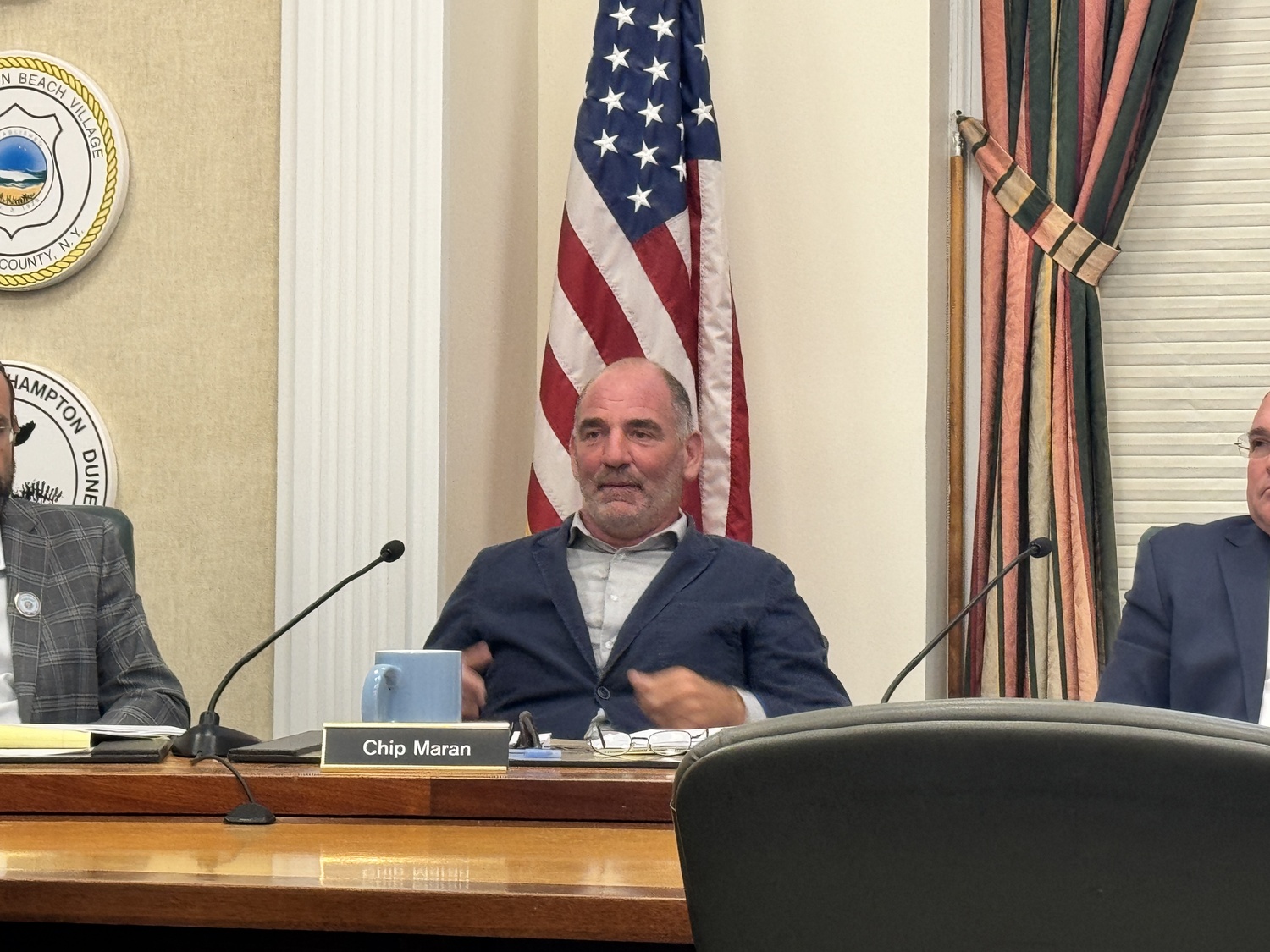
Southampton Town Trustee Chip Maran said that he sees the key to getting the Picnic Area open to vehicles by the start of the summer beach season in July is to protect the first clutches of eggs that plovers lay, usually in late May, so that their eggs hatch and the babies fledge safely and leave the area. MICHAEL WRIGHT
With anger and frustration over extensive closures of a popular beach to 4x4 vehicles due to nesting piping plovers still boiling over in the halls of Southampton government, a veteran biologist from the federal U.S. Fish & Wildlife Service this week addressed the protections that the Southampton Town Trustees have put in place in recent years to protect the birds and the criticisms they have been bombarded with in return.
Steve Sinkevich, a senior wildlife biologist for the USFWS, said that many of the complaints he’s heard Southampton residents direct at town officials in recent weeks and years echo those of beachgoers from across Long Island where the tiny endangered birds have closed off or inhibited access to popular stretches of oceanfront.
And his advice to them is the same: The best way to get beaches open is to help the plovers nest early in the season, see their eggs hatch, the baby plovers roam safely around the beach for 25 to 35 days and then learn to fly — after which they will depart with their parents and the beaches can be reopened.
He responded specifically to questions from critics as to why the town started fencing off nesting areas as early as February and March — seemingly encouraging the plovers to nest in areas the 4x4 owners wish they would not.
“The sooner the areas are protected, the sooner the plovers can nest, the sooner the eggs will hatch and they’ll be able to fly and they’ll leave the area,” Sinkevich, a senior wildlife biologist, told the Trustees on Monday morning. “Like it or not, they’re coming back, and if you don’t protect the area, the eggs can get crushed and then they’re going to renest and you’re just going to prolong the process. So the earlier the better.”
Next to him sat more than a dozen of the 4x4 owners who cherish summer weekends at the “Picnic Area,” the stretch of Southampton Village beach at the western end of Meadow Lane that is the only beach in all of Southampton Town’s more than 25 miles of oceanfront where vehicles may drive on the sand between 9 a.m. and 6 p.m. in summer.
The beach draws hundreds of vehicles on sunny summer Sundays, and earlier this month dozens of regulars held a rally outside Town Hall to put political pressure on town officials to do something about the closure of the Picnic Area to vehicles for portions of each of the last five summers because of nesting plovers. This past summer saw the longest closures, lasting from early June until August 15.
Sinkevich said he’d watched the Town Board meeting at which the 4x4 owners had bombarded officials with questions and suggestions on how the birds could be discouraged from nesting in the Picnic Area instead of the miles of largely unoccupied beach to the east, how the nests could be protected without completely barring vehicle access and why other perceived threats to the birds are not enforced with the same zeal as the vehicle closures.
Some of the accusations have been laced with the suspicion that wealthy owners of oceanfront homes who abhor the crowds of 4x4s that pack the beaches in front of their homes have played a role in town policy, or ignored the restrictions themselves by walking unleashed dogs or have even employed underhanded tactics to keep the nesting plovers in place longer and longer each year.
Sinkevich said that, in fact, town staff have been tenacious in their attention to the plover areas and pressed him regularly on when they can lift the restrictions.
“I can personally attest to the tenacity of the Trustees staff, calling me to discuss when they can open the beaches,” he said. “I know that even one day of having the beach closure is not optimal for many people.”
Some critics have questioned why the Trustees and the town have to adhere so closely to the federal guidelines to protect the birds across the board and proposed that in one small area perhaps the protections could be relaxed.
Sinkevich said the federal guidelines are only advisory, they are not laws. Any municipality that does not adhere to them risks being seen as in violation of the Endangered Species Act. He noted, however, that there are places that have simply said they will not be following the federal recommendations.
James Duryea, who oversees Southampton’s plover protection efforts, said that 13 baby piping plovers were fledged from the sands inside the Picnic Area and the adjacent Shinnecock East County Park — which has also seen vehicles barred from its popular oceanfront campgrounds in recent summers.
Plovers are listed as “threatened” by the federal government on the Atlantic coast. New York State categorizes them as endangered.
At Monday’s meeting, a small group of wildlife advocates also mounted their own rally in support of keeping protections of plovers robust.
“[Piping plovers] are vital to our identity — they are a treasure,” said Hope Sandrow. “Please don’t change any of their protections. If anything, increase them.”
“Long Island has no shortage of beaches or beach access, but threatened and endangered animals are losing their nesting grounds left and right,” said John Di Leonardo, president of Humane Long Island, an animal advocacy group.
“I appreciate locals standing up to the wealthy and perhaps overprivileged — however, nobody is more vulnerable than endangered species,” he added, echoing some of the same appeals that 4x4 owners had made to restore a beloved perk amid the many hurdles blue collar residents face to remaining on the South Fork. “The last of their kind is struggling to survive in a world where everyone is more privileged than they.”
“Let nature take its course,” Melissa Hargraves, the president of the board of directors at the Evelyn Alexander Wildlife Rescue Center, said. “SUVs are not part of nature.”
Kristin White, the vice president of the Southampton Association for Beach Access, a 4x4 owners group, asked the Trustees to explore “alternative management practices” that would reduce the limits on vehicle access to the beaches during the plover nesting. She said that the impression among many is that the town beaches are forced to protect plovers while villages do nothing — and, in fact, rake their beaches flat and clean of seaweed, which discourages the plovers from nesting.
She bristled at the implications that the “locals” who frequent the Picnic Area don’t care about the environment.
“We’ve watched our environment be destroyed by overpopulation and overbuilding — including on the dunes,” she said. “We’ve watched a lot of habitat in our town be destroyed. We have houses that put up deer fences — where are the deer supposed to go? We have migratory birds that depend on our ponds, which are now polluted to the point of toxicity. So that we don’t want to protect the environment is a fallacy.”
Stephanie McNamara and Fran Adamczeski asked the Trustees to work on designating other areas of beach that could be opened to 4x4s during the weekends of future summers when the Picnic Area is closed because of plovers. McNamara suggested that they work with Southampton Village to get 4x4 owners who do not live in the village courtesy access to the village’s beaches, rather than pay the $250 annual nonresident sticker fees.
“Give us a little section, until the birds are gone,” Adamczeski said.
Trustee Chip Maran, who has expressed frustration with the Picnic Area closures, said that he sees the best course of action being to find a way to aggressively protect any plovers that nest in the Picnic Area so that their chicks can hatch and fledge before the height of the summer beach season.
“This beach is near and dear to my heart. It’s one of the number one reasons I became a Trustee, and the more understanding I’ve gotten of this whole issue, of what the complications are, I don’t want to pass judgment of why this is happening, but the predation of eggs and the nests early in the season is the problem,” he said. “Each time these nests get whacked, the parents renest, and statistically they lay fewer eggs on the second nest so it counteracts the goals of the FWS and DEC to get that 1.5 percent increase each year they say we need. So surely the dogs off the leash issue is a bigger issue than we all thought. There’s homeowners and there’s people who walk onto that beach and let their dogs loose.”
The Trustees have discussed for years opening other areas to 4x4s, but beach erosion and conflicts with traditional bathing beaches that could not have vehicles introduced easily, have thwarted the effort. Trustee Scott Horowitz, the board’s president, said that the Trustees are working constantly on solutions.
“It’s a very complex process, and it’s no secret that there is litigation involved in this as well,” he said, harking to the pending lawsuit by homeowners challenging the Trustees’ policy of allowing 4x4s on the beach at the Picnic Area at all. “We’re in a rock and a hard place situation.
“It raises a lot of anxiety because it is a tradition that we all hold near and dear, but we have to respect federal law. It requires a lot of finesse.”


 Michael Wright on Sep 11, 2024