


 2 Photos

State lawmakers and fishermen’s advocates are pushing legislation that would rein in the powers of search and seizure by state environmental enforcement officers.
State Department of Environmental Conservation officers routinely cross geographic boundaries in their searches of fishermen’s boats, trucks and properties, charged Dan Rodgers, an attorney who has represented several fishermen against DEC charges, and then compete economically against those fishermen in selling the seized fish for profits to pad state budgets.
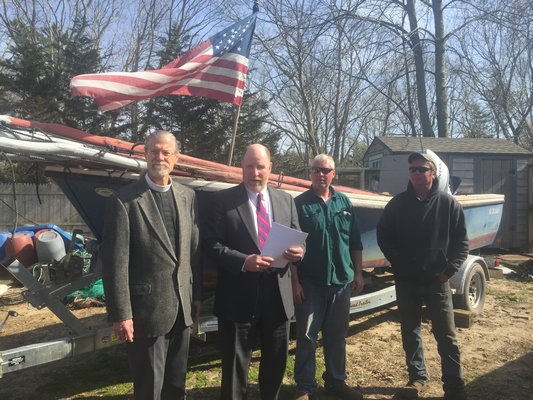
“These officers are seizing property and then selling it and using the funds to augment their budget,” Mr. Rodgers said at a gathering of fishermen and officials at the home of brothers Danny and Paul Lester, commercial fishermen from Amagansett, on Thursday afternoon. “It’s legal under New York State law, but it’s not legal under the constitution.”
State Assemblyman Fred W. Thiele Jr. said that he and State Senator Kenneth P. LaValle are crafting a bill for introduction to the State Legislature next month that would place some limits on the abilities of DEC officers to search fishermen’s properties—perhaps requiring some proof of reasonable suspicion that a regulation is being violated.
“We’re looking to put some checks and balances on this power of search and seizure,” Mr. Thiele said. “The burden shouldn’t be on [fishermen] to reverse the presumption of innocence and go through all these hoops and court dates to try to prove that you were doing nothing wrong and get your property back.”
The Lester brothers have had fish seized by DEC officers at least four times, they said, once in a high-profile case that led to an investigation of the DEC by the state Inspector General’s office. In that instance, a DEC officer walked into the Lesters’ backyard when they were not present and seized a carton of fish packed for delivery to market and took the fish, about $800 worth, to a nearby fish market and sold it.
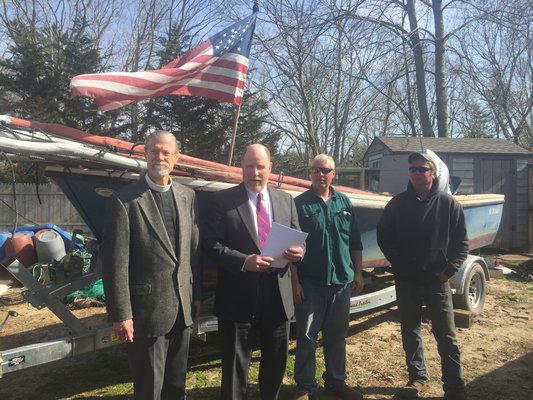
“They came right here and took the fish out of the yard,” Dan Lester said on Thursday afternoon, leaning against a trailered fishing boat loaded with fish trap components and adorned with a flapping American flag. “We weren’t here to witness it or speak for ourselves. He just walked in and took our fish.”
“He drove from here, right around the corner [to a fish market] and said, ‘Here’s a box of fish,’” Paul Lester added, nodding toward Stuart’s Seafood Market, just one street away.
More than four years later, after being acquitted of the violations claimed by the officer, and in the midst of the IG’s investigation, the DEC reimbursed the Lesters for the lost revenue. But Mr. Rodgers said that was a drop in the bucket in the $90,000 in fish that officers seized from fishermen and sold in 2010 and 2011, and that without tailoring the statutes governing officers the abuses can continue.


 on Apr 22, 2016