


 4 Photos
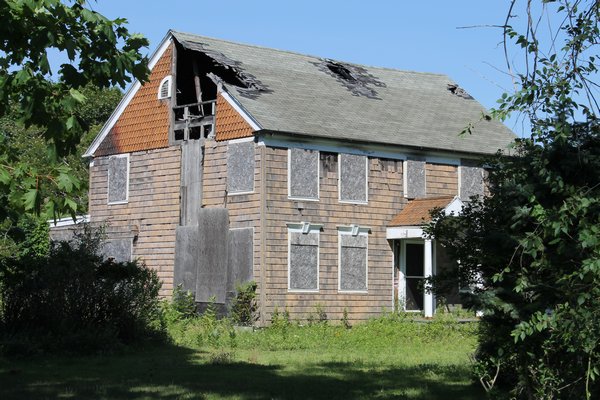
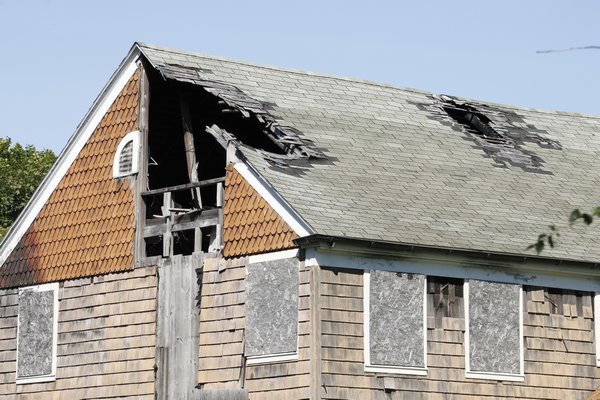
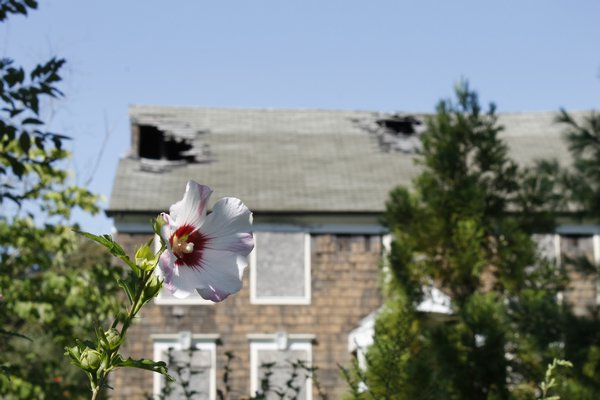
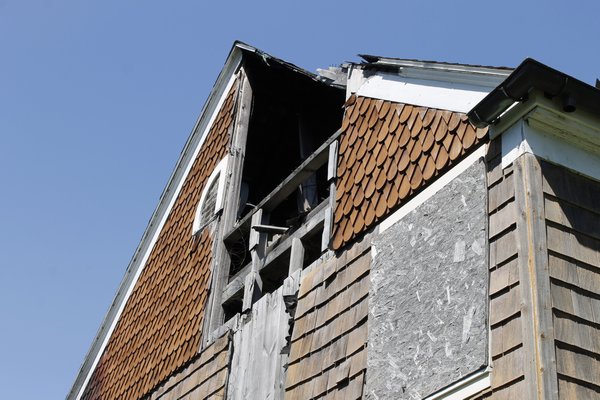
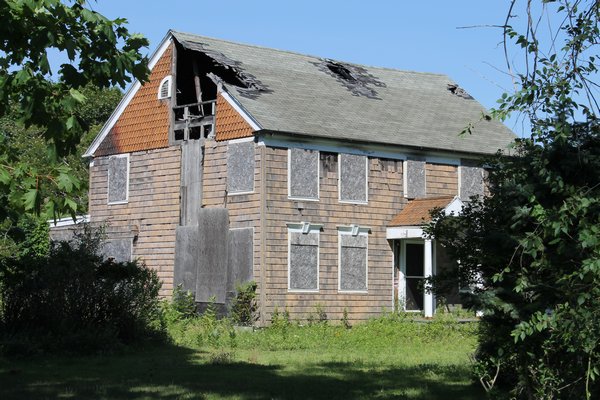
Residents of Griffing Avenue in Westhampton Beach are tired of looking at the charred and boarded-up home that has sat vacant on their street for nearly six years.
Citing health, safety and property value concerns, as well as expressing general discontent for the home’s appearance, residents are clamoring for the village to expedite efforts to demolish the home of former Suffolk County Legislator and convicted felon George Guldi.
Suffolk County Supreme Court Justice Arthur Pitts granted the village permission to demolish the house in February, but those efforts, to date, have been stymied by the former lawmaker and attorney, who is appealing that ruling from jail.
Griffing Avenue resident Darelyn Olsen described the village’s handling of the house, which caught fire in November 2008 and has been in foreclosure since 2010, as “outrageous,” “insulting” and “disrespectful” to those living near the home.
“The fact that the village has done nothing about this is unconscionable,” Ms. Olsen said inside her home on Tuesday morning. “There are people who live here and have to deal with this every day. He’s in jail for fraud—why does he have more rights than us?”
Mr. Guldi, who represented the South Fork in Hauppauge from 1993 to 2003, was convicted of first- and second-degree grand larceny and third-degree insurance fraud, all felonies, in 2011 for his involvement in a multimillion-dollar mortgage fraud scheme that targeted dozens of homes on the East End from 2002 to 2009. In 2011, he was sentenced to four to 12 years in jail, a term which he currently is serving in the Marcy Correctional Facility in Oneida County.
His home, which was mortgaged at $1.4 million in 2007, caught fire in 2008, causing substantial damage to the exterior of the house, including multiple gaping holes in the roof. It has been boarded up ever since.
Griffing Avenue resident Diana Waldron, speaking on behalf of a group of her neighbors, raised the issue of the Guldi house to the Village Board during its monthly meeting on August 7. Ms. Waldron questioned why it has taken so long to take down the house.
“I know you have plans to raze it, but we’re approaching almost six years,” Ms. Waldron said. “Forget the eyesore that it is—I think it’s a danger. It’s falling apart, and I would just like a status on why it’s taking so long and what the action plan is.”
Westhampton Beach Mayor Maria Moore explained that although the village was granted the authority to demolish the house earlier this year, those efforts have been held up by a motion filed by Mr. Guldi shortly after Judge Pitts issued his decision.
Mr. Guldi, who was a lawyer prior to being disbarred following his felony conviction, filed a motion for an appeal, claiming that he was not properly notified of the hearing about the future of his house and, therefore, could not make the necessary arrangements to protest. Although the house has been in foreclosure since 2010, the loan holder, Bank of New York Mellon, has not finished its foreclosure action and, as a result, the title for the house remains in Mr. Guldi’s name.
Mr. Guldi is scheduled to have a parole hearing in October and is eligible for release on February 12, 2015.
Since September 2013, Westhampton Beach has paid former village attorney Richard Haefeli $11,476.96 to handle litigation related to the house, although the village maintains that all of those costs—including demolition and legal fees—will be tacked on to Mr. Guldi’s tax bill. When reached by phone this week, Mr. Haefeli said the village’s hands are tied until a ruling is made regarding Mr. Guldi’s motion.
Asbestos also must be removed from parts of the building before demolition can take place, something that also is held up until the litigation is resolved, Ms. Moore said. When questioned during the board’s meeting, the mayor declined to give an estimated timetable for the demolition.
“We can’t say how long the judge will take to decide the motions that are pending,” she said.
Neighbors were not happy to learn the news.
“If you lived on that block, you would have lost your patience by this point,” Ms. Waldron retorted. “I come on behalf of all my neighbors, because I happen to be available [tonight]. It’s just disgraceful. So, duly noted, and, hopefully, there will be an action plan and this won’t go on for another two or three years.”
Ms. Olsen, a Florida resident who purchased her home on Griffing Avenue in 2008 and has spent the past six summers in Westhampton Beach, said she has seen feral cats being fed on the porch, and doors to the home are left unlocked. The area reeks of urine, she said, adding that she is concerned about squatters occupying the home, a notion echoed by other neighbors.
The dilapidated, century-old colonial has become such a defining characteristic of the neighborhood, Ms. Olsen said, that even her 4-year-old granddaughter, Chloè, has come to recognize it as “the broken house.” Ms. Olsen argued that the building is hazard to curious children who might venture into it.
“That nothing has happened yet is a miracle,” she said.
Fellow Griffing Avenue resident William Price concurred that the site is a hazard to animals and children. Mr. Price, who estimates that he has owned his home for more than 25 years and has been living there full time for at least the past three years, said he voted for Ms. Moore for mayor in June based on the understanding that the Guldi home would be removed from his street in speedy fashion.
“It’s absolutely disgraceful,” he said. “As a resident of Griffing Avenue, I view it as a risk to public safety, a target for crime and an eyesore.”


 Kyle Campbell on Aug 20, 2014