


 2 Photos
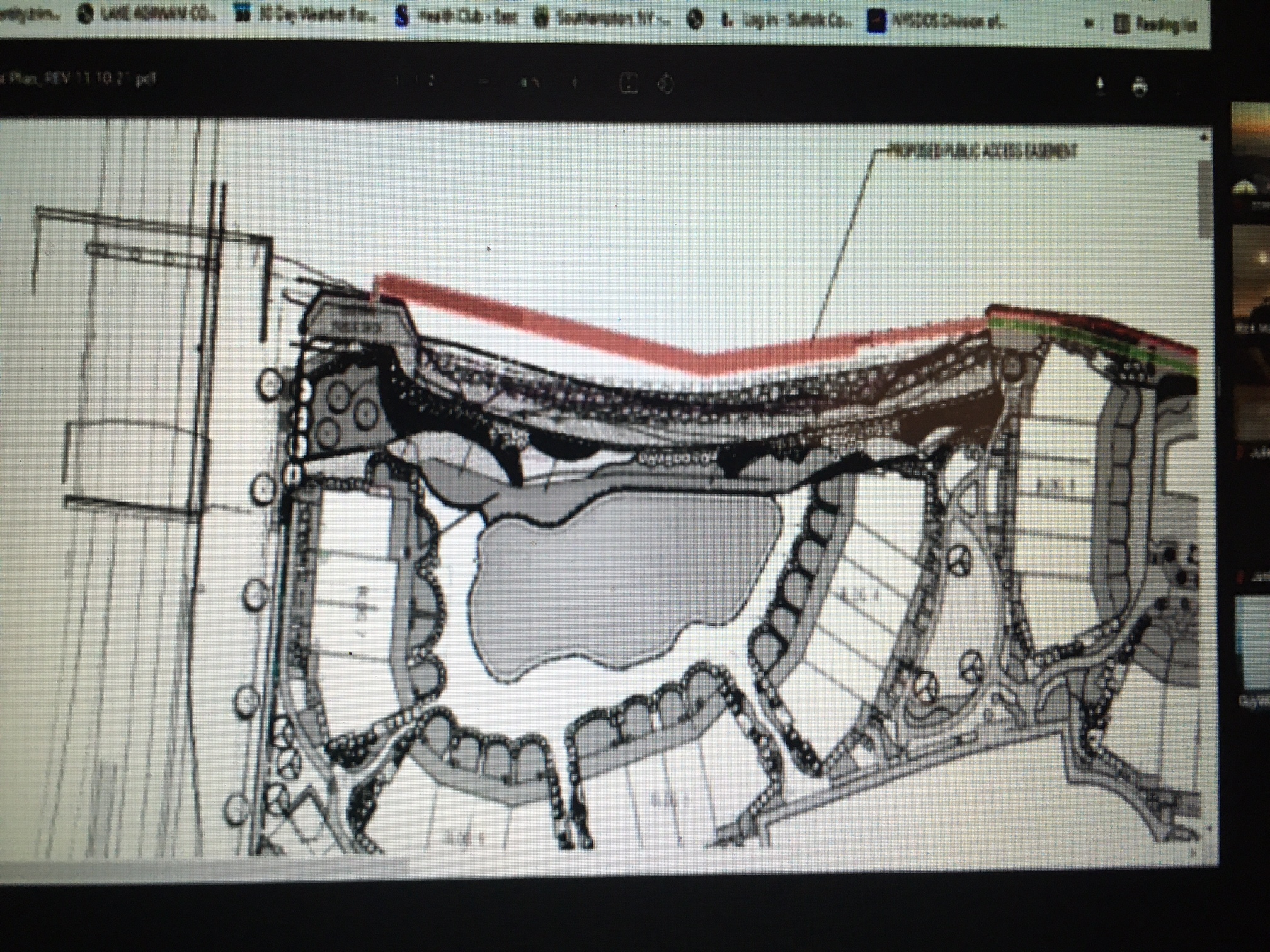
A sketch depicts the proposed public access along the east side of the Shinnecock Canal in red.
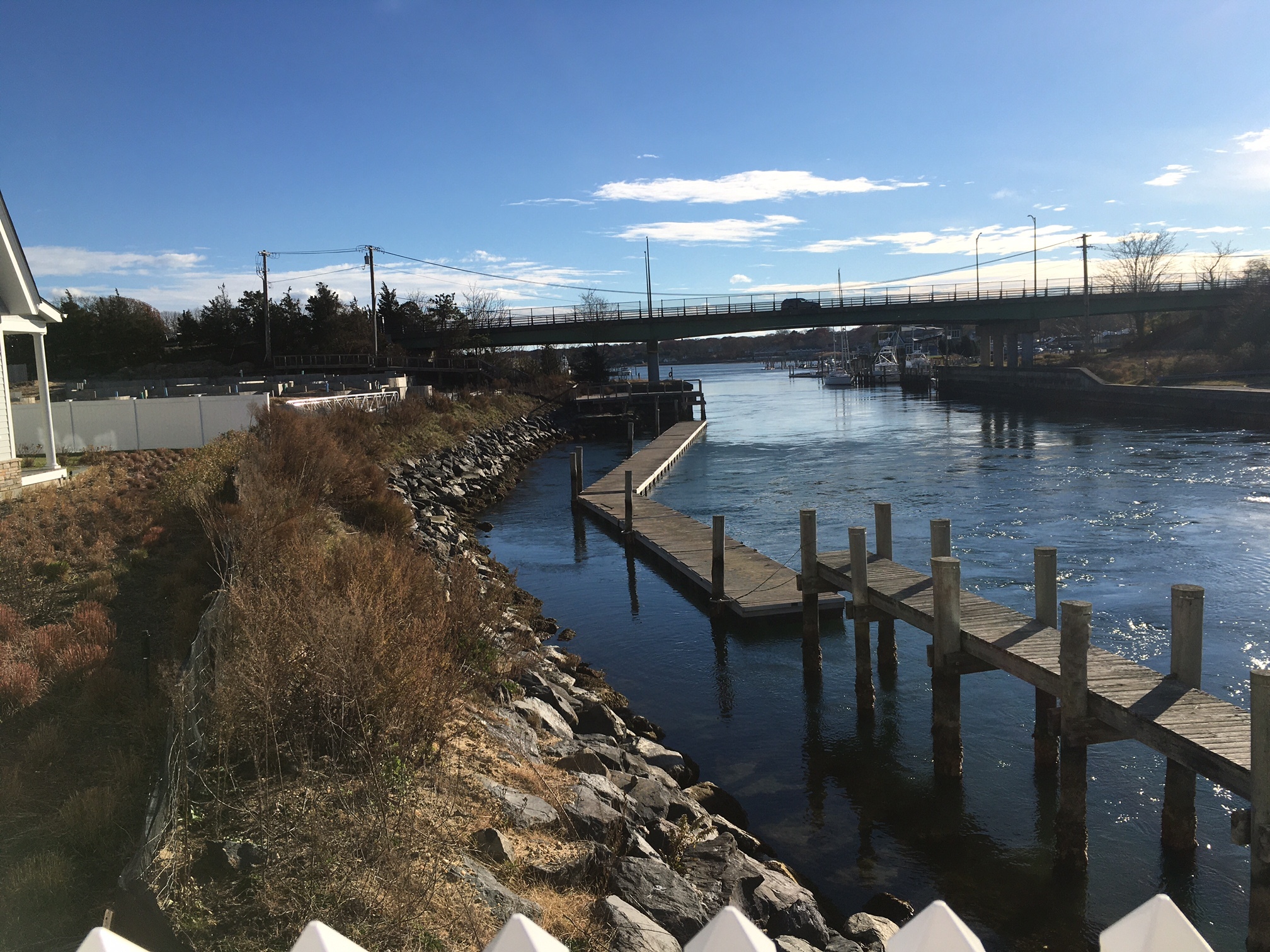
The proposed public access along the east side of the Shinnecock Canal includes a floating dock. KITTY MERRILL
The Southampton Town Board voted unanimously on Tuesday, March 8, to amend the Canoe Place Inn zoning designation to allow the townhouses located on the eastern side of the Shinnecock Canal to operate like luxury hotel accommodations under a single management and ownership umbrella.
In 2015, the board approved the Canoe Place Inn, Canal, and Eastern Properties Planned Development District. It envisioned the Inn and cottages on the west side of the canal, and townhouses that would be sold separately to individual homeowners on the east side. Back then, there were also plans to create a public access route all the way along the canal from the townhouses, under the railroad bridge through to Meschutt County Park.
But the easements from the Long Island Rail Road and county necessary for the path weren’t coming. So the developers of the properties, Gregg and Mitchell Rechler, conceived a loop around the townhouse property to offer the public access contained on their land.
They also, over time, came to feel that including the townhouses as part of an overall “hospitality community,” as described by Gregg Rechler during a visit to the Southampton Town Planning Board last month, would allow them to serve more guests than just the 20 rooms in the Inn and the eight cottages on the western property.
The PDD amendment would remove stay restrictions on the townhouses and allow them to be used for transient visits one would expect to see in a hotel.
It also provides for the public access loop and codifies the developers’ vow to make up any property tax difference between the residential townhouses and the hotel-type condos. Considering the measure last month, members of the Town Planning Board wanted lawmakers to include a provision that prohibits fishing from the public walkway and floating dock that comprises a portion of the public access loop. They felt the walkway was too narrow to allow for pedestrians and fishermen together.
Offering comments before the March 8 vote, Supervisor Jay Schneiderman said he hopes people do fish off the dock, which has two platforms that are suited to it.
He said the access first proposed had “a fatal flaw’ — reliance on the county and MTA. The revised plan is “real waterfront access,” and the public will feel more welcome walking along a hotel property than a residential townhome development.
“I think this will be a bustling addition to Hampton Bays,” Councilman Rick Martel offered.
Also of concern was the potential difference between tax revenue from residential townhouses compared to the hotel-like condos. Schneiderman said that each year the town assessor will calculate the difference and the developers will pay it into a fund that would then be apportioned to the varied districts — school, fire, water — that typically receive tax payments.
The supervisor said he had the chance to tour the inn, which has undergone a painstaking restoration to its original grandeur.
“The community is in for a treat,” he said.


