


 2 Photos
DCIM100MEDIA
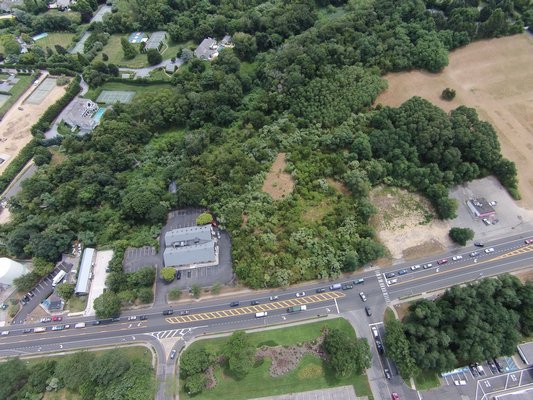
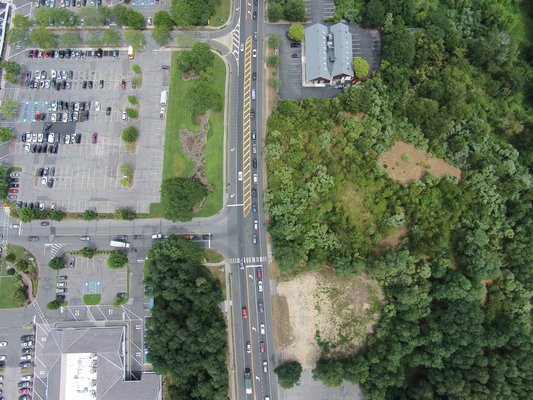
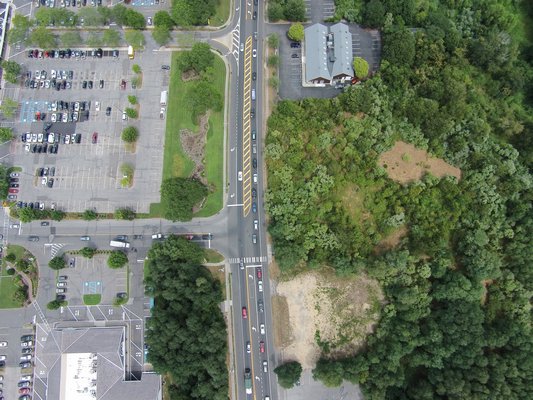
The area of the Bridgehampton Gateway. DCIM100MEDIA
A proposed moratorium on planned development district proposals in Southampton Town does not apply to the Bridgehampton Gateway PDD—although many hamlet residents say it should.
The legislation, first pitched by the Democratic slate during the political campaign in the fall, is meant to give the Town Board time to take another look at PDDs, a zoning mechanism that permits more intense development in exchange for community benefits. The moratorium only would apply to new applications for PDDs, and the legislation outlines several exclusions, including applications currently under review that were initiated by the Town Board—which would include Gateway—as well as those that have already been actively reviewed by the board.
There has been an “intense amount of planning that it has already gone through,” said Southampton Town Supervisor Jay Schneiderman of the Gateway project, which is currently proposed as 105,000 square feet of mixed commercial and residential space. He added that the Gateway was a town proposal, not a PDD application filed by a developer, and that PDD applications that were submitted under the current law should be reviewed under that same law.
Other existing PDD applications, including The Hills in East Quogue and the Townhouses in Water Mill, also are excluded from the moratorium, the supervisor noted.
East Hampton attorney Jeffrey Bragman, who represents Bridgehampton Action Now, or BAN, a group of local residents opposed to the Gateway PDD, counters that the moratorium absolutely should apply to the Gateway application, as the specific purpose of the moratorium is to maintain the status quo.
“From a practical standpoint, they are enacting a moratorium,” he said, “but they are excluding this application from the provision of that law applying to it, and it shouldn’t be,” Mr. Bragman said. “The operative fact is that the Town Board is obviously very concerned about PDDs—they are concerned that they don’t meet the needs of the community, that they produce dramatic overdevelopment, which we’ve seen, and they want to study the use of that mechanism. And if they are going to do that, there is no reason that it shouldn’t apply to this PDD.”
Town Councilwoman Christine Scalera said that although she does not believe in the PDD moratorium to begin with—support for the moratorium appears split 3-2 along party lines, with Ms. Scalera and fellow Republican Stan Glinka as likely “no” votes—the applications that are excluded from the moratorium were specifically excluded so they “proceed under the same law that they were submitted.”
“I think if used properly, it is a useful tool,” she said of PDDs. “To the extent that we could change the law to more appropriately address public trust and concerns, it is incumbent on us to do that.”
A public hearing will be held Tuesday, April 12, on the proposed moratorium on reviewing PDD applications. Another hearing will be held May 3 on whether the board should continue to move forward in reviewing the PDD application specifically for the Gateway.


 Alisha Steindecker on Apr 5, 2016