


 8 Photos
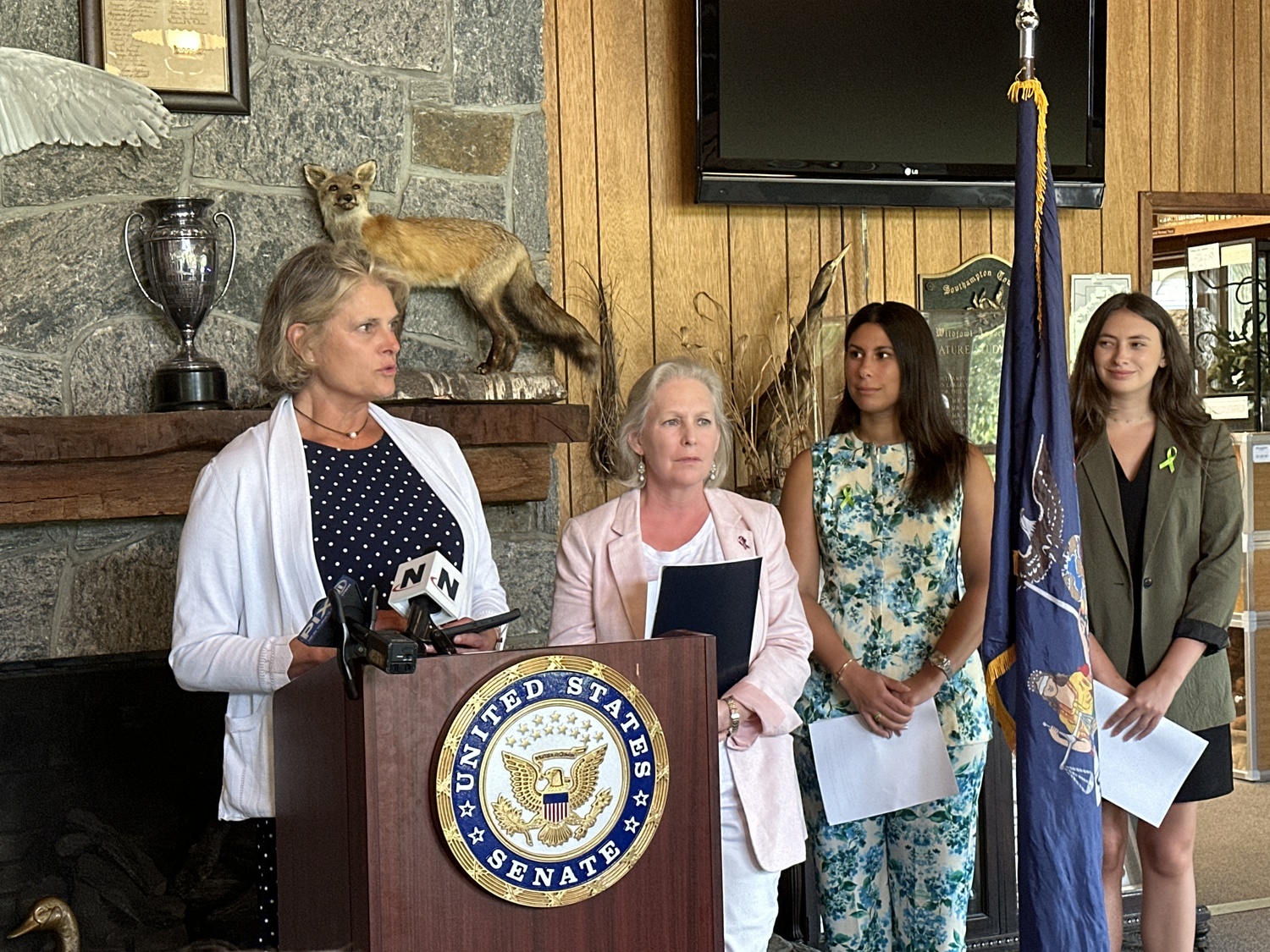
Suffolk County Legislator Ann Welker speaking at the Quogue Wildlife Refuge on Monday, July 29. DAN STARK
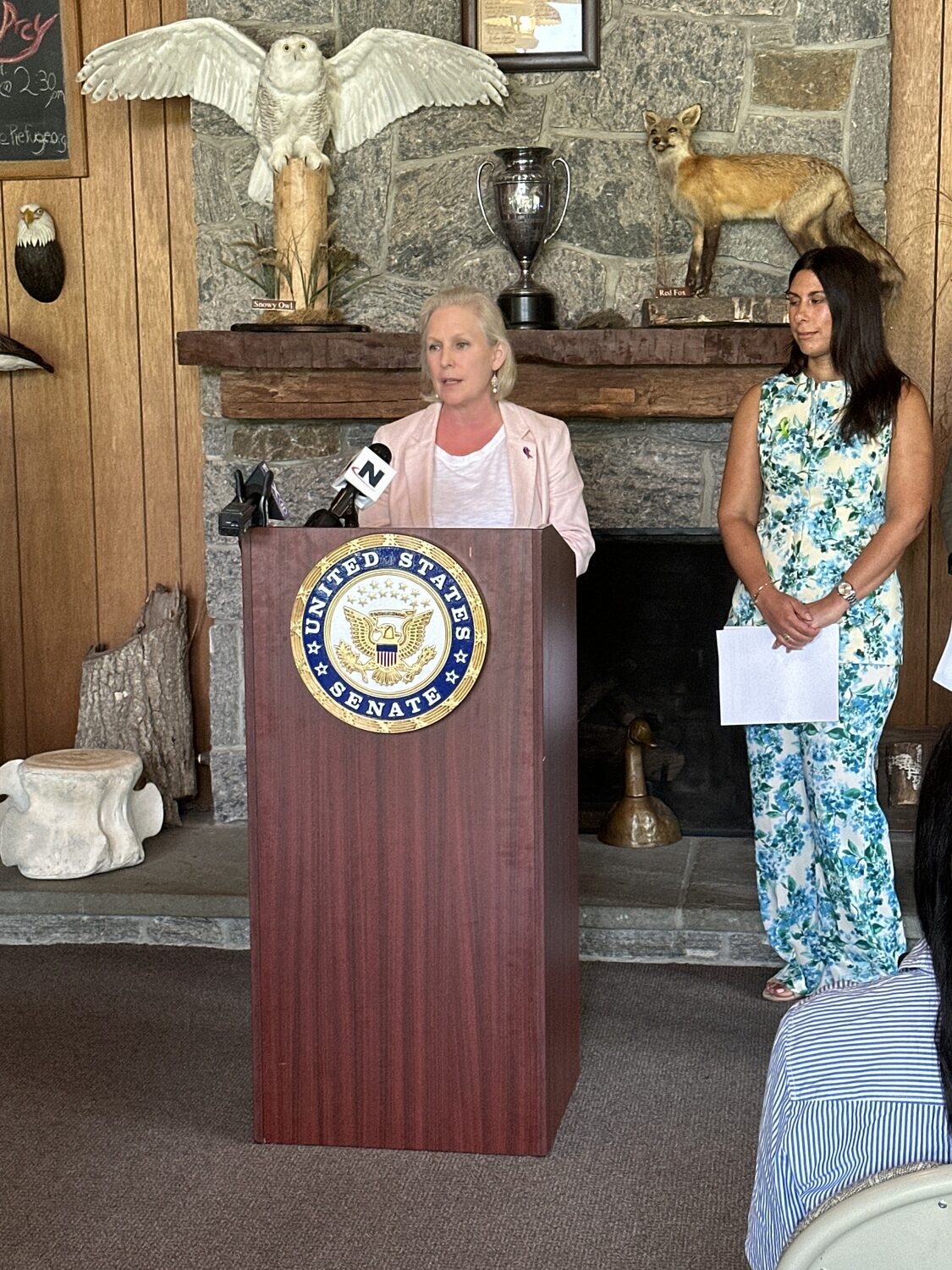
Senator Kirsten Gillibrand speaking at the Quogue Wildlife Refuge on Monday, July 29. DAN STARK
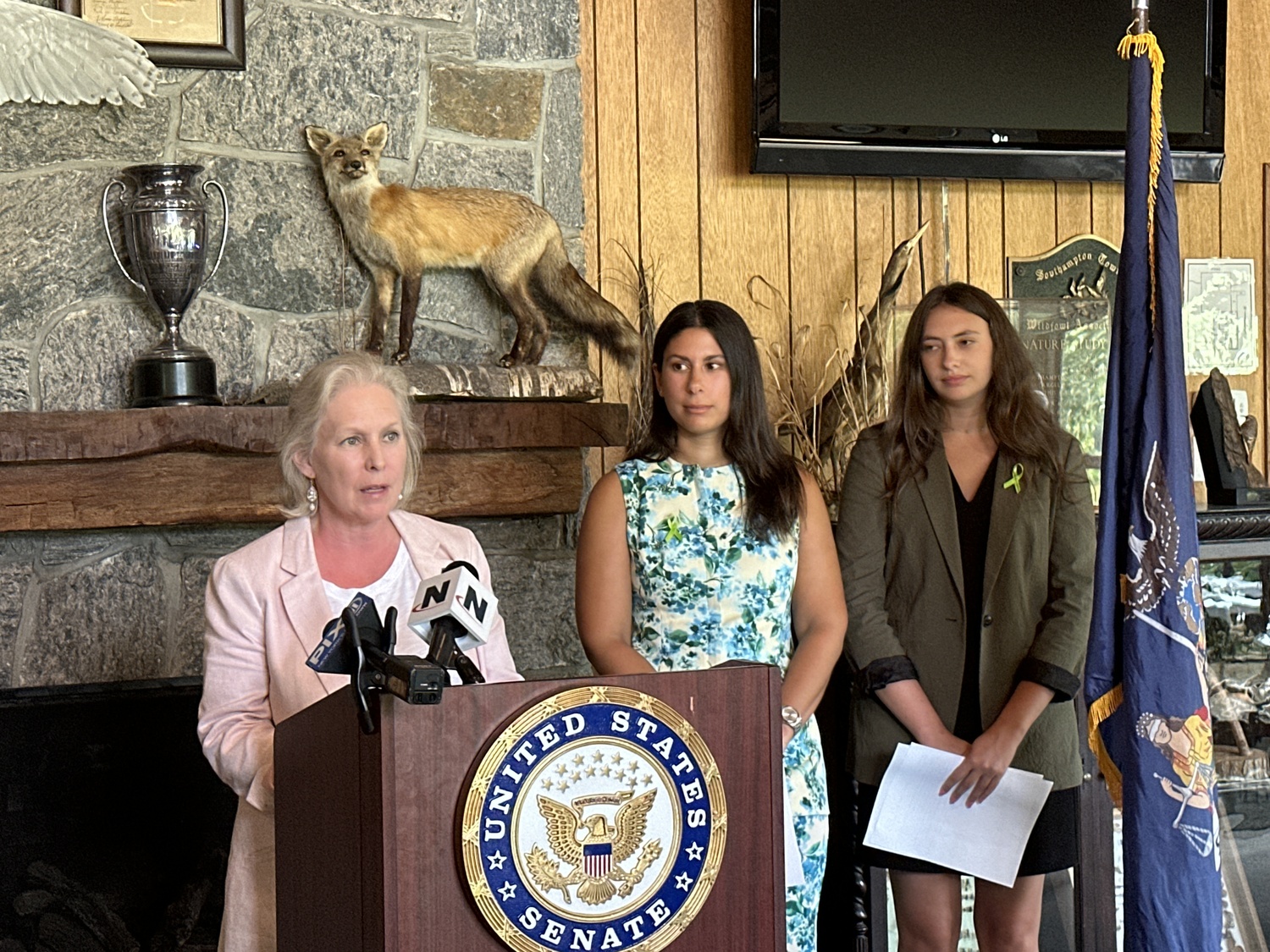
Senator Kirsten Gillibrand speaking at the Quogue Wildlife Refuge on Monday, July 29. DAN STARK
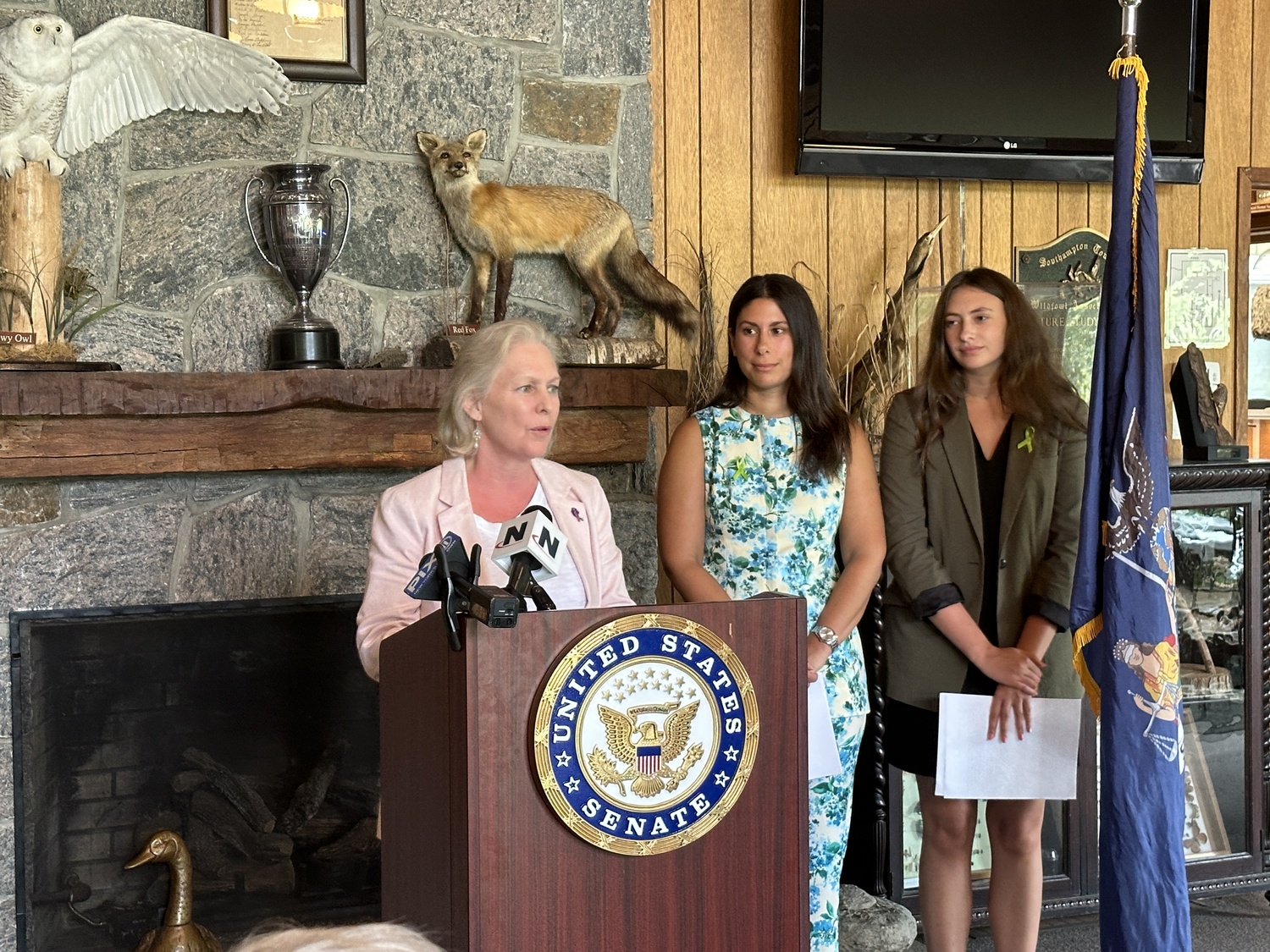
Senator Kirsten Gillibrand speaking at the Quogue Wildlife Refuge on Monday, July 29. DAN STARK
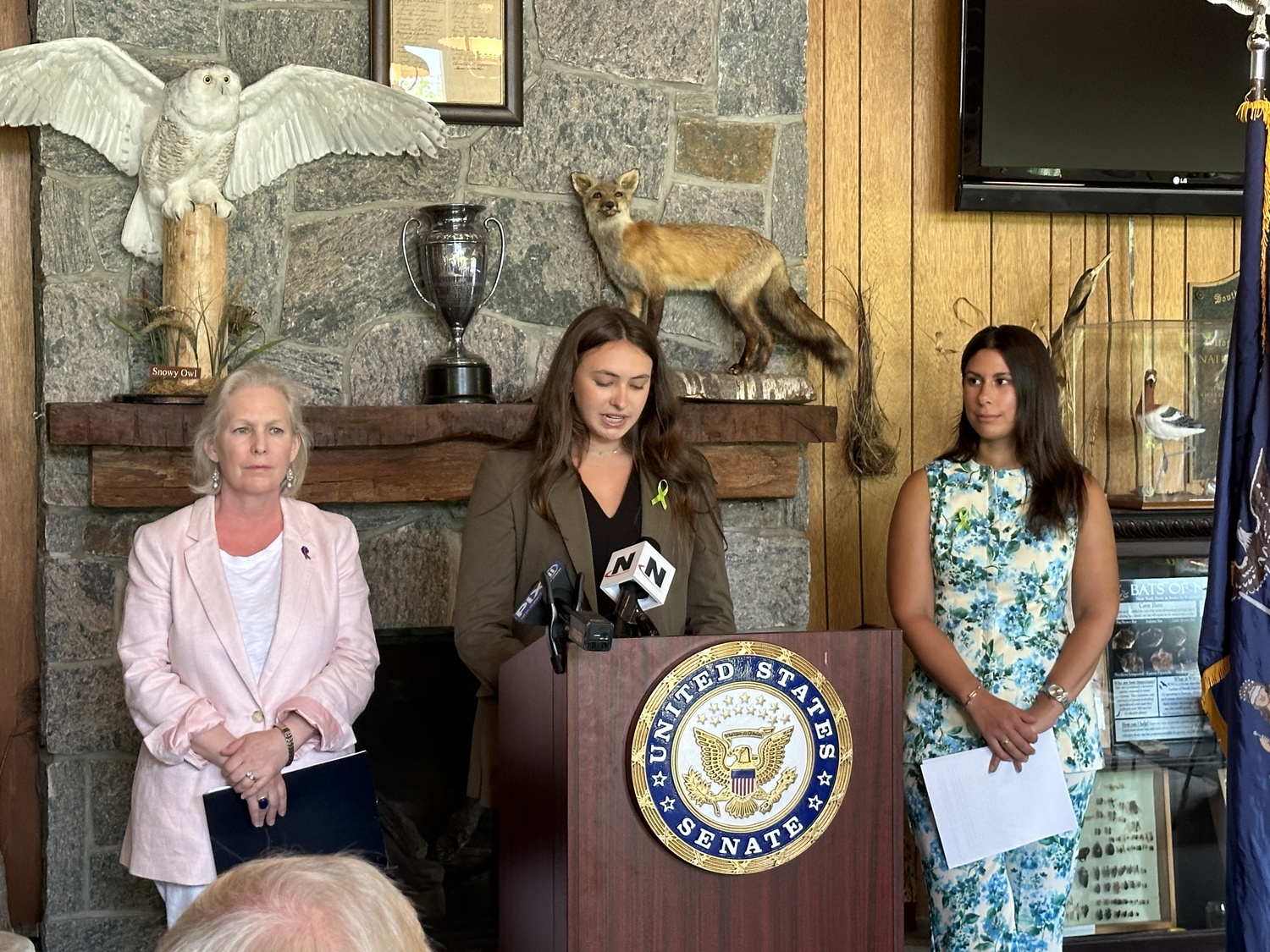
Olivia Abrams speaking at the Quogue Wildlife Refuge on Monday, July 29. DAN STARK
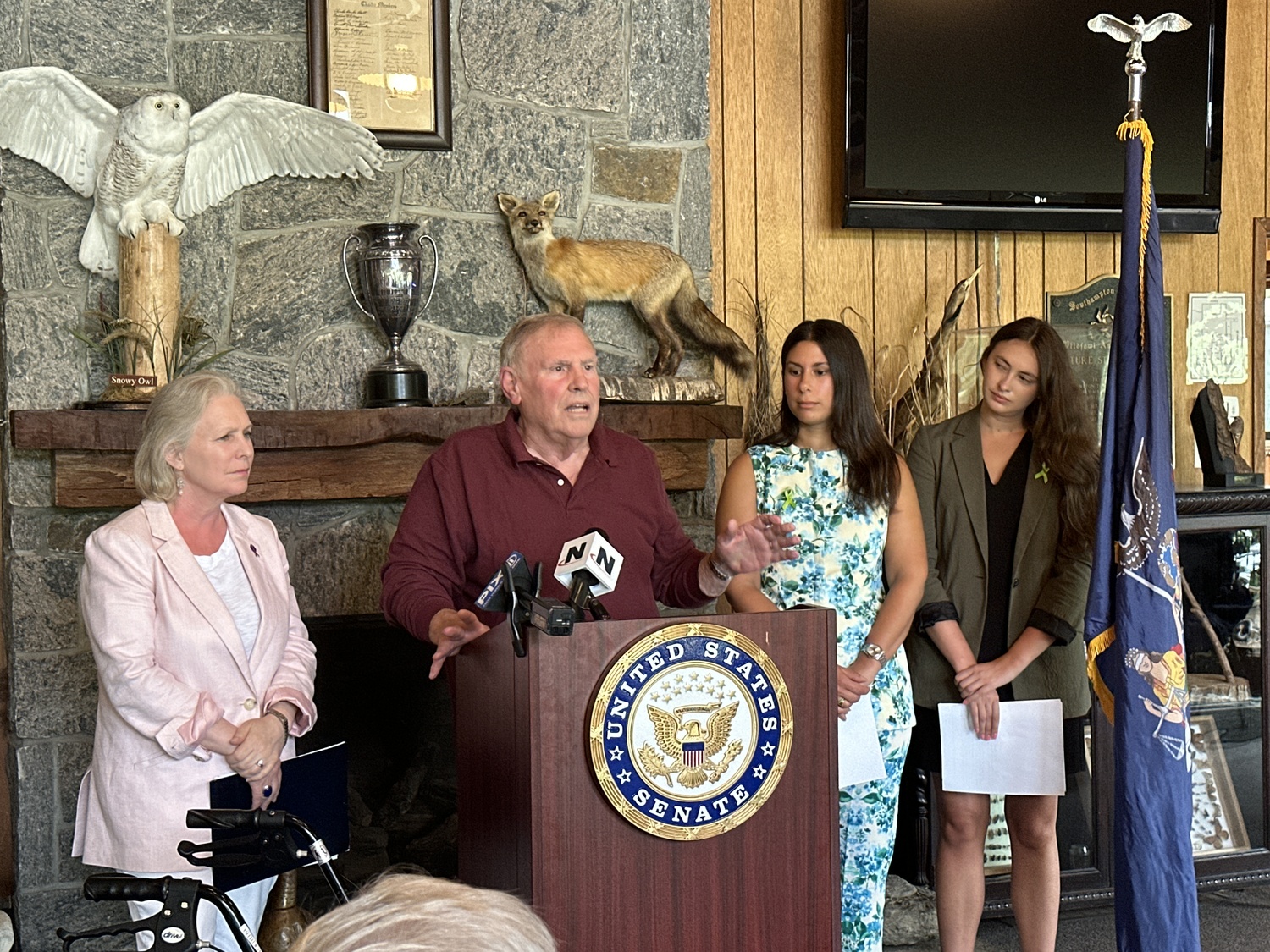
Dr. Jorge Benach of Stony Brook University speaking at the Quogue Wildlife Refuge on Monday, July 29. DAN STARK
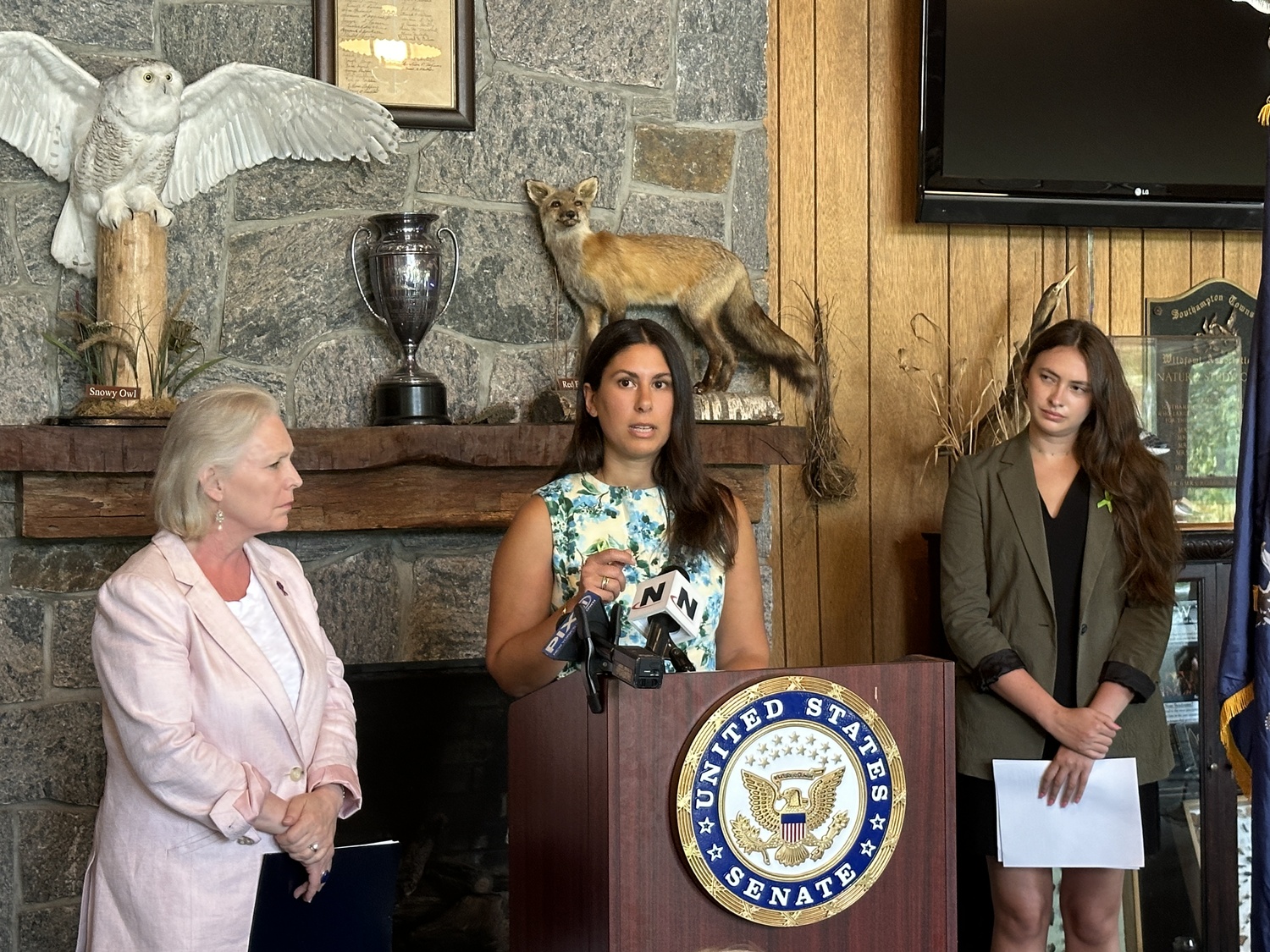
Ali Moresco speaking at the Quogue Wildlife Refuge on Monday, July 29. DAN STARK
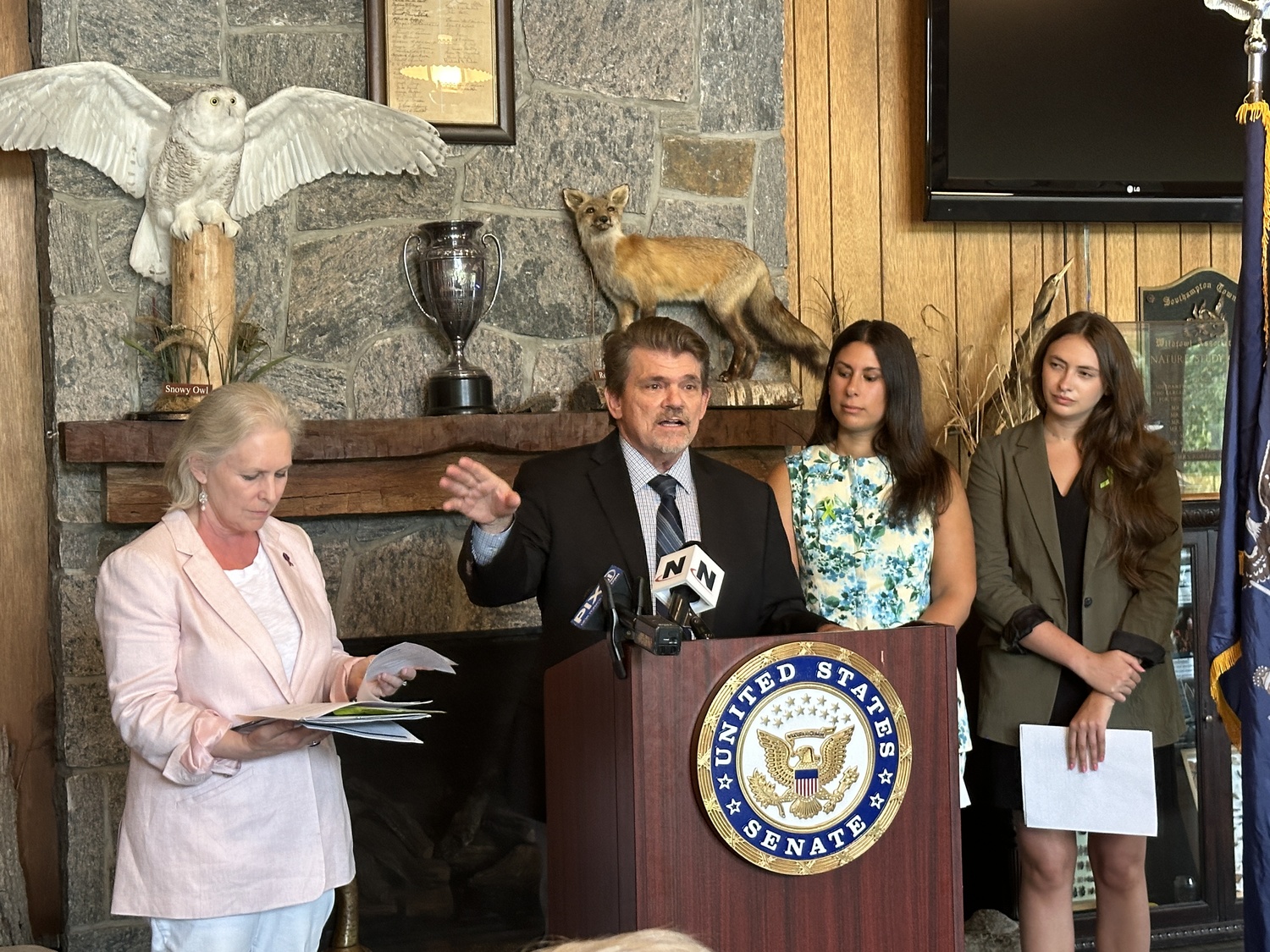
Southampton Town Councilman Tommy John Schiavoni speaking at the Quogue Wildlife Refuge on Monday, July 29. DAN STARK
U.S. Senator Kirsten Gillibrand announced her push for federal funding to research tick-borne illnesses during a visit to the Quogue Wildlife Refuge on Monday afternoon.
The funding that Gillibrand is calling for in next year’s government funding bill would allocate an additional $200 million to fight tick-borne illnesses, specifically Lyme disease.
This includes $30 million to the Department of Health and Human Services to establish a national strategy on tick-borne diseases, $30 million to the CDC for Lyme disease research, $9 million to the Department of Defense’s Tick-Borne Disease Research Program and $130 million to the National Institutes of Health for tick-borne disease research.
Gillibrand said that addressing tick-borne illnesses is “a life-and-death issue,” specifically in New York and on Long Island, which have some of the highest rates of tick-borne illnesses in the country. She noted that this is particularly an issue during the summer.
“We have more New Yorkers and their families going outdoors, spending time in the woods, taking walks and enjoying the summer,” she said. “But with that comes the increased risk of getting a tick-borne illness.”
Gillibrand also said that tick-borne diseases pose a particular threat to service members and their families, as “the vast majority of military bases are located in states where exposure to ticks and the diseases they carry is especially high,” which can pose a national security risk.
The senator said that despite the increasing risk of tick-borne illnesses due to various factors, federal funding hasn’t increased enough to correspond with the risk.
“As the influence of suburban development and climate change expand tick ranges and increase the risk of tick-borne illnesses, the threat to our families, service members and our communities grows,” she said. “But despite the serious nature of these diseases, federal research and prevention efforts have been historically underfunded.”
Gillibrand vowed to work with her congressional colleagues to secure the funding and “continue to prioritize this important reaching,” saying that “New Yorkers deserve the freedom to spend time outdoors without worrying about facing a debilitating or serious illness from a tick bite.”
The funding currently has 14 co-sponsors in the Senate, all of whom are Democrats. Gillibrand said that she expects the push will be “widely bipartisan” and will receive support from across the aisle soon.
Suffolk County Legislator Ann Welker, who represents the South Fork, voiced her support for the bill, pointing out that her legislative district features many areas where ticks are prevalent and pose a risk for residents.
“As a member of [the] Suffolk County [Legislature’s] Health Committee and also a member of the legislature’s Tick Control Advisory Committee, I’m aware of the critical importance of the need for funding research on tick-related diseases, and I commend Senator Gillibrand on her work with this,” she said.
Southampton Town Councilman Tommy John Schiavoni also expressed his support for the bill, noting the high risk that East End residents face and that many family members of his have “had some kind of tick-borne illness.”
In addition to the funding push, Gillibrand also said that increasing awareness of tick-borne illnesses is necessary to combat them, particularly when it comes to parents and knowing how to check their children for ticks.
“Awareness is perhaps the greatest thing we can promote so that these tick checks are happening every day when your kid comes in from the backyard,” she said.


