


 2 Photos
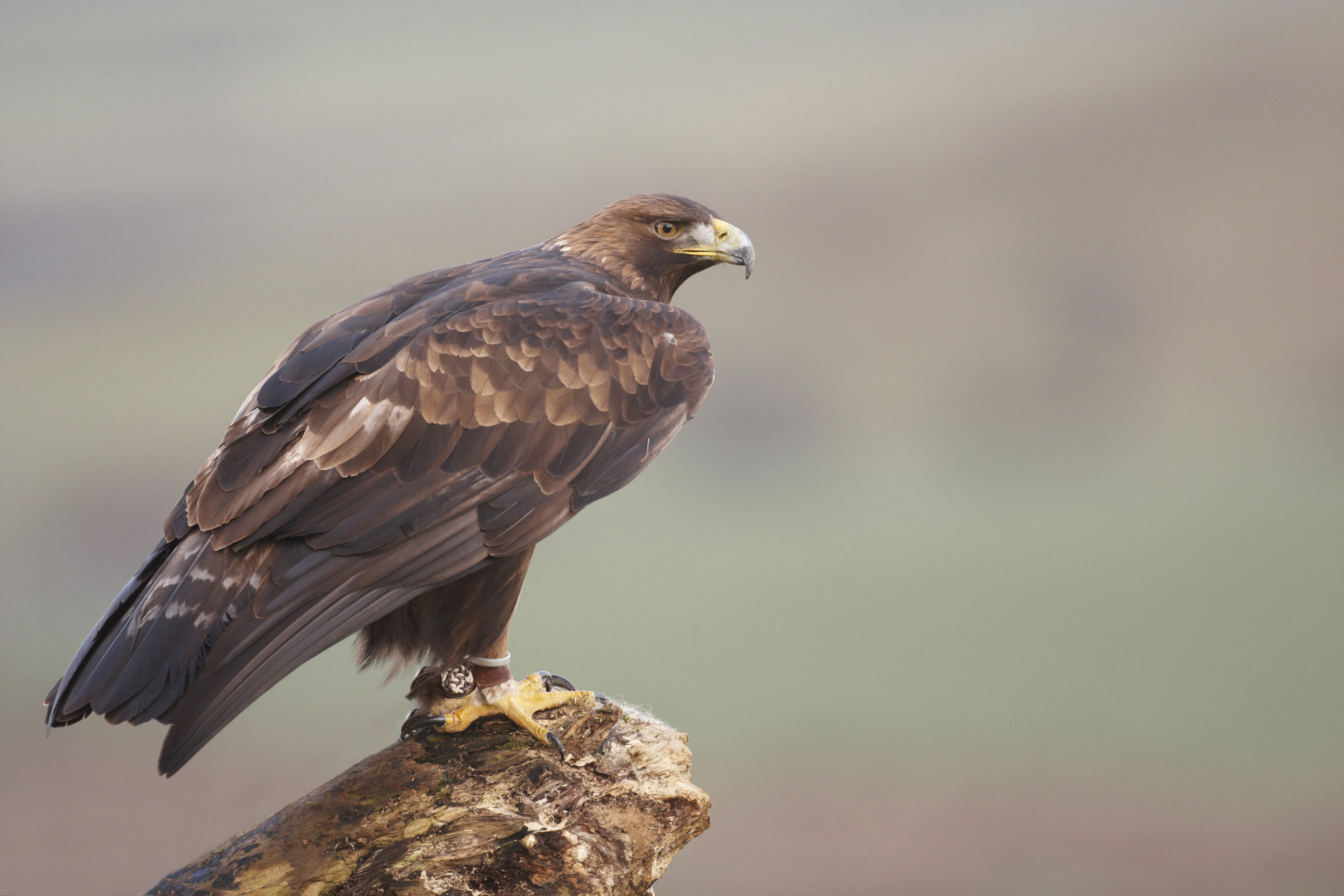
The juvenile bald eagle has a darker (blackish) bill and cere, and extensive white on its body, while the golden does not.
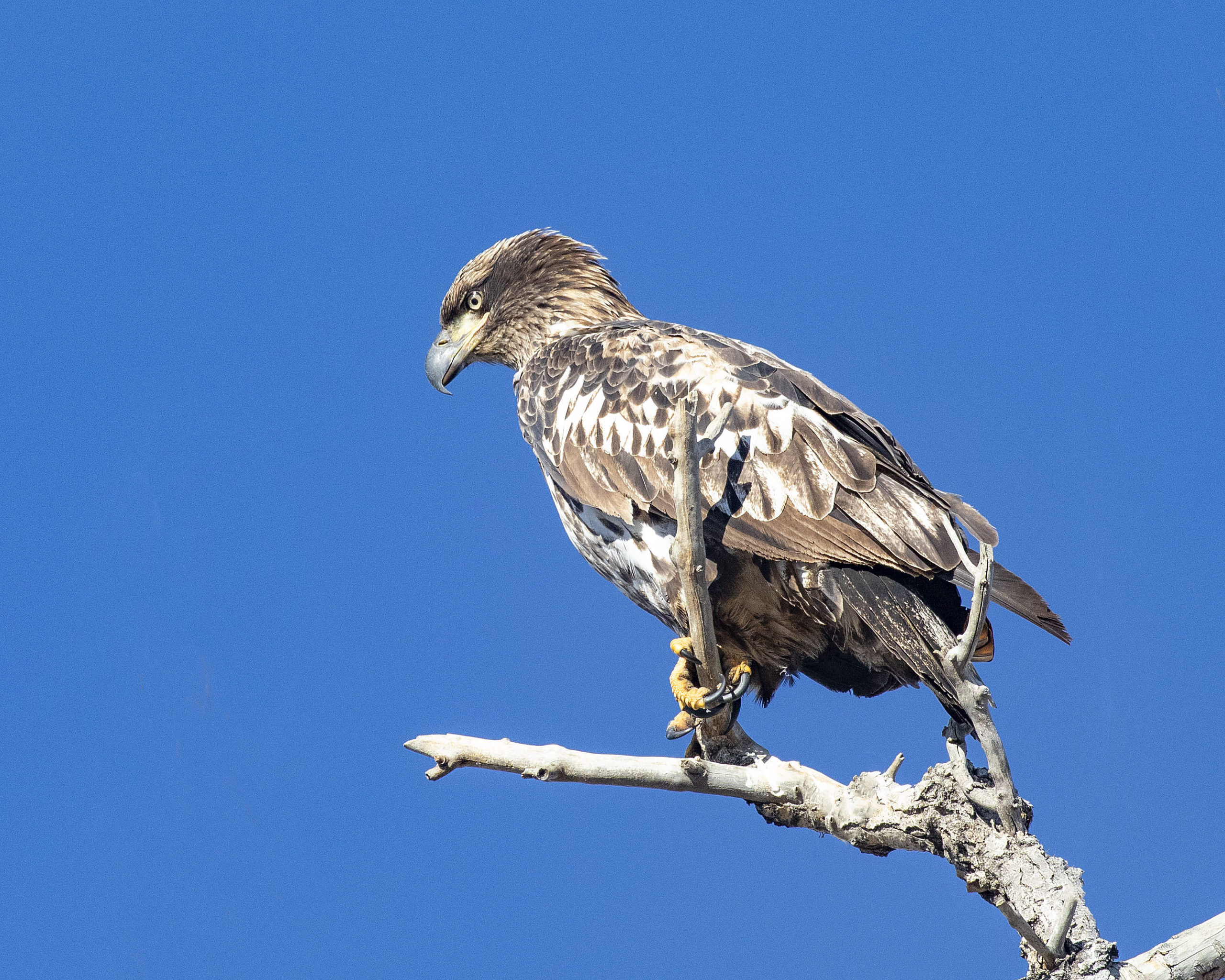
The juvenile bald eagle has a darker (blackish) bill and cere, and extensive white on its body, while the golden does not.
Very similar in size to the golden eagle, juvenile bald eagles lacking the characteristic white-feathered head of the adults are sometimes misidentified as golden eagles.
And that was initially assumed to be the case when Cat Yellen-Rebennack submitted several photographs to the “Long Island Wildlife Photography” Facebook group last week. The photos were taken on the East End of Long Island, and several members chimed in that they were photos of an immature bald eagle.
That was not the case. Cat not only had an excellent photo showing the distinctive white band of tail feathers found on immature goldens, but had witnessed the golden in an aerial tussle with a bald eagle. Quite the sighting! You can view her photos at fireislandandbeyond.com/best-of-long-island-wildlife-photography-11-30-19.
Long Island’s bald eagle nesting population has been slowly growing in recent years, and sightings of both immature and adult balds are becoming relatively common here. On the other hand, while the golden eagle historically nested throughout most of North America, including New York, its breeding population is now mainly found in the West. The last reported golden eagle nest in New York was in 1972. The only remaining nesting pair in the Northeast was in Maine, and that pair last fledged young in 1986. The pair continued to nest for the following 13 years, with no young produced during that time, and their nest site was abandoned in 1999. Golden eagles are a rare sight here.
What happened? Apparently, they were never common breeders in the east. Their preferred habitat includes a combination of rugged topography and open, nonforested habitat such as tundra, alpine areas, prairie and rangeland. While the East has suitable mountainous areas, those are largely forested.
In the west, 80 percent to 90 percent of its diet consists of small- to medium-sized herbivorous mammals: hares, jackrabbits, marmots and prairie dogs. Breeding pairs will also hunt cooperatively to pursue and catch prey. They also eat carrion. Their diet in the east included more avian prey positioned higher up on the food chain and which were thought to concentrate more harmful contaminants.
In addition to North America, it can be found nesting in Europe, Asia and northern Africa. More than 70 percent of golden eagle deaths are attributed to humans. In the western states, their rangeland habitat preference has put them in conflict with sheep ranchers. Before the endangered species act was passed in 1972, an estimated 20,000 golden eagles were shot from planes in the southwest (1941-1961), and 500 were shot in Colorado from helicopters in 1971. Many also die from poisoning, often by way of poison placed in carcasses to attract wolves and coyotes.


 Mike Bottini on Dec 2, 2019