


 1 Photo
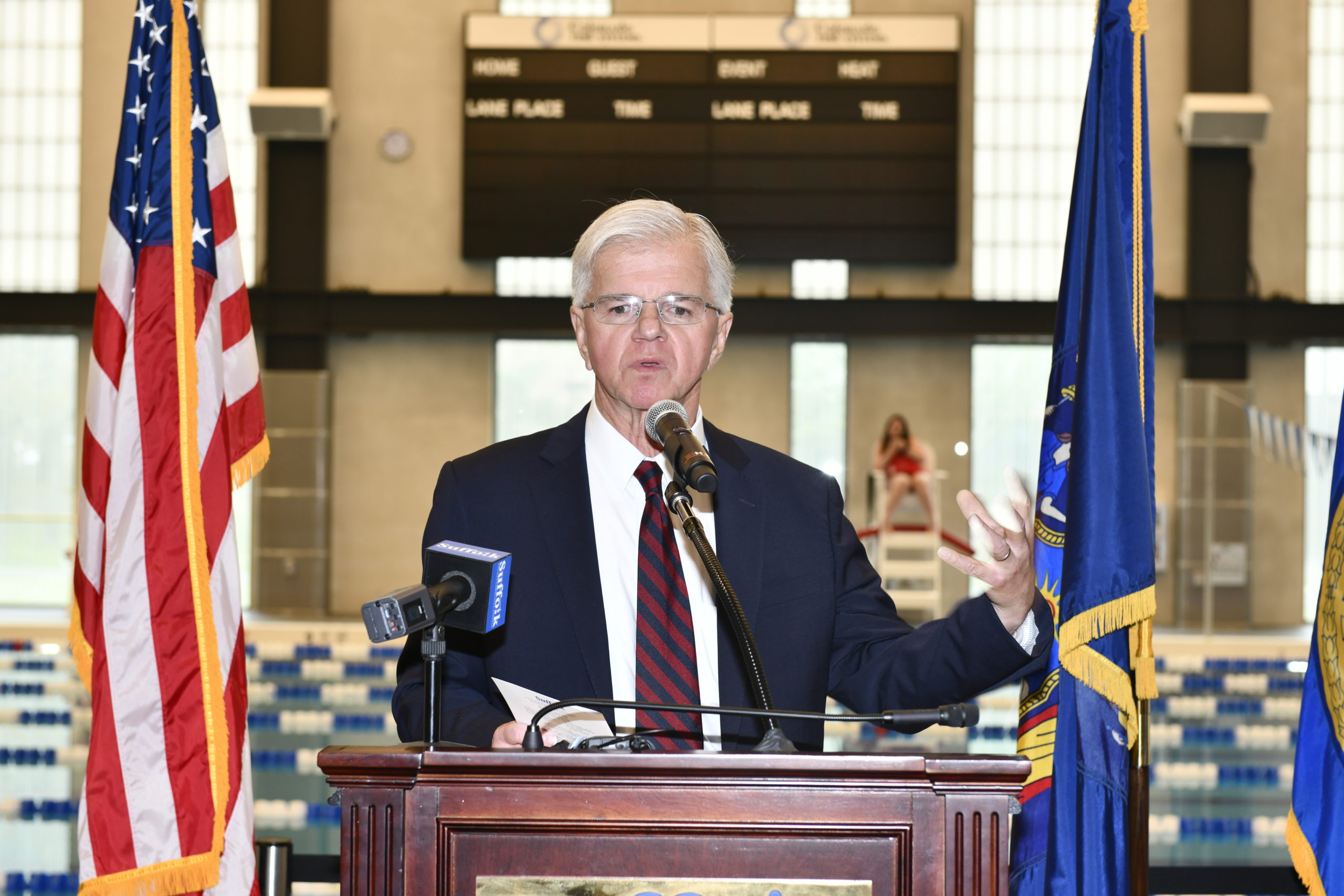
New York State Assemblyman Fred Thiele Jr.
Legislation sponsored by State Assemblyman Fred W. Thiele Jr. and State Senator Jim Gaughran to allow state and local governments to hold meetings remotely for the remainder of the COVID-19 state disaster emergency declaration was signed into law by Governor Kathy Hochul on Tuesday.
The law, which was supported by the Association of Towns, the New York Conference of Mayors and the New York State School Boards Association, is intended to help safeguard public health during the ongoing pandemic, and continue the practice of holding meetings using Zoom and other video conferencing technology that has become ubiquitous since March 2020.
Ensuring local governments and school boards can continue to conduct meetings remotely in the immediate future — while the number of COVID cases and hospitalizations are still at high numbers thanks to the only recently waning omicron surge — has been a top priority for Thiele. But he has his sights on a larger long-term look at the open meetings law currently on the books, which he says is in need of an update. He’s been working toward that goal over the past few months, along with several other colleagues in both state and local government.
“We’ve always viewed this as two-step process,” he said on Tuesday. “One is allowing government to function in an emergency, and the second is to permanently amend the Open Meetings Law to allow it to catch up with new technology.”
There are several issues that will need to be worked through before any permanent changes can be made to the current open meetings law. That process began with several public hearings on the matter in the fall. Thanks to the use of video conferencing technology, public participation in meetings has increased over the last two years, a silver lining of the pandemic, and, Thiele said, a key factor in his motivation to work on legislation that will allow that trend to continue.
Thiele said there seems to be broad consensus that even after the COVID crisis abates, and most if not all meetings go back to being in-person affairs, there should be a provision added to the law that allows for hybrid meetings, which would give community members the ability to not only view but participate in those meetings remotely. That provision would not only encourage more participation, but benefit certain groups that have, in the past, been perhaps unfairly shut out of participation — people with disabilities for whom in-person attendance is a challenge or even impossible, or parents with young children who cannot access childcare to attend meetings in person.
Hammering out the details of whether or not the officials who serve on those boards and in local government positions can continue to attend meetings remotely is a thornier challenge, because it raises questions surrounding transparency, which can be compromised when elected officials are not forced to meet their constituents face to face. But Thiele has pointed out that trying to update the law in a way that safeguards that need for transparency but also includes some allowances for elected officials to sign into hybrid meetings remotely is a worthwhile endeavor, for many of the same reasons it makes sense to allow remote participation from the community.
Making some form of remote participation available makes is possible for more people to serve on boards, which then leads to a greater diversity of people in those positions. For an area like the East End, which has a high number of part-time residents, it can be particularly beneficial, Thiele pointed out.
Because the changes that would need to be made to update the law and bring it in line with the latest technology and the current moment in society are “more complex than it appears,” Thiele said those changes remain on the horizon, and were not the immediate concern for the current law that was signed by Governor Hochul.
“I expect we will do something in 2022 on open meetings law to make some permanent changes,” he said. “We didn’t want to change the rules now, because people know what they are and it’s been this way for almost two years now. We just wanted to keep it simple and allow governments to still be able to meet remotely.”


 Cailin Riley on Jan 19, 2022