Governor Hochul Vetoes Bill That Would Have Expanded Kelp Production

icon 2 Photos
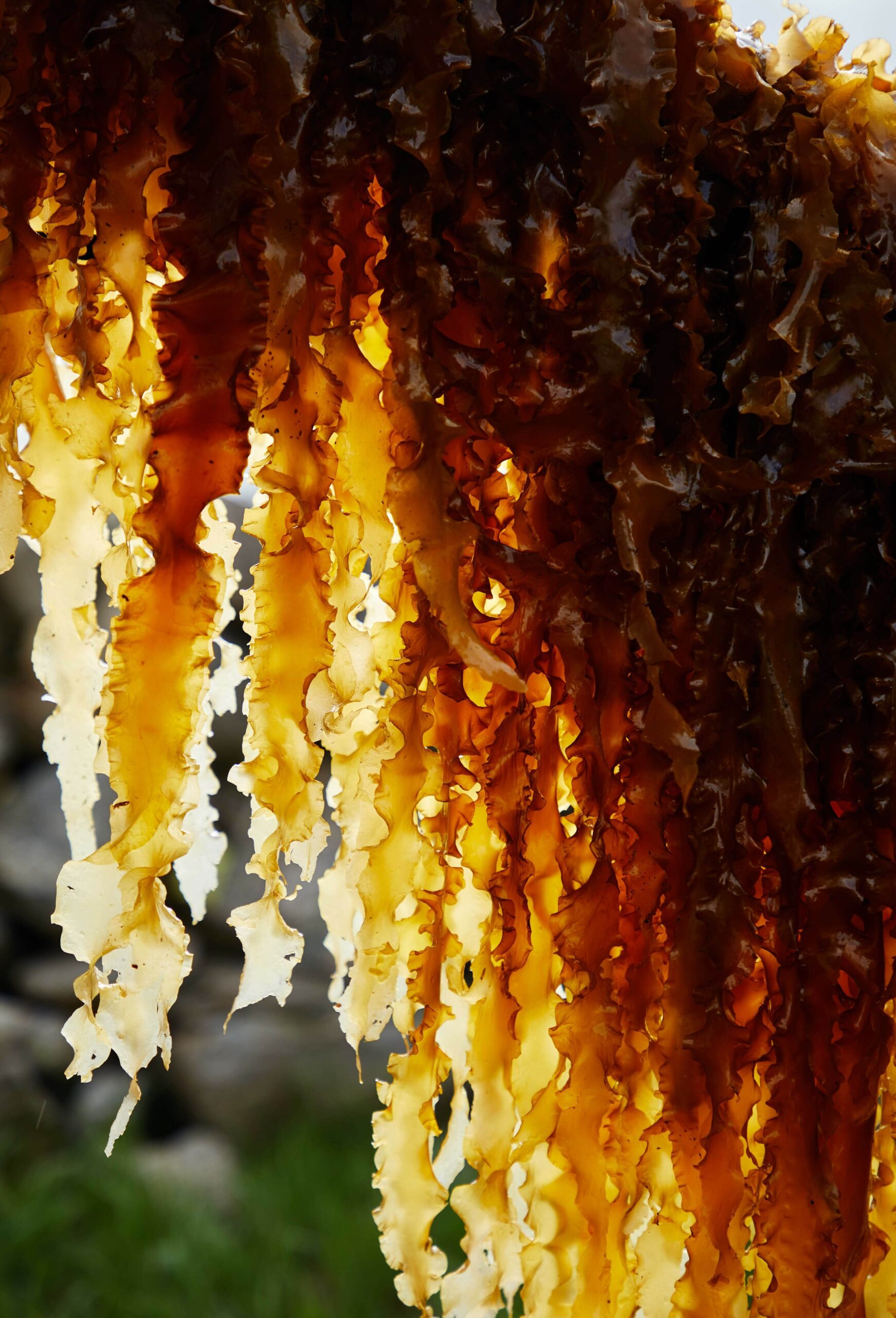
New York State Governor Kathy Hochul vetoed a bill last month that would have permitted leasing of state-owned underwater land for seaweed cultivation. New York State Assemblyman Fred Thiele had supported the bill, which would have expanded kelp cultivation. COURTESY OF GREENWAVE

New York State Governor Kathy Hochul vetoed a bill last month that would have permitted leasing of state-owned underwater land for seaweed cultivation. New York State Assemblyman Fred Thiele had supported the bill, which would have expanded kelp cultivation. COURTESY OF GREENWAVE

New York State Governor Kathy Hochul vetoed a bill last month that would have permitted leasing of state-owned underwater land for seaweed cultivation. New York State Assemblyman Fred Thiele had supported the bill, which would have expanded kelp cultivation. COURTESY OF GREENWAVE

New York State Governor Kathy Hochul vetoed a bill last month that would have permitted leasing of state-owned underwater land for seaweed cultivation. New York State Assemblyman Fred Thiele had supported the bill, which would have expanded kelp cultivation. COURTESY OF GREENWAVE

authorCailin Riley on Jan 4, 2023

Late last month, Governor Kathy Hochul vetoed a bill that would have permitted the leasing of state-owned underwater lands for seaweed cultivation.

It was a move that came as a disappointment to some, including New York State Assemblyman Fred W. Thiele Jr., who said the veto amounts to a missed opportunity to help the state catch up with nearby regions when it comes to harnessing the dual benefits — both economic and environmental — that seaweed cultivation provides.

In a statement released on December 21, Thiele shared his thoughts on the veto.

“As New York continued to fight climate change and nitrogen pollution, this bill would have allowed more kelp farmers and local enterprises to participate in a growing industry that can provide substantial environmental benefits for the state,” the statement reads. “The Governor’s decision to veto this legislation is a missed opportunity to boost our economy and create new jobs for our maritime businesses.”

Thiele expanded on his thoughts earlier this week, saying that, in comparison to other nearby states, including in the New England area, New York is already falling behind when it comes to taking advantage of kelp production. Kelp is a valuable natural resource because it not only removes harmful pollutants like nitrogen, carbon and phosphorus from the water, but it is also a marketable product that can be harvested and used to produce marketable goods like organic fertilizer.

“New England is running circles around us when it comes to running programs with seaweed and kelp,” Thiele said.

Kelp production is already permitted and happening in the waters between the forks, in Peconic and Gardiners bays. The Shinnecock Nation has been cultivating and harvesting kelp since 2021, after tribal members Tela Troge, Darlene Troge, Becky Genia, Donna Collins-Smith, Waban Tarrant and Danielle Hopson-Begun founded the co-op Shinnecock Kelp Farmers, which works in partnership with other entities to grow and harvest kelp in Shinnecock Bay. It is the first Indigenous owned and operated kelp hatchery and farming collective on the East Coast.

Because of the urgency of the climate crisis, and the dual benefits that seaweed cultivation represents, Thiele and other supporters of the bill would like to see more underwater land made available to expand production. He said that while he was disappointed in the veto, he remains hopeful that the goal will come to fruition sooner rather than later.

“It wasn’t like the governor was saying this was a bad idea and that’s why we’re vetoing,” Thiele said.

A program run by the county for seaweed and kelp cultivation in the waters between the forks is in the beginning stages of implementation, and Thiele said Hochul vetoed the bill because she wants to see how that program works out before committing to allowing state lands to be leased for that purpose.

“It’s something we can revisit in the future, and I certainly intend to do that,” Thiele said. “That said, I’m still disappointed. Other states are ahead of us, and have proven the concept already, and New York runs the risk of falling further behind than it already is.”

Thiele said that in addition to continuing to promote the benefits of kelp cultivation and push for its expansion, he would also look into whether or not it would make sense for any future programs to not be administered solely by the Department of Environmental Conservation — which already administers the aquaculture production in those state-owned waters — but to also be under the jurisdiction of the state department of agriculture and markets.

“It’s one of those rare cases where you can improve water quality by producing an economically viable product,” Thiele said of his motivation to keep pushing for expanded kelp production. “It doesn’t get much better than that.”

You May Also Like:

A Day of Quiet

November 27, Thursday, Thanksgiving Day. Morning: I hear the screech owl, the great-horned owl, the Cooper’s hawk, Carolina wren, white-throated sparrow, chirps of the cardinal, red-breasted nuthatch, the cooo of the mourning dove; songs of rooster, flicker, dark-eyed junco. Titmouse, blue jay. Wind, barely a breeze, whispers haaaaaaaa in wind language, lovingly. Tranquility. Peace. I’m alive — ping of chill in the air, my skin zings. This sacred silence is why I moved here 40 years ago. But it’s completely gone now. And why? Was our designation of “green community” just a photo-op? A lie? Words co-opted like the phrase ... 4 Dec 2025 by Staff Writer

White House Confidential

There has been some consternation expressed about changes that the Trump administration is making to the White House, including the East Wing demolition, paving over the Rose Garden, and plans for a grand ballroom. Let’s put some historical perspective on this: The first president to occupy the White House, John Adams, did so 225 years ago last month, and the building and grounds have been undergoing change ever since. Construction of the White House had begun during George Washington’s first term — specifically, at noon on October 13, 1792, with the laying of the cornerstone. The main residence and foundations ... by Tom Clavin

The Nitrogen Threat

“Restore Our Waters” was the title of the invitation. Its subtitle: “Learn How To Switch Out Your Septic To Remove The No. 1 Threat to Groundwater, Nitrogen, From Our Septic Systems With Tax-Free Grant Funds.” Some 100 people packed into the auditorium of the Southampton Cultural Center two weeks ago for a “public education event” to learn about an issue that has deeply impacted Suffolk County: the migration of nitrogen from cesspools into groundwater, the sole source of potable water in Suffolk. The nitrogen also goes into surface waters, including lakes, ponds and bays. Spotlighted at the event was the ... by Karl Grossman

Vigor and Decay

Brown is the color of the days. We, at such an angle to the sun, give up our growing season and must tilt toward the melancholy color of mud. While finger-painting, brown might be the first color you make by mistake. In your enthusiasm, you blended all the colors on the pallet and ended up with nothing remarkable. In fact, it looks like excrement. Brown may not be a vibrant color, but it is generally a warm one. All living things are, at some point, brown. The goldfinch, as if reduced to rags, just dingy fluff where brightness had been. ... by Marilee Foster

Community News, December 4

HOLIDAY HAPPENINGS Santa on the Farm Weekend The Long Island Game Farm invites families to ... by Staff Writer

The Start of a New Era at The Express News Group, With a New Website and Focus on Digital Media, and Leadership Changes

The end of the year will be the start of a new era at The ... 3 Dec 2025 by Cailin Riley

Sag Harbor Planning Board Has Questions as Redevelopment of 2 Main Street and 22 Long Island Avenue Come Into Focus

The Sag Harbor Village Planning Board had a number of questions as the board reviewed ... by Stephen J. Kotz

Sign the Ban

Pity the poor horseshoe crab. It is, without question, a survivor almost beyond compare. Consider this: There are fossils of the creature dating back 445 million years. Dinosaurs arrived about 200 million to 250 million years ago — which means the time between us and dinosaurs is equal to the time between dinosaurs and the earliest horseshoe crabs. And they’re still here, nearly unchanged. But they finally may have met their match. The American horseshoe crab has “vulnerable” status, according to the International Union for Conservation of Nature. The population faces a whole series of challenges, including sea-level rise, coupled ... by Editorial Board

Reloaded Bridgehampton Boys Take Aim at 10th State Title

From the hunters to the hunted. That’s the way Bridgehampton boys basketball head coach Carl ... by Drew Budd

Pierson Girls Eye Playoff Push; Boys Seek Big Jump After Rebuild

For the past two years, the Pierson girls basketball team has lost by just a ... by Drew Budd