Gregory Rabassa, Renowned Literary Translator, Dies June 13

icon 1 Photo

author on Jun 16, 2016

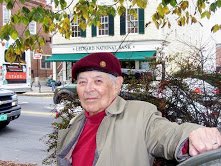
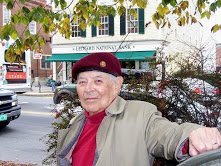
Gregory Rabassa, renowned teacher, scholar and translator, died June 13, in Branford, Connecticut. He was 94 and had a home in Hampton Bays.

Dr. Rabassa was born March 9, 1922, in Yonkers, to Clara Macfarland of New York, and Miguel Rabassa of Cuba. He grew up in Hanover, New Hampshire, where his parents operated a popular inn known as the Villaclara Farm. Graduating from Hanover High School in 1940, he attended Dartmouth College. When the United States entered World War II, Dr. Rabassa, still in college, volunteered for the Enlisted Reserve Corps. Called up before he could graduate, Dr. Rabassa, who had taken his comprehensive examinations in romance languages, was six points short of graduation. It was while he was involved with the Fifth Army in the European campaign that, much to his surprise, Dr. Rabassa received his diploma in the mail. Dartmouth officials, he was pleased to learn, had determined that his Army service had provided him with sufficient physical education training to gain him the needed three points in that area and that his participation in the war effort, in North Africa and Italy, had given him the also needed three points in modern European history, which Dr. Rabassa, with characteristic wit, would later say that he was not only studying but helping to make. A decorated veteran with a rank of staff sergeant of infantry, Dr. Rabassa took great pride in his military service and in his decoding, encryption and cipher work with the Office of Strategic Services (OSS).

It was while serving in Caserta, Italy, and doing this kind of work, that Dr. Rabassa felt he received his earliest lessons in the art of translation. In 1945, Dr. Rabassa enrolled at Columbia University as a graduate student in Spanish. Later, in 1954, Dr. Rabassa would receive his Ph.D. in Portuguese and Luso-Brazilian literature. Dr. Rabassa was invited to stay on in the Columbia system, teaching Spanish at Columbia College, honing his Portuguese, and also attending Columbia University seminars on James Joyce (where he studied with William York Tindall and from which he gained a lifelong love of Joyce and his work, especially “Finnegans Wake”) and classes offered by the German, Italian, and French programs. Part of his assignment at Columbia College was teaching in the Great Books program, which he thoroughly enjoyed and which allowed him to develop his love of Shakespeare and Faulkner. Dr. Rabassa stayed on at Columbia until 1969, when, having been offered a position as professor of romance languages and comparative literature, he left to join the faculty at Queens College and the City University of New York Graduate Center. He held this position until his retirement as distinguished professor of romance languages and comparative literature.

Dr. Rabassa was widely known as “the translator’s translator.” Publisher Alfred A. Knopf once dubbed Dr. Rabassa the “pope of translation.” For William Kennedy, Dr. Rabassa ranked as one of the greatest translators “who ever drew breath.”

It was through his translations that Dr. Rabassa would become the writer he had always wanted to be. Gabriel García Márquez, the author of “One Hundred Years of Solitude” (a novel that Dr. Rabassa also translated), once described Dr. Rabassa as “The best Latin American writer working in the English language.” Dr. Rabassa’s many awards include the National Medal of Arts, New York Public Library Literary Lion, PEN/Ralph Manheim Medal, PEN/Martha Albrand Medal, PEN/Gregory Kolovakos Award, American Academy of Arts and Letters Literature Prize, a Guggenheim Fellowship and the Brazilian Studies Association Lifetime Achievement Award.

Outside of the literary world, he had a love for nature. Whether it was bird-watching, hiking, or observing a particular bird or tree while out on a walk, he thrived on it. He spent many years in Hampton Bays, enjoying the wildlife of the area. He was also an avid stamp collector.

He is survived by his wife, Clementine; daughters Kate Rabassa Wallen and Clara Rabassa; and granddaughters Jennifer Wallen and Sarah Wallen.

The funeral is private. Condolences may be left at gregoryfdoylefuneralhome.com.

Memorial donations may be made to the OSS Society and Dartmouth College.

You May Also Like:

A Surprise Every Morning: Sunrises Are Southampton Photographer's Specialty, and He Shares Them Daily on Instagram

Every day he’s in Southampton, Eric Nastri does the same exact thing. And yet, he ... 4 Dec 2025 by Cailin Riley

Southampton Turns Back to Outside Help To Stay Ahead of Building Application Deluge

Southampton Town has renewed a contract with a freelance building plans examiner to keep up ... by Michael Wright

Ground Broken for Westhampton Community Center; Long-Awaited Resource Could Open in 2026

Southampton Town officials held a ceremonial groundbreaking on the long-awaited Westhampton Community Center project on ... by Michael Wright

Southampton Police Reports for the Week of December 4

SOUTHAMPTON VILLAGE — Matthew Kopoulos, 34, of East Hampton was arrested by Village Police on December 2 and charged with petit larceny and unlawfully fleeing an officer, both misdemeanors, stemming from a September 25 incident in which police say Kopoulos stole items from the 7-Eleven on North Sea Road and then fled the scene on an e-bike. When a Village Police officer attempted to stop him he sped away and drove onto the Shinnecock Territory. A village officer recognized Kopoulos walking on the side of Tuckahoe Road this week and placed him under arrest. He was arraigned in Village Justice ... by Staff Writer

Love in Action

On behalf of the Hamptons United Methodist Church, I would like to extend our heartfelt thanks to the generous donors and dedicated volunteers who made this year’s free community Thanksgiving dinner a remarkable success. Because of your kindness, we were able to serve nearly 500 of our neighbors — families, seniors, workers and individuals from all walks of life — by providing a holiday meal for their table. For the sixth year in a row, we are also deeply indebted to our fearless leader, Denise Smith-Meacham. To our volunteers: You peeled and chopped and cooked, packaged and delivered meals, washed ... by Staff Writer

A Day of Quiet

November 27, Thursday, Thanksgiving Day. Morning: I hear the screech owl, the great-horned owl, the Cooper’s hawk, Carolina wren, white-throated sparrow, chirps of the cardinal, red-breasted nuthatch, the cooo of the mourning dove; songs of rooster, flicker, dark-eyed junco. Titmouse, blue jay. Wind, barely a breeze, whispers haaaaaaaa in wind language, lovingly. Tranquility. Peace. I’m alive — ping of chill in the air, my skin zings. This sacred silence is why I moved here 40 years ago. But it’s completely gone now. And why? Was our designation of “green community” just a photo-op? A lie? Words co-opted like the phrase ... by Staff Writer

White House Confidential

There has been some consternation expressed about changes that the Trump administration is making to the White House, including the East Wing demolition, paving over the Rose Garden, and plans for a grand ballroom. Let’s put some historical perspective on this: The first president to occupy the White House, John Adams, did so 225 years ago last month, and the building and grounds have been undergoing change ever since. Construction of the White House had begun during George Washington’s first term — specifically, at noon on October 13, 1792, with the laying of the cornerstone. The main residence and foundations ... by Tom Clavin

The Nitrogen Threat

“Restore Our Waters” was the title of the invitation. Its subtitle: “Learn How To Switch Out Your Septic To Remove The No. 1 Threat to Groundwater, Nitrogen, From Our Septic Systems With Tax-Free Grant Funds.” Some 100 people packed into the auditorium of the Southampton Cultural Center two weeks ago for a “public education event” to learn about an issue that has deeply impacted Suffolk County: the migration of nitrogen from cesspools into groundwater, the sole source of potable water in Suffolk. The nitrogen also goes into surface waters, including lakes, ponds and bays. Spotlighted at the event was the ... by Karl Grossman

Vigor and Decay

Brown is the color of the days. We, at such an angle to the sun, give up our growing season and must tilt toward the melancholy color of mud. While finger-painting, brown might be the first color you make by mistake. In your enthusiasm, you blended all the colors on the pallet and ended up with nothing remarkable. In fact, it looks like excrement. Brown may not be a vibrant color, but it is generally a warm one. All living things are, at some point, brown. The goldfinch, as if reduced to rags, just dingy fluff where brightness had been. ... by Marilee Foster

Community News, December 4

HOLIDAY HAPPENINGS Santa on the Farm Weekend The Long Island Game Farm invites families to ... by Staff Writer