


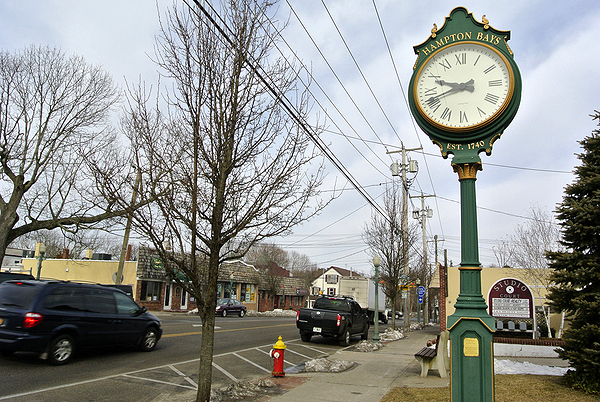
 3 Photos
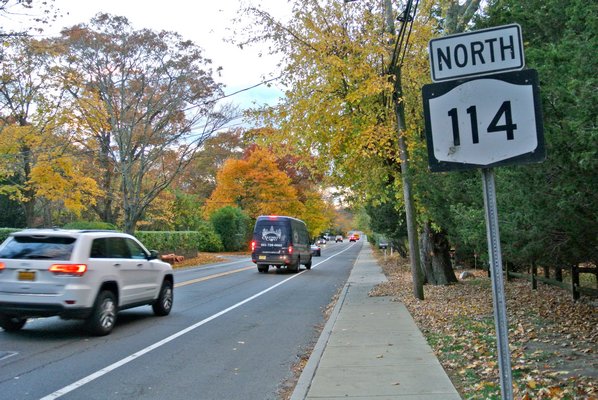
Sag Harbor Village officials are seeking to reduce the speed limit on Route 114. DANA SHAW
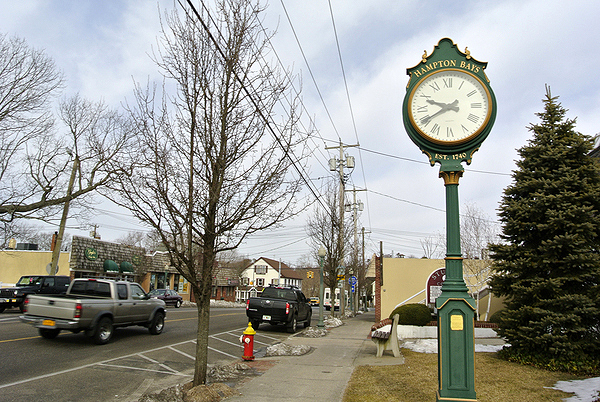

Development consultants working for Southampton Town have presented lawmakers with their assessment and recommendations for a comprehensive planning handbook for the hamlet of Hampton Bays.
The study, known as a generic environmental impact study, or GEIS, is not yet public but discussion with engineers at a Town Board work session last week hinted at a smattering of the recommendations, few of them surprising: attention to water quality issues, restraining additional development, traffic concerns.
The Town Board will review the document in the coming weeks to make sure it has addressed all the concerns about the hamlet study raised during public hearings nearly two years ago. Once they have deemed the document complete, its full text will be made public. The board will then host a new round of public participation.
The study, now more than eight years in the offing, aims to shape future development in the hamlet through the implementation of a broad array of recommendations that include zoning changes, capital projects, transportation upgrades, and stormwater management and beautification projects.
On Thursday, February 14, a representative of Cashin Associates, the Hauppauge engineering and development firm the town hired to complete the third iteration of the Hampton Bays study, discussed a few of the things they found during their examination of the study.
“There are over 100 recommendations on mitigation strategies to protect the environment,” Michael Russo told board members. “We reviewed the comments from the public participation period—three public hearings, a three month written comment period, and the ad hoc steering committee—and we came up with some additional ideas. When we do the findings statement, we’ll include all the recommendations that have been made.”
Mr. Russo noted that a handful of the concerns raised in the initial discussions, as well as in earlier versions of the study, have been addressed—and others have been cast in a different light by new understandings or changes in the community.
The study, Mr. Russo said, recommends a broad effort to reduce storm water runoff to help address water quality issues. In the last year, however, scientific studies have revealed that much of the water quality issues seen in the tidal waters that bound Hampton Bays are actually being caused by subterranean infiltration of pollutants into water tables and creeks from residential septic systems. Mr. Russo noted that the study does offer recommendations to the town about addressing septic issues, largely mirroring a plan the Town Board has already undertaken to help homeowners fund the replacement of aging, leaking septic systems with more modern systems that greatly reduce the amount of pollutants they release.
“People are very concerned about future development but maybe the biggest threat is the existing development,” Mr. Russo said, a point board members said was magnified in Hampton Bays because it is the most densely populated area of the town and also sits almost entirely within the watershed of the local bays.
The firm also recommended that when reviewing a Planned Development District, or PDD, application, the Town Board should demand that the applicant present them with detailed comparisons of the septic system impacts of the project with each of several advanced treatment systems.
Mr. Russo said the Town Board should also demand that PDD proposals, which can greatly exceed the level of development normally allowed on a property, be required to have no more negative environmental impacts than whatever development could be done as of right—regardless of whether an advanced treatment sytem is employed by the larger project.
Along similar lines, Mr. Russo said the plan will recommend that the town secure the remaining 4.8 Pine Barrens development credits remaining in the Hampton Bays district to protect from future, increased-density development. He said the study also warns against importing any Pine Barrens credits into the Hampton Bays district, allowing additional development.
Cashin Associates left a recommendation in the study that explored creating a second main thoroughfare from the business district to the residential areas by connecting Good Ground Road and Route 24—a plan devised to relieve congestion in the downtown during morning commuting hours. But board members noted that since the redesign of County Road 39 in 2010, much of that congestion has been relieved. Mr. Russo said that if the board wanted to do away with the proposal for the road extension it should be done in the findings statement portion of the plan’s drafting.
A smattering of Hampton Bays residents attended the work session, though with little in the way of details to discuss, they could offer little input, other than expressions of relief that the study is moving forward.
“This has gone on now for eight years,” Hampton Bays Civic Association president Bruce King said. “How long did the East Quogue study take, three years? We’re on our third plan. I’m very happy it’s moving forward.”


 on Feb 20, 2013