


 5 Photos
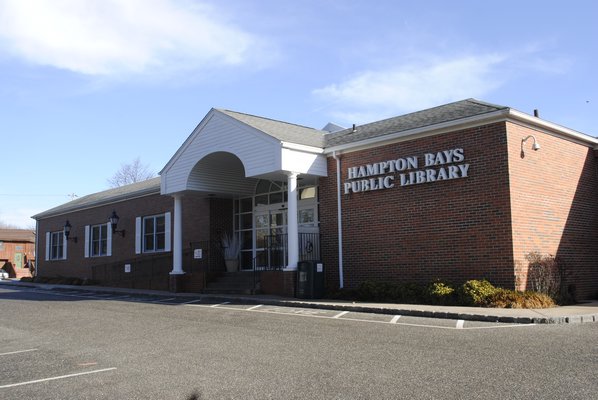
The Hampton Bays Library Board of Trustees is asking taxpayers to approve a nearly $10 million bond referendum to renovate the Ponquogue Avenue facility. AMANDA BERNOCCO

If the nearly $10 million bond referendum is approved an additional 25 parking spaces will be built at the Hampton Bays Library. AMANDA BERNOCCO
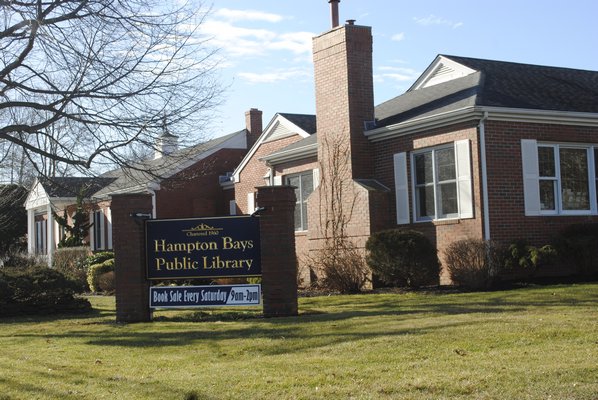
The Hampton Bays Library Board of Trustees is asking taxpayers to approve a nearly $10 million bond referendum to renovate the Ponquogue Avenue facility. AMANDA BERNOCCO
If the nearly $10 million bond referendum is approved an additional 25 parking spaces will be built at the Hampton Bays Library. AMANDA BERNOCCO

Hampton Bays Library Director Susan LaVista
The Hampton Bays Public Library will be holding an informational meeting regarding its proposed $9.9 million bond referendum on Tuesday, March 7—exactly one week before taxpayers will head to the polls to vote on the revised plan.
Set to begin at 7 p.m. at the Ponquogue Avenue facility, the meeting will detail the library board’s plans to hire an architect to draw up a completely new floor plan for the library that would eliminate wasted, unused space, according to Hampton Bays Library Director Susan LaVista.
Expected to cost $9.9 million, the revised plan also calls for completely replacing the roof, adding insulation throughout the two-story building, as well as installing an energy efficient heating and cooling system, along with a new fire suppression system.
The renovated building, if the work is ultimately approved by district taxpayers, would be brought into compliance with Americans with Disabilities Act standards, officials said. The work would also require the closure of the library itself for several months, meaning the facility will be forced to operate from a temporary trailer during the renovations.
Voting on the referendum will run from 10 a.m. until 9 p.m. on Tuesday, March 14, in the library’s main program room.
Ms. LaVista explained this week that the library’s seven board members decided to put up another bond referendum—after a more ambitious $15.8 million bond referendum was rejected by taxpayers in June—because they still need to address immediate problems with the building, starting with the need for a new roof. That plan, however, called for the complete demolition of the current library and constructing its replacement from scratch.
“The thing that is really important to keep in mind is by doing this all at one time we’ll be able to address all the problems instead of just patching,” Ms. LaVista said.
As with the board’s first proposal, the updated plan calls for the purchase of an adjoining half-acre lot at 3 Argonne Avenue for $390,000 to provide additional parking spaces. The house that sits on the property would likely be preserved and used for additional library space or by Friends of the Library, a nonprofit group that raises funds for the library through book sales and other avenues, according to Ms. LaVista.
“One of the big things that has always been on the table is more and safer parking, and more space, which we’ll get by acquiring the adjacent house,” she added.
The project would be paid for with a $9.9 million bond that could run for as long as 30 years and with an annual debt service of $646,000, according to Ms. LaVista, who stressed that those terms have not yet been finalized.
On Tuesday morning, Ms. LaVista said the library’s tax rate would climb about 18 cents, to approximately 77 cents per $1,000 of assessed valuation, if the bond is approved on March 14, an estimated 30-percent increase. Therefore, a person with a house assessed at $350,000 and now paying about $201 in library taxes can expect to pay an extra $64 a year for the length of the bond to finance the work.
David Zimmerman, president of the library board, did not return calls or emails this week.
The lack of discussion about the upcoming bond vote has prompted some community members to question the reasoning of library officials, with a few going as far as to suggest that they are purposely downplaying the upcoming vote in the hopes of getting it approved.
Janet Allen of Hampton Bays, who said she voted against last year’s $15.8 million referendum, said library officials have not spent much time selling their proposal to the public, noting that next week’s informational hearing will be the first and only one prior to the March 14 vote. For comparison’s sake, officials held more than two dozen informational meetings, and even met one on one with several local organizations, prior to the first bond vote.
“I went to the meetings last year—I followed it very closely,” Ms. Allen said. “A lot of people don’t have the time, [so] they read the newspaper, or they hear from word of mouth. They think [the bond] vote was over and done with last year. Eight months ago, it was voted down, and now it’s back on the table with a [vote] scheduled, and they are not holding any public meetings.”
Library officials shared some information with taxpayers in their last two newsletters. In the January/February version, Ms. LaVista explains that the work is needed to address basic building issues and to offer additional parking. The newsletter did not include specific plans or estimated costs.
In the March/April newsletter that was recently circulated, Ms. LaVista reveals that the work is expected to cost $9.9 million and that a “special-mailing” with additional details would follow. That mailer, which Ms. LaVista said was postmarked last week, offers additional details as well as a rough sketch of what the updated library would look like.
It also offers an explanation from the library board about its decision to put up its second bond referendum in nine months: “Last June the community voted against the proposal to build a new library. The library has only two options: To completely renovate the entire building and acquire the adjacent property and house as a long-term solution. Or to continue making repairs on a piecemeal approach over an extended period, which would not only cost significantly more, it would cause continual disruption in library services until all the work has been completed.
“After reviewing the options from both a fiscal and operational viewpoint,” the letter continues, “the Board felt that a complete renovation was the responsible choice.”
When she contacted the library director earlier this year, Ms. Allen said she was surprised to learn that the board had no plans to hold any informational meetings prior to the vote. The lack of communication, according to Ms. Allen, suggests to her that the board thinks it has a better shot at securing approval when many hamlet residents are wintering in warmer climates. Last time around, she said, board members were much more open in sharing information and listening to input from the public.
“But now they are keeping it quiet—it’s a ‘hush-and-rush,’” Ms. Allen said. “They want it to pass, but that’s a long-term debt for those of us who are going to be paying for the next 30 years.”


 Amanda Bernocco on Feb 27, 2017