


 6 Photos
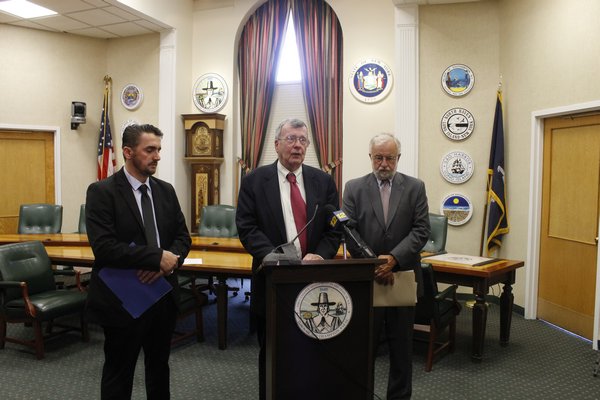
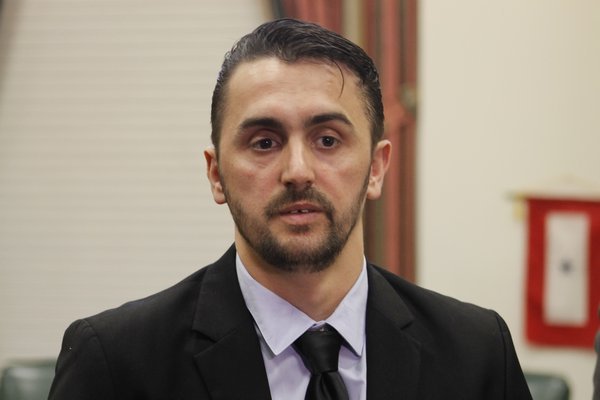
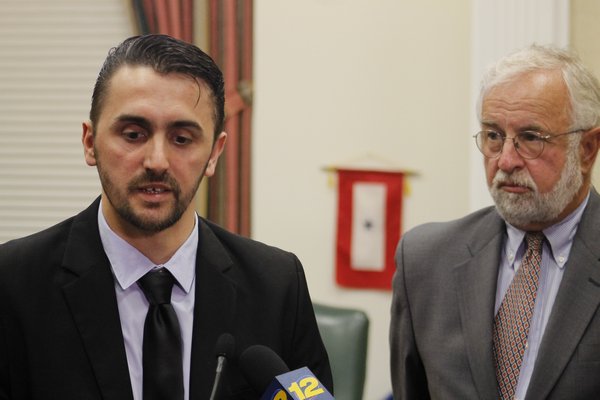
The slain brothers' younger sibling Fatose Bytyqi. PRESS FILE
Fifteen years ago, three brothers from Hampton Bays, while trying to carry out a peaceful mission following the end of the Kosovo War, were arrested and executed by the Serbian government.
Ylli, Agron and Mehmet Bytyqi were sentenced to 15 days in jail for accidentally crossing the unmarked administrative border between Kosovo and Serbia in June 1999. Despite a judge’s order that they be released, the three brothers were whisked away, bound and blindfolded, and shot in the back of the head in early July 1999, their bodies dumped in a mass grave for slain Albanians.
While a handful of Serbian military officials believed to be involved in the Bytyqi brothers’ executions have been arrested, none has been convicted in connection with the illegal execution.
And one man has made it his mission to make sure justice is served.
Fatose Bytyqi, a younger brother of the three Bytyqis who lives in Hampton Bays, has met with dozens of U.S. Department of State officials and made almost 50 trips to the Serbian capital of Belgrade, demanding answers from the Serbian government regarding his slain siblings.
Now, after 15 years of searching for answers, Mr. Bytyqi hopes to finally bring his brothers’ killers to justice, with the help of U.S. Representative Tim Bishop of Southampton and members of Congress.
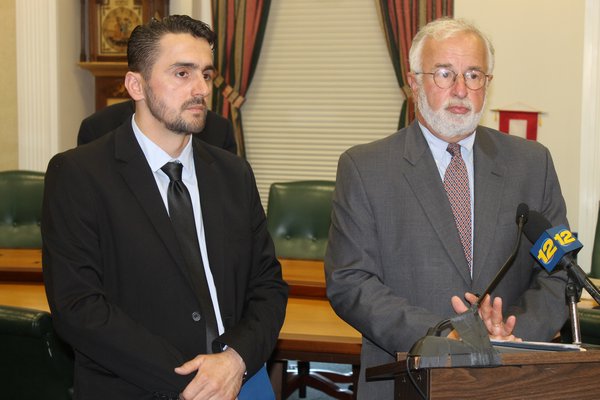
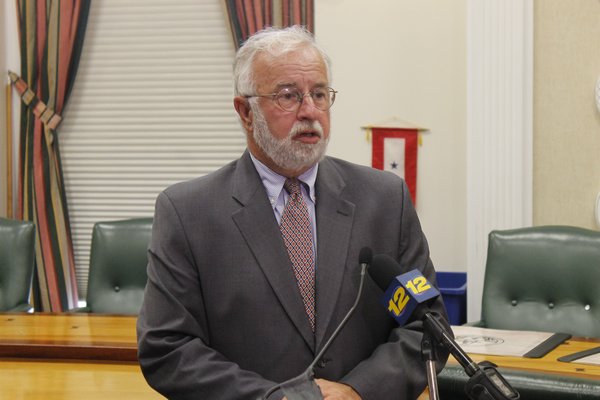
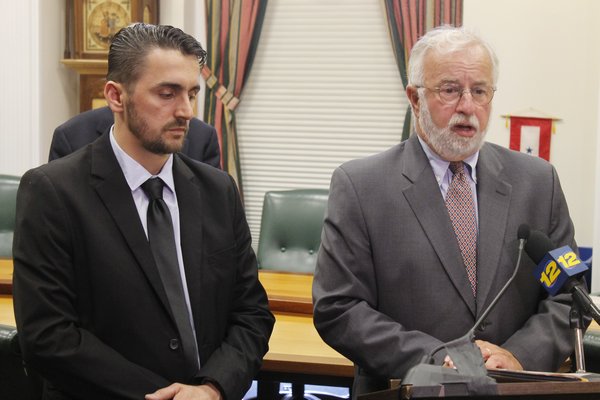
“For 15 years, me and my family expected results from the Serbian government,” Mr. Bytyqi said during a press conference held on Monday morning at Southampton Town Hall while accompanied by Mr. Bishop. “The Serbian government’s responsible for my brothers—their kidnap and their execution—and no one’s brought to justice.”
While standing beside Mr. Bytyqi, Mr. Bishop discussed a resolution he introduced to the House Committee on Foreign Affairs last October that prioritizes bringing the Bytyqi brothers’ killers to justice, criticizes the fact that no one has been convicted or is currently facing charges in the matter, and devotes unspecified American resources toward monitoring the Serbian government’s investigation into the killings.
A copy of the resolution states that any progress, or lack thereof, by Serbia regarding this matter should be a significant factor in determining the future development of U.S.-Serbian relations. Currently, the Republic of Serbia is a candidate to join the European Union—something that Mr. Bytyqi said should be blocked if its government cannot be held accountable for killing three U.S. citizens.
“Whether our resolution passes or not, the Serbian government must simply do the right thing,” Mr. Bishop said. “They are attempting to rejoin the community of nations, they are attempting to atone for past atrocities, but our government must make it clear to the Serbian government that if they wish to maintain or establish appropriate relationships with our country, finding and prosecuting the murderers of these three young men must be part of their effort to make amends.”
Born just outside Chicago to Ahmet and Bahrije Bytyqi, ethnic Albanian immigrants from Kosovo, the three brothers—Ylli Bytyqi, then 25, Agron Bytyqi, 24, and Mehmet Bytyqi, 21—felt compelled to join the Kosovo Liberation Army during the spring of 1999 to fight in the Kosovo War, a 15-month-long conflict between Yugoslavia and Albanian rebels in the Kosovo territory. The three siblings, who had lived in Hampton Bays since the early 1990s, wanted to fight for the independence of their ethnic homeland.
They never got the chance to do so: The war ended a few months after their arrival. But the brothers agreed to help several ethnic Romas—a persecuted group in Kosovo at the time—get out of Kosovo before returning home. The group of Romas had been their neighbors in Kosovo and helped bring the Bytyqis food when it was too dangerous for them to go out in public.
The brothers crossed a section of the Kosovo-Serbia border illegally during their journey and were subsequently arrested. The neighbors they were assisting were freed, but the Bytyqi brothers would spend the rest of their days in captivity.
Two years after their deaths, the remains of the three brothers were uncovered in a mass grave in the Serbian village of Backo Petrovo Selo, thus compelling Fatose Bytyqi, along with his other brother, Ilir, to begin their search for answers. They also have another brother, Enver, and a sister, Bukurije.
The bodies of their slain siblings were returned to New York in March 2002.
Fatose and Ilir Bytyqi have been assisted by former U.S. Ambassador to Indonesia and Bulgaria Robert L. Barry, who also worked as the Head of Mission for the Organization for Security and Cooperation in Europe in Bosnia and Herzegovina, in their quest to bring the murderers of their brothers to justice.
Mr. Barry said the blame for their deaths should fall squarely on Goran Radosavljevic, a lieutenant colonel of Yugoslavia’s Ministry of Internal Affairs and the commanding officer of the Backo Petrovo Selo special forces training camp where the Bytyqis were executed.
But because Mr. Radosavljevic still has strong political ties within the Serbian government, Mr. Barry said he has been insulated from war crimes prosecution.
“This is a case of political will,” Mr. Barry said. “They know who is responsible, we know who is responsible. The question is: Is the Serbian government going to lift the curtain of silence surrounding this case, and all the people we know were in the chain of command and who probably gave the order that day to assassinate the Bytyqi brothers, and bring them to trial?”
Ahmet Bytyqi, the father of the Bytyqi brothers, said this kind of corruption is exactly why he and his wife left Serbia, which was then part of Yugoslavia, in 1971 for Italy, before moving to the United States.
Beyond his own frustration with the lack of results in the investigation of his sons’ deaths, the elder Mr. Bytyqi said the way the Serbian government is approaching this case is indicative of a greater problem within the country.
“It should be in the interest of any government to prosecute its criminals that wear badges before those who do not,” he said. “I feel sorry for these people, too, because they continue to live under this government.”


 Kyle Campbell on Jul 8, 2014