


 1 Photo
Hampton Bays Middle School is all about the green—going green, that is.
Late last month, the State Education Department announced that the Ponquogue Avenue school is one of three state finalists in the U.S. Department of Education’s Green Ribbons Schools program. The award program recognizes schools that create an environmentally conscientious atmosphere through curriculum or building design.
According to Lars Clemensen, Hampton Bays schools superintendent, the middle school submitted an application that had elements of both requirements.
“I am thrilled,” Mr. Clemensen said during a recent interview regarding the contest. “It is a testament to the Board of Education’s commitment to the building, and to our faculty who have really taken the idea of environmental stewardship and run with it.”
In total, the state received 27 applications; one winner from each state will be announced on Monday, April 23, the day after Earth Day. The winning school will participate in an awards presentation in Washington, D.C., over the summer.
A key part of the application for the middle school, which opened in 2008, is the building’s designation as a Leadership in Energy and Environmental Design (LEED) school, which means that the design and construction of the building met strict “green” standards. Burton Behrendt & Smith Architects and Engineers of Patchogue designed the middle school, with assistance from Beatty, Harvey & Associates LLP of Hauppauge.
According to the district’s website, the building’s eco-friendly features include: extra insulation and high-quality windows to provide maximum air control; dual heating systems that consume both oil or natural gas depending on the most available and inexpensive resource at the time; the use of recycled materials throughout construction; preserving as much of the natural surrounding landscape as possible; and choosing “local” materials for construction that did not have to be transported more than 500 miles.
While Mr. Clemensen said the LEED certification was a distinguishing component of his district’s application, he does not think it was the deciding factor in being selected as a state finalist.
“What really put us over the top was the curriculum,” Mr. Clemensen said. “The environment curriculum is really a rich component of the education here, and I think that put us over the top.”
Middle school art teacher Kathy Dayton agrees. Ms. Dayton, who spent the summer working at the district as an administrative intern, said one of her main responsibilities was spearheading the application process.
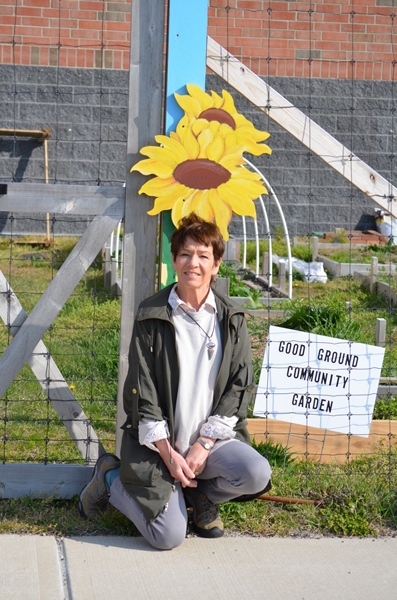
According to Ms. Dalton and the superintendent, several things separate their middle school from others in terms of environmental awareness. Behind the building is a community garden that is used to teach students the importance of growing their own food and leading healthier lifestyles. A new composting initiative also teaches students the importance of recycling. Students also have the option of participating in the school’s Science and Earth clubs; both spend time focusing on what students can do to help the environment.
More recently, the district added a 10-week sustainability course that emphasizes the different things that students can do to protect their planet and lead healthier lives. And each year, students participate in Southampton Town’s Great East End Cleanup, helping clean public beaches and parks in the hamlet.
“The building itself set the stage for us,” Ms. Dalton said about the district’s decision to delve into environmental studies and stewardship. “Since then, other players have made this happen.”
All of these elements helped Ms. Dayton, along with a panel that included Mr. Clemensen and middle school Principal Dennis Schug, fill out the tedious application form that featured three “pillars” that included: addressing all the “green” aspects of the school; how they have improved the well-being of students and staff; and how the programming has educated students and staff about the environment.
They got a jump-start on the process last summer when they started pulling together information. They received the formal application in January and had until February to complete and return it.
After months of hard work, the district was thrilled to learn that it was one of only three finalists. Sleepy Hollow Middle School in Sleepy Hollow and Bethlehem Central Middle School in Delmar are the other two state finalists.
“We were elated—it was just a special recognition,” Mr. Schug said. “This result is truly an effort of people working together from the district to the building level, and, most importantly, bringing it to the kids. It is a privilege to be recognized.”


 Erin McKinley on Apr 10, 2012