


 7 Photos
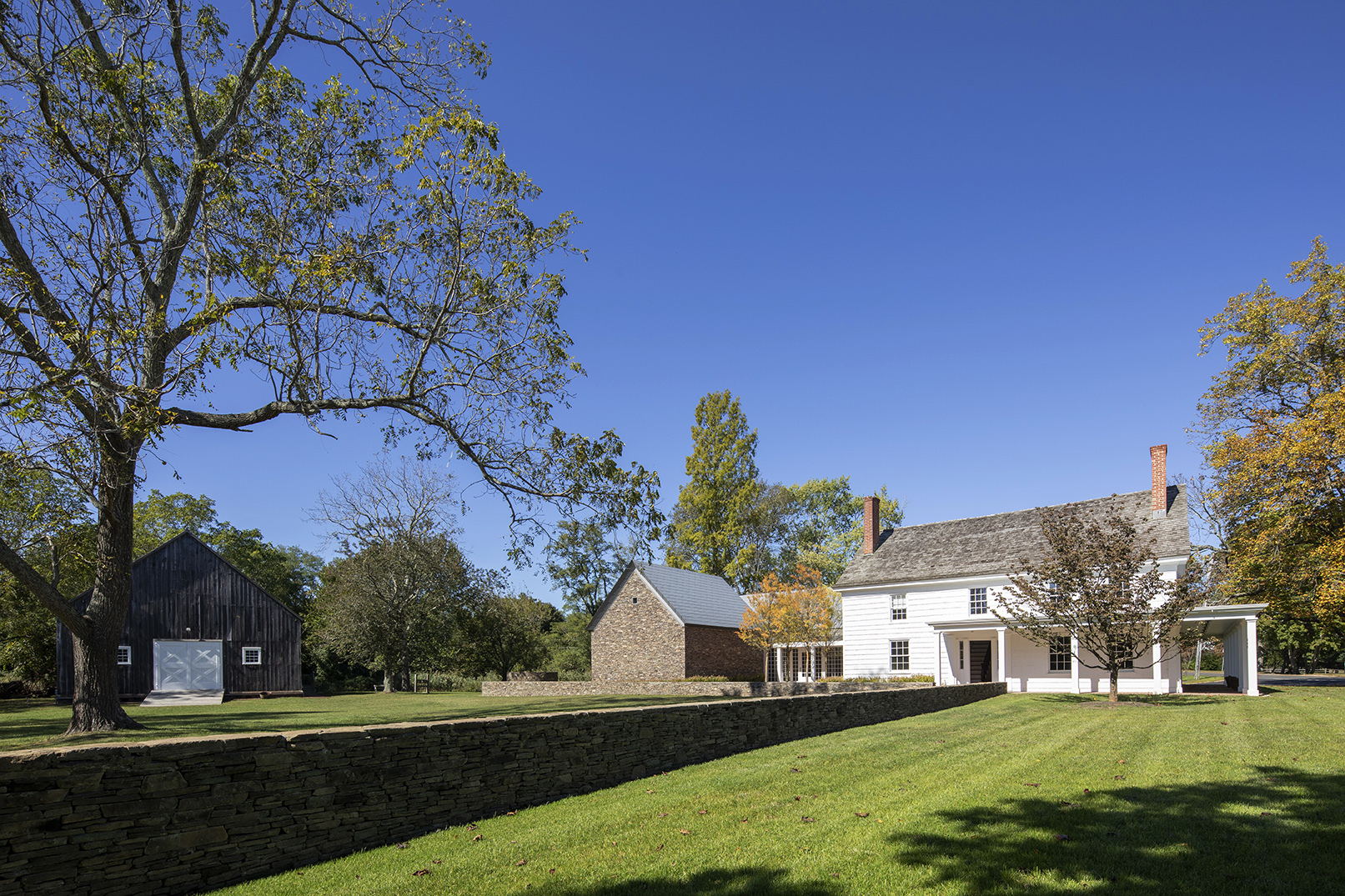
Havens House.
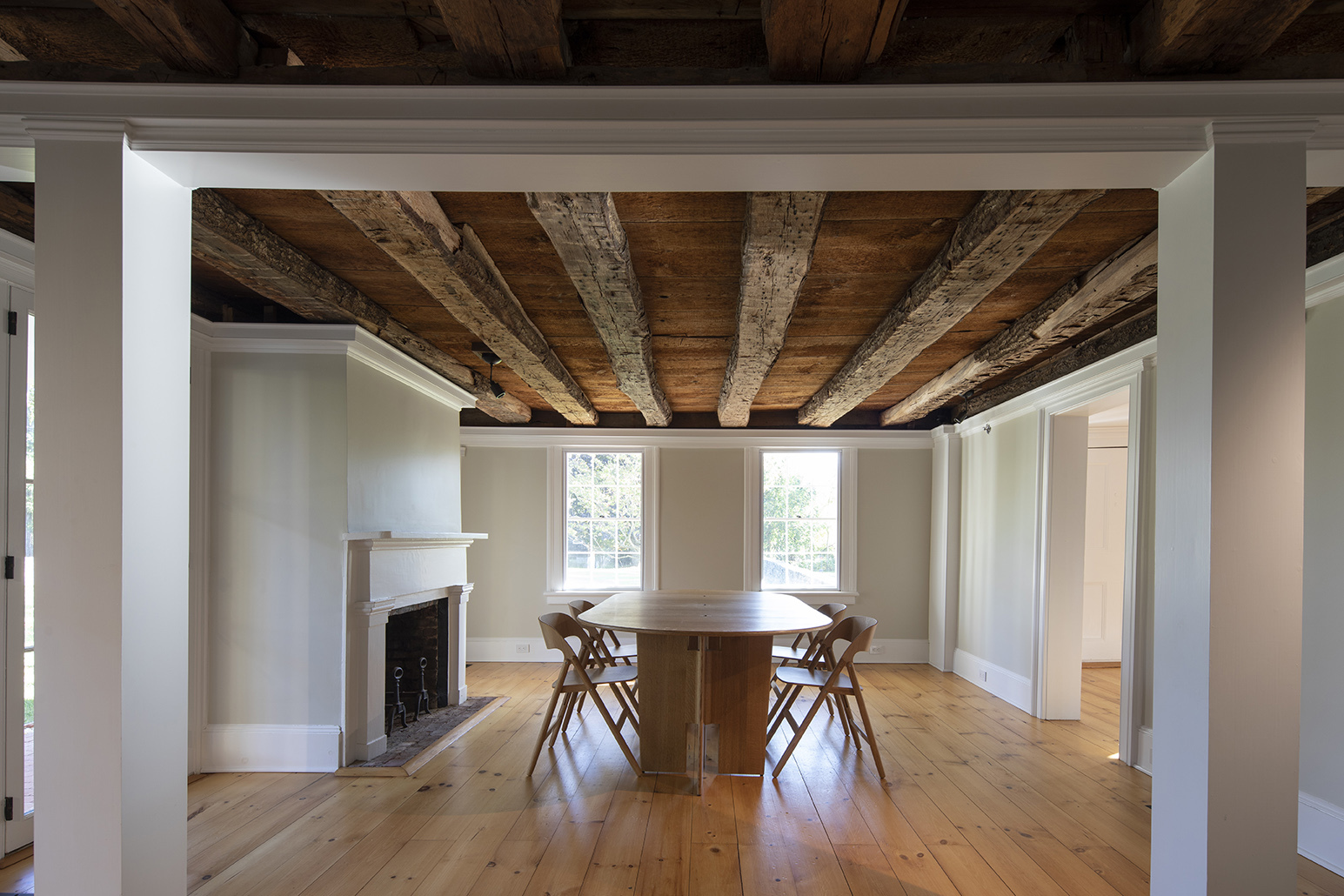
An interior room in the restored Havens House courtesy photo
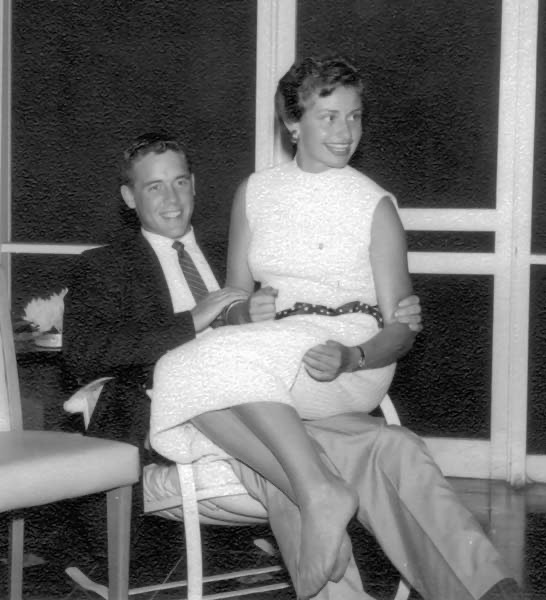
William and Elizabeth Pederson in 1959. courtesy photo
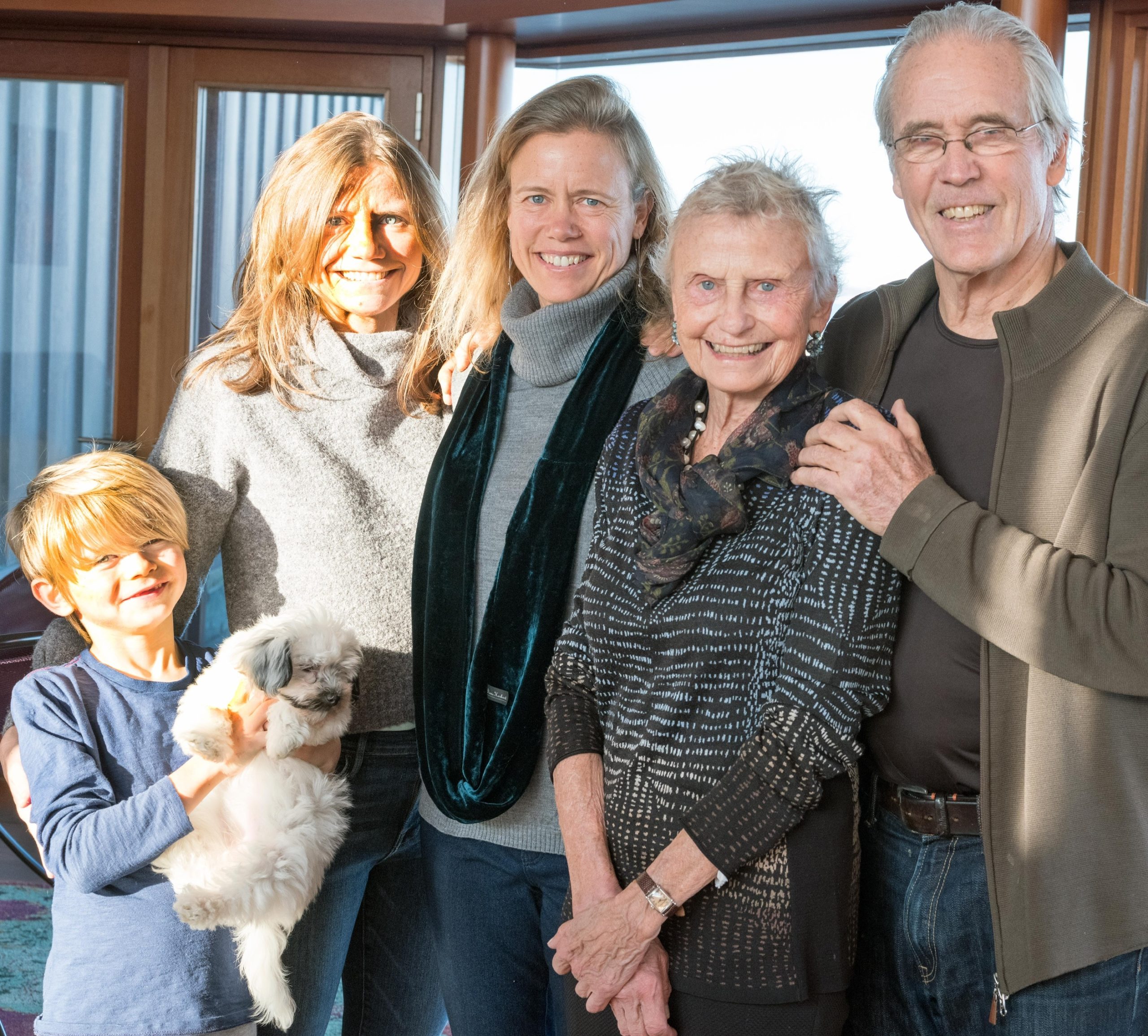
The Pederson family. Courtesy photo
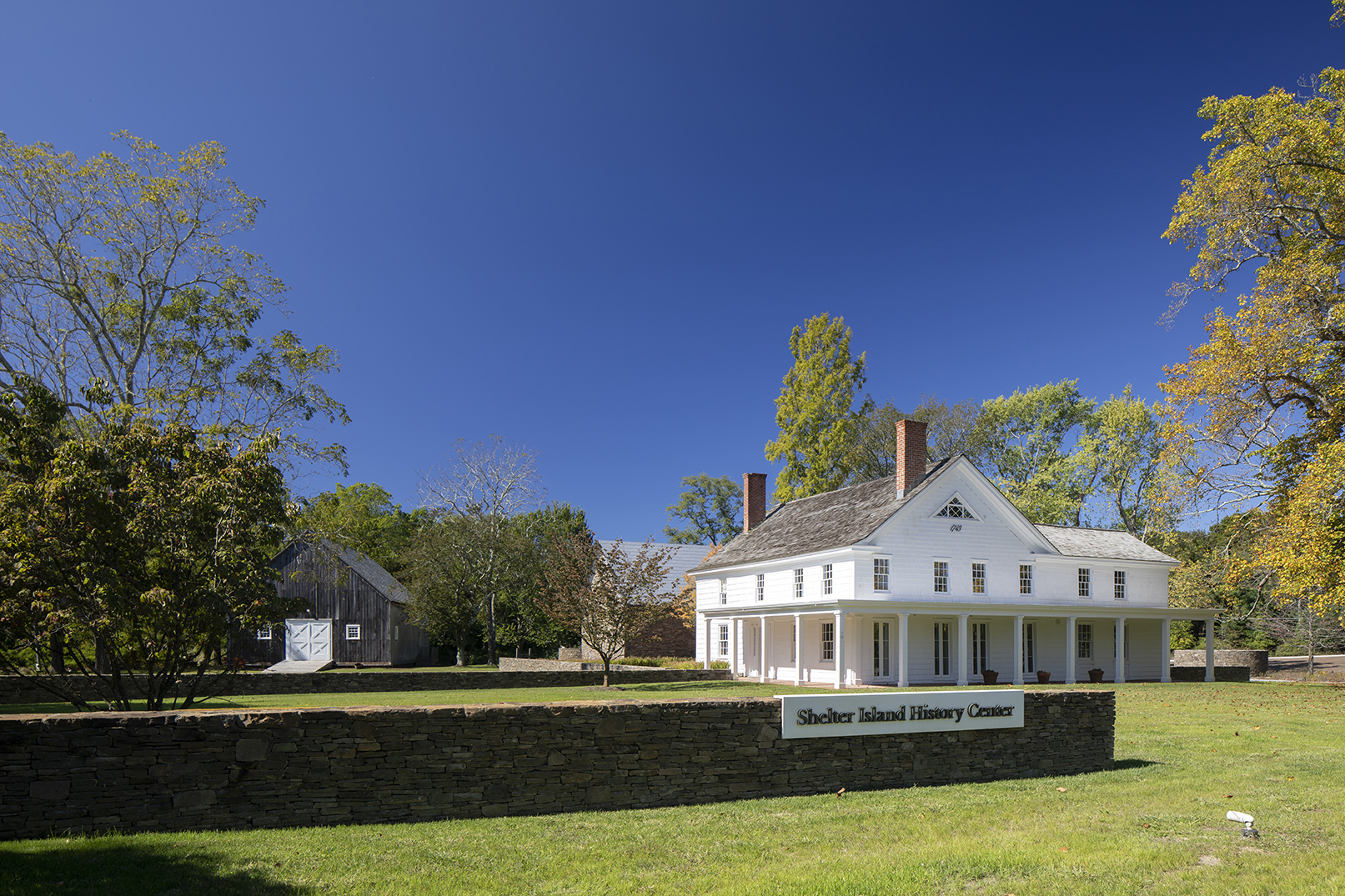
The Havens House
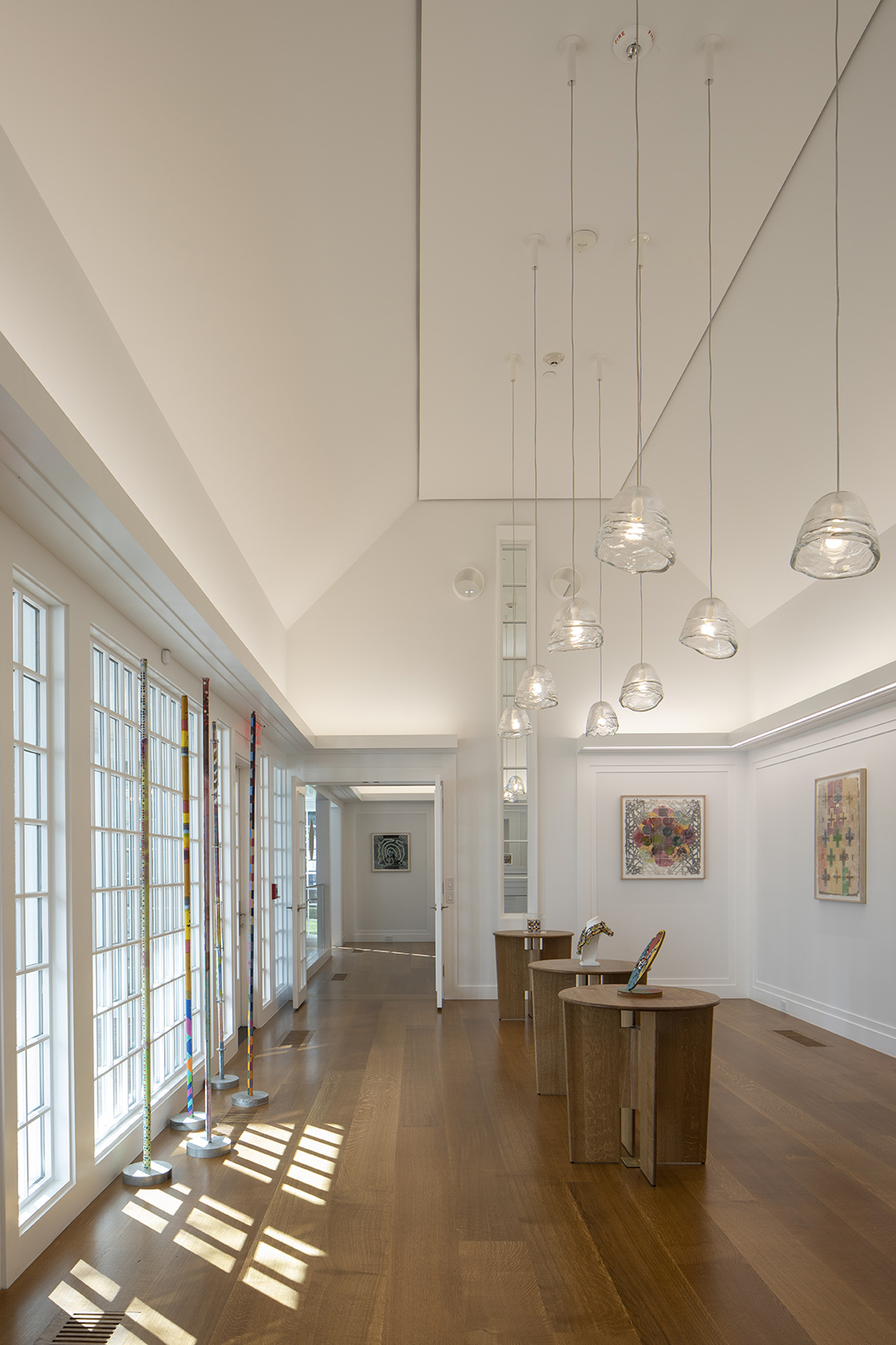
An interior in the renovated and restored Havens House. Michael Moran
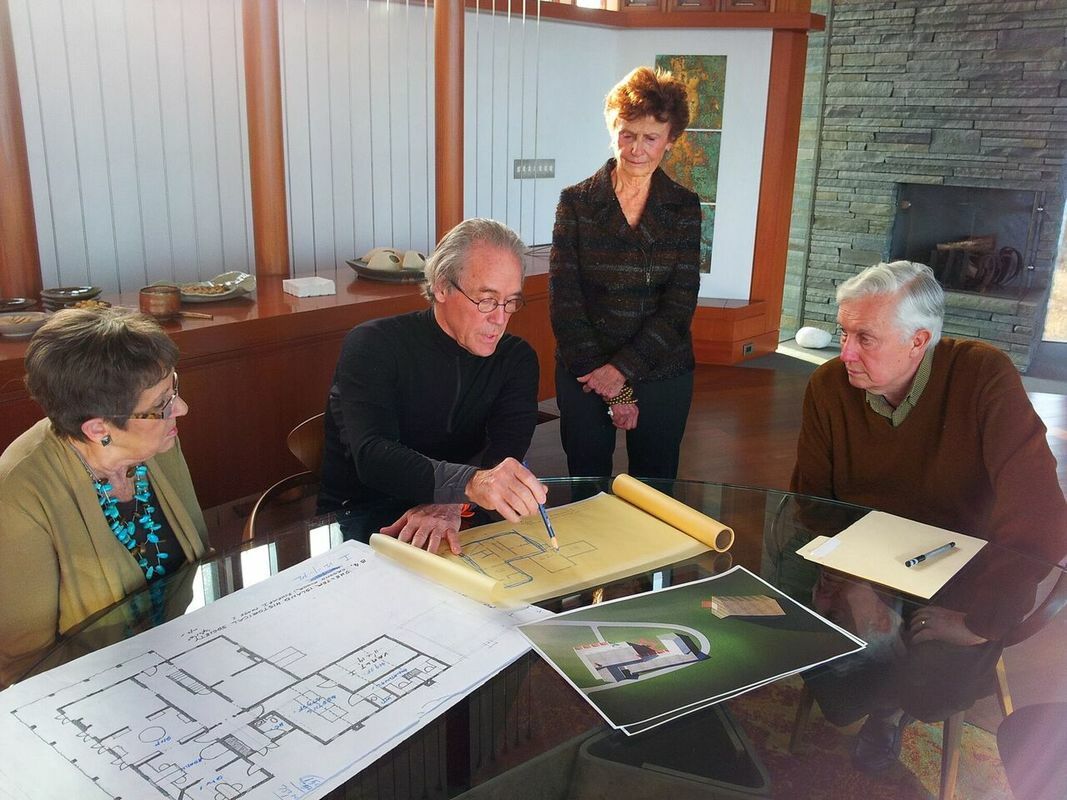
William Pederson reviews plans with members of the Shelter Island Historical Society. courtesy photo
When architect William Pedersen considers the Havens House, what he sees is a historic document — one worthy of study, admiration and a life even longer than the 277 years it’s stood on Shelter Island.
The recent renovation of the 18th century building, as well as the new construction of what is now the Shelter Island History Center, will guarantee just that, Mr. Pedersen says confidently, nearly eight months after its grand reopening last July, his passion for the project palpable as ever.
His speech quickens as he recalls the original oak beams the team discovered in the ceilings, the numerals carved into their wood, the evolution of construction unfolding before their eyes.
The octogenarian is animated and enthused, sprinting through the creative process of a project unlike any other in his 60-year career — which has included the World Financial Center in Shanghai and Hudson Yards in Manhattan. But now he pauses mid-stride, taking a step back as he considers the three-year venture as a whole.
He lets out a quiet, somber sigh.
“My wife, Elizabeth, was diagnosed with pancreatic cancer four years before the building opened,” he says. “For me, and for both of us, this became the center of our lives. And just watching it being constructed, the timeline of its construction and the timeline she had remaining in her life tended to be almost a mirror image of each other.”
Fifteen years into their marriage, the Pedersens had fallen in love again — this time with Shelter Island, where they bought and renovated what would be the first of their three homes here. It was 1976, the same year Mr. Pedersen co-founded his New York-based firm, Kohn Pedersen Fox Architects — and, not long after, inherited a “very strange cat” from their daughter.
But when the cat clashed with their boxer, one of them couldn’t stay.
“We had to find a home for the cat,” Mr. Pedersen said with a laugh. “We looked around, and someone suggested, ‘Well, Belle Lareau just lost her cat and she really likes animals,’ and we wondered, ‘Who would really take this cat on?’ And Belle Lareau did.”
For weeks, the couple anxiously awaited the dreaded phone call from Ms. Lareau, who sat on the board of the Shelter Island Historical Society, asking them to take the cat back.
And, six months later, the call did eventually come — but it wasn’t about the cat.
“It was about Elizabeth joining the board of the historical society,” Mr. Pedersen said. “She was so relieved that it wasn’t about the cat that she immediately said she’d join.”
She would be named president in 2011, ultimately leading the historical society through its greatest undertaking yet. It was one that she and her husband spearheaded with a gift to one another, in celebration of their 50th wedding anniversary.
“Rather than having a party, we decided to sponsor a professional study of the Havens House, which we did,” Mr. Pedersen said. “And when we got the results of that, it was clear a lot had to be done, obviously.”
Built in 1743 by William Havens, the original farmhouse sat on 1,000 acres. It was home to four first-floor rooms with two above, a central chimney and cooking hearth, and two doors at either end of the hall, facing north to south, allowing for a cool breeze to blow through on warm summer days.
His son, Captain James Haven, and wife Elizabeth took over the homestead in 1761 and named it “Heartsease.” To accommodate their 11 children, they added two rooms to the second floor. That also provided space to allow the home to serve as a store, tavern, school, post office and town meeting hall for 27 households on Shelter Island.
“Heartsease” remained in the family through 1913, rapidly changing hands until 1925, when Frank and Alice Sherman bought the property to, first, run as a boarding house before calling it their home.
When Ms. Sherman died in 1971, the Shelter Island Historical Society took possession of the house and grounds, now reduced to 2 acres and, since 1986, listed on both the New York State Register of Historic Places and the National Register of Historic Places, according to Nanette Lawrenson, executive director of the Shelter Island Historical Society.
“The building is the second-oldest home on Shelter Island, so it has a lot of history,” she explained. “There are many Shelter Islanders who are Havens, or connected to the Havens family. It’s an important piece of not only Shelter Island history but of the East End history as well.”
To stabilize, repair and ultimately save the Havens House was never in doubt, Ms. Lawrenson said, but, admittedly, the building needed a tremendous amount of work — and for the modest historical society, funding was a major concern.
“You can imagine it had some wear and tear. There were some critically important portions of the house that needed to be repaired,” Ms. Lawrenson said. “Over the years, we put on a new roof, we fixed a number of things, but when our past archive vault started to not have stabilized humidity control and it wasn’t large enough, we started to think about expansion.”
While more than 400 concerned citizens donated to the cause, it would be the Pedersens, who covered 90 percent of the $6 million price tag, that allowed the renovation to happen — not to mention the architect’s pro bono services, which included plans for the ambitious building project.
“It is very different from anything I’ve done in my career, and I will say that this probably ranks as my most enjoyable experience as an architect,” Mr. Pedersen said. “My career has been largely devoted to very large-scale urban construction, or academic buildings, things of that nature. And while I have done homes before, this represents a different scale.
“The most important thing was that anything that was constructed had to be somewhat subservient to the historic house. The historic house needed to remain the center focus of the composition,” he said. “This was not a situation where an ‘architectural statement’ or ‘unique drama’ was necessary. It needed to be something that enabled the existing structures to blend with the new structures.”
Concerned that an addition large enough to properly house the historical society’s impressive archive would be overwhelming next to the Havens House and existing barn, Mr. Pedersen decided to locate half of the new two-story center adjacent to the building, but below ground — effectively doubling the original space to nearly 4,000 square feet.
“That was a very challenging proposition, just from the construction process,” Mr. Pedersen said. “We had to dig down about 16 feet and pump water out for a long period of time, and we had to build a basement that was, frankly, so heavy that the water could never lift it. All of that involved a lot of sophisticated structural engineering.
“It was a challenging thing to build, and it has worked absolutely perfectly. There’s not even the slightest sense of any moisture penetration into it, and there never will be.”
Now, the climate-controlled, 425-square-foot vault protects over 100,000 documents and artifacts relating to the island’s history, previously stored in the attic of the decaying building. With the exception of an exhibition by Helena Hernmark, featuring a tapestry inspired by the society’s oldest document, dating back to 1652, the entire museum collection is still in storage off site, Ms. Lawrenson said.
“We intentionally left the rooms empty of exhibit, because we’re exhibiting the house,” she said. “So if you’re interested in architecture or construction, this will be a great time to come see the house.”
During construction, the team uncovered one historical discovery after another, from signatures on the floors and ceiling, to original, partially dressed oak beams — with bark still on two sides — carved with Roman numerals, “almost like an Erector Set,” Mr. Pedersen said, which leads him to believe the building was potentially moved and reassembled in this location.
“Once we stripped all of the Sheetrock and plaster off the interior, we exposed the construction of the walls and the construction of the ceiling. Things were built very differently back then, even in the three phases of construction — 1743, 1783 and then the end of the 19th century,” he said. “Had we just covered it up like it had been covered up, the opportunity to see that would have been lost.”
As the building neared completion — finished with white oak floors and walls, Pennsylvania wall stone, and a zinc roof — Ms. Pedersen’s health steadily declined in her fight against metastasized pancreatic cancer. By this time, the couple had fully embraced Shelter Island as their full-time home in their final years together.
“This project was something that was so necessary to focus on,” Mr. Pedersen said. “For both of us, it became very important and, in a way, it just made us feel better. She loved it, and she was very encouraging all the way.”
Ms. Pedersen died just weeks before the official opening of what is now the Shelter Island History Center, taking its place among the important local institutions, including Sylvester Manor, the Shelter Island Public Library, Mashomack Preserve, and the Perlman Music Program.
“We had Elizabeth’s memorial at the historical society, and they brought two wonderful musicians to play for us at that event, and actually they brought two wonderful musicians to come to our house to play for Elizabeth before she died,” Mr. Pedersen said. “The institutions on the island are really important to its future and to its present, and now we feel that the historical society can really play its role.
“The building is becoming more of a center of gravity for the island, and that’s the objective,” he continued. “Elizabeth made this statement in a video that was done of her just shortly before she died, and she said she really wanted to see this place jumping with kids.
“And so I think that’s going to happen.”


 Michelle Trauring on Apr 13, 2020