


 4 Photos
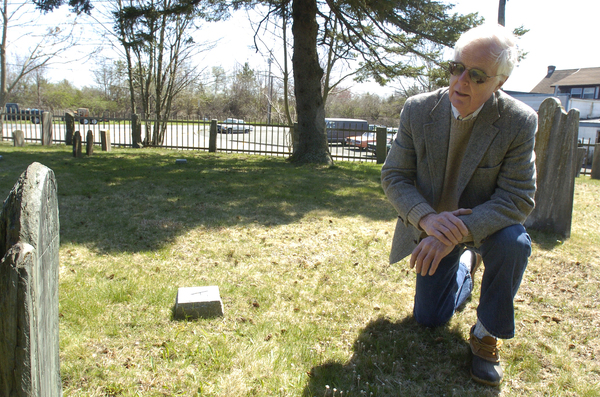
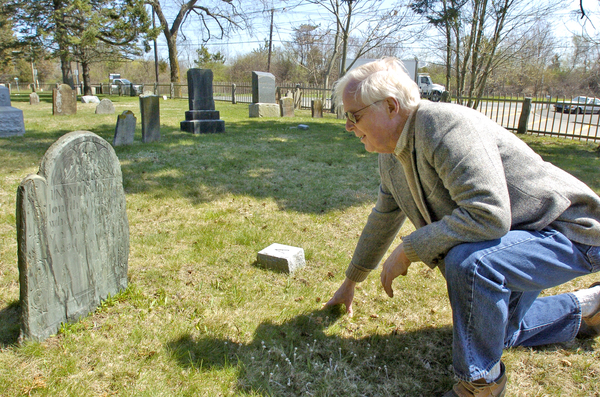
Dr. James Kirkpatrick Flack examines a headstone in the Hayround Cemetery in Bridgehampton.
In a well-traversed part of Bridge‑ hampton lies a historic site that dates back to the earliest days of the hamlet, though to most people it probably goes largely unnoticed.
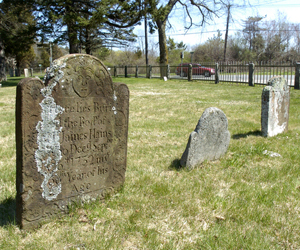
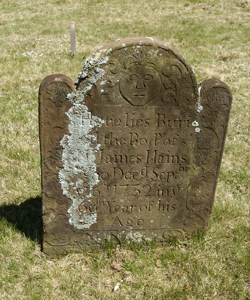
The Hayground Cemetery, located at the corner of Montauk Highway and Windmill Lane, has a rich history of well-known names buried within its confines, including Cooks, Corwiths, Hands, Ludlows, Rogerses, and Roses. For retired history professor Dr. James Kirkpatrick Flack, the cemetery also contains clues that tell him about the way the first inhabitants of Hayground—as that portion of Bridgehampton was known—lived, beginning in the early 18th century.
“The cemetery has a lot to tell us about life,” Dr. Flack said on Friday, noting that he has been studying farmers who lived in Hayground in the mid-18th century for several years. “There are aspects of the landscape that can be read as stories ... If we read them correctly, we can learn about what life was like.”
On Sunday, May 3, at 2 p.m., Dr. Flack and Zachary N. Studenroth, the architectural preservation consultant to the Town of Southampton’s cemetery project and executive director of the Sag Harbor Whaling and Historical Museum, will outline the history of the cemetery and how it reflected life in Hayground during a free tour of the cemetery. The tour, which will also focus on measures being taken to preserve the site and the headstones themselves, has been organized by the Bridgehampton Historical Society in association with the Southampton Trails Preservation Society.
“I’m just fascinated by what we might learn in the cemetery,” said Stacy Dermont, the program director for the historical society. “Cemeteries are the richest repositories of local history. ... These places are so much better than having a file cabinet full of information.”
She said that tourgoers can expect the official discussion to last about an hour, though both experts have agreed to stay for as long as there are questions.
“I can’t wait to get in there,” she said. “I think everybody’s really curious about it.”
“Cemeteries are really among the very few outdoor museum sites which remain virtually unchanged from when they were established,” said Mr. Studenroth, who explained that he will be discussing the stones themselves during the tour and pointing out challenges in terms of the preservation or restoration of these stones. “Just as a cultural landscape, these are surviving areas that people can learn a lot from.”
Dr. Flack explained that while the boundaries of Hayground are somewhat vague, most people agree that it lies on 1 square mile between Bridgehampton and Water Mill. In that area, he said, the cemetery was a part of the center of the community. That center was located in a triangle of sorts located at the intersection of Hayground Road and Windmill Lane, and the cemetery was located just to the east. Among the amenities at the town center was a windmill adjacent to the cemetery.
Although Dr. Flack said it’s hard to say exactly when people began using the cemetery, because remains may have been reinterred, the earliest gravestone dates to the early 1720s. He explained that the location of the cemetery—in the middle of open farmland, rather than next to a church—reflected the agrarian character of Hayground. In addition, it was primarily used by local farmers and fishermen, a characteristic that is reflected on the headstones.
Mr. Studenroth added that at the time the graveyard was founded, the church and burial rites were kept separate. When the town was settled in 1640 and up until the nineteenth century, the town was responsible for providing burial grounds.
During the tour, Dr. Flack said he intends to discuss certain individuals who are buried at the Hayground Cemetery, and discuss what the history of that individual says about life in early Bridgehampton. Meanwhile, Mr. Studenroth will discuss what the cemetery says about the earliest inhabitants of the hamlet, and will focus on what the type of stone says about the people buried underneath. He’ll also go into details of what the lettering, emblems, or ornamentation indicate.
But one aspect of the tour that Dr. Flack is most looking forward to is to answering questions, or even hearing from people who may have relatives buried in the cemetery.
“We want to be sure there’s a lot of opportunity for questions,” he said. “We want it to be a dialogue.”


