Hayground School Students Turn Beach Trash Into a Work of Art

icon 4 Photos
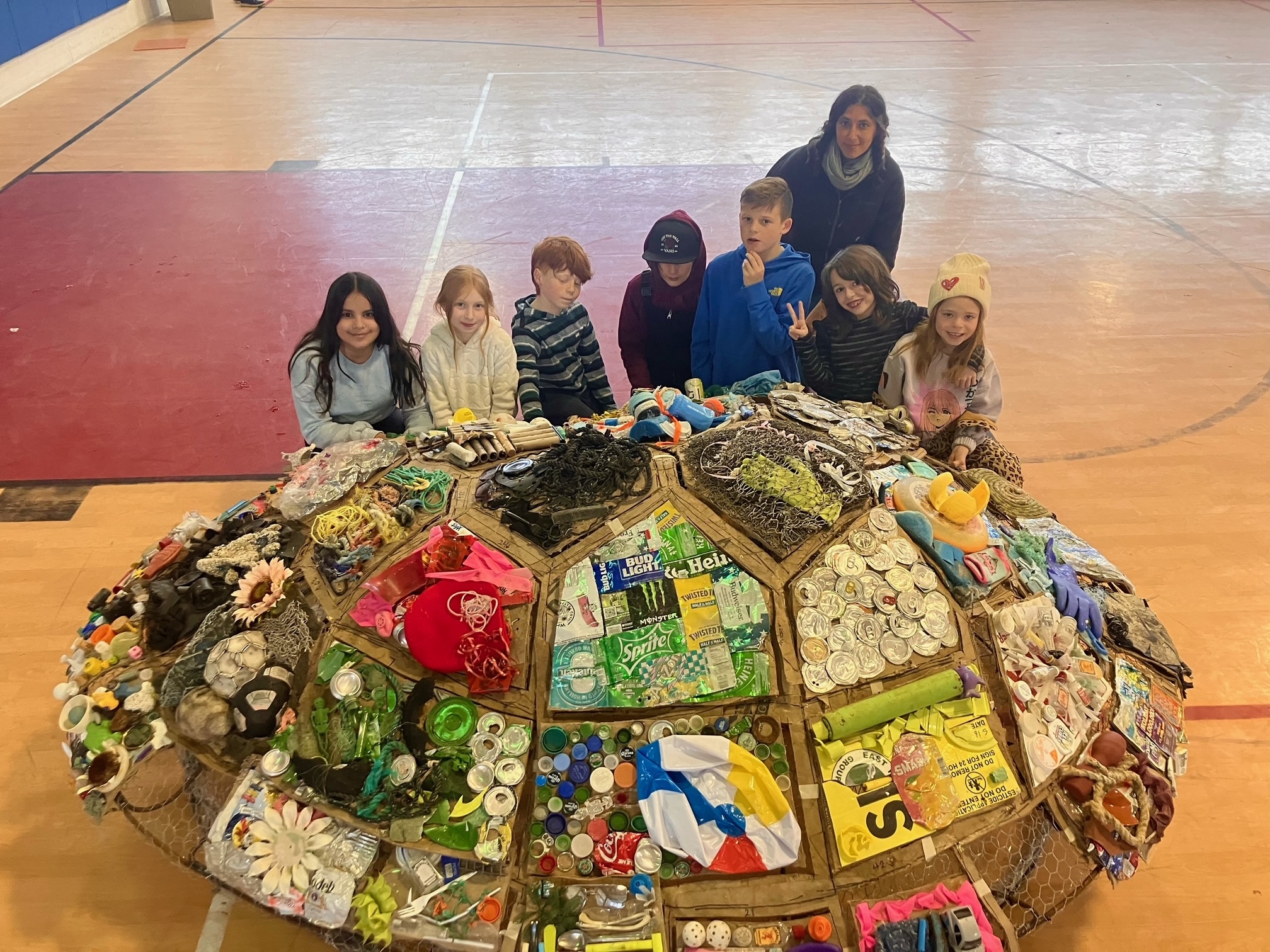
Students at the Hayground School created a sea turtle work of art, crafted from trash they collected at local beaches. It will be on display at the Parrish Art Museum on March 12.
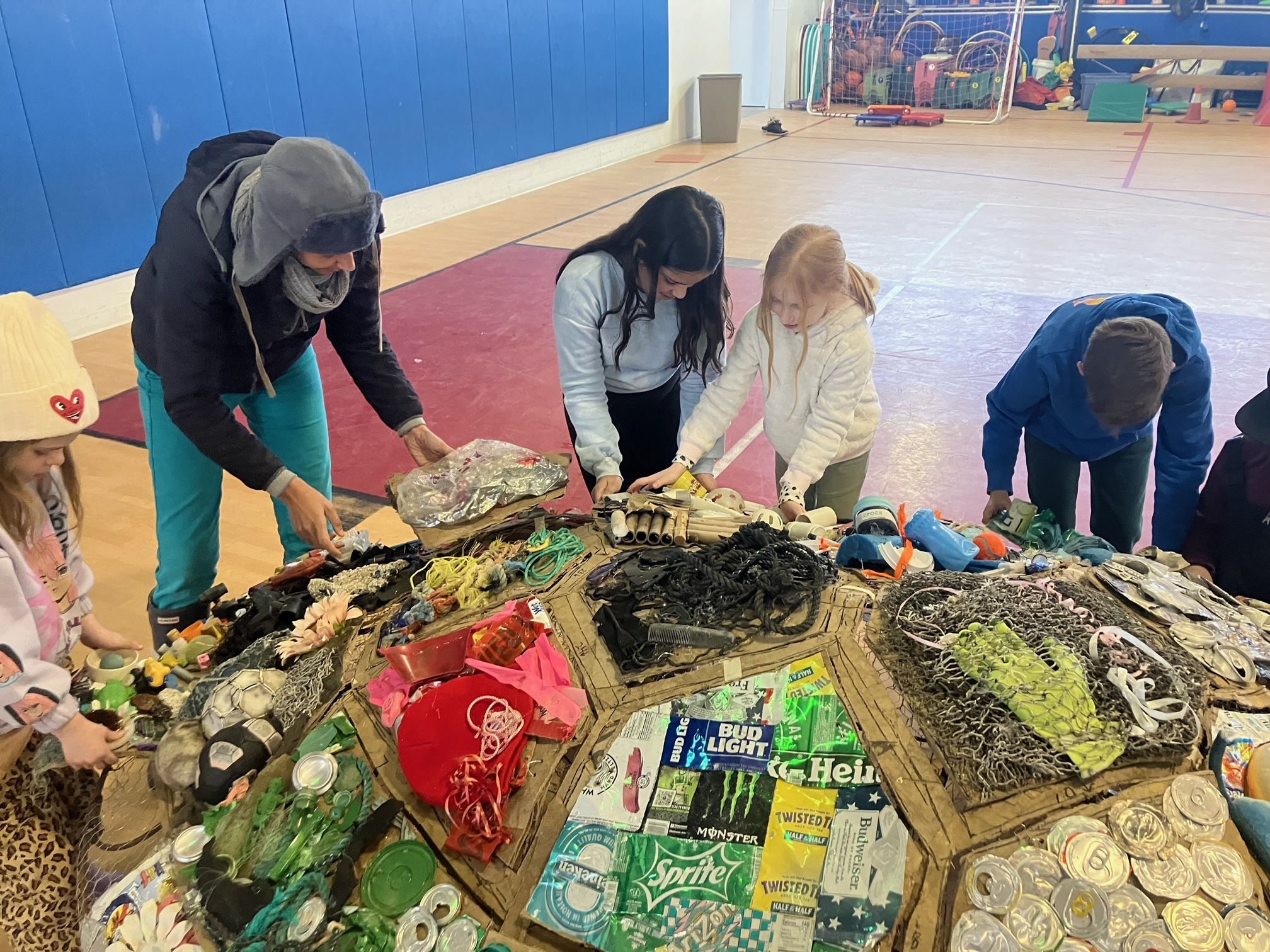
Students at the Hayground School created a sea turtle work of art, crafted from trash they collected at local beaches. It will be on display at the Parrish Art Museum on March 12.
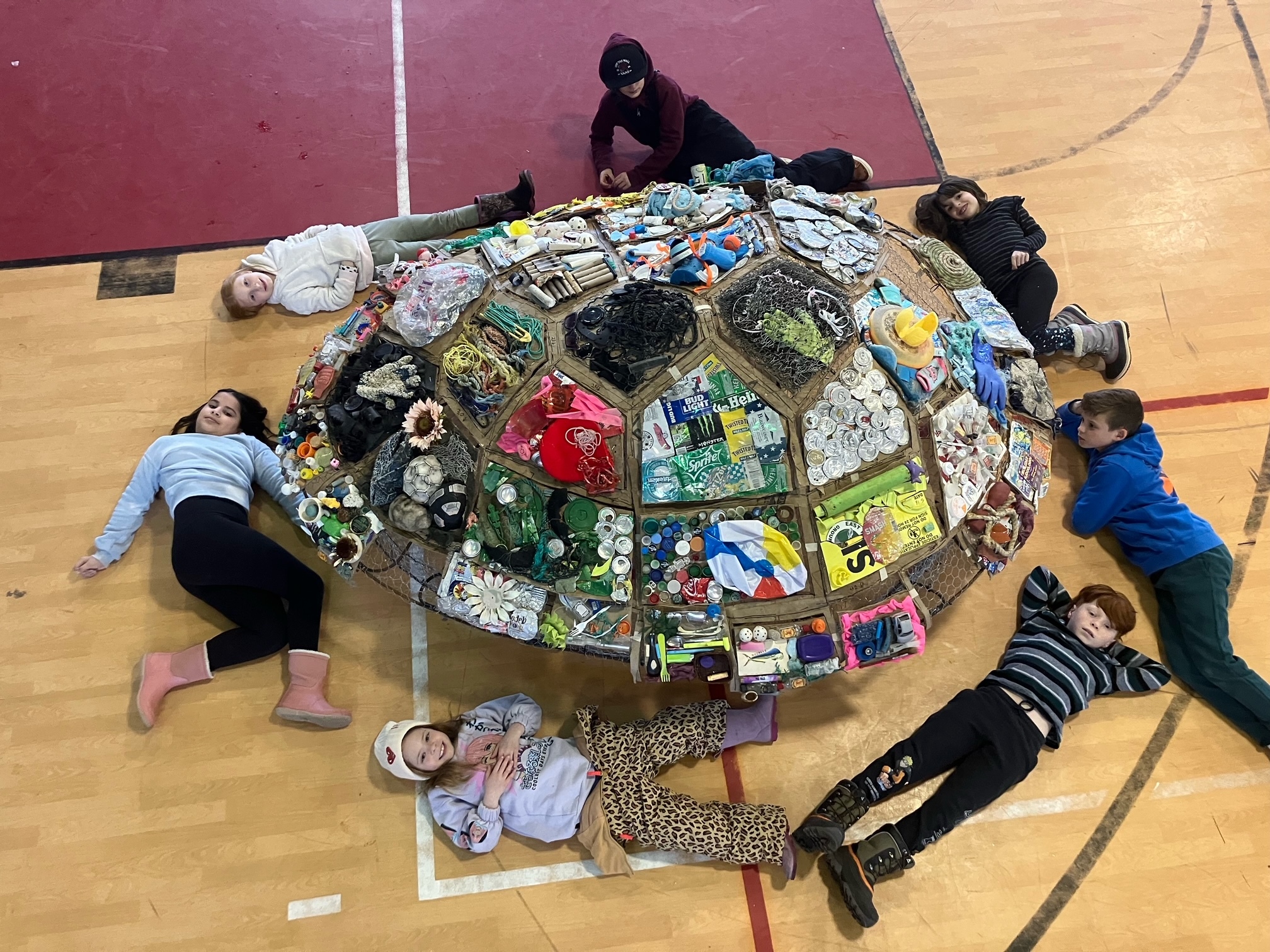
Students at the Hayground School created a sea turtle work of art, crafted from trash they collected at local beaches. It will be on display at the Parrish Art Museum on March 12.
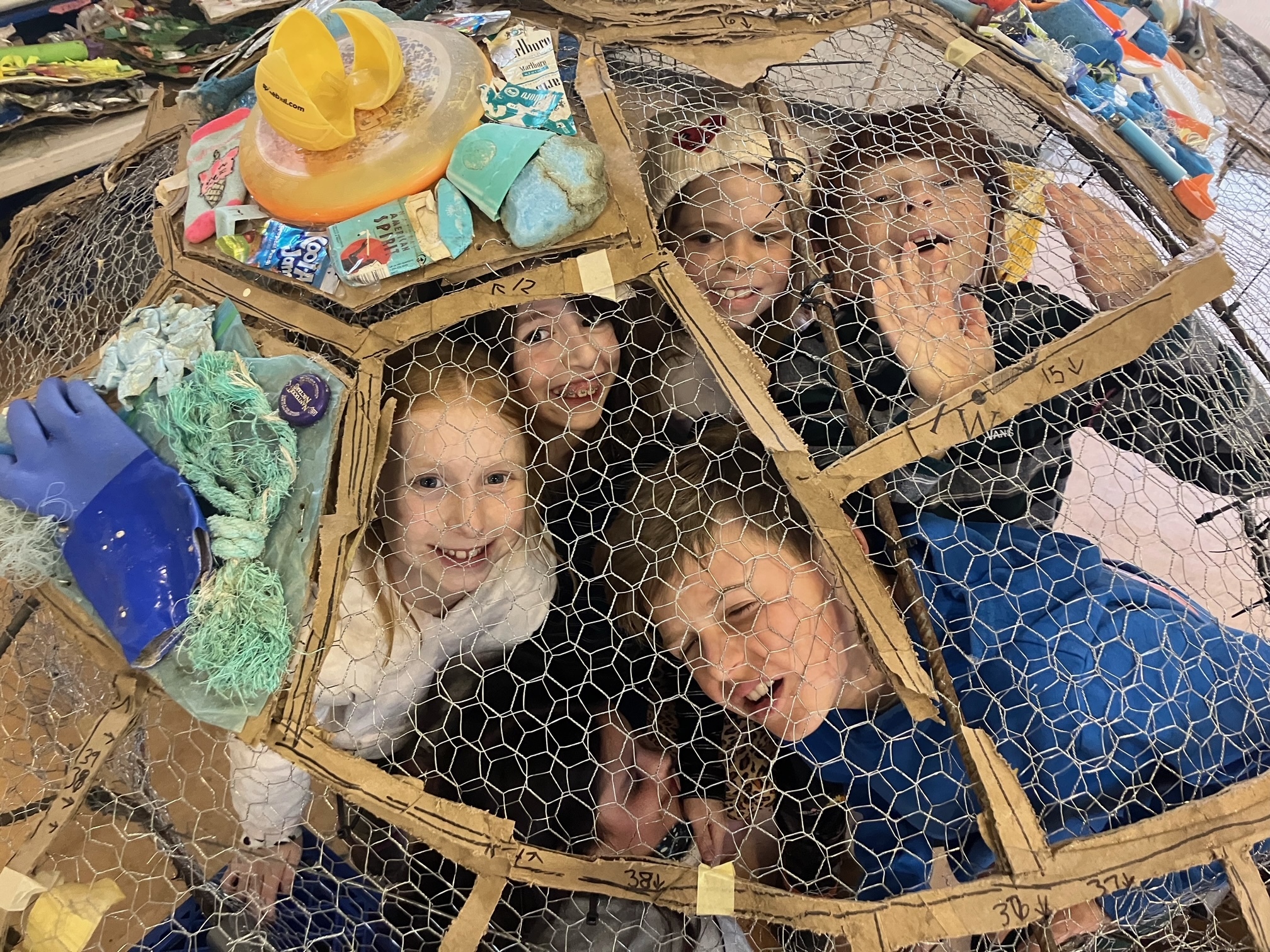
Students at the Hayground School created a sea turtle work of art, crafted from trash they collected at local beaches. It will be on display at the Parrish Art Museum on March 12.

Students at the Hayground School created a sea turtle work of art, crafted from trash they collected at local beaches. It will be on display at the Parrish Art Museum on March 12.

Students at the Hayground School created a sea turtle work of art, crafted from trash they collected at local beaches. It will be on display at the Parrish Art Museum on March 12.

Students at the Hayground School created a sea turtle work of art, crafted from trash they collected at local beaches. It will be on display at the Parrish Art Museum on March 12.

Students at the Hayground School created a sea turtle work of art, crafted from trash they collected at local beaches. It will be on display at the Parrish Art Museum on March 12.

authorCailin Riley on Mar 6, 2023

For the past several months, students at the Hayground School in Bridgehampton have been turning trash into a very specific kind of treasure — a work of art that is the result of an impressive collaborative effort, and can serve as a powerful reminder for the community at large.

Since October, students ages 5 through 13 have been making treks to nearby beaches in the Bridgehampton and East Hampton area with the school’s Studio Art teachers, Sabra Moon Elliot and Perry Burns, to collect trash left at the beach — everything from discarded fishing nets to tangled jumbles of ribbons, cans and, of course, an endless array of plastics. They diligently collected the items, and in recent weeks have turned them into a giant sea turtle sculpture, which will be on display at the Parrish Art Museum starting on March 12.

Burns and Elliot are both artists-in-residence at the Hayground School, and Burns said the months-long effort, which they called the “Flotsam and Jetsam Project,” has been an educational, enriching and eye-opening experience for the students, and for them as well.

The idea was to turn the trash into a work of art, and eventually the students settled on making a sea turtle. They’ve dubbed their creation “the legend of the trash turtle,” and have even been working on creating a fictional narrative around the turtle as a mythical creature.

Burns explained the genesis of the project.

“Sabra and I were both thinking about the state of marine life in the area, with the resurgence of whales and dolphins being spotted at beaches this summer,” he said. “We’d hear parents talk about how every time they take a walk on the beach, they find trash. So we started wondering how much trash is there on our beaches, and is it affecting our marine life?”

That, Burns said, was the jumping off point for the idea of taking the students on short field trips to area beaches. He said that, at first glance, many of the beaches look clean, thanks to efforts by local town officials to keep them clean, but closer inspection reveals plenty of garbage and human waste left behind by beachgoers or washing up on shore.

“It’s a little bit disheartening,” he said.

Elliot agreed, but said she and Burns, as well as the students, quickly found a way to turn that kind of negative into a positive, and dealing with the trash challenged the students artistically and also in their development as responsible citizens and stewards of the planet.

“There is the creative process of trying to turn this huge pile of trash into something visually interesting,” she said. “The students have had to learn to be flexible and to problem solve. Using trash as the medium is an interesting task, because the students have to think of why certain objects look better next to other objects based on shape, color or texture.”

Elliot said they even tried altering some of the trash completely throughout the process, but ultimately decided to try and leave it more or less in the form they found it.

“We felt it was important to see what the actual objects were,” she said. “We’re using all of this as a teaching moment for the students to see the type of trash that’s being left behind and hopefully creating a culture of ‘leave no trace.’

“We want the students to learn and be aware of how humans impact the environment,” she added.

Working on the project drove that point home, and it was painful at times for the students to delve into the full scope of what humans have done to the planet.

“We tried to connect [the project] to the larger world and how trash in the ocean effects sea life,” Burns said. “The kids started to research that, and came across all kinds of pictures of animals stuck in fishing lines and nets, dolphins with plastic around them. For some of the younger kids, it was really emotional, and a couple of them cried at seeing the images, so it was a bit intense. It affected them and made them realize we need to do better, so we’ve talked about how we can do that, and how we can affect change.”

Parents and other Hayground teachers have gotten involved as well, gathering trash during family beach walks outside of school hours and bringing it in to contribute to the project, giving it the added bonus of being a school and community-wide effort.

The Hayground “trash turtle” will be on display at the Parrish Art Museum from March 12 through April 16, as part of the museum’s annual Student Art Exhibition.

You May Also Like:

Southampton Town Police Announce 2026 Civilian Academy

The Southampton Town Police Department will launch its 2026 Civilian Police Academy on January 15, ... 5 Dec 2025 by Staff Writer

Sag Harbor Village Police Reports for the Week of December 4

SAG HARBOR VILLAGE — Sag Harbor Village Police arrested a Sag Harbor teenager on a charge of assault in the third degree, a misdemeanor, early Saturday morning. According to police, the victim, also a Sag Harbor teen, left work and was approaching his car parked on Rysam Street at about 10:30 Friday night when he noticed the interior light in a dark sedan go on, after which the suspect stepped out. The victim told police that the suspect had recently been photographing his car, then sending him threatening messages via social media. After getting out of the sedan, police said, ... 4 Dec 2025 by Staff Writer

A Day of Quiet

November 27, Thursday, Thanksgiving Day. Morning: I hear the screech owl, the great-horned owl, the Cooper’s hawk, Carolina wren, white-throated sparrow, chirps of the cardinal, red-breasted nuthatch, the cooo of the mourning dove; songs of rooster, flicker, dark-eyed junco. Titmouse, blue jay. Wind, barely a breeze, whispers haaaaaaaa in wind language, lovingly. Tranquility. Peace. I’m alive — ping of chill in the air, my skin zings. This sacred silence is why I moved here 40 years ago. But it’s completely gone now. And why? Was our designation of “green community” just a photo-op? A lie? Words co-opted like the phrase ... by Staff Writer

White House Confidential

There has been some consternation expressed about changes that the Trump administration is making to the White House, including the East Wing demolition, paving over the Rose Garden, and plans for a grand ballroom. Let’s put some historical perspective on this: The first president to occupy the White House, John Adams, did so 225 years ago last month, and the building and grounds have been undergoing change ever since. Construction of the White House had begun during George Washington’s first term — specifically, at noon on October 13, 1792, with the laying of the cornerstone. The main residence and foundations ... by Tom Clavin

The Nitrogen Threat

“Restore Our Waters” was the title of the invitation. Its subtitle: “Learn How To Switch Out Your Septic To Remove The No. 1 Threat to Groundwater, Nitrogen, From Our Septic Systems With Tax-Free Grant Funds.” Some 100 people packed into the auditorium of the Southampton Cultural Center two weeks ago for a “public education event” to learn about an issue that has deeply impacted Suffolk County: the migration of nitrogen from cesspools into groundwater, the sole source of potable water in Suffolk. The nitrogen also goes into surface waters, including lakes, ponds and bays. Spotlighted at the event was the ... by Karl Grossman

Vigor and Decay

Brown is the color of the days. We, at such an angle to the sun, give up our growing season and must tilt toward the melancholy color of mud. While finger-painting, brown might be the first color you make by mistake. In your enthusiasm, you blended all the colors on the pallet and ended up with nothing remarkable. In fact, it looks like excrement. Brown may not be a vibrant color, but it is generally a warm one. All living things are, at some point, brown. The goldfinch, as if reduced to rags, just dingy fluff where brightness had been. ... by Marilee Foster

Community News, December 4

HOLIDAY HAPPENINGS Santa on the Farm Weekend The Long Island Game Farm invites families to ... by Staff Writer

The Start of a New Era at The Express News Group, With a New Website and Focus on Digital Media, and Leadership Changes

The end of the year will be the start of a new era at The ... 3 Dec 2025 by Cailin Riley

Sag Harbor Planning Board Has Questions as Redevelopment of 2 Main Street and 22 Long Island Avenue Come Into Focus

The Sag Harbor Village Planning Board had a number of questions as the board reviewed ... by Stephen J. Kotz

Sign the Ban

Pity the poor horseshoe crab. It is, without question, a survivor almost beyond compare. Consider this: There are fossils of the creature dating back 445 million years. Dinosaurs arrived about 200 million to 250 million years ago — which means the time between us and dinosaurs is equal to the time between dinosaurs and the earliest horseshoe crabs. And they’re still here, nearly unchanged. But they finally may have met their match. The American horseshoe crab has “vulnerable” status, according to the International Union for Conservation of Nature. The population faces a whole series of challenges, including sea-level rise, coupled ... by Editorial Board