


 4 Photos
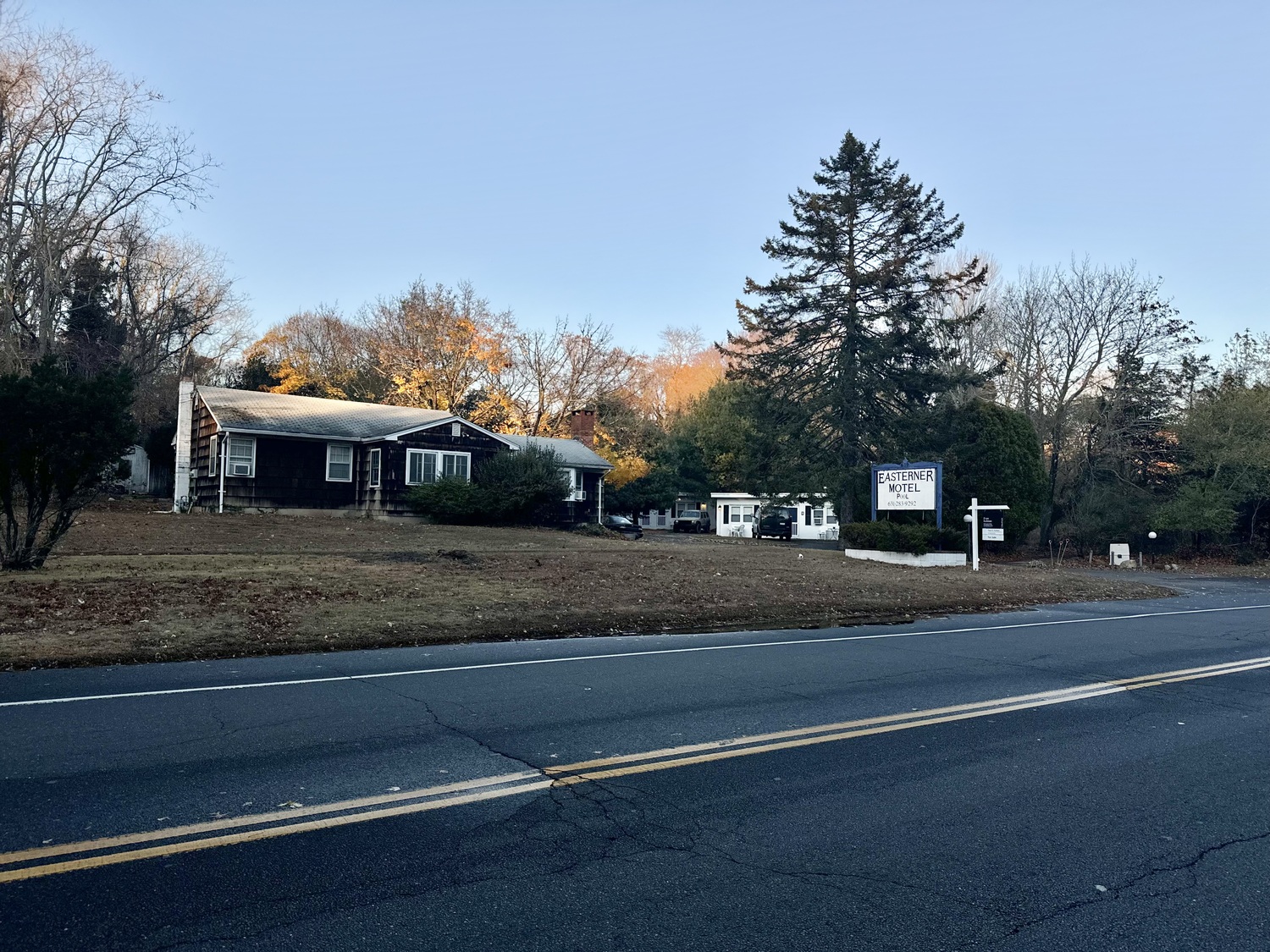
The Southampton Town Housing Authority is hoping to purchase The Easterner Motel, a small collection of cottages and studio units in Shinnecock Hills that it would make rental housing.
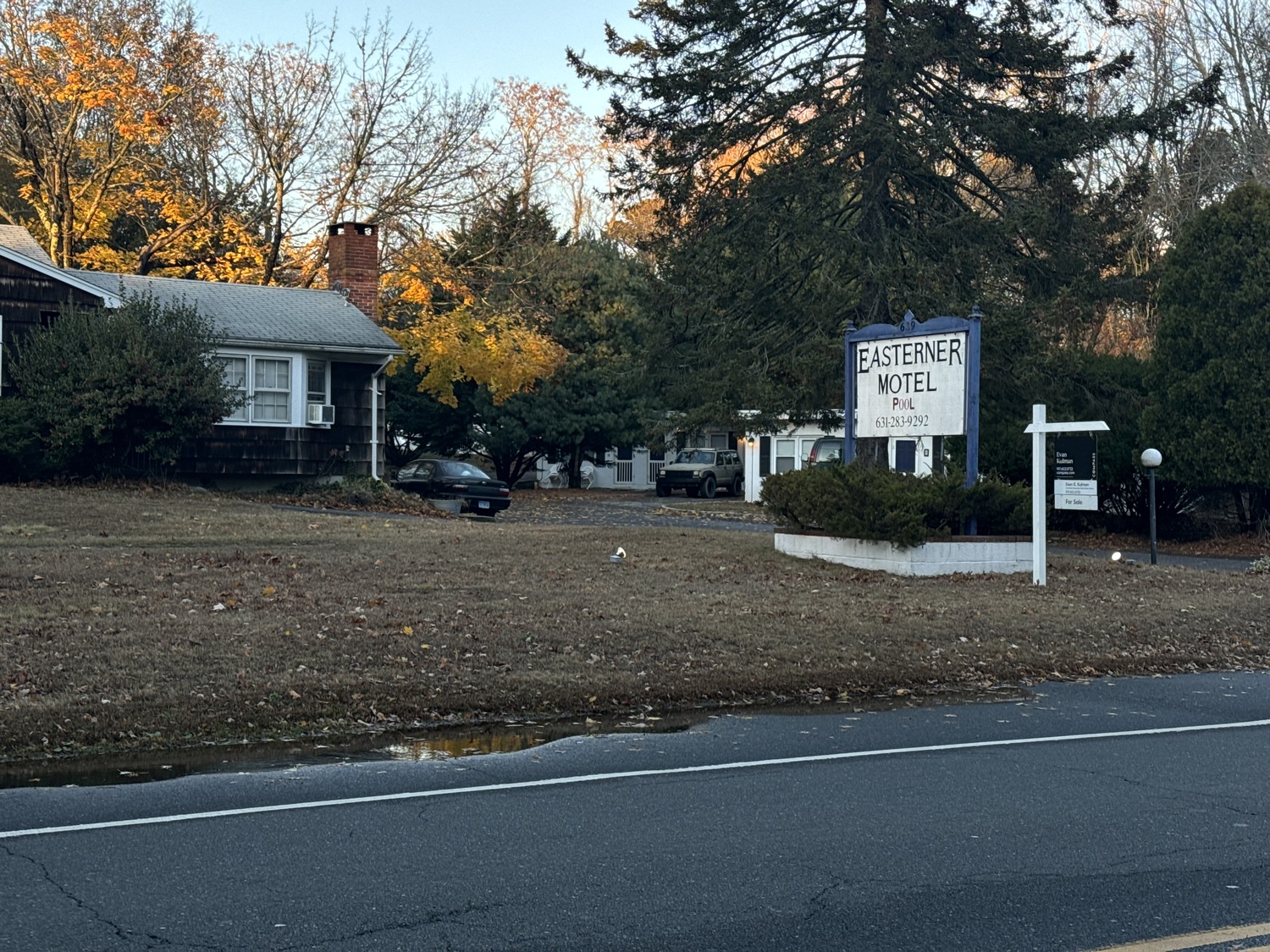
The Southampton Town Housing Authority is hoping to purchase The Easterner Motel, a small collection of cottages and studio units in Shinnecock Hills that it would make rental housing.

The Southampton Town Housing Authority is hoping to purchase The Easterner Motel, a small collection of cottages and studio units in Shinnecock Hills that it would make rental housing.
Curtis Highsmith, the director of the Southampton Town Housing Authority, explained the plans for The Easterner Motel if the housing authority is able to purchase it for use as below-market rental housing. MICHAEL WRIGHT
The Southampton Town Housing Authority is making a play to purchase the Easterner Motel, a small former resort motel on Montauk Highway in Shinnecock Hills that has been used as long-term housing for several years.
Curtis Highsmith, the executive director of the Housing Authority, said that he has reached an agreement on a purchase price for the property with the current owner that would allow the property to be permanently transitioned to a rental housing development, upgrade the septics and aesthetics of the property, and make it available at affordable housing rates.
The authority would not expand the current arrangements of the units, Highsmith told members of the Hampton Bays Civic Association last week, and does not expect that the property would add a significant number of new students to the Hampton Bays School District.
The Easterner has six existing structures: three small buildings with two “studio” rooms each, one building with a studio and a one-bedroom unit, and two two-bedroom cottages. An existing swimming pool would be removed if the Housing Authority takes over the property.
Highsmith pledged that a Housing Authority takeover would only mean the property becomes more attractive than it currently is.
“We will not introduce any additional space. We’re only going to improve what is there — the landscaping, sidewalks, the facades,” Highsmith, who lives near the motel, told more than 100 Hampton Bays residents on Monday evening, November 25.
“I travel this road every single day — full disclosure, I live a block away from there — so I have a vested interest in making sure that this is not only well-received but that it operates well, it looks good and that the overall [appearance] is respectful to the community.”
Highsmith said that purchasing hotels and motels that have been converted — often illegally — to long-term rental housing has been on the Housing Authority’s radar for some time. The authority — which is a quasi-public organization separate from Southampton Town government — had made a bid to purchase the Bentley motel earlier this year but was outbid by private developers.
“Everything we do can’t be new construction — why don’t we look at opportunities to repurpose what already exists?” Highsmith said, drawing applause from the audience gathered in the Hampton Bays Community Center.
“The downside is, I have to compete with every private developer out there … who has a lot more money,” he said. “I can’t go to the owners and ask, ‘Can you give me a break?’”
The current owners of The Easterner — which town property records indicate are Nicole Davis and Michelle Bradley, whose family have owned the property since at least 1986 — have received two purchase offers from private developers but have told Highsmith they would prefer to sell to the Housing Authority to keep the property as affordable housing.
After Monday evening’s meeting, Highsmith said that one of the property’s current owners had been in the audience to hear the reactions of the community to the proposal.
Residents had largely been generally supportive of the idea but raised concerns about the potential impact on taxes, particularly school taxes, if the property became a permanent rental housing venture that could be expected to be home to families with school-aged children.
Highsmith said the Housing Authority has not yet closely examined the potential occupancy limits for the property but said he thinks the seven 350-square-foot studios are too small to legally accommodate more than one resident, which would mean that only the one-bedroom unit and the two two-bedroom cottages could be used by even a single parent with one child.
Unlike some of the privately run converted motels, Highsmith said, the Housing Authority will strictly enforce the occupancy limits imposed by town building and fire safety codes.
He said the Housing Authority has pledged to make annual PILOT payments — payments in lieu of taxes — that would be equal to what the property would pay in annual property taxes, even though, as a nonprofit, the authority would not be required to pay property taxes.
Hampton Bays resident Gayle Lombardi said that there have been concerns raised about a Housing Authority project in Speonk, that the PILOT payments, which are based on a hypothetical analysis, do not add up to what the actual impact of the residential units have had on the school taxes.
“You can come up with an expert to tell you whatever you want it to say, but we all have to deal with the reality that the density in our community is already three times the rest of the Town of Southampton,” Lombardi said. “If this is a motel that is supposed to be used as a seasonal motel then nobody should be living there. We should have a conversation about the reality versus what it looks like on paper.”
Adam Ortiz said the Housing Authority should pledge to pay the full additional school tax impact of any students that come to the district from the new housing units so that there is no new burden passed along to residents of the hamlet, who already pay some of the highest school taxes in the town.
Marion Boden, a longtime Hampton Bays resident, asked what the residency requirements for the property would be with regard to new residents coming into the region or simply those who live here already getting more stable housing.
Highsmith said that the authority cannot set requirements on who is eligible for the lottery for its housing units in any development beyond the income requirements, but that in the past the vast majority of those who participate in the lottery already have direct ties to the community, either as residents or through their jobs.
Of the more than 200 applicants for housing at units in the hamlet the Housing Authority has made available in recent years, 65 percent were already Hampton Bays residents, Highsmith said.
The property is listed for sale for $2.95 million, but Highsmith would not say what the purchase price agreed to with the Housing Authority is.
The Housing Authority expects to tap into funding assistance for various components of purchasing and renovating the property from Southampton Town, New York State and Suffolk County, Highsmith said, with the goal of making sure that the rents that are charged are the lowest the housing authority has ever passed on to tenants. He said the goal is to get the rents that must be charged below the level deemed affordable to people making less than 80 percent of area median income, the state standard for “affordable housing.”
Highsmith said that he’s heard complaints that “affordable housing” in the town has too often proven not at all affordable for working class residents, or those currently commuting to the town for jobs, adding to traffic congestion.
He said that mustering the resources to create housing that is even remotely affordable for middle-income tenants or buyers is a high hurdle — and one that strikes to the heart of the difficulty in creating and keeping housing affordable across the region.
“When I have to pay $2.5 million for land, when I have to pay for construction and predevelopment, when I have to make sure I don’t cut costs on design and I have to put in landscaping and wastewater treatment, pay staff salaries and insurance, which has gone up 30 percent on all of our complexes — the carrying costs of these projects are astronomical,” he said. “That has to come from somewhere. So, unfortunately, rents suffer.”


 Michael Wright on Dec 1, 2024