



 3 Photos
Angela Fernandez
author of Pierson V. Post. ELIZABETH VESPE
Angela Fernandez
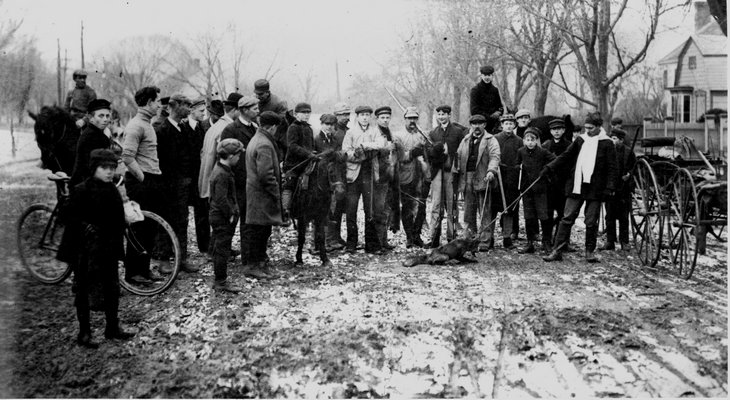
Lodowick Post was hunting with a group of acquaintances in Sagaponack on December 1, 1802, when his hounds caught the scent of a fox. After chasing it onto an empty beach, they began to close in.Unbeknownst to Post, Jesse Pierson, another local resident, had started to follow the trail of the same fox. He caught up with it, clubbed it and carried it off for himself.
Post sued Pierson, claiming that, because he had already been chasing the fox, the pelt and carcass were rightfully his.
A legal case over the ownership of a wild animal hadn’t been recorded before. Local justices ruled in favor of Post, explaining that the fox legally belonged to him because he’d been chasing it first. But Pierson appealed the ruling to the State Supreme Court of New York, which reversed the lower court’s decision in his favor, the judge noting that the hunt for an animal does not constitute ownership.
The world-renowned 1805 fox hunting case, Pierson v Post, has long been used in American property law classrooms to introduce law students to the concept of first possession. The question being: Can a person claim possession of a property by seizing it first?
Angela Fernandez, a law and history professor at the University of Toronto, has been researching the case stemming from a fox killed on a Sagaponack beach for more than 10 years.
“It’s a unique case,” she said during a lecture she gave at the Southampton History Museum on Thursday, March 28. “The topic is possession.”
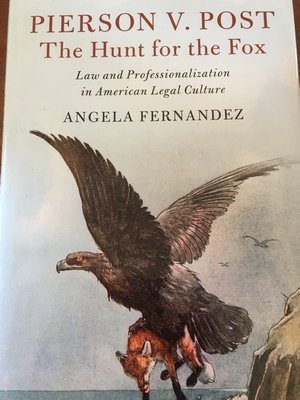
Her newest book, “Pierson V. Post, The Hunt For The Fox: Law and Professionalization in American Legal Culture,” retells the history of the famous fox case, from its origins as a squabble between the two wealthy young men in Sagaponack, through its appeal to the State Supreme Court, and its entry into legal treatises, law school casebooks and law journal articles, where the case is still analyzed to this day.
Over the past 10 years, she’s been studying archives and judgment rules in Albany, New York City and on the East End, where the incident took place, including archives from the historical societies of Riverhead, Southampton, Bridgehampton and East Hampton.
Ms. Fernandez drove from Canada earlier in the week to lecture to a full audience at the Southampton History Museum.
She explained that records stated at the time that both men were in their 20s, and Pierson came across the fox near Peter’s Pond Lane in Sagaponack, knowing that it was already being chased by Post.
“A lot of people say that he shot the fox, but he didn’t,” Ms. Fernandez told the audience. “Apparently, he clubbed it with a piece of fencing railing.”
Post was a teacher, most likely at the Amagansett School—“which makes sense, because he probably wouldn’t have had a gun on him coming from school,” Ms. Fernandez said.
At the time, fox hunting on Long Island wasn’t as big a sport as it was in Europe. Ms. Fernandez explained that Post may have been hunting the fox because it was considered a pest, and could have been killing chickens or other farm animals.
“It isn’t known what they did with the fox after. I think Post clubbed it to spoil Pierson’s fun,” she said. “I think at the time it must have been meaningful either to them or to their fathers,” she added, noting that the issue seemed primarily to be one of ego.
The dispute may have also been about use of the land where the fox was caught. Members of the Pierson family were original settlers of Bridgehampton and could have thought they had special privileges over the beach.
Post believed that chasing an animal in the course of hunting was sufficient to establish possession, and therefore he had rightful ownership of the fox. Seeing as such an issue hadn’t been brought up before, at the local or state level, the local courts agreed with him.
“Post wins 75 cents at the jury trial,” Ms. Fernandez explained—about the value of the pelt and carcass. However, after the case was appealed and reversed in Pierson’s favor, Pierson was awarded around $130.
Ms. Fernandez said “to be heard, the trial took two and a half years,” with a ruling coming in 1805.
The appeal was put to the Supreme Court of New York and heard by Chief Justice James Kent, who was at the time one of the nation’s preeminent jurists, and Associate Justices Daniel Tompkins, who would later become vice president of the United States, and Henry Brockholst Livingston, who would go on to serve as a justice of the U.S. Supreme Court.
The majority opinion was written by Daniel Tompkins. “This was one of the biggest things he ever wrote,” Ms. Fernandez said.
The decision ruled that the pursuit alone vested no property right in the huntsman, and that the pursuit accompanied by wounding was equally ineffective. The animal must be captured, killed or taken away in order to constitute possession.
The majority opinion found that though it may have been “rude” for Mr. Pierson to have killed the fox, he was legally not at fault, Ms. Fernandez said.


 Elizabeth Vespe on Apr 1, 2019