


 1 Video & 13 Photos
Express Session 2024_10_10
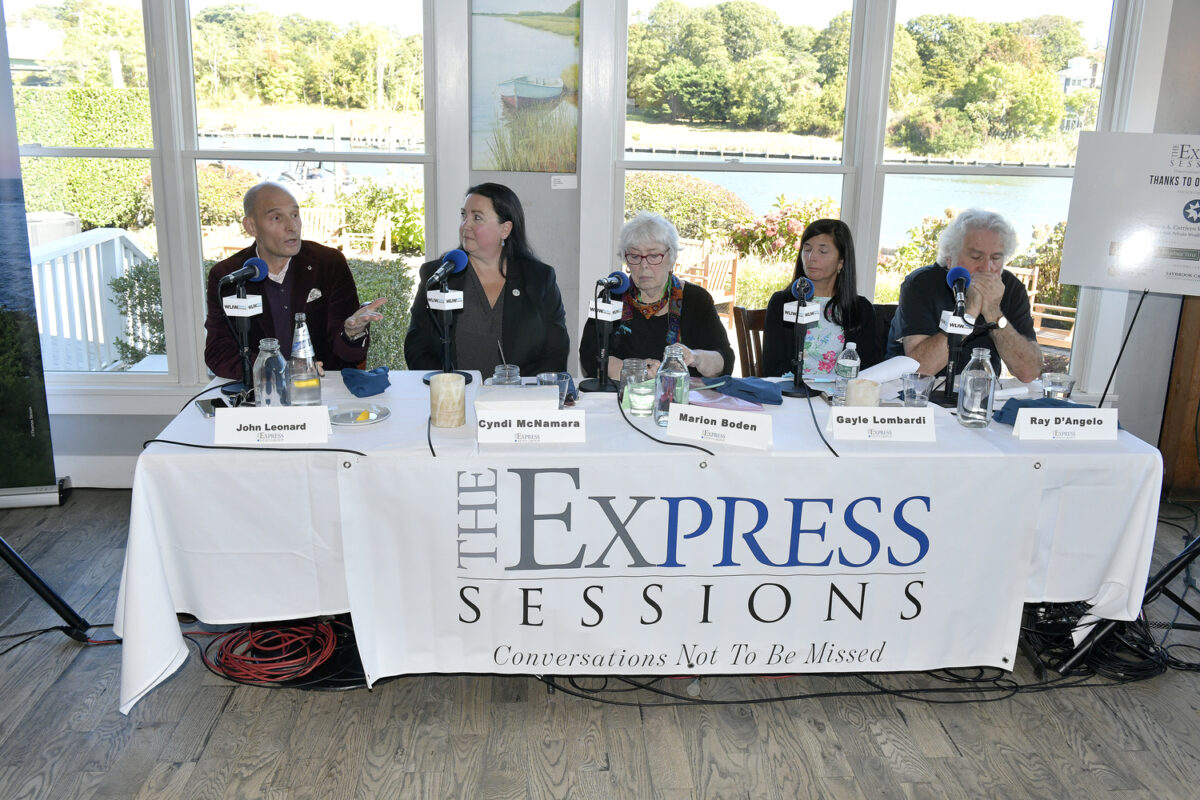
The panelists at the Express Session event, "Hampton Bays Under Pressure: Southampton Town's Largest Hamlet Is in a State of Flux," at Cowfish on October 10. DANA SHAW
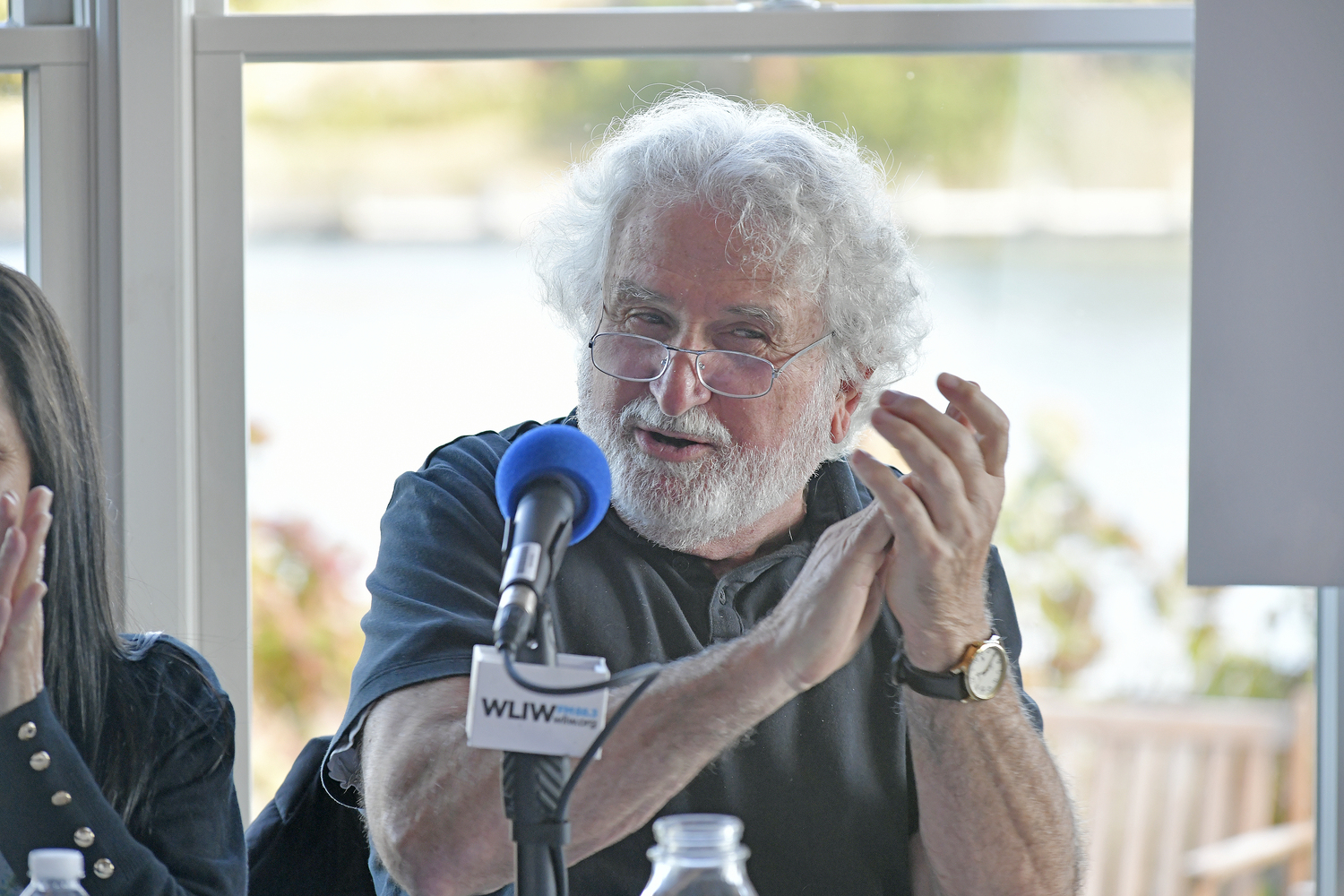
Session Panelist Ray D'Angelo, President, Hampton Bays Civic Association. DANA SHAW
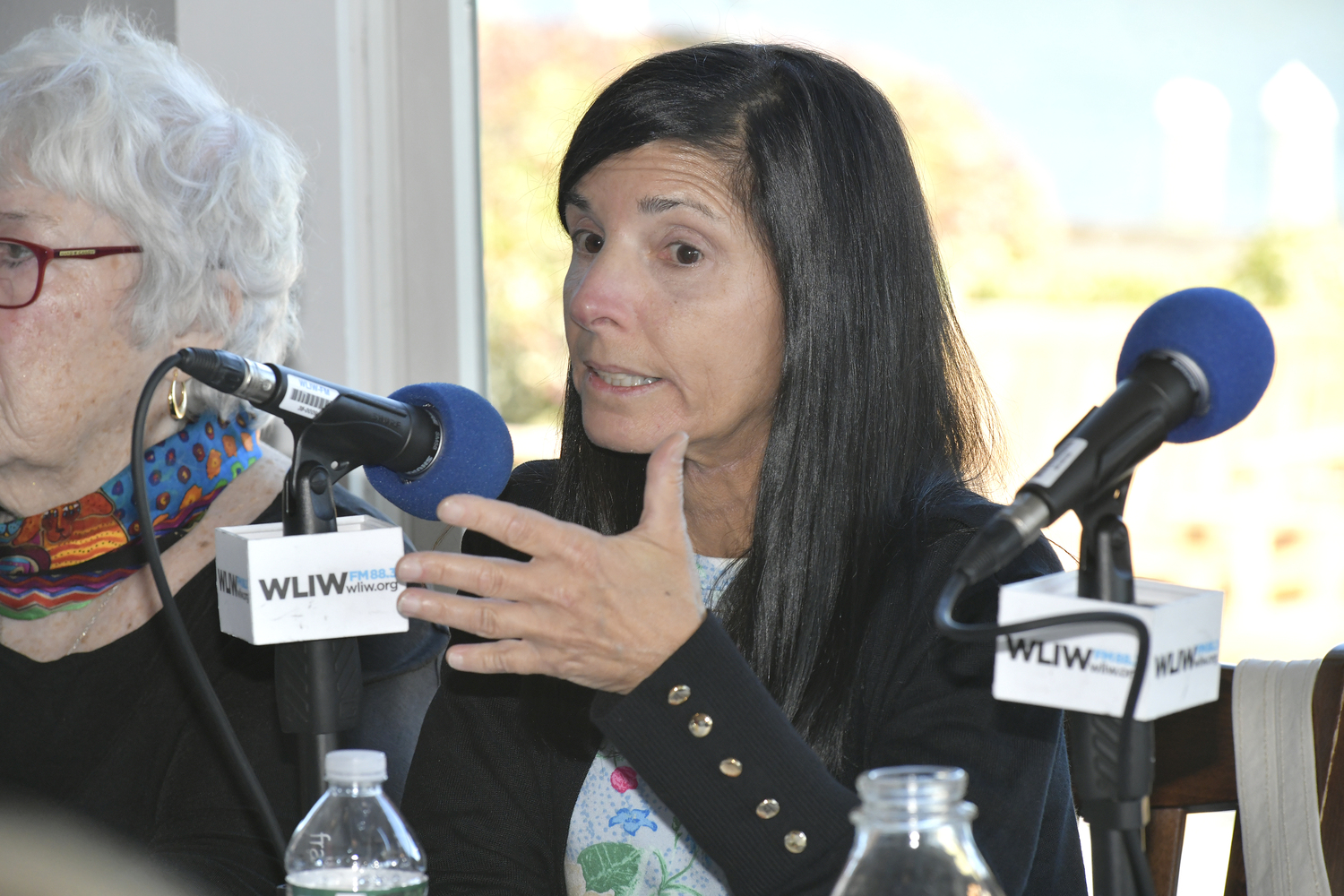
Panelist Gayle Lombardi, Director, Hampton Bays Civic Association. DANA SHAW
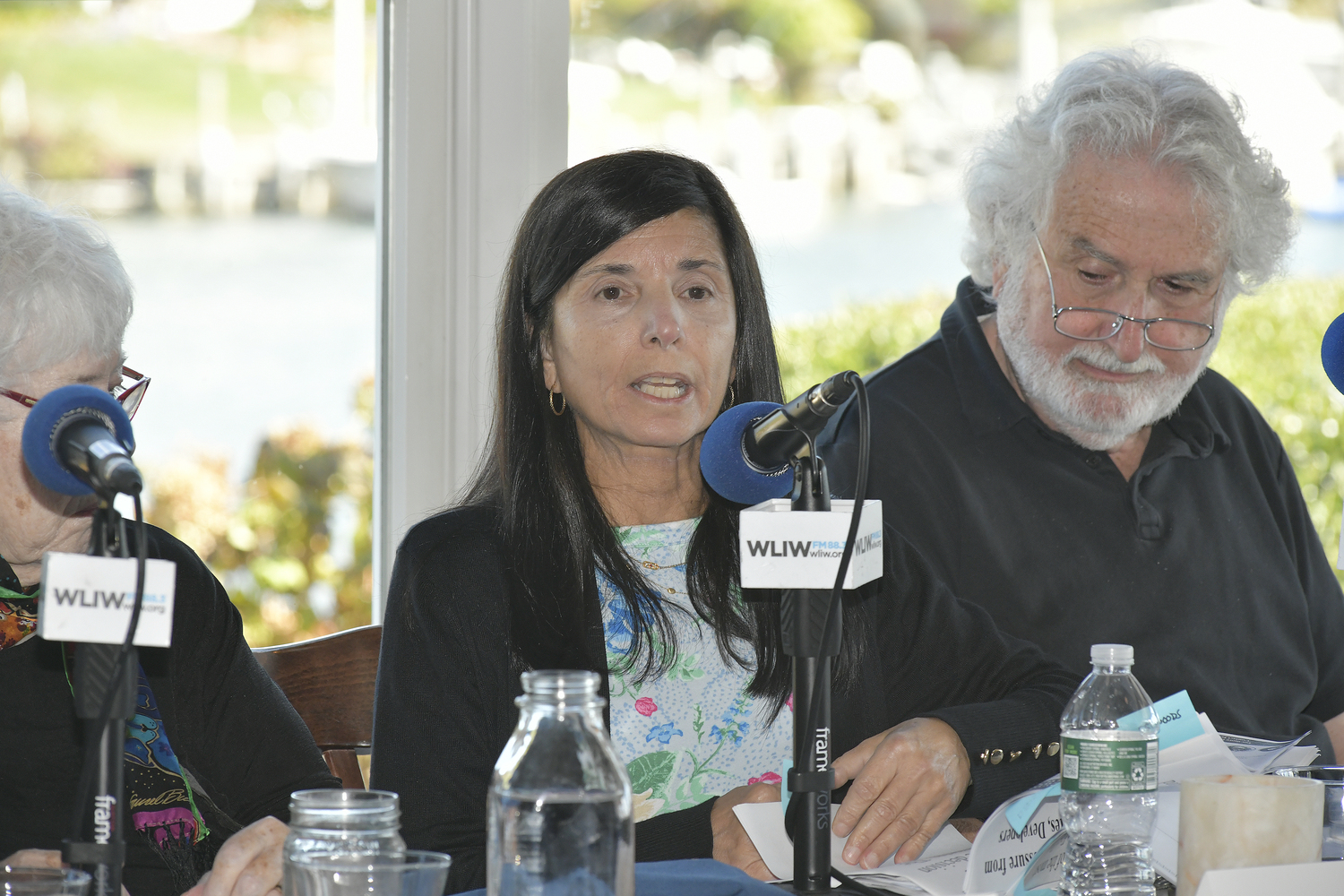
Panelist Gayle Lombardi, Director, Hampton Bays Civic Association. DANA SHAW
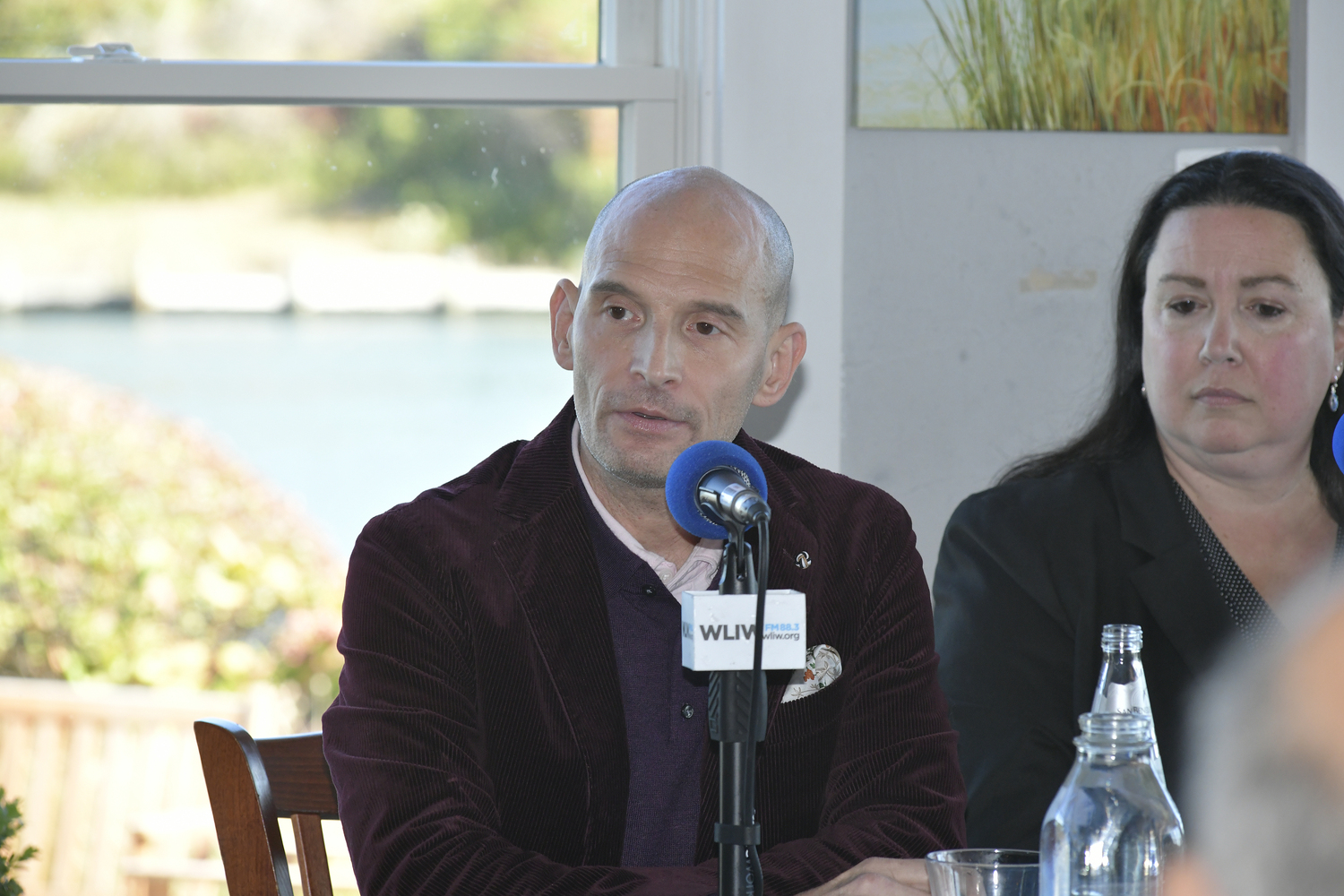
Panelist and Hampton Bays Alliance Founder John Leonard. DANA SHAW
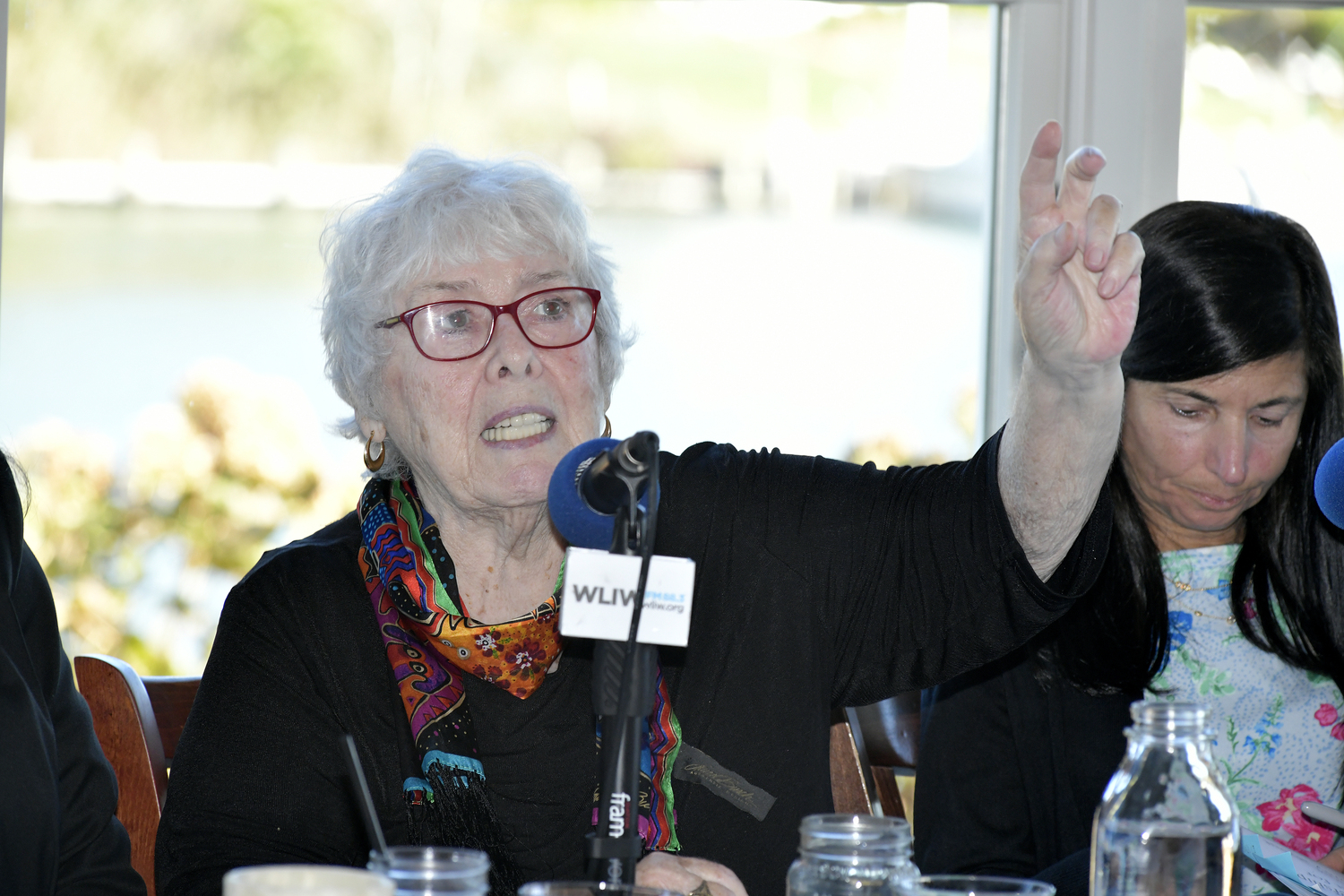
Panelist and Hampton Bays resident Marion Boden. DANA SHAW
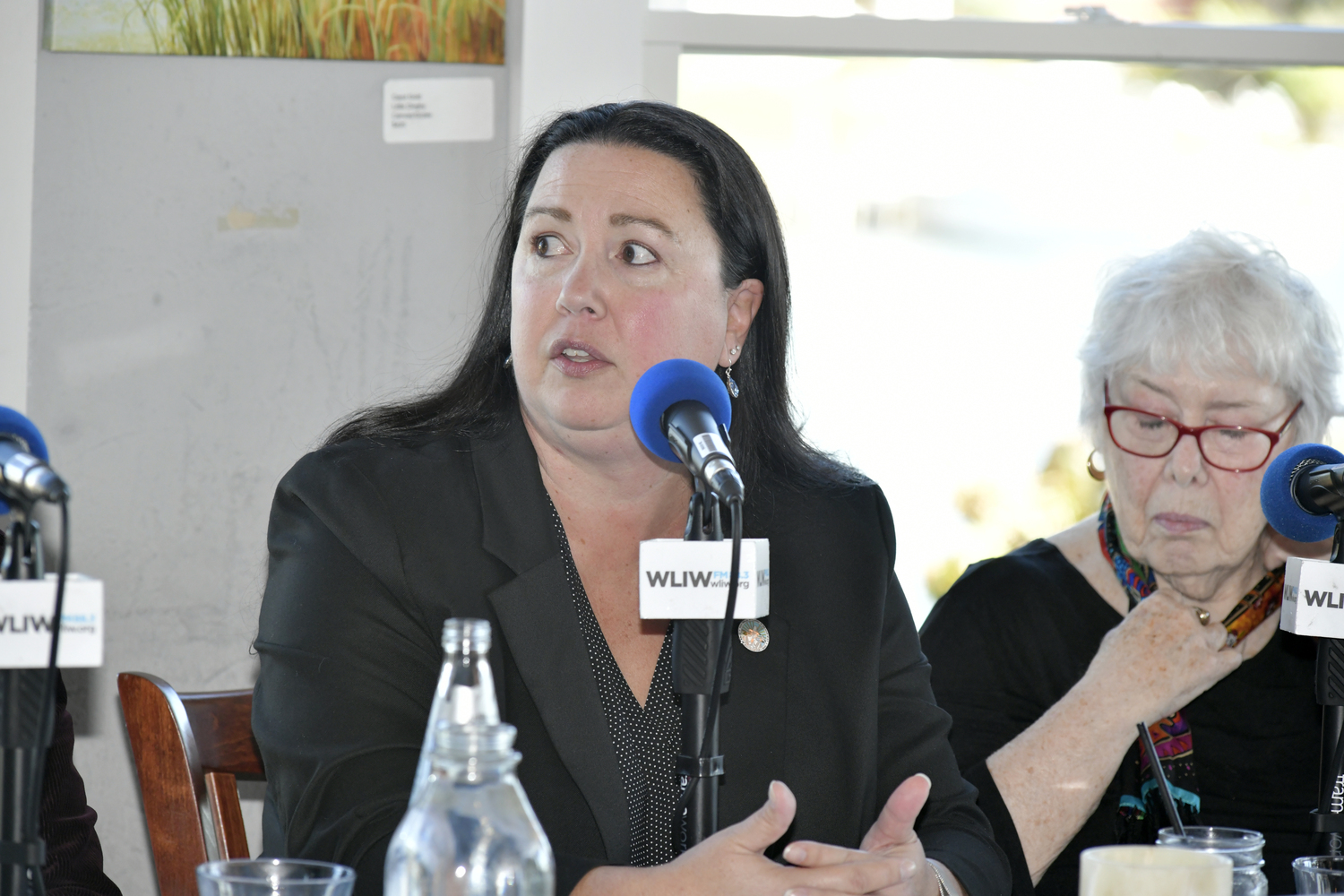
Panelist Cyndi McNamara, Southampton Town Councilwoman. DANA SHAW
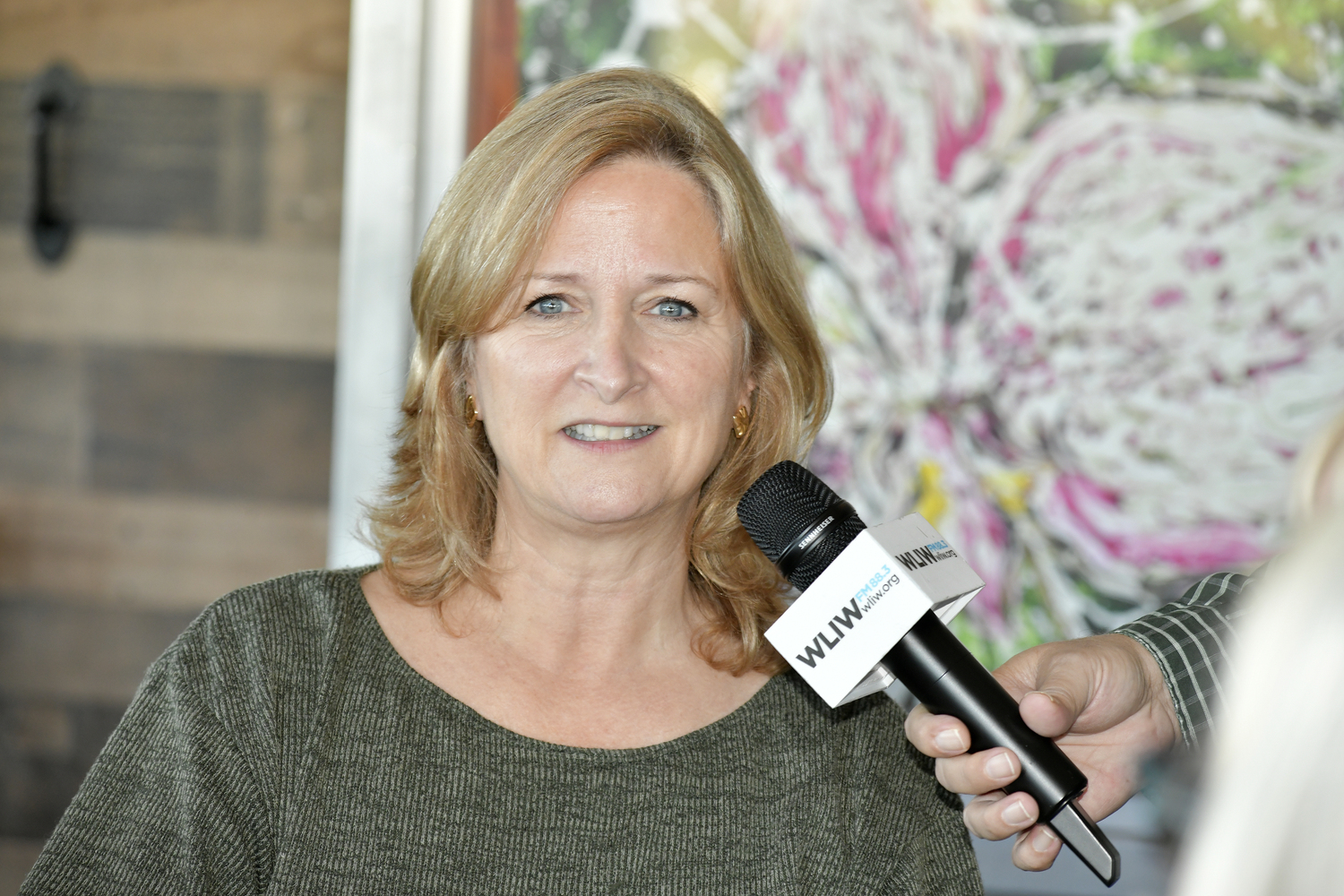
Southampton Town Supervisor Maria Moore, fields a question. DANA SHAW
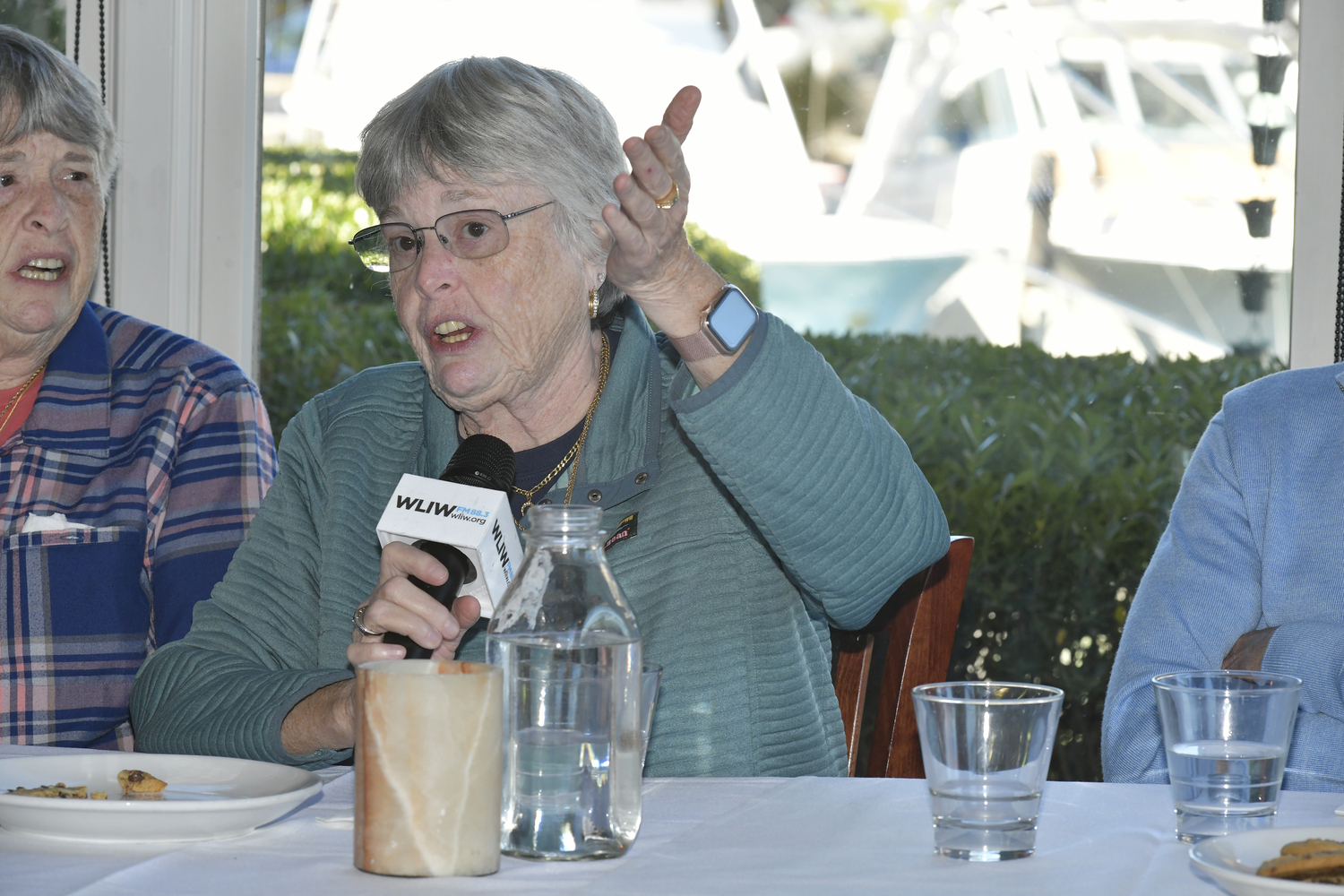
Audience member Gail Murcott asks a question. DNAA SHAW
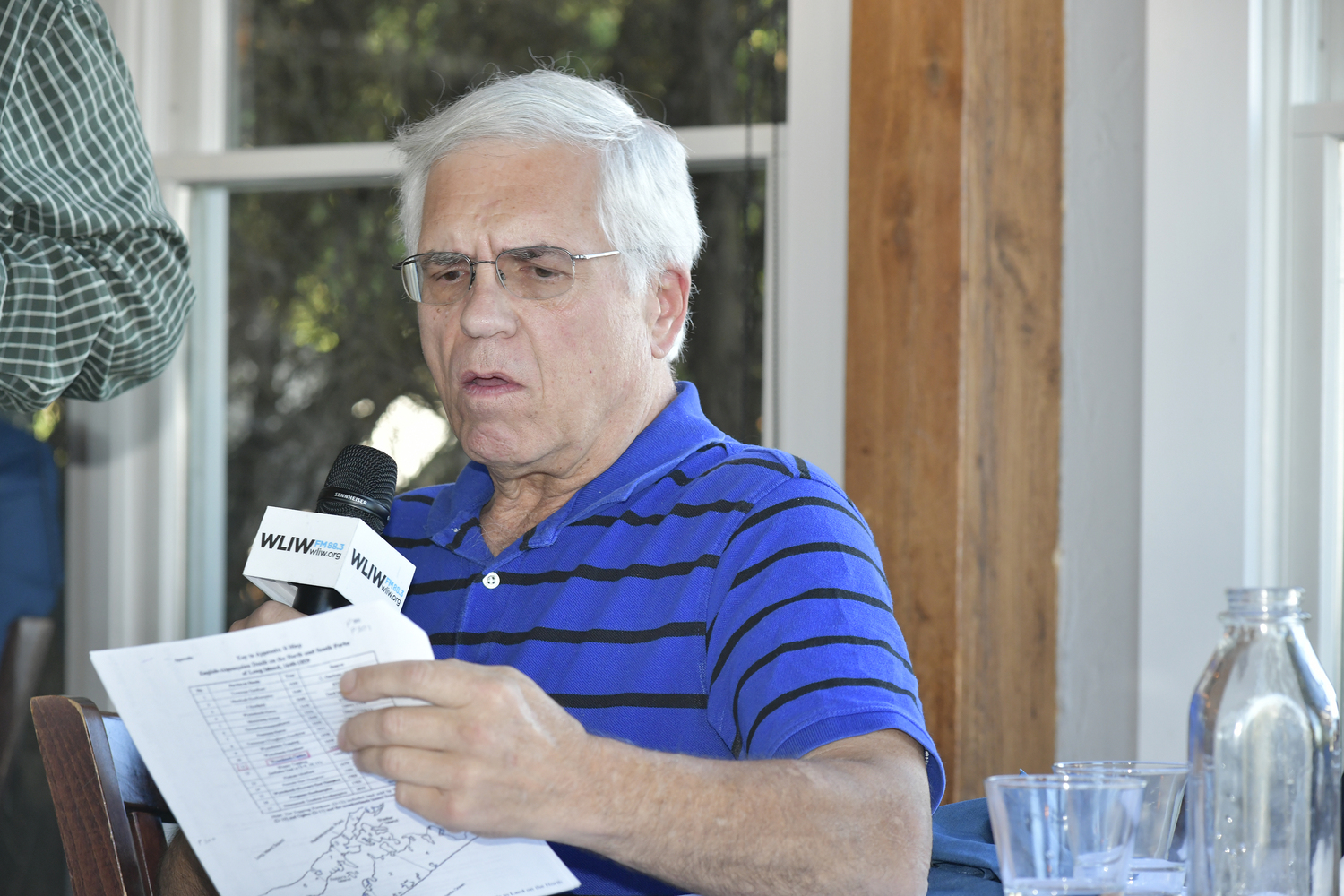
Audience member Roger Moores. DANA SHAW
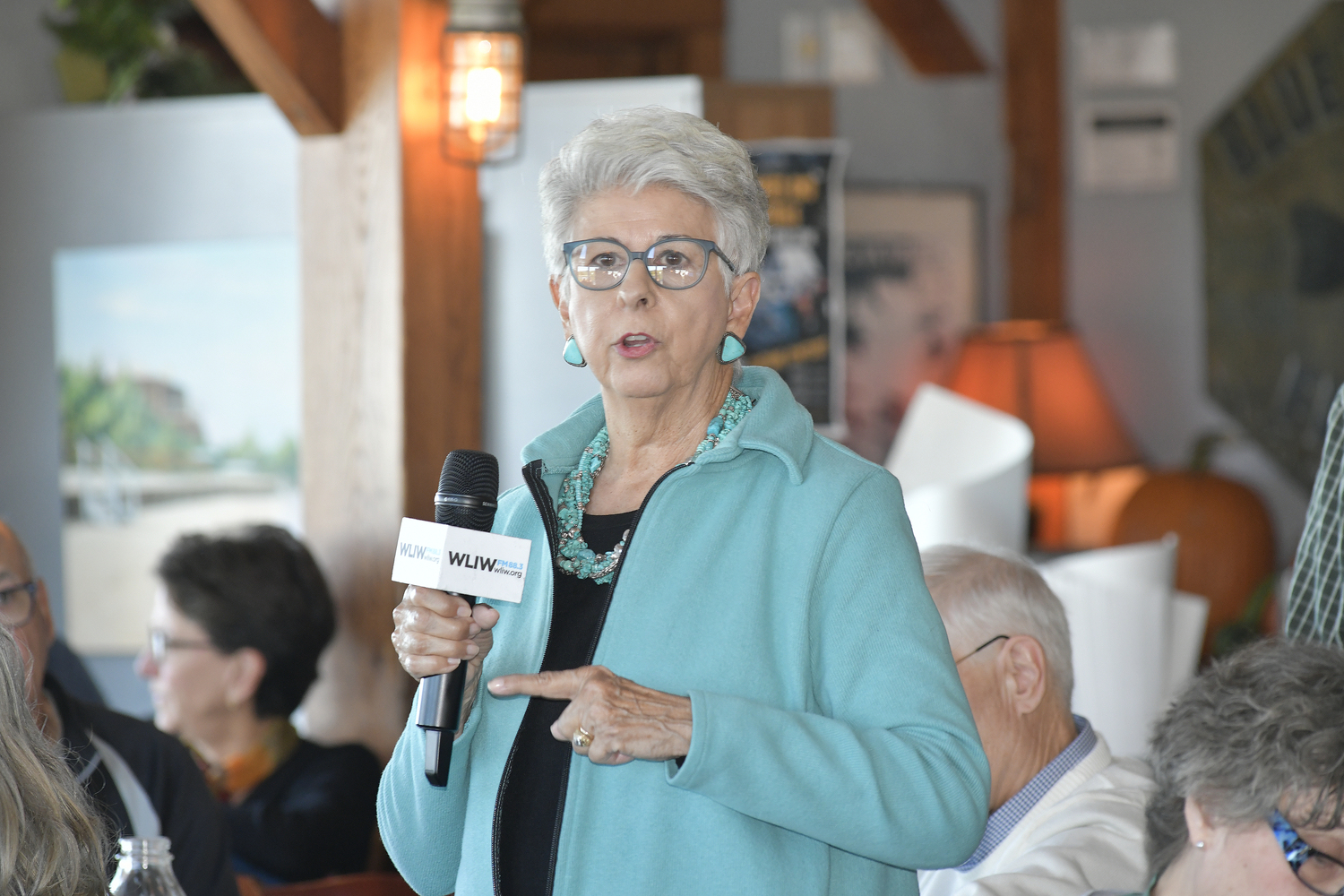
Audience member Linda Wells at the October 10 Express Session. DANA SHAW
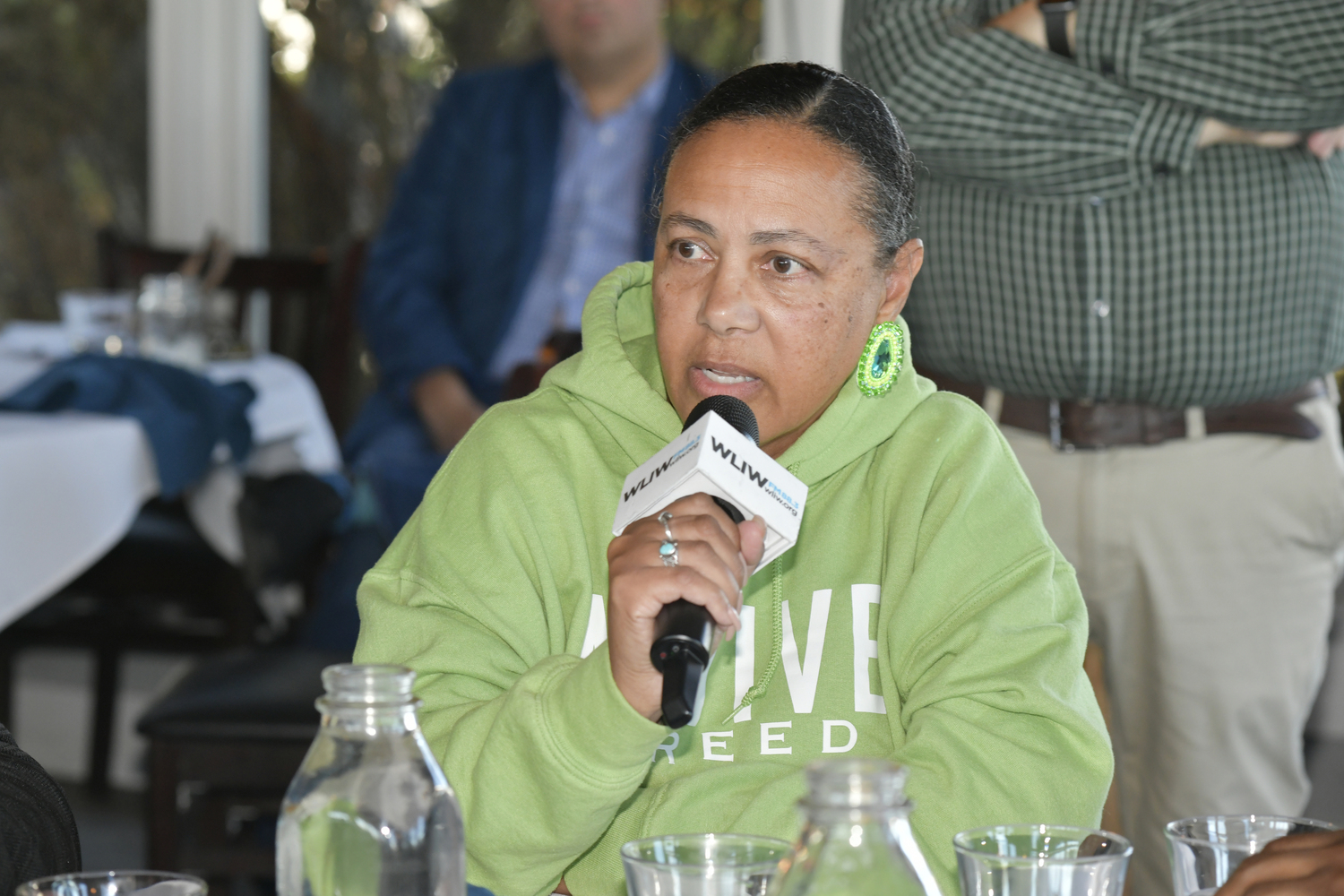
Shinnecock Council of Trustees Chairwoman Lisa Goree makes a point at the Express Session. DANA SHAW

Southampton Town Councilman Michael Iasilli makes a point at the Express Session. DANA SHAW
Hampton Bays is in a state of flux.
In the eyes of some, the hamlet’s downtown has crumbled and is in desperate need of revitalization. To others, it is bustling.
For some, an ambitious developer’s plan to build a new extension of the downtown connecting Montauk Highway to Good Ground Park with three new streets of businesses and dozens, or hundreds, of apartments is just the sort of rebirth Southampton Town’s largest hamlet needs. But others see that as fraught with pitfalls of choking traffic and overwhelmed infrastructure.
A gas station being constructed off Sunrise Highway by the Shinnecock Nation with essentially no oversight by regulatory agencies of any kind — as far anyone in the local community or government is aware, at least — is, for some, an affront to the legal framework of health and safety assurances that development must typically meet. For others, it is a long overdue move toward economic security for the tribe, a sovereign nation, and one that may well be soundly protected by federal law.
Those two issues are but the most looming in the town’s largest hamlet and were the focus of the latest Express Sessions luncheon discussion, held last week in the sun-drenched dining room of Cowfish restaurant on the Shinnecock Canal.
Members of two civic groups in the hamlet, the Hampton Bays Civic Association and Hampton Bays Alliance, town officials and dozens of residents waded through a wide-ranging, nearly two-hour conversation, debate and venting session that spotlighted, once again, the hamlet’s place as the most involved citizenry in Southampton Town.
Whether the downtown should be wholly remade — and injected with dozens of new apartments — in an effort to breathe new life into it as a more modern downtown, focused on a “walkable” center that draws its own and other hamlet’s residents to its streets to amble casually, licking ice cream and window shopping between visits to bustling new restaurants, was the main topic of debate for the members of the discussion panel and the audience.
That one man’s revitalization is another man’s overdevelopment, was clear.
“What one person considers smart growth could be a 50-story apartment building, and another it could be nothing at all,” said Marion Boden, a longtime resident, setting the stage of the nearly decadelong, and counting, debate within the Hampton Bays community.
“We have to be careful of unbridled overdevelopment, said Ray D’Angelo, the president of the Hampton Bays Civic Association, and a panel member. “We live on top of our water supply, all the stuff that comes out of us, goes into our water. So it’s a big question we have to deal with, how much are we going to allow. We have to be cognizant of it and try to keep Hampton Bays the beautiful place that it is.”
John Leonard, the founder of the Hampton Bays Alliance, said that when he looks at Hampton Bays he sees a community that he loves but whose economic engine has stalled because of a lack of available commercial space and a downtown that does not attract residents to its sidewalks other than to run specific errands and then be on their way.
“Hampton Bays is really a crown jewel of the Hamptons — gorgeous, pristine beaches, wonderful people, a wonderful way of life — but I recognize the need for other things in our community. Just because you love where you live, doesn’t mean it’s the way you want it to be,” he said. “The fact of the matter is, people want a walkable downtown. They want something akin to Westhampton Beach and Sag Harbor — without all the traffic.”
Leonard has been a champion of the proposal by developer Alfred Caiola, who owns dozens of acres of land north of the hamlet’s main business corridor on Montauk Highway, that has long been the focus of a plan by Southampton Town to revitalize the downtown. The plan conceptually calls for new streets of two- and three-story buildings, with retail shops, cafes and restaurants on the ground floors and apartments upstairs.
Leonard says the hamlet is in desperate need of both the additional commercial space and of residences who are both attractive to and affordable for the sort of people that drive bustling downtowns in other hamlets.
Critics have said that the new influx of people living in the downtown would overwhelm infrastructure, mainly the already oft-congested roadways leading into and out of the hamlet. Leonard said that even if those apartments meant 750 people living downtown, the impact would be “a drop in the bucket” in a hamlet of 14,000 residents — the town’s largest by far — and would be the sort of economic foundation needed for businesses to thrive.
Gayle Lombardi, also a member of the Civic Association, and the resident who derailed the town’s efforts to move the new downtown expansion toward reality with a lawsuit challenging a rezoning plan, said that the hamlet is already beset with so many pressing issues of concern — the gas station and a proposal for a battery energy storage system only the foremost — that the town should not be embarking on plans for sprawling new development until it has gotten a handle on what is already in the pipeline.
“My issue with the Town of Southampton and their zoning and planning is that they are not doing a comprehensive review of the community,” Lombardi said. “They are piecemealing it. I don’t know how we can talk about continuing to develop until we fix the infrastructure problems.”
Southampton Town Councilwoman Cyndi McNamara said she thinks that the vision of remaking the downtown would make Hampton Bays more appealing to the young people in the community — like her children — who now typically move away.
“My kids went off to college, one is living in Manhattan now and the other says she’s going to stay upstate — that’s really sad,” she said, a story she hears from lots of young people. “Talk to them — most of them don’t want to own a house. They want to live in an apartment where they can walk to a bar.
She added, “We have a developer who wants to change Hampton Bays and we are afraid of that change.”
McNamara expressed frustration with the latest concrete step in the effort: the adoption of the so-called Hampton Bays Pattern Book — originally a guideline for the vision of redevelopment in the downtown, but tinkered with and stripped of so many of its recommendations about what could be done that she wondered why the town even bothered adopting it earlier this month.
Boden said that being afraid of change is natural and that accepting that things must change is rational, but that how the change is managed can be the difference between delight and disaster.
“I realize we can’t freeze a place in time,” Boden said. “I’d like to see a downtown that we can still recognize as downtown Hampton Bays and not Patchogue junior. The main thing I’d like to see is the quality of life maintained. I’d like to see a Hampton Bays that I recognize, a Hampton Bays that is healthy and that doesn’t take me 25 minutes to get to the King Kullen in the morning.”
As for the gas station being built by the Shinnecock, and the future plans for a broader development at the property, the panelists and many in the audience — which included several of the Shinnecock Nation’s leaders — were somewhat less equally divided, with only a spare few accepting of the project upon which the tribe has embarked.
Southampton Town has said it is helpless to halt the gas station project because the tribe is a sovereign nation — though its rights to use the Hampton Bays land known as Westwoods independent of local oversight remains a question that could be settled by a lawsuit brought against the tribe by New York State over its construction of two electronic billboards on Sunrise Highway.
“I fear for the safety of our community when the gas station opens,” D’Angelo said of the influx of traffic that the project may draw down narrow, winding Newtown Road — currently the only way to access the property — when it is completed in spring 2025. The tribe is lobbying New York State to allow it to open an access directly onto the westbound lanes of Sunrise Highway.
Flatbed trucks carrying gas storage tanks more than 50 feet long rolled into the 10-acre property, which the tribe clear cut last spring, late at night earlier this week — the latest step in the massive construction project that has taken place just feet from the backyards of more than two dozen homes and without any official oversight or explanation of what safety and environmental protections are being considered.
The tribe has offered assurances that their planning team has taken all the necessary steps to insure the gas station is safe for both the environment and residents — complying with federal requirements, they say — but have shared no documentation with either the town nor the local civic groups, despite promises to do so.
“People ask me what’s going on with the gas station, and I can’t answer them, because I haven’t seen anything,” McNamara said. “There is a road that is 6 feet above grade and drainage pipes pointing toward people’s houses, and I can’t tell them anything.”
Tribal leaders have met with Supervisor Maria Moore and members of the Town Board in recent weeks and the town has hired an attorney who specializes in tribal land use laws, and the two sides say they want to avoid costly and legally fraught litigation.
“Nobody wants to initiate litigation because it is so expensive and if we did and the nation prevailed, they’d be able to do whatever they wanted and if we prevailed we’d be able to impose our zoning, so we’re trying to negotiate,” Moore told the audience at Cowfish.
“If this were any other developer, I would be moving 100 mph to stop a development that doesn’t go through the process,” Councilman Michael Iasilli added. But he noted that the tribe’s sovereign status means that simply stepping in to stop the work may not be within the town’s legal powers. So the town has taken to trying to negotiate with the tribe to explain how it’s going about the construction.
“We have to be thoughtful,” he said. “We’re doing everything we can to try to get answers. We see a lot of great collaboration, but we also need to recognize the federal laws.”
“We also have people who are asking us to uphold their rights,” McNamara countered.
Leonard, an attorney, said that litigation is indeed a costly and “soul crushing” endeavor that he often counsels clients to avoid at any opportunity — but he said there are questions about the tribe’s true legal rights on the Hampton Bays land that need to be settled legally.
The tribal leaders see their 13,000-year history in the region and the federal recognition they received in 2010 as all the analysis needed.
“We are a government,” Lisa Goree, chairwoman of the Shinnecock Council of Trustees, told the panel and audience from her tribe’s table in the Cowfish dining room. “We predate the Constitution … We are not going to let someone just strip us of our inherent rights.”


 Michael Wright on Oct 16, 2024