


 3 Photos

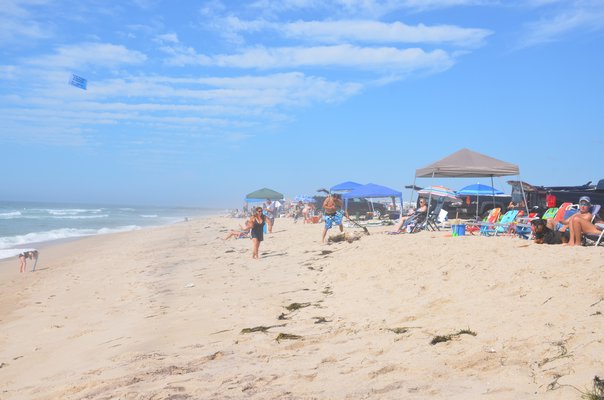
A State Supreme Court justice last week dismissed a lawsuit challenging the use of the “Picnic Area” beach in Southampton Village, upholding the public’s right to drive onto the beach and park in summer.
Beach driving proponents had been closely watching the decision by Justice Joseph A. Santorelli, worried that it might set a precedent that would threaten beach driving regulations in Southampton Town and Southampton Village. The ruling ended up in the town’s and village’s favor—but an appeal of the March 12 decision is expected to be filed.
“The people of Southampton can continue to enjoy the beach as we have for years,” John Kosciusko, the president of the Southampton Association For Beach Access, said of the decision.
The lawsuit was filed in October 2015 by Southampton Village-based attorney Nica B. Strunk on behalf of Kathleen Araskog Thomas, Andrew S. Thomas, Rand V. Araskog and Jessie M. Araskog. Throughout the court proceedings, all plaintiffs except for Ms. Araskog Thomas dropped out.
The defendants were the Southampton Town Trustees, Village of Southampton and State Department of Environmental Conservation.
The lawsuit claimed that the village and Town Trustees unfairly and illegally allow SUVs and 4x4 vehicles to park on a 2,000-foot-long stretch of beach, known as the Picnic Area, during the day in the summertime, while excluding them from other beaches. The plaintiffs argued that the practice singles out nine property owners to be affected by the practice, which is otherwise restricted in the village, and created a “noxious and unsafe situation.”
The judge’s ruling had three parts, covering eight different arguments made by the plaintiffs. Most significantly, it upholds the village’s policy of allowing parking in the easement as constitutional, saying its use does not constitute a “taking” without compensation, as the plaintiffs maintained. Related claims that the use was a nuisance were rejected as well, because the plaintiffs did not show “unreasonable” action had been taken by the Town Trustees, he said.
Steven Stern, an attorney from Carle Place-based Sokoloff Stern LLP, who represents the Southampton Town Trustees, said a 90-day statute of limitations factored into the judge’s decision on whether damages resulted from any public nuisance, but noted it was not a major part of the decision. Mr. Stern explained that the Araskog family’s lawsuit was filed on October 21, 2015, so any claims prior to July 23, 2015 were not allowed to be acted on by the courts. In this case, the Araskog family and their representatives failed to prove that allowing people to drive on the beach was a public nuisance.
The part of the lawsuit targeting the DEC was dismissed because the plaintiffs failed to show that the DEC acted outside its right to grant permits on a discretionary basis, according to the judge’s ruling.
Southampton Village code does not allow people to drive on the beach between the hours of 9 a.m. and 6 p.m. in the summer on the majority of beaches, but an exception lies with the Picnic Area, between the western boundary of the village and Road F, where residents of Southampton Town and Southampton Village are permitted to drive onto the beach and park for the day. Beach driving also is banned on town beaches during the day from June 15 to September 15.
Some of these claims accuse the town and village of taking private property without permission and allowing people to drive on the landward side of the debris line. The lawsuit also claimed the village allowed the beaches to become overcrowded, opening the door to uncontrolled public intoxication, urination, defecation and littering on the claimants’ private property.
“We disagree with the decision entirely,” Ms. Strunk said on Monday, noting she will be filing an appeal later this week.
Southampton Village Attorney Wayne Bruyn told Village Board members at a meeting on Tuesday that the village is not completely eliminated from the lawsuit. He explained that the court ruled in favor of the claims made by the village, but the village did not challenge the claims made regarding allegations of a nuisance use.
He added that the Town Trustees had made a motion to dismiss the claims of nuisance against them, and won. “It’s a very positive step for the village at this point,” he said.
“We are please with the outcome of the case,” said Ted Sklar, an attorney with the Smithtown-based Devitt Spellman Barrett, LLP, which represented the Village in the case. “The primary issue of the case was whether village regulation of the beach was constitutional, and we prevailed on those claims.”
Mr. Sklar said his firm chose not to challenge the nuisance claim because the constitutional claims were more important.
If an appeal is filed by Ms. Strunk, Mr. Sklar said his firm plans to continue representing the Village.
“As the primary defendant defending the village code, we will defend the appeal,” Ms. Sklar said.
Homeowners along the oceanfront in Southampton Village own the beach from their house to the mean high water mark, and the Town Trustees hold a public access easement along all ocean beaches within the town, which extends from the crest of the natural dunes to the high tide line. The Dongan Patent, from 1686, established that easement and allows the Town Trustees to regulate activities in that zone, such as fishing and collecting seaweed.
Mr. Stern said the court’s decision factored in arguments made by the Trustees. These arguments include that the Trustees’ actions were not unreasonable, that they hold an easement for the public, and that there was no nuisance at the beach.
“The Trustees are pleased that the court recognized the significant history and authority for public access to the beaches, and will continue to vigorously defend its rights through any appeals,” Mr. Stern said.


 Greg Wehner on Mar 19, 2018