


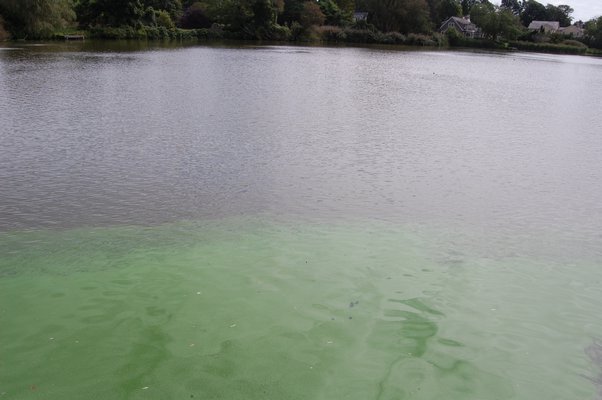
 14 Photos
A bloom of blue-green algae seen in Lake Agawam in Southampton. JON WINKLER
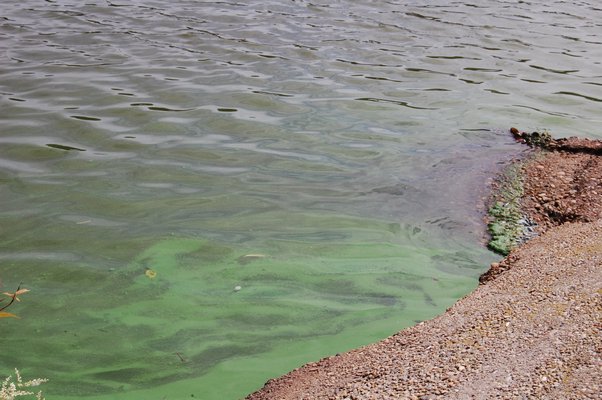
A bloom of blue-green algae seen in Lake Agawam in Southampton. JON WINKLER
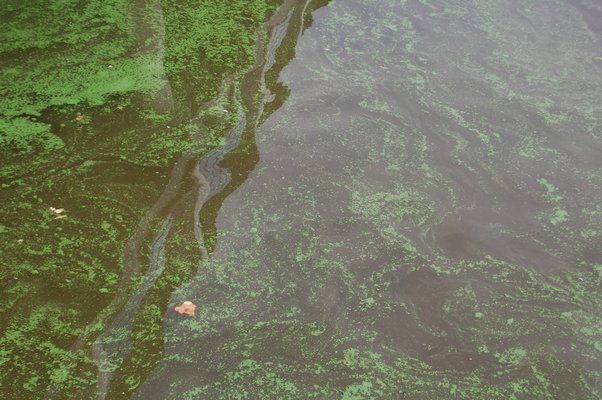
A bloom of blue-green algae seen in Lake Agawam in Southampton. JON WINKLER
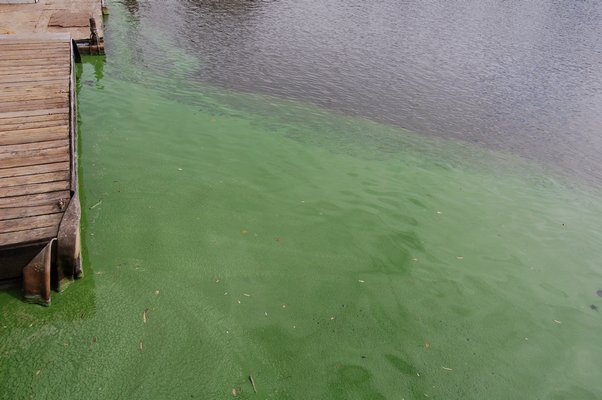
A bloom of blue-green algae seen in Lake Agawam in Southampton. JON WINKLER
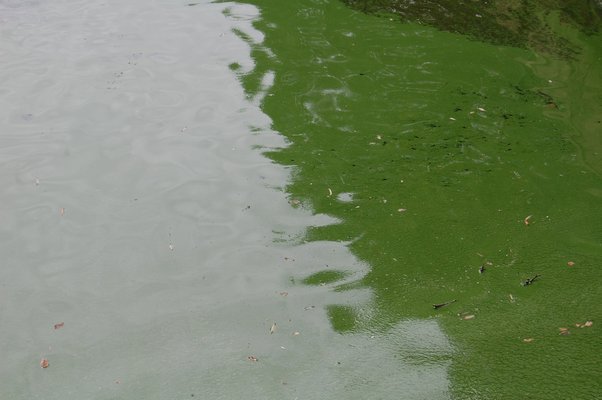
A bloom of blue-green algae seen in Lake Agawam in Southampton. JON WINKLER
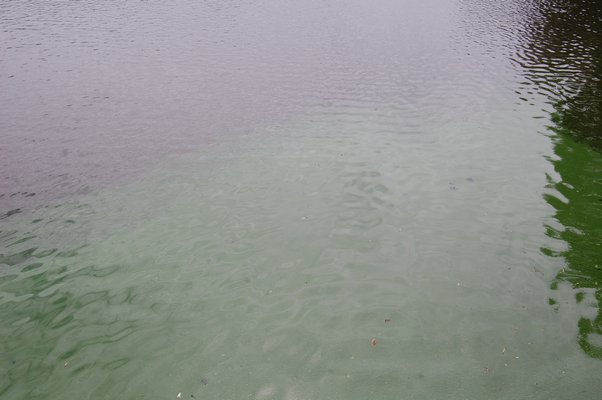
A bloom of blue-green algae seen in Lake Agawam in Southampton. JON WINKLER
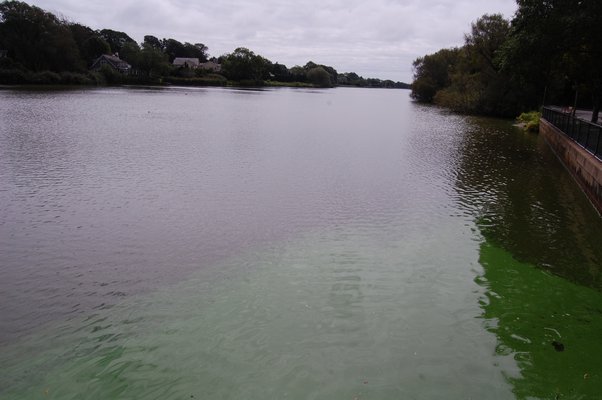
A bloom of blue-green algae seen in Lake Agawam in Southampton. JON WINKLER
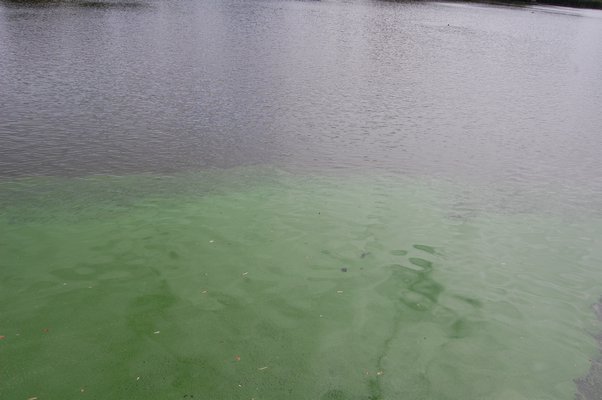
A bloom of blue-green algae seen in Lake Agawam in Southampton. JON WINKLER
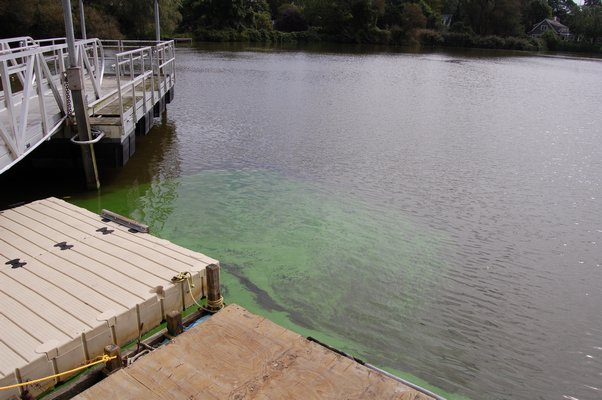
A bloom of blue-green algae seen in Lake Agawam in Southampton. JON WINKLER
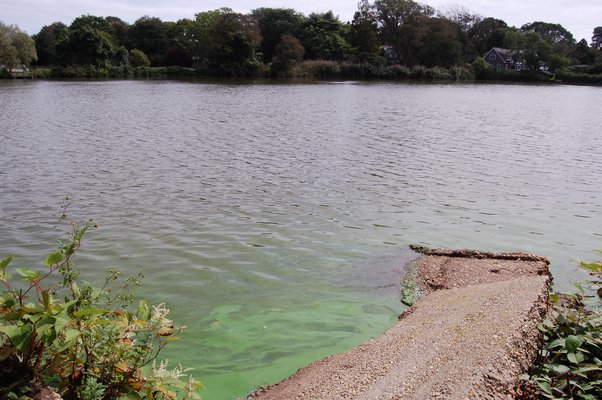
A bloom of blue-green algae seen in Lake Agawam in Southampton. JON WINKLER
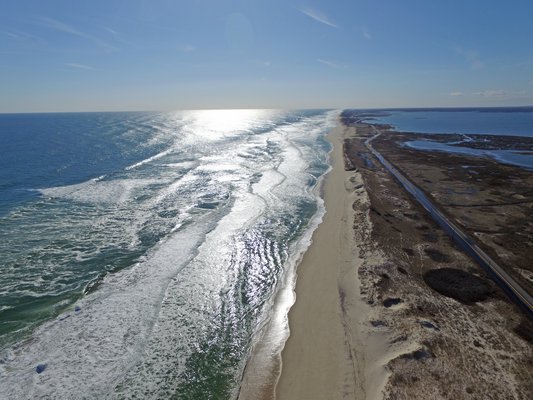
An aerial view of the blue-green algae bloom in Lake Agawam in Southampton Village on Monday.
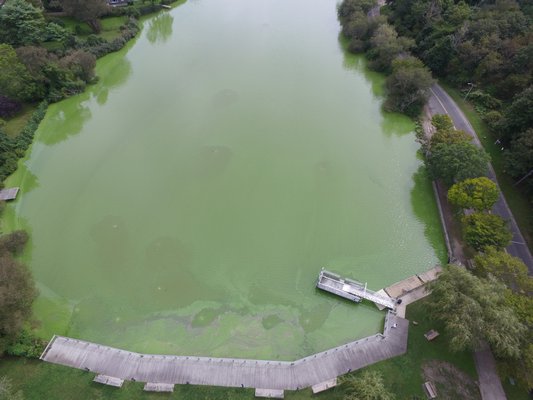
An aerial view of the blue-green algae bloom in Lake Agawam in Southampton Village on Monday.
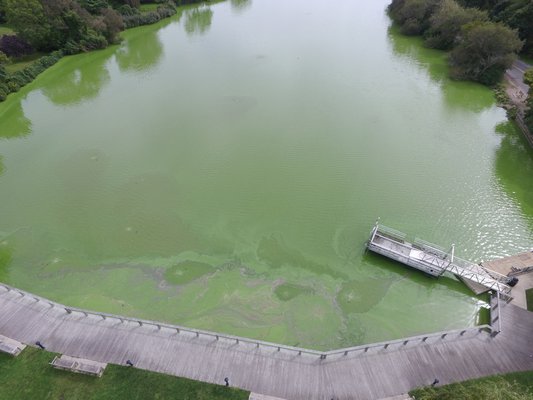
An aerial view of the blue-green algae bloom in Lake Agawam in Southampton V
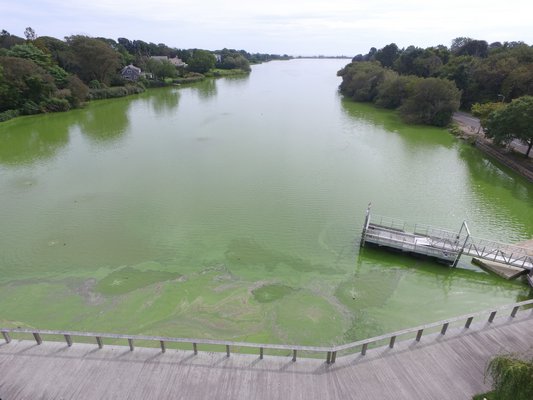
Scientists from Stony Brook University said this week that a toxic algae bloom in Southampton Village’s Lake Agawam was the densest growth ever recorded in a Long Island water body.
The incredibly dense blooms of the blue-green algae microcystis exploded to hundreds of times the Environmental Protection Agency’s thresholds for harmful conditions.
The EPA sets the threshold for a harmful algae bloom as 25 micrograms of algae per 1 liter of water. In August, the levels in Agawam were about 80 micrograms per liter, or mpl. By Labor Day weekend, spurred by high water temperatures and regular rainfall, the levels had leaped to over 10,000 mpl.
This week, the Stony Brook team measured levels of 76,000 mpl in Lake Agawam—more than 3,000 times the EPA threshold.
“When we took samples this week, it was 80 to 90 percent solid, and only 10 percent liquid—it was that dense,” said Dr. Christopher Gobler, a Stony Brook University researcher who leads the team of marine biologists that oversees water testing and algae monitoring throughout Long Island. “This breaks all records of anything we’ve ever observed anywhere on Long Island in the last 15 years of monitoring.”
The algae species microcystis that has taken over Lake Agawam naturally emits a toxin, known as microcystin, that can be harmful or even fatal to humans and animals if ingested. In 2012, a dog died after drinking water in Georgica Pond in East Hampton that contained a blue-green algae bloom at far lower levels than what is found in Lake Agawam currently.
The Stony Brook scientist said that people should keep animals away from the pond’s shoreline and should avoid contact with the water. Even if not ingested, the algae can cause skin irritations.
Algae blooms have been shown to feed on nitrogen and other nutrients carried into water bodies by groundwater flow contaminated with residential septic system waste and rain runoff that carries fertilizers and other chemicals from lawns and roadways.
The blooms are helped along by warm summer temperatures, and this summer’s conditions were optimal. Dr. Gobler noted that while the summer did not feature exceptional high temperatures, the low temps at night were higher than usual, so waters did not cool during overnight hours.
“In a normal summer, at night it gets into the low 60s, but in July and August this year, it rarely got below 70,” Dr. Gobler said. “So we had some of the warmest water temperatures we’ve seen—at or above 80 degrees for most of July and August, which is unusual.”
Dr. Gobler said that the current health threat posed by the dense algae bloom was not the only concern for the lake. When temperatures cool and the algae begins to die off, the decaying process will suck oxygen from the surrounding water and could cause a fish kill, as occurred in 1997, 2002 and 2006.
Lake Agawam has a long history of being impacted by dense blooms, thanks to being the end point for drainage from dozens of streets around the village’s business district, up to a mile away.
Despite years of study and concern about the health of the lake, village officials have been unable to identify and mobilize a solution to the pond’s chronic woes.
Multiple calls seeking a reaction to the density of the bloom from Southampton Village Mayor Michael Irving were not returned.
Sean O’Neill, the Peconic Baykeeper, said the big issue with Lake Agawam is drainage. “You have this giant conveyance from the village, of stormwater coming from the village, and the lake basically acts as a sump,” he said last week. “Think of the whole village draining to a confined space.”
On top of that, Lake Agawam is not tidal, so there is no flushing effect. Mr. O’Neill said when the lake is about to flood, a valve opens to allow the lake to drain into the ocean, but that removes only what is on the surface of the water.
Mr. O’Neill said the village should continue to push for alternative wastewater systems that reduce nitrogen loading into the groundwater, along with buffers to help rain runoff from yards. He also said diverting some of the water that drains from the village to other area ponds instead of just Lake Agawam could help lessen the blow.
In 2016, village officials began discussing a sewer system in the business district, but that has been put on the back burner as the technology evolves.


 Michael Wright on Sep 14, 2018