


 1 Photo
New York State Senator Kenneth P. LaValle and State Assemblyman Fred W. Thiele Jr. are considering legal action in order to block Stony Brook University’s cuts to its satellite campus in Shinnecock Hills, and have asked Albany to investigate what they described as “deceptive acts and practices” by university officials in making the sudden announcement.
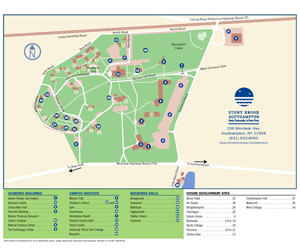
The university responded by stating that Stony Brook Southampton, in its current state, is not a viable business model, and is a casualty of massive cuts in state funding. Stony Brook University officials also stated that they have no plans to sell the 81-acre campus, as was feared when officials with Long Island University—the former owners of the property when it housed Southampton College—announced that they were closing the campus for financial reasons.
On Tuesday, April 6, media reports revealed that Stony Brook University was planning to shut down the residential components of the satellite campus, which welcomed its first students in 2007. Stony Brook University confirmed the reports the next morning, saying that it would shutter most of the buildings on the Shinnecock Hills campus, including the dormitories, and move the bulk of the programs over to the main campus by August 31, due to deep cuts in state aid in recent years.
The announcement came just four years after the university purchased the campus for $35 million from Long Island University and invested tens of millions of dollars in an effort to transform it into a hub for sustainability and environmental studies.
In interviews since the sudden announcement last week, Mr. LaValle and Mr. Thiele have said that they will explore filing a lawsuit in New York State Supreme Court against Stony Brook University, charging that the state would be wasting taxpayer dollars by essentially closing the campus, which now serves about 500 students. The taxpayers, via the State University of New York, have invested $78 million in Stony Brook Southampton since Stony Brook University purchased the campus, according to Mr. Thiele. That figure includes the $35 million purchase of the site, as well as renovation and construction projects across the campus since then, he said.
On Tuesday, the two legislators announced that they sent letters to New York State Attorney General Andrew M. Cuomo and New York State Comptroller Thomas P. DiNapoli, asking them to investigate “deceptive acts and practices” on the part of Stony Brook University. In a press release that afternoon, the legislators stated that their offices have been “deluged” with complaints by parents and students, both current and prospective, since the cuts were announced.
“Without exception, Stony Brook made representations to these students and parents that [Stony Brook Southampton] would not be closed or its unique environmental sustainability program eliminated,” the press release said. “In some cases, these representations were made just days before the closure announcement.”
Those families made decisions, like declining scholarships from other institutions, based on the premise that the programs at Stony Brook Southampton would be maintained, according to Mr. Thiele and Mr. LaValle.
In an e-mail on Tuesday, Lauren Sheprow, a Stony Brook University spokeswoman, replied that the programs that were unique to Stony Brook Southampton would be continued at the main campus.
“All students with sustainability majors will have the ability to graduate from Stony Brook University with the major in which they are enrolled,” she wrote. “Academic programs that will no longer be offered at Southampton will be offered at the main campus, including those environmental studies offerings that earned such wide distinction.”
It was unclear this week whether or not the offices of the attorney general or comptroller would go forward with the investigations.
On Tuesday, David Henahan, a spokesman for SUNY, said the university system “welcomes and will fully cooperate with any review or inquiry in regard to Southampton” by either state office.
Both Mr. Thiele and Mr. LaValle said they would meet with an attorney sometime this week to discuss the possibility of a separate taxpayer lawsuit. The purpose of the lawsuit would be to get a judge to hand down an injunction to stop the cuts until they can be further reviewed, Mr. Thiele said.
In response to the charge that Stony Brook University will waste taxpayer money by curtailing services, Ms. Sheprow noted that certain programs—namely, the marine sciences research center and the graduate writing program—would continue to operate on the site. She also said that there were no plans to alter or sell the property.
Ms. Sheprow wrote that Stony Brook University is currently working to close a $34 million budget gap that was caused by deep cuts in state funding handed down from Albany in recent years. The university has already cut an additional $20 million since 2008, she said. University officials estimate that the school will save about $6 million per year by eliminating programs at the satellite campus.
Stony Brook Southampton is not a “viable business model” in dire economic times, Ms. Sheprow wrote. It takes 2.5 times the amount of money to educate a student at Stony Brook Southampton than it does on the much larger main campus, she said. In an address to Stony Brook Southampton students last week, Stony Brook University President Dr. Samuel L. Stanley Jr. said that Stony Brook loses $10 million per year running the satellite campus.
“What message are we sending our students if we tell them that we can keep spending money we don’t have, that we don’t have to manage the university like we do our own personal finances?” Ms. Sheprow wrote on Tuesday.
Mr. Thiele and Mr. LaValle said the cuts need to be reviewed because they question the accuracy of budget figures forwarded by Stony Brook University since the announcement, including the estimated savings that the university will see by eliminating programs at the satellite campus.
U.S. Representative Tim Bishop, reached while on his way to Washington, D.C., on Tuesday afternoon, said he would work to secure federal funding for Stony Brook Southampton, although he admitted that the plan was a “long shot.”
Mr. LaValle and Mr. Thiele were instrumental in negotiating Stony Brook University’s takeover of the campus, after LIU announced in 2004 that it would be closing Southampton College. In many ways, history is repeating itself, according to the legislators. “It’s déjà vu all over again with Stony Brook,” Mr. Thiele said.
After the announcement that LIU would be leaving the campus behind in 2004, members of the community expressed concerns that the land would be carved up and sold to developers, and the Southampton Town Board at the time imposed a one-year moratorium on development of the campus and in the surrounding area.
Both Mr. Thiele and Mr. LaValle said that they will focus on keeping the campus open before they tackle the land use issues, and Stony Brook University officials have stated that they have no plans to sell or alter the site.
Frank Zappone, the deputy supervisor for Southampton Town, said it was too early to consider another moratorium at the campus, or to take steps to change the zoning there, but that the town would consider measures to block development if it received signals that Stony Brook University was considering selling off parts of the land.
The campus is currently zoned “residential,” and could thus be legally sold and developed at any time, according to Patrick “Skip” Heaney, the former Southampton Town supervisor who presided when LIU announced it would close Southampton College.
Mr. Heaney, who served as supervisor between 2002 and 2007 and who graduated from Southampton College in 1983, said that, in many ways, the news about the cuts to Stony Brook Southampton is worse than the news about Southampton College, because Southampton College went through a very public fiscal decline, while the cuts to Stony Brook Southampton were unexpected.
“For me, it’s more than déjà vu,” said Mr. Heaney, who now works for Suffolk County. “In some ways this is more severe a disappointment and surprise than it was in 2004.”


 Will James on Apr 16, 2010