


 3 Photos
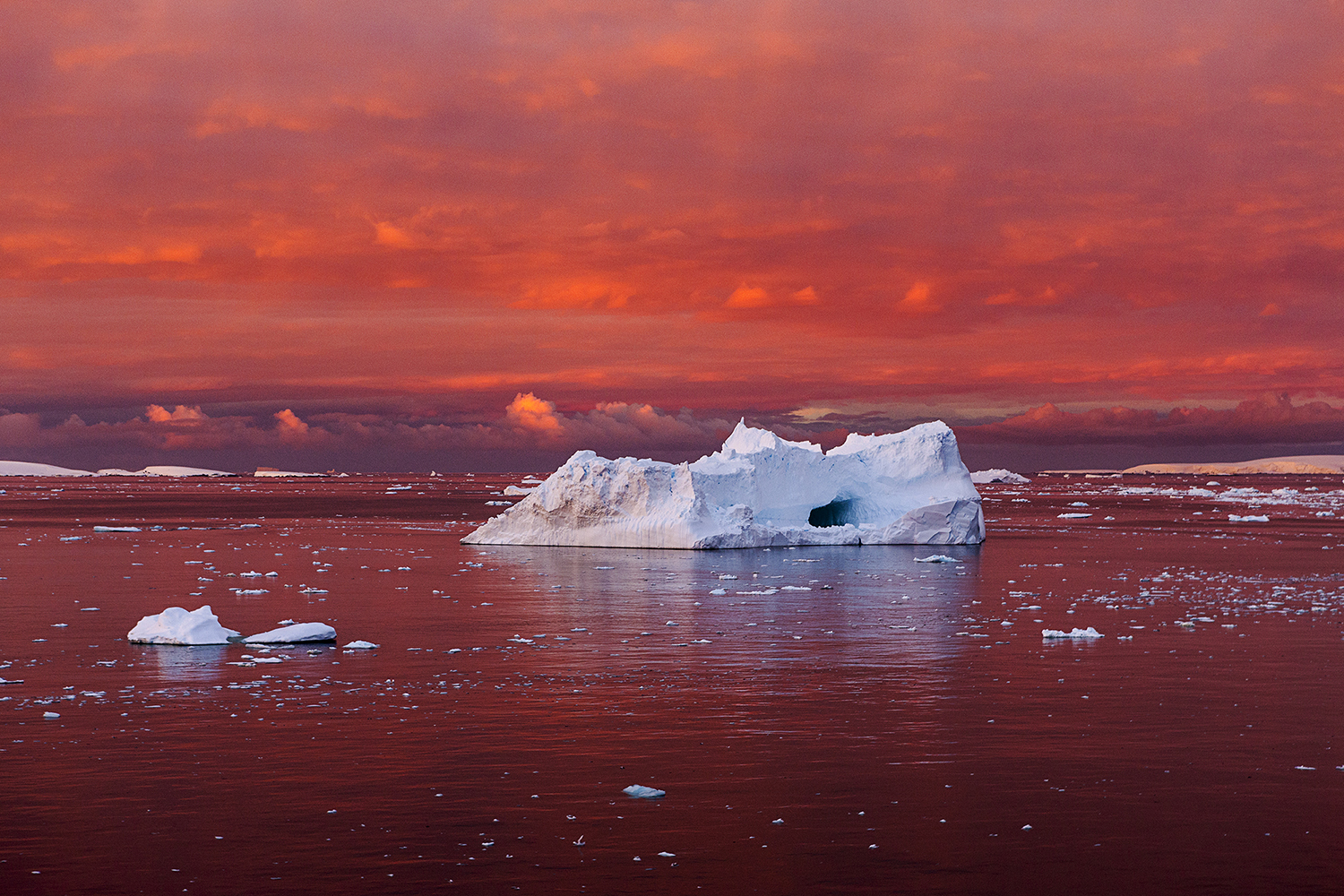
An eerie image from Antarctica in 2016 illustrates the urgency of addressing climate change on a scale commensurate with the problem. CAMILLE SEAMAN
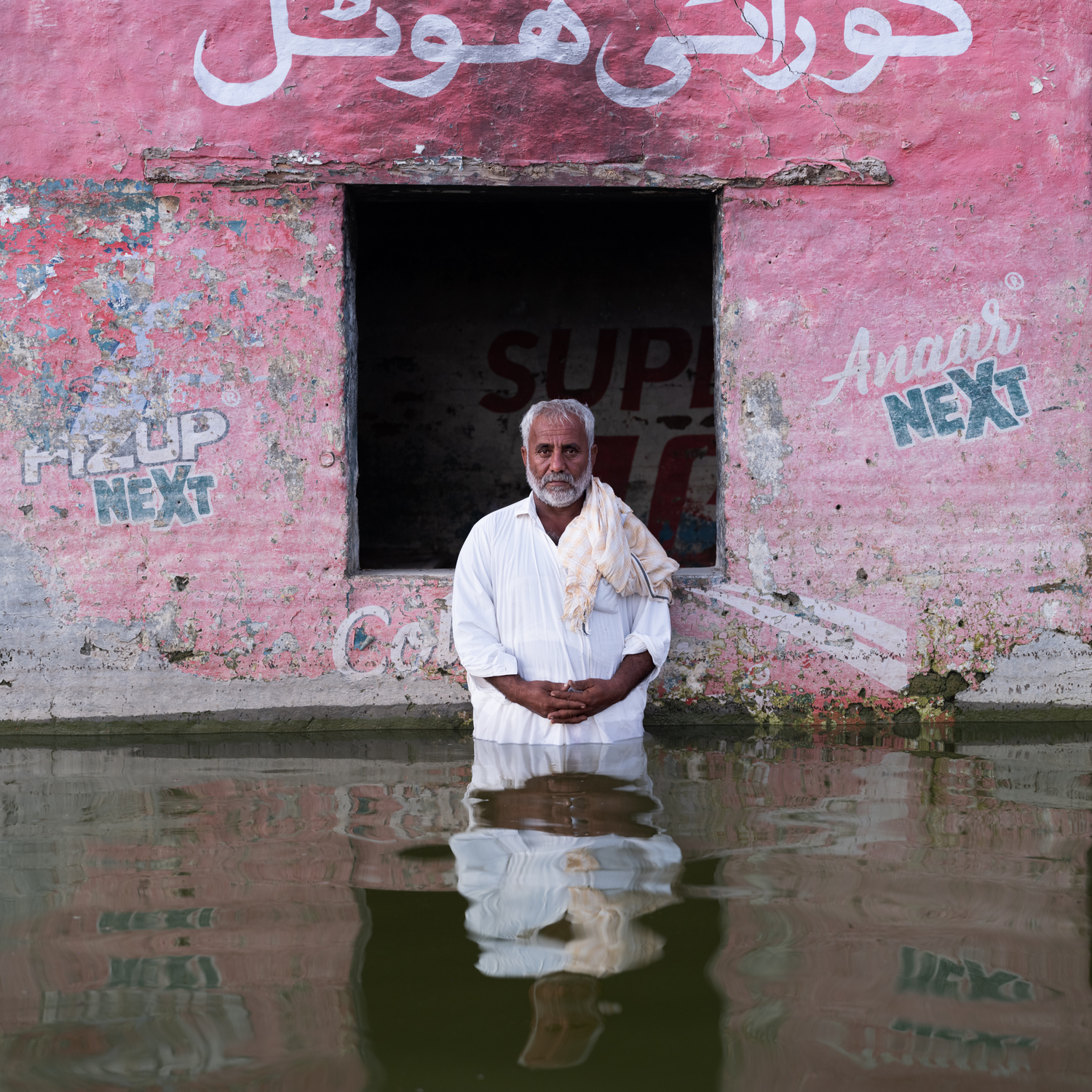
Flooding in Pakistan in 2022, which killed more than 1,500 people and left millions homeless, is depicted in the COAL + ICE exhibition at the Asia Society. GIDEON MENDEL
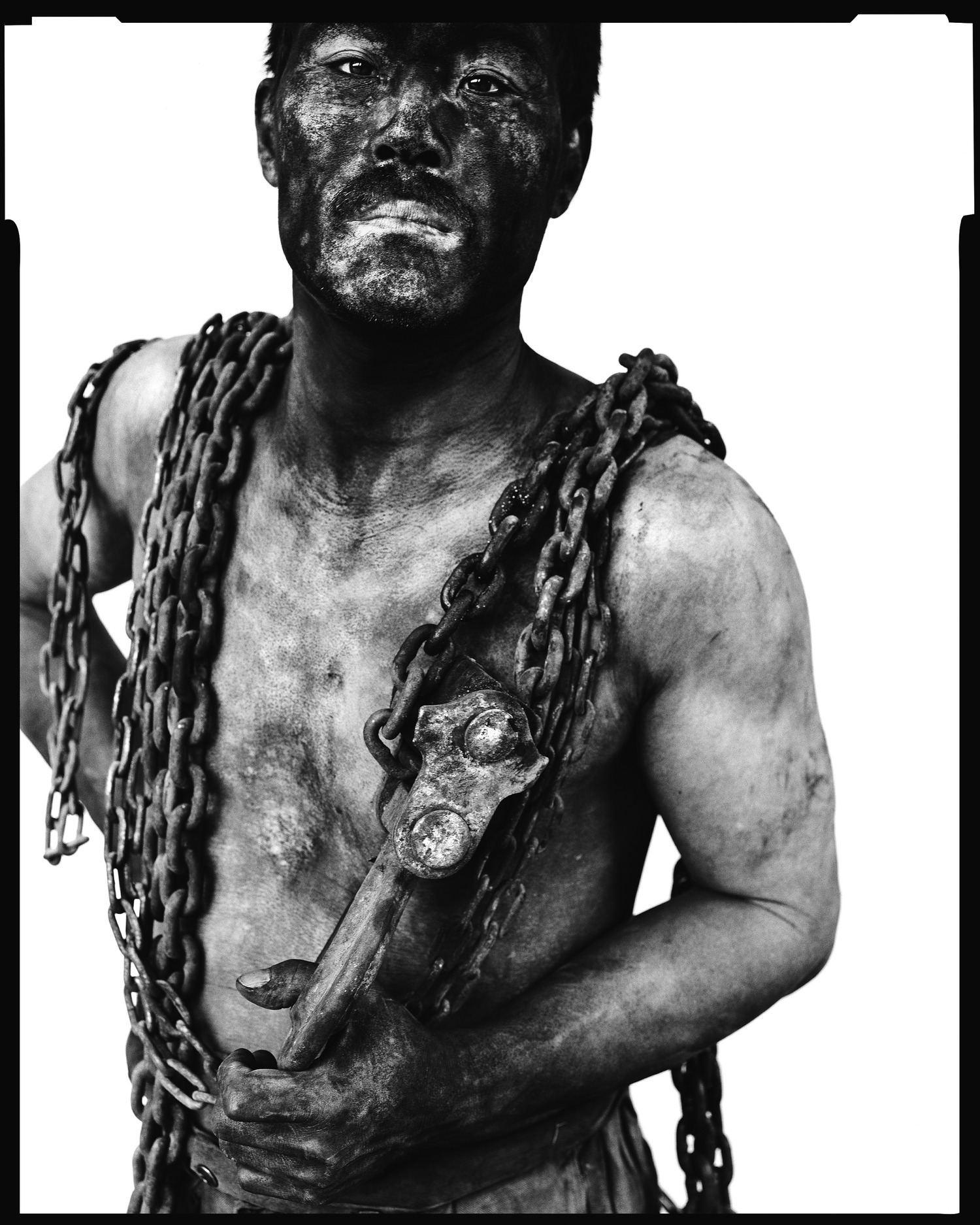
A coalminer in China's Shandong Province is depicted in COAL + ICE at the Asia Society in Manhattan. SONG CHAO
Not everyone sees the connection in “COAL + ICE,” the enigmatic title of an exhibition at the Asia Society in Manhattan, the documentary photographer Susan Meiselas said last week.
Meiselas, who lives in Sagaponack, is co-curator of the immersive photography and video exhibition that should unnerve every visitor.
COAL + ICE makes powerfully visible the causes and consequences of climate change — but also spotlights solutions and offers visitors ways to become involved.
The exhibition, which has been shown in Beijing, Shanghai and Yixian, China, as well as Copenhagen, Paris, San Francisco and Washington, D.C., depicts in video and still photography the environmental and human cost of the unchecked burning of fossil fuels — particularly coal.
Originating in China, the exhibition, which remains at the Asia Society through August 11, has evolved as it travels around the world to incorporate the ever-more-visible manifestations of a changing climate.
Its showing at the Fort Mason Center for Arts & Culture in San Francisco, for example, happened just weeks before the Camp Fire devastated parts of northern California. Harrowing video of the urban firestorm in Paradise, California, in which 84 people burned to death and much of the town was destroyed by wildfire, is featured at the Asia Society.
The exhibition’s executive producer is Orville Schell, the Arthur Ross Director of the Center on U.S.-China Relations at the Asia Society and a former professor and dean at the University of California, Berkeley, Graduate School of Journalism. Coal and ice, Meiselas said, is “the arc that Orville understood.”
Around 2007, she and Schell began to compile works by Chinese photographers documenting coal mining in what is now the world’s largest emitter of carbon dioxide. Included were works by Song Chao, “who was a miner and photographed his colleagues. They’re very striking portraits,” she said.
“Many people think they’re by Richard Avedon,” she said. In fact, the photographer “just hung up a sheet right outside of the mine and began to document his friends and colleagues.”
In one featured photo, a miner, his face and body blackened by soot, stares bleakly into the camera, chains hanging over each shoulder.
The exhibition’s origin predated that research, said Schell, who is a frequent visitor to the South Fork. While in China, a family vacation to Buddhist grottoes in Shanxi Province revealed a distressing landscape.
“We got up there,” he said, “and I had never seen such a hellish landscape in all my decades of life. The air was polluted, the rivers were polluted, the trees were dead. Everywhere was coal.
“I was teaching at Berkeley, and thought we should do something on coal in China — this is firing the economic miracle, and it’s destroying the world.”
The “ice” in COAL + ICE came from a mountaineer who had scaled Mount Everest five times and told Schell that he thought the glaciers were melting.
“We got him some money,” he said, “and he went back with the photographs that George Mallory shot in 1921 around Everest. He got to the same place and shot them again. That’s how ice came into it, because it turns out coal-fired power plants and many other things are elevating temperatures up in the Tibetan plateau, where all the rivers of Asia arise, and melting the glaciers.”
This, too, is depicted in the exhibition.
The photography is “specifically authored work by different kinds of photographers,” Meiselas said. “In some cases,” Meiselas said, “you’ve got people working with their iPhones now.”
At the Asia Society, “you see people photographing the flooding of subways with their iPhones, or hurricanes and tornadoes in Southeast Asia,” she said. “But it really began with photographers doing pretty extensive work. … The consequences are really broadening, and from China to San Francisco to D.C. to New York, the show continues to evolve, sadly, because climate change does. So we’re incorporating new bodies of work in each venue in reflection to the growing and the evolving crisis.”
The exhibition debuted at Beijing’s Three Shadows Photography Art Centre, designed by Ai Weiwei, in 2011. It “was going to be something like five weeks, and it stayed five months,” Meiselas said. “People really loved the show, and it began to open a conversation about climate change in China.”
But, Schell said, while China is making immense progress in battery technology, electric vehicles, wind power and solar panel manufacture, it is happening “alas, mostly in Xinjiang, where they’ve got the Uyghurs locked up in concentration camps producing them.”
As with Tibetans in Chinese-occupied Tibet, the 12 million mostly Muslim Uyghurs in the misleadingly named Xinjiang Uyghur Autonomous Region are subject to China’s egregious human rights abuses, including imprisonment and “re-education camps.” The country is making progress on transitioning to emission-free energy sources, “but, also, their energy demand is rising so rapidly that at the same time they’re making steps forward, they’re having to build more coal-fired power plants or not retire old ones. So it is a paradox.”
Further, he said, “the U.S. and China can’t even talk about controlling a pandemic, never mind climate change. The fact that we have two absolutely different political systems — not that we always do ours very well — makes it utterly impossible to get together.”
The Chinese Communist Party “views the United States as a hostile foreign power seeking regime change,” he added. “They’re not completely wrong, although we did make a lot of efforts to try to reassure them. These are the two largest carbon emitters. We’re the two big dogs on the block, and we don’t want to deal with this.”
An especially powerful element of “COAL + ICE” is a small room featuring the photographer Gideon Mendel’s work depicting flooding around the world. “We used to think it was Bangladesh,” Meiselas said. “But now it’s the [United Kingdom] and New Orleans. The question is, how do you get people to feel that it could be them? It’s not far away and happening to someone else.”
The exhibition aims to “give you a sense of the interconnectedness in the world,” she said. “I think that is the thing that is the hardest to envision because we live in our specific environments. We’re so localized, instead of globally present.” Once people see “COAL + ICE,” “they feel the impact and they want to know more.”
The exhibition has joined forces with artistic, environmental and service organizations including the American Museum of Natural History, the Billion Oyster Project, the Hudson River Foundation and the New York Botanical Garden, which are presenting concurrent climate-related programming. Those attending “COAL + ICE” are invited to share their thoughts and ideas by creating a poster with the “Climate Posterator.” They can also share a memory of the natural world via the architect and artist Maya Lin’s What Is Missing website (whatismissing.org/share-a-memory).
“They’re all trying to activate audiences and create that collective consciousness.” Meiselas said. “Of course, these are only small gestures in relation to the larger problem we all face. We all individually try to make gestures toward composting and recycling, not using single plastics. But when you read about the bigger problems, you don’t know where to begin.
“That’s why we go back to what the U.S. and China can do together.”


