


 9 Photos
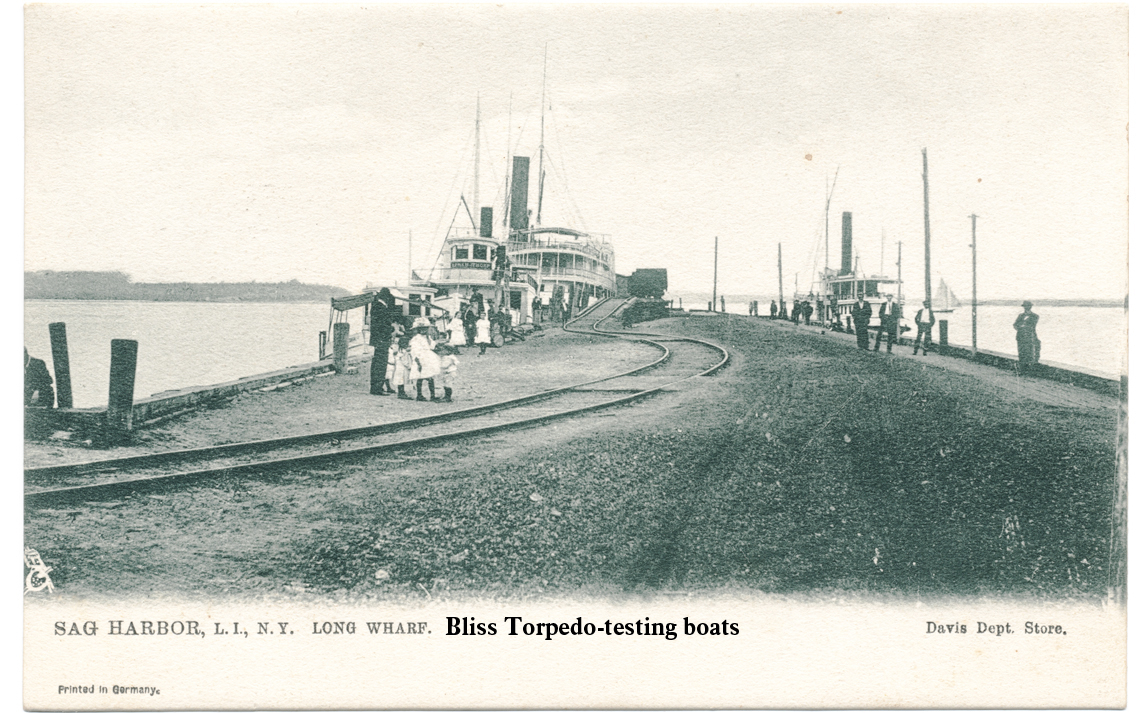
This postcard shows Long Wharf circa 1910 when it was used by the E.W. Bliss Torpedo Company to test its product. Courtesy Sag Harbor Historical Society.
Sag Harbor HIstorical Society logo
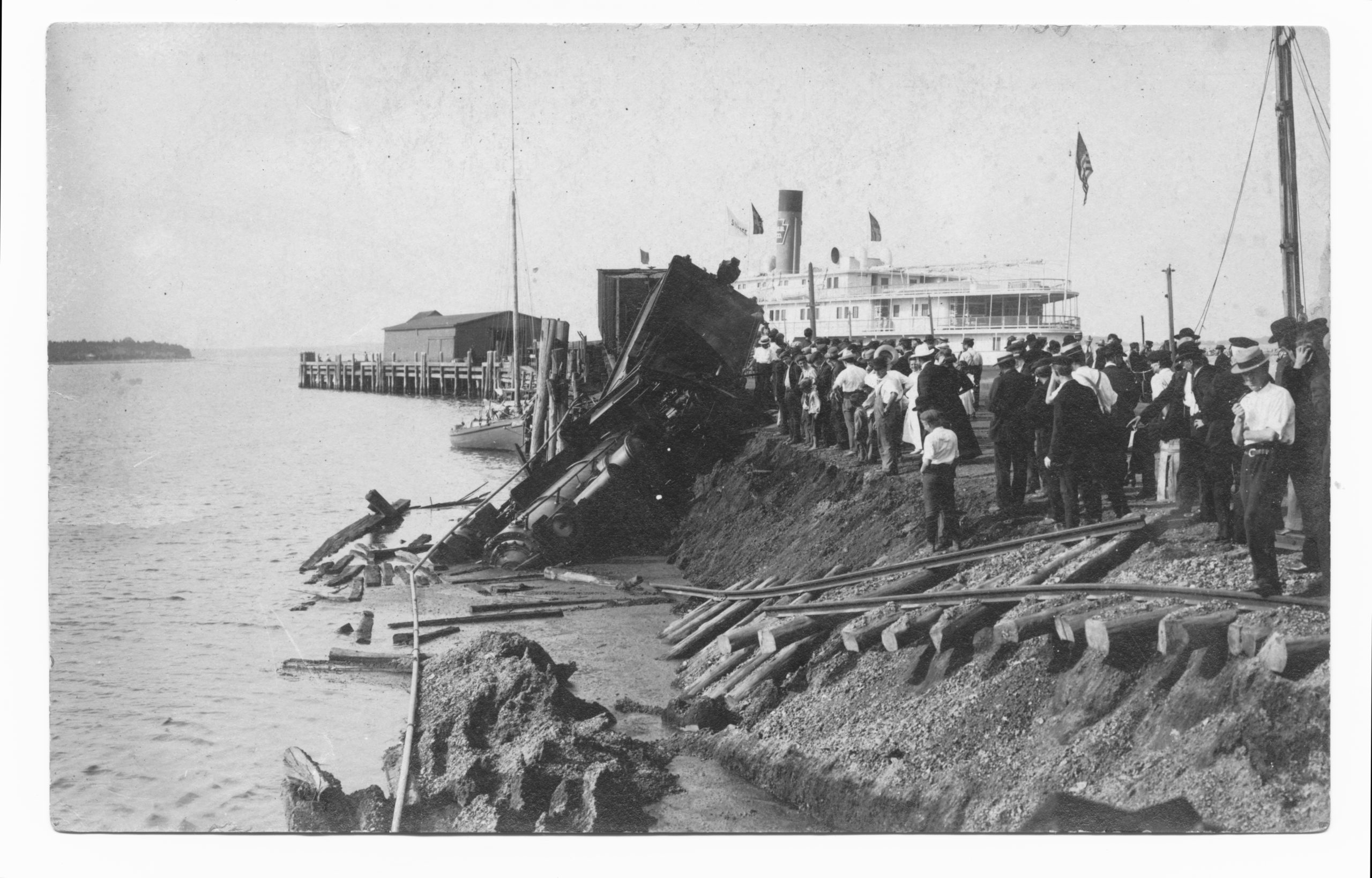
This Long Island Rail Road locomotive ended up in the harbor when a portion of Long Wharf collapsed in 1908. Gift of Steve Peters to Sag Harbor Historical Society.
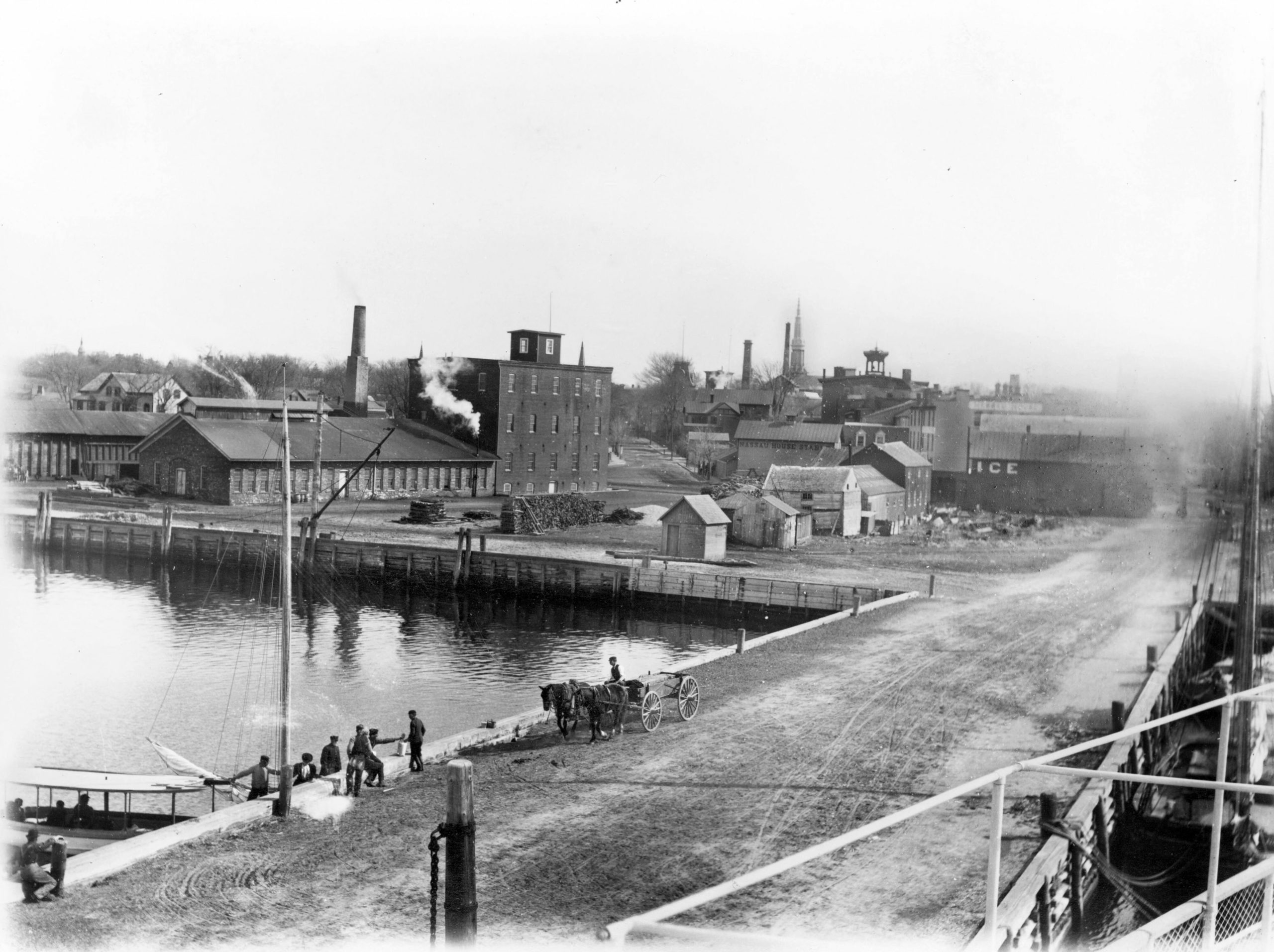
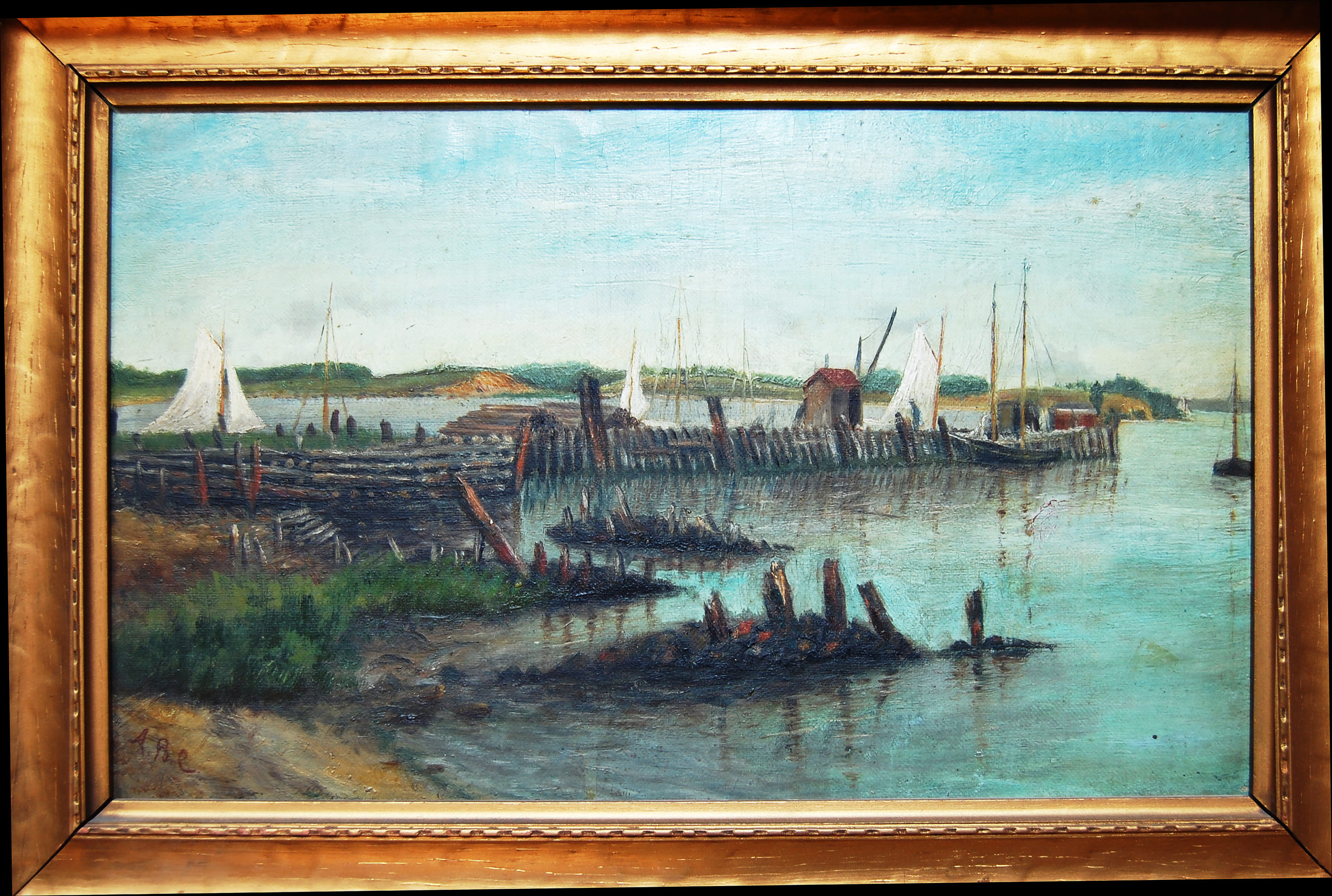
Photo of Long Wharf by William Wallace Tooker. Courtesy of the Kevin J. McCann Collection
This postcard shows Long Wharf circa 1910 when it was used by the E.W. Bliss Torpedo Company to test its product. Courtesy Sag Harbor Historical Society.
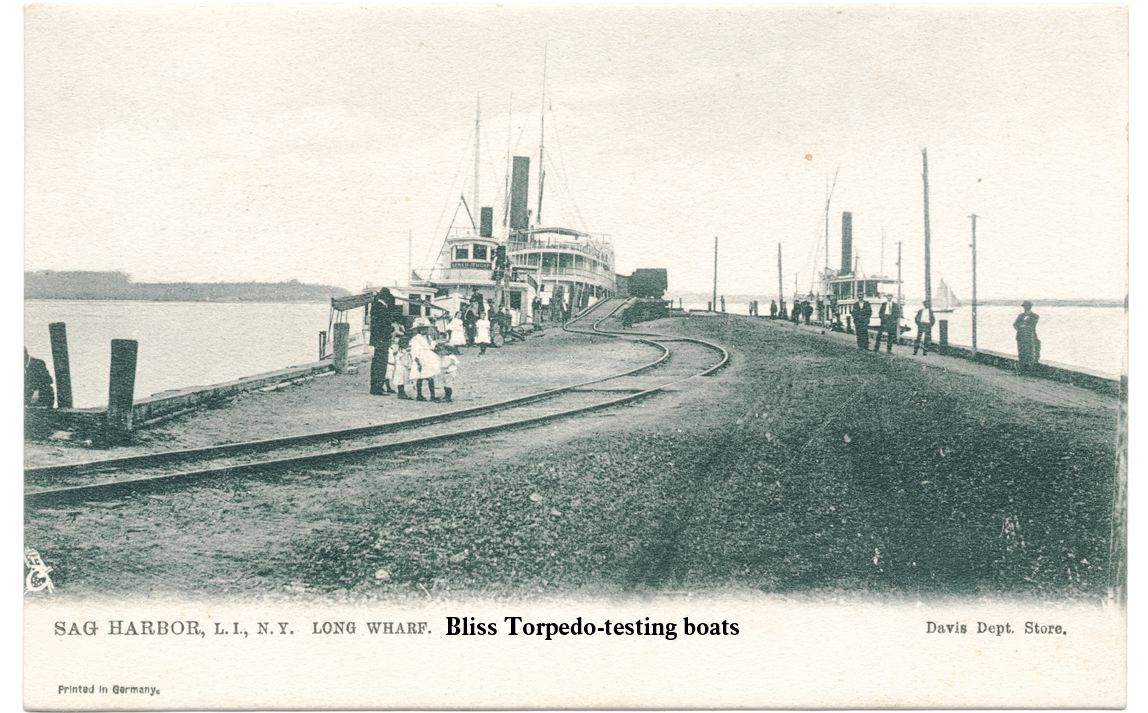
This postcard shows Long Wharf circa 1910 when it was used by the E.W. Bliss Torpedo Company to test its product. Courtesy Sag Harbor Historical Society.
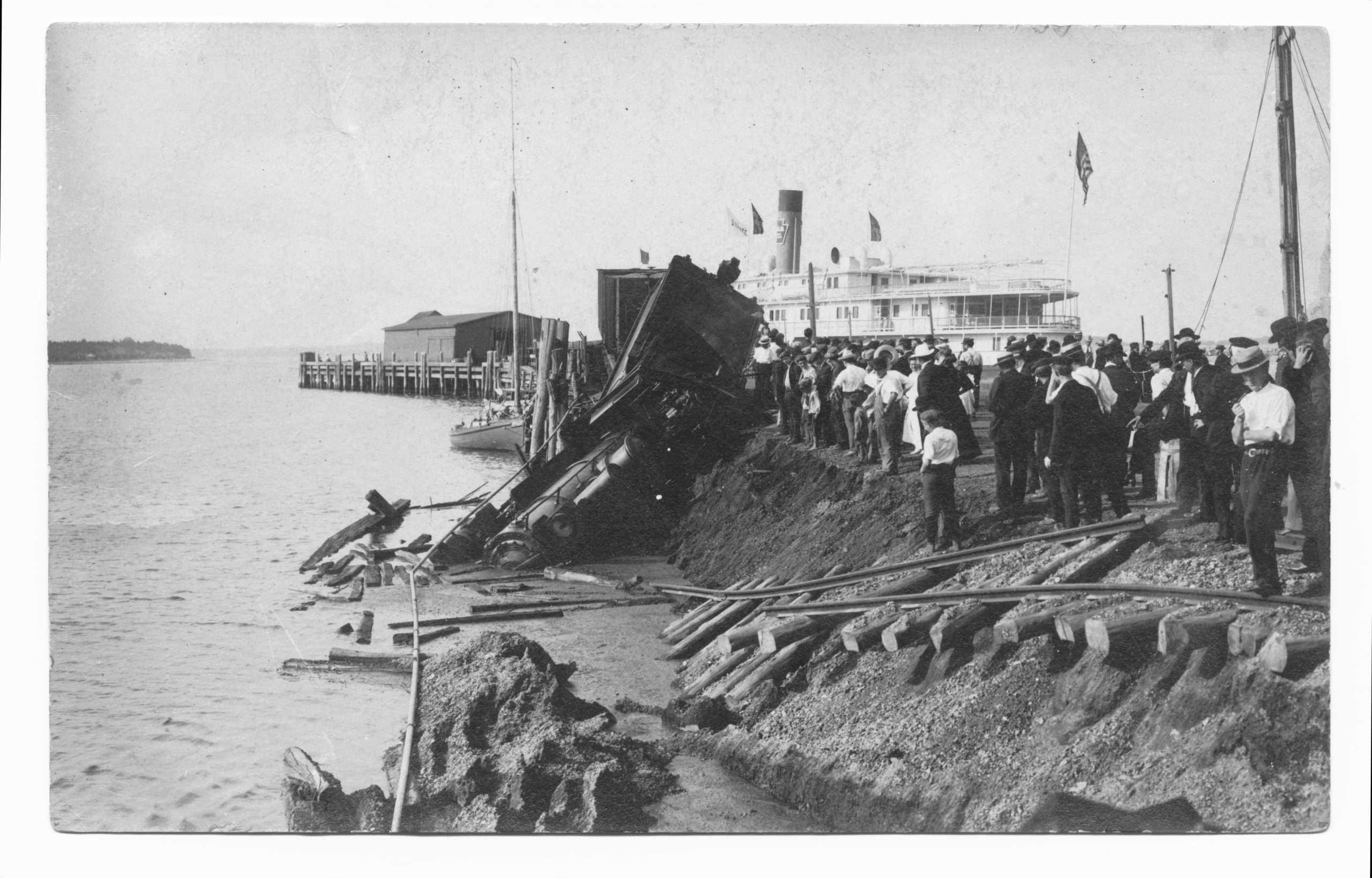
This Long Island Rail Road locomotive ended up in the harbor when a portion of Long Wharf collapsed in 1908. Gift of Steve Peters to Sag Harbor Historical Society.
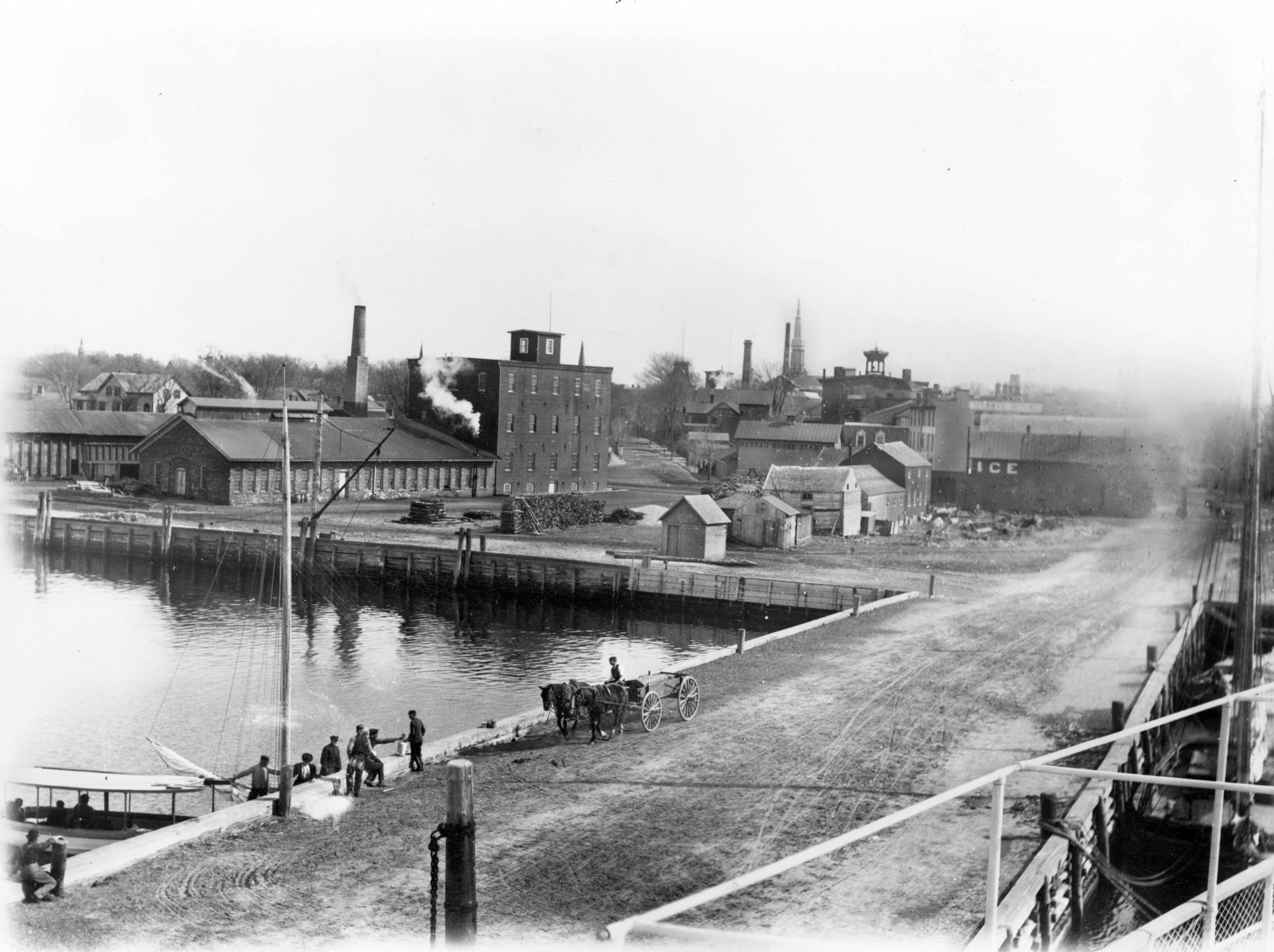
Photo of Long Wharf by William Wallace Tooker. Courtesy of the Kevin J. McCann Collection
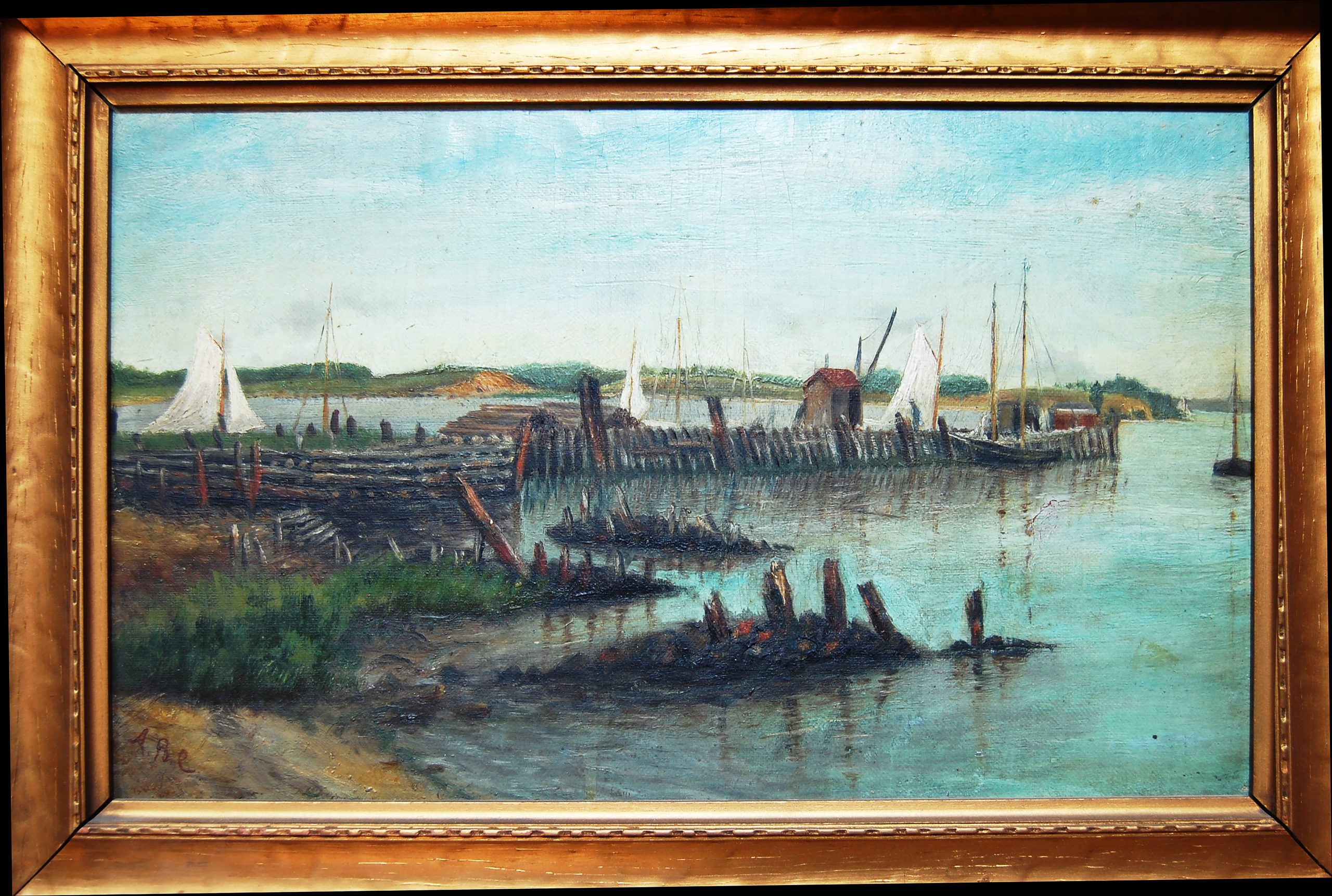
This postcard shows Long Wharf circa 1910 when it was used by the E.W. Bliss Torpedo Company to test its product. Courtesy Sag Harbor Historical Society.
On a typical summer night, Sag Harbor’s Long Wharf is crowded with visitors and locals alike who are drawn to the waterfront, maybe to watch the sunset, to gawk at the big yachts that dock alongside it, or just to bring the kids into town for an ice cream.
To Jean Held, a volunteer with the Sag Harbor Historical Society who is curating an exhibit on the history of the wharf that will open early in 2020, the attraction is obvious. The wharf, she says, has long been the focal point of the village, whether during its heyday as a whaling port in the 1800s, as a manufacturing center in the early 20th century, or as the resort destination it has become today.
“Look at the map: All roads lead to Long Wharf,” she said. “It’s a funnel. It’s not by some grand design — it’s simply because that’s where the traffic went.”
Today that wharf is undergoing a major restoration effort, for which the village recently received a $1.5 million state grant. The project aims to make the pier a more attractive — and safer — destination for pedestrians.
Although early settlers were first attracted to the area that would become known as Sag Harbor in the late 1600s because its meadows offered an abundant supply of salt hay to feed their livestock, they soon saw its potential for a port. That port would soon supplant nearby Northwest Harbor and North Sea.
Shipping was established in Sag Harbor as early as the turn of the 18th century, and there were efforts dating to the early 1740s to build a proper wharf. But the first one was not built until 1761, when Nathan Fordham Jr. and James Foster constructed a modest structure a few hundred feet to the west of the current Long Wharf.
Work on what is now Long Wharf did not begin until 1770, when an association of men from East Hampton and Southampton bought land on either side of the town line and built a structure that was 30 rods — a rod is 5.5 yards — long and 35 feet wide. It was completed in 1771.
Just a few short years later, on September 15, 1776, early in the American Revolution, Long Wharf would be crowded with evacuees fleeing to Connecticut. The British would occupy Long Island, including Sag Harbor, for seven years after the retreat from New York City of General George Washington and the Continental Army.
With the village occupied by the British, Long Wharf played an important role in the skirmish known as Meigs’s Raid. On May 24, 1777, after Colonel Return Jonathan Meigs and a force of 170 men crossed Long Island Sound and Peconic Bay to Noyac, they marched on Sag Harbor, taking the British commander captive, attacking the British garrison, and setting fire to a dozen British ships that were anchored in the bay, before making their escape with 90 prisoners and tons of supplies.
During the War of 1812, the wharf was also the site of a skirmish on July 11, 1813, when British forces came ashore, only to be repulsed by the stiff resistance of village defenders.
The prominence of Sag Harbor as a port was such that in 1789 the village was made an official port of entry into the United States. At the time, it had more tonnage than even New York City.
A large part of that trade involved whaling. According to “Sag Harbor: An American Beauty” by Dorothy Zaykowski, in 1760, the Dolphin, the Success and the Goodluck, three ships owned by Joseph Conkling, John Foster and others, were the first vessels to leave Sag Harbor in search of whales.
Although early crews hunted their prey in coastal waters, the pressure on whale stocks soon increased so much that ships had to sail farther and farther away, first to the West Indies and later to the Southern Hemisphere, and eventually to the Pacific.
Despite being interrupted by both the Revolution and the War of 1812, whaling remained a thriving business in Sag Harbor for the better part of a century.
Records at the Sag Harbor Historical Society show that 35 whaling ships were registered in Sag Harbor by 1839. Just six years later, at the peak of the whaling era, 64 ships called the village their home port.
Long Wharf would have been a bustling scene at that time. According to Zaykowski’s history, in 1847, the busiest year for whaling, some 3,910 barrels of sperm oil, 63,712 barrels of right whale oil, and 605,340 pounds of whale bone came into the harbor.
But the decline was swift. The California Gold Rush, the discovery of oil in Pennsylvania and the toll of hunting on the whale population combined to spell the end of whaling in Sag Harbor.
The last whaling ship to leave the port was the Myra, which made its final voyage in 1871 under Captain Henry A. Babcock. The ship never returned. Damaged beyond repair, it was broken up in Barbados in 1874.
Concurrent with the later stages of whaling, Long Wharf was also busy as a transportation hub. In the years before the arrival of the railroad, when dirt roads were dry and dusty or rutted and muddy, depending on the season, sailing ships and later steamships began to frequent the wharf. They provided convenient transportation between eastern Long Island and New York City and helped open the East End as popular destination for summer visitors.
For a time, Long Wharf was owned by the Long Island Rail Road, which ran a track from its main line in Bridgehampton to the village’s waterfront. For years, a spur and trestle ran from the depot near the present post office onto the wharf so that coal could be delivered to the railroad’s steamships.
In what was likely one of the biggest mishaps to befall the wharf, a portion of it collapsed under the weight of a locomotive and its tender in 1908 and fell into the water. The two crew members on board escaped.
As Sag Harbor became an industrial center in the late 1880s, Long Wharf became home to the E.W. Bliss Torpedo Company in 1891. The company manufactured torpedoes in Brooklyn and, according to Ms. Zaykowski’s book, shipped some to Sag Harbor for testing in Peconic Bay — without explosive charges, of course.
Still later, Agawam Aircraft opened its plant just east of Long Wharf. The company was later bought out by Grumman and is now site of the Bay Street Theater.
In the early 1960s, with local industry in decline and the resort economy not fully developed, Sag Harbor recognized Long Wharf as a draw for tourists and locals alike. The Old Whaler Festival, which had its debut in 1963, lives on today as HarborFest, a two-day event that includes an updated version of the whaleboat races that were the main draw of the original.
This is the first in a series of history-related articles, developed with the aid of the Sag Harbor Historical Society, that will be published in The Sag Harbor Express throughout 2020.


