


 19 Photos
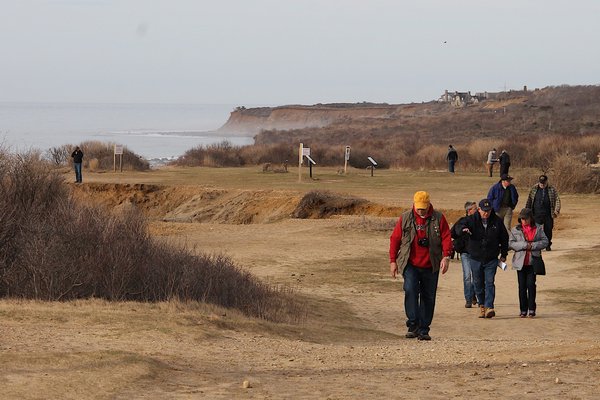
The "Fort Nerds
" as the members of the Coast Defense Study Group call themselves
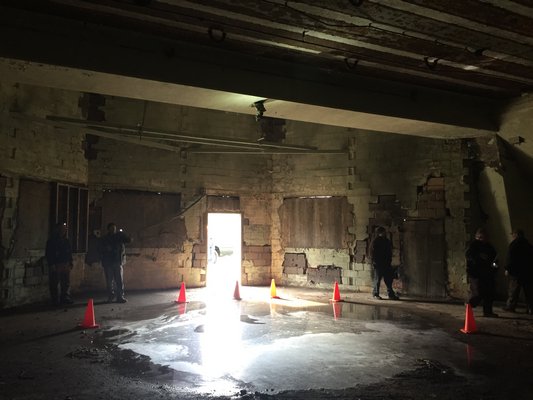
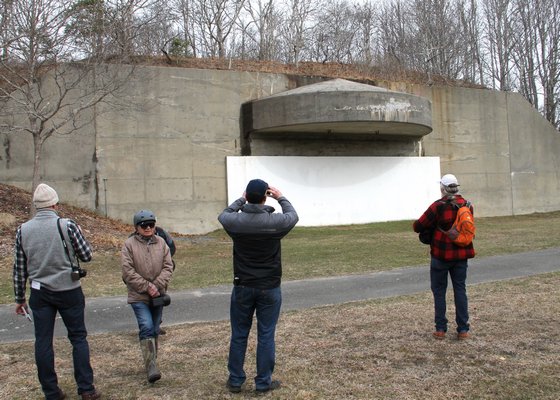
explored the gun emplacements
command faciliteis and labrynth of underground tunnels that connect them at Camp Hero in Montauk. Michael Wright
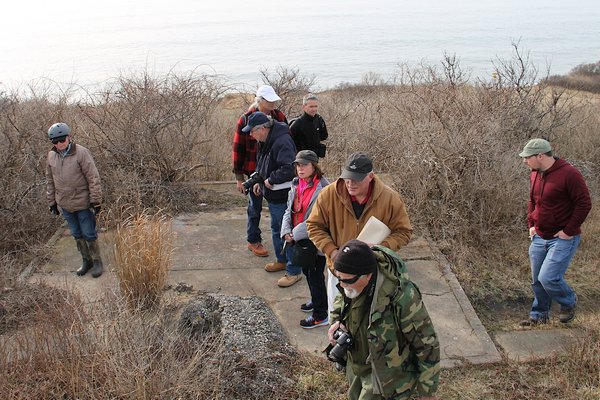
The "Fort Nerds
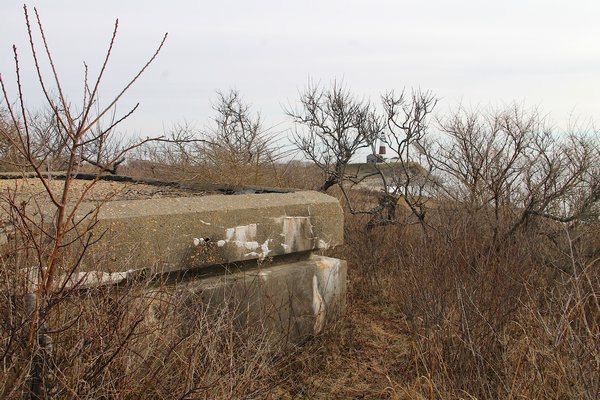
" as the members of the Coast Defense Study Group call themselves
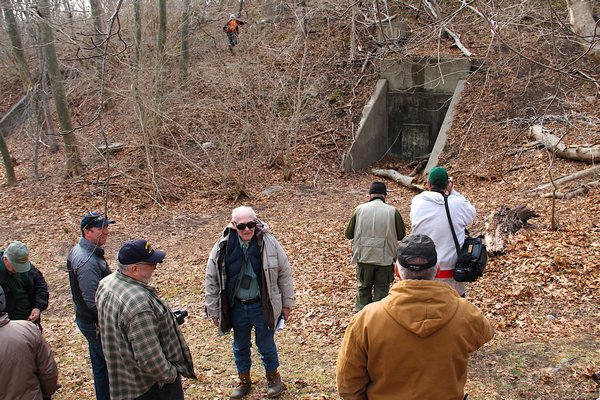
explored the gun emplacements
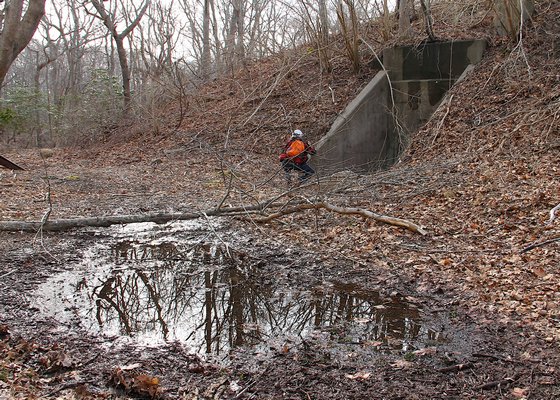
command faciliteis and labrynth of underground tunnels that connect them at Camp Hero in Montauk. Michael Wright
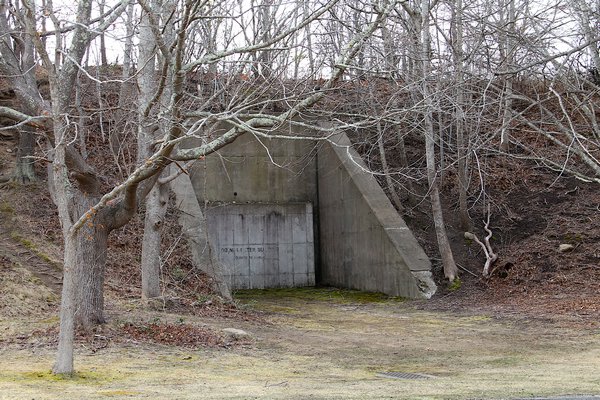
The "Fort Nerds
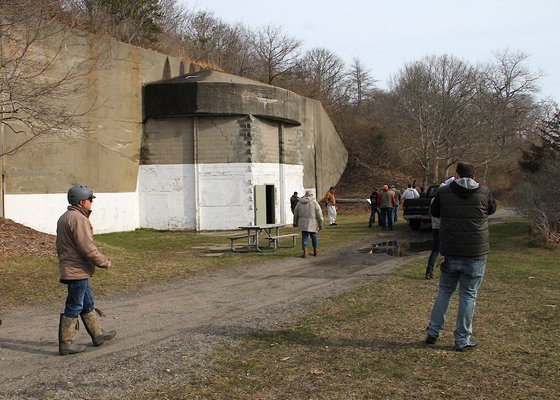
" as the members of the Coast Defense Study Group call themselves
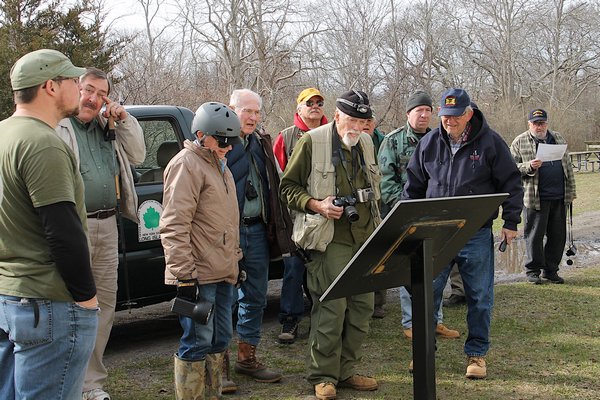
explored the gun emplacements
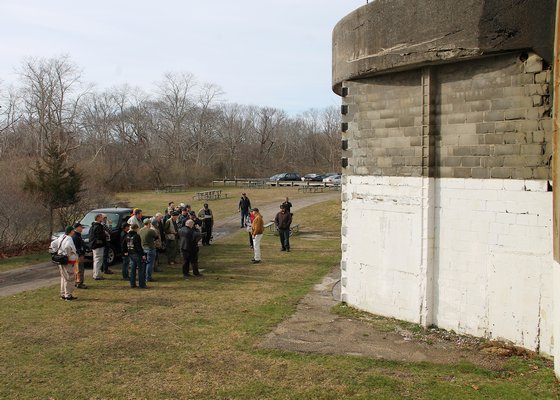
command faciliteis and labrynth of underground tunnels that connect them at Camp Hero in Montauk. Michael Wright
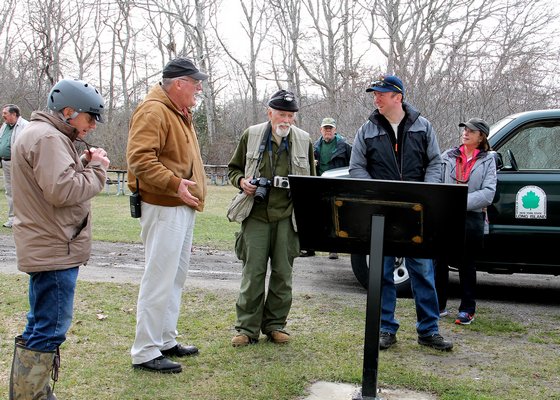
Coastal defense enthusiasts converged at Camp Hero in Montauk on April 3. KYRIL BROMLEY
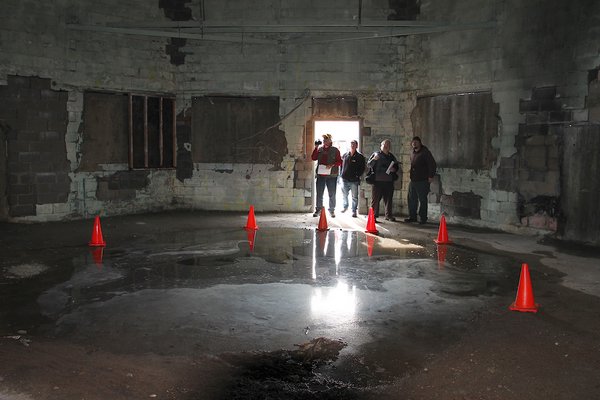
Coastal defense enthusiasts converged at Camp Hero in Montauk on April 3. KYRIL BROMLEY
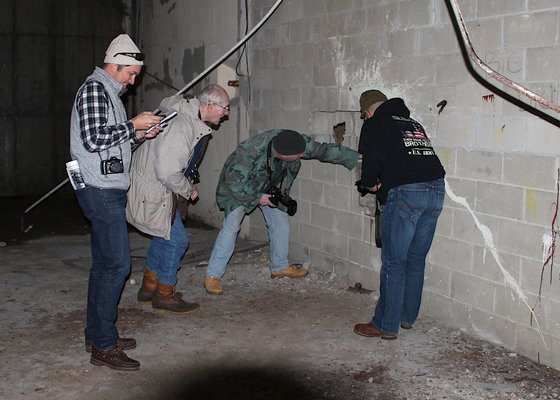
Coastal defense enthusiasts converged at Camp Hero in Montauk on April 3. KYRIL BROMLEY
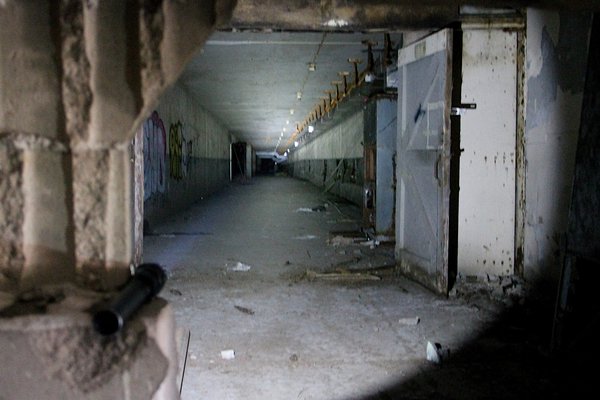
Coastal defense enthusiasts converged at Camp Hero in Montauk on April 3. KYRIL

Camp Hero is hiding secrets.
But it’s not aliens or nuclear weaponry that are concealed behind the stalwart concrete doorways and bunkers of the former military base now part of Montauk Point State Park, as many a conspiracy theorist would like to believe.
Just history.
Most well known locally for its soaring ocean bluffs from which surfers and fishermen scan the Atlantic, and the towering former radar dish visible from dozens of miles away, the fossilized military installation invites conspiracy theorists largely because it was built with the express intention of concealing its deadly secrets.
Last week, a hodgepodge of military history buffs who call themselves the “Fort Nerds” were actually invited to peer into some of the rarely seen corners of Camp Hero’s history, leftover testimonies to the incredible abilities of an industrial nation at war.
The Coast Defense Study Group, as the group is officially called, was led through the state park by Tom Dess, the park’s manager, and got to wander through some of the underground caverns and crumbling old buildings that parks workers spend most of their time trying to keep people out of.
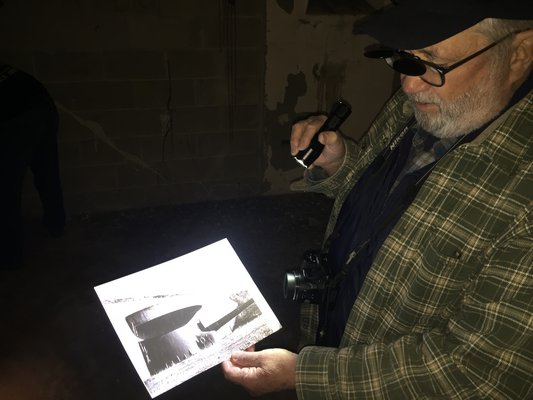
The 25 or so men and one woman who attended the tour eagerly marveled at the scale of the construction, examined and explained to one another what the crumbling remnants of the old mechanisms that controlled the camp’s thunderous weaponry would have looked like and been used for in 1942—clearly not so much to educate each other, since all were vastly knowledgeable of almost every intricate detail, but seemingly more as a way of filling out their own mental vision of what it would have been like to see it in operation.
“The people you see here, they are the brain trust of coastal fortifications in the United States,” said Tom Minton, a U.S. Army artillery battalion officer. “A lot of these guys are real experts about specific components of these defenses. They’re pretty well known all over the world.”
The group hailed from up and down the East Coast, across the country and around the world. An accountant from France, a retired Green Beret from Texas, Mr. Minton, a National Park Service ranger turned artillery gunner.
Each had a story to tell and was eager to share details of how the old installation would have operated had there ever been a threat to the coast.
The three gun emplacements that made up the Long Island Sound defenses—Camp Hero and similar batteries in Point Judith, Rhode Island, and on Fishers Island—and the dozens of watch stations along the coast that supported them—communicated by radio according to a system of synchronized bells. With each ringing of the bell, all the stations would report their sightings, explained Dan Malone, a retired Special Forces officer who served in Vietnam, Iraq and Afghanistan, where he helped train Afghan soldiers. If a ship or target were spotted, its movements, speed and direction could be tracked in detail according to the readings on distance and heading taken by each watch station that could see it.
“Once they had three or four reports, they could determine the speed of the vessel,” Chief Warrant Officer Malone said. “There was no need for computers.”
In the early 1940s, during the just four or five years that Camp Hero operated in its original intended capacity, a watch officer atop a tower on a German destroyer—perhaps the lead recon of an invasion force, or a gunship set on destroying important industrial centers in Connecticut, as the military minds at the time envisioned—may have peered over the horizon from 20 miles offshore, scanning the coastline for signs of threat. He would have seen a smattering of cottages, a quaint sea village tucked among low foothills near a tall white and red lighthouse.
By the time he wondered about the village, it would well have been too late.
Standing outside what appeared to be a crumbling two-story, Cape-style house, behind a usually locked fence near the foot of the radar tower (which wasn’t built until 1962 in Camp Hero’s second incarnation, as a U.S. Air Force base) Mr. Minton pointed to a thin strip of incongruous design feature mostly barely noticeable under the eaves of the roof trim. The soldiers inside the “house”—actually the main control room for the four 100-ton “16-inch” guns—would have lifted a small wooden panel and peered through the narrow viewing window with telescopes to spy their targets and see the effect of the volleys from the guns.
From the close-up view that a German navy lookout would never have gotten, hikers through Camp Hero will see that many of the park’s foothills are not really hills at all. They are just a man-made facsimile of the surrounding woodlands, carefully planted atop enormous concrete bunkers that once held some of the most powerful guns ever constructed. Some 60 feet long, more than 2 feet in diameter and weighing more than 230,000 pounds each, the four main guns that were buried into the hills of Camp Hero in 1941 could propel a one-ton high-explosive bullet, or shell, 25 miles out to sea at an approaching armada. The big guns were complemented by a handful of 6-inch guns, so named for the inside diameter of their gun barrel bores, which could fire five to six miles.
Construction on Camp Hero started in the late 1930s and was put into full gear with America’s entry into WWII. It was completed in 1942 but within just a few years—with the end of the war and the shift from naval to air power already on the horizon—was effectively obsolete.
“By 1947, there was no enemy,” said Terry McGovern, one of the founders of the CDSG and author of several books on coastal defense installations.
Flush with the relish of exploring the typically cordoned-off sections of the camp, the Fort Nerds to a man talked with longing about what could be done with an influx of money and dedicated restoration.
Foremost among the steps the buffs said they would like to see at Camp Hero is for one of the former gun emplacements, now sealed off behind concrete walls, to be opened up and have one of the few remaining 16-inch guns still in existence put in place where the originals would have sat.
There are four of the gargantuan gun barrels in storage since they were removed from decommissioned battleships, Terry McGovern, one of the founders of the CDSG, said. One is due to be installed at Fort Hancock in New Jersey, part of the former New York Harbor defense battery.
“That would be a good model for this place,” Mr. McGovern said with a mix of relish and resignation.
Proud of his charge but knowing the financial limitations the state has for such things, Mr. Dess could only chuckle at the thought of the amount of money such an undertaking would require.
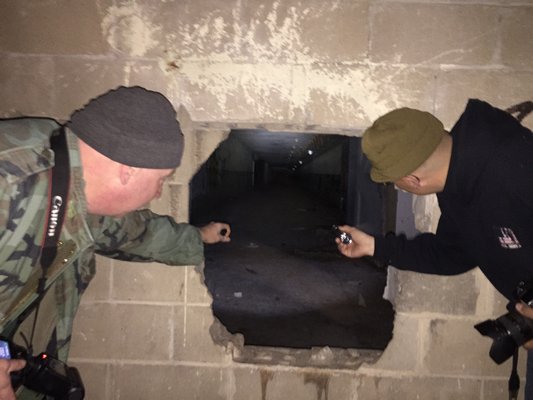
“This should all be preserved, restored and opened up [to the public] someday,” Mr. Minton said, as he and Chris Zeeman shined flashlights through a hole in a cinderblock wall that revealed a 600-foot underground tunnel connecting two of the four former gun emplacements. “This is important, this is real history, right here.”


 Michael Wright on Apr 11, 2017