


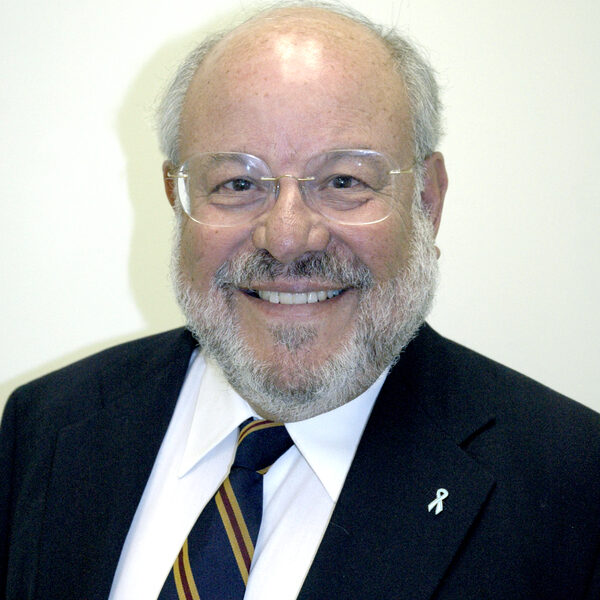
Jeffrey Sussman of East Hampton, a prolific author — he’s now written 18(!) books — has been giving presentations at East End libraries about his newest, “Backbeat Gangsters: The Rise and Decline of the Mob in Rock Music.”
It’s about Mafia involvement in the early days of rock ’n roll. Many of Sussman’s books are about the Mafia. He is recognized as a leading authority in the United States on Mafia activities here.
His books include “Tinseltown Gangsters: The Rise and Decline of the Mob in Hollywood” (published in 2024); “Sin City Gangsters: The Rise and Decline of the Mob in Las Vegas (2023); and “Boxing and the Mob” (2019).
I attended his presentation at John Jermain Memorial Library in Sag Harbor last weekend, and in the audience comments segment I brought up how 2025 was the 60th anniversary of the time when, in Suffolk County, the election was dominated by a charge that the Mafia was attempting to gain control of the criminal justice system here.
As a reporter for the daily Long Island Press, I covered this in 1965. Through the years, I’ve related what happened in this space, but not for decades.
Charles T. Matthews, of Cold Spring Harbor in the Town of Huntington, a longtime Republican and an assistant Suffolk district attorney and bureau chief in the Suffolk D.A.’s office, ran on this allegation as the Suffolk Democratic Party’s candidate for D.A.
Matthews was from a prominent Suffolk Republican family. He was the nephew of GOP stalwart and former State Supreme Court Justice Fred Munder of Huntington.
It was a huge surprise when he appeared at a Suffolk Democratic Convention and declared that he was accepting the Democratic Party’s nomination for D.A. — as a matter of conscience.
What followed were weeks of specifics brought forth by Matthews and also Newsday.
Especially focused upon was a gathering involving the late John Del Mastro, president of a chain-link fence business in Smithtown, and several Suffolk County Republican Party leaders, about choosing a candidate in 1965 for Suffolk D.A.
Climactic was an examination before trial on a libel suit that Del Mastro brought against Matthews, Newsday, its lead investigative reporter, Bob Greene, and its Suffolk County editor, Kirk Price, linking Del Mastro to this alleged Mafia effort.
It was held weeks prior to the 1965 election at the Smithtown office of State Supreme Court Justice Jack Stanislaw. I was present and reported about it in the Long Island Press.
At it, Del Mastro, under oath, spoke of being a plasterer in the Bronx in the 1950s, acknowledged his connections with Mafia figures in the city who were named, and then coming to Suffolk County and becoming head of a chain-link fence company that turned into a multimillion-dollar business through contracts with governments here.
Matthews lost the election. And Del Mastro, after it, dropped his libel suit.
The situation, meanwhile, was followed by longtime State Assembly Speaker Perry B. Duryea Jr. of Montauk — who had an eye on running for New York governor, which he subsequently did — moving for new leadership of his home political organization. His boyhood friend, Edwin M. Schwenk of Southampton, became Suffolk GOP chairman.
Matthews, an honors graduate of Princeton University and Harvard Law School, and a World War II U.S. Navy veteran, embarked after the election on a successful career as a private attorney in Huntington. He died in 2008.
The description of the book “Backbeat Gangsters” on Sussman’s website, which he elaborated fully on in his presentation, tells of how in the “early days of rock ’n roll … the mob used every tactic they could, from creating their own record labels, [to] bribing radio DJs and stacking jukeboxes with their own artists, to exploiting and intimidating performers, and creating their own black market of bootlegged records, to make millions.”
“It began in the 1950s, when rock ’n roll burst upon the scene,” relates the website. “The major established record companies thought that the new music was a passing trend, but mobsters were there and pounced on the new business opportunity.”
“‘Backbeat Gangsters’ includes the stories of the most sinister people who took control of the record business … as well as those of the numerous, young performers who were exploited and received threats and beatings instead of the compensation they were promised. The Mafia used intimidation and violence to achieve its ends,” says the description.
There is an endorsement of the book by Nicolas Pileggi, who wrote the book “Wiseguy” and co-wrote the screenplay for its film adaptation, “Goodfellas,” and had a home in East Hampton.
The website, too, describes — and Sussman detailed — his other books, including “Sin City Gangsters,” which, it says, provides an “account of how the mob created and controlled Las Vegas.”
As for “Big Apple Gangsters,” it speaks of it as a “page-turner for anyone interested in the history of the mob in New York.”
The Express News Group newspapers published a piece on “Tinseltown Gangsters” that said: “The book is the fast-paced, gripping story about how the mob controlled movie studios, stars, directors and producers. Sussman names names.”
The mob “controlled unions of projectionists, art directors, cinematographers, electricians, scene designers, stagehands and others ….The mobsters were like sharks tearing away enormous chunks of cash. They extorted producers, blackmailed stars, forced studios to hire those actors who were either connected to mobsters or indebted to them.”
I found Sussman, despite the violence he chronicles, calm. And brave.
More Posts from Karl Grossman


