


 4 Photos
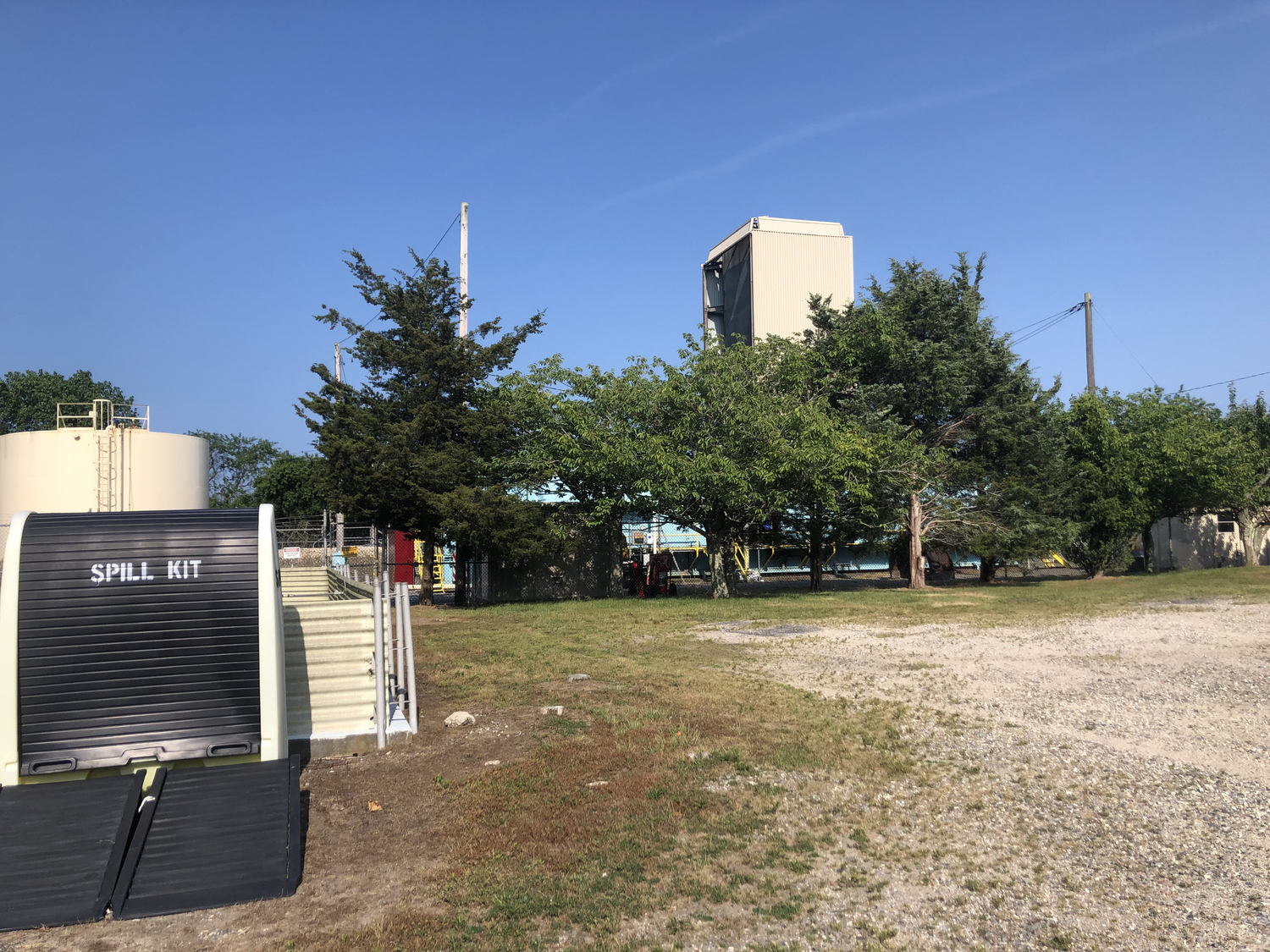
The National Grid site on David White's Lane. FILE PHOTO
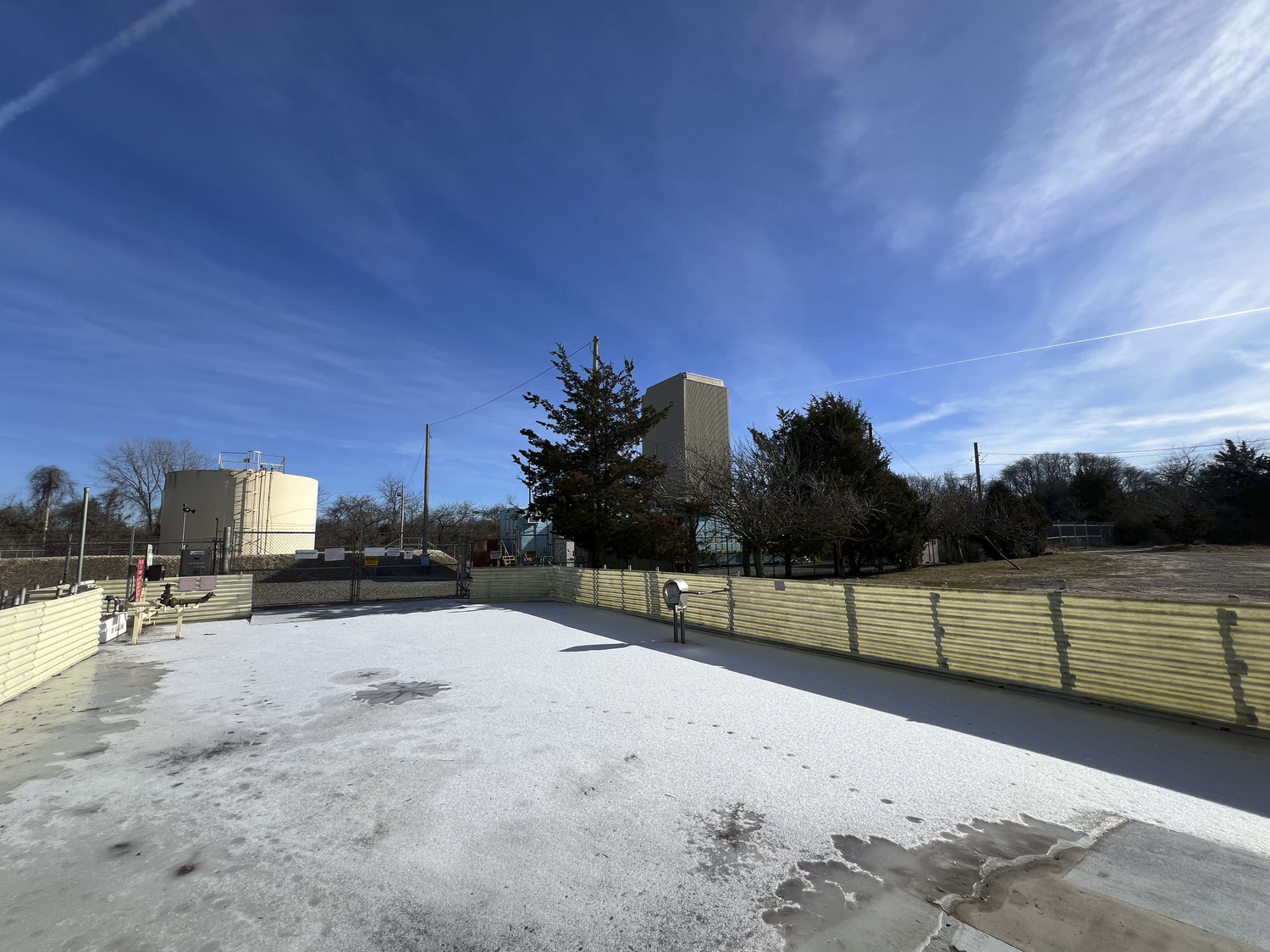
National Grid natural gas plant at 280 David Whites Lane in Southampton. DANA SHAW
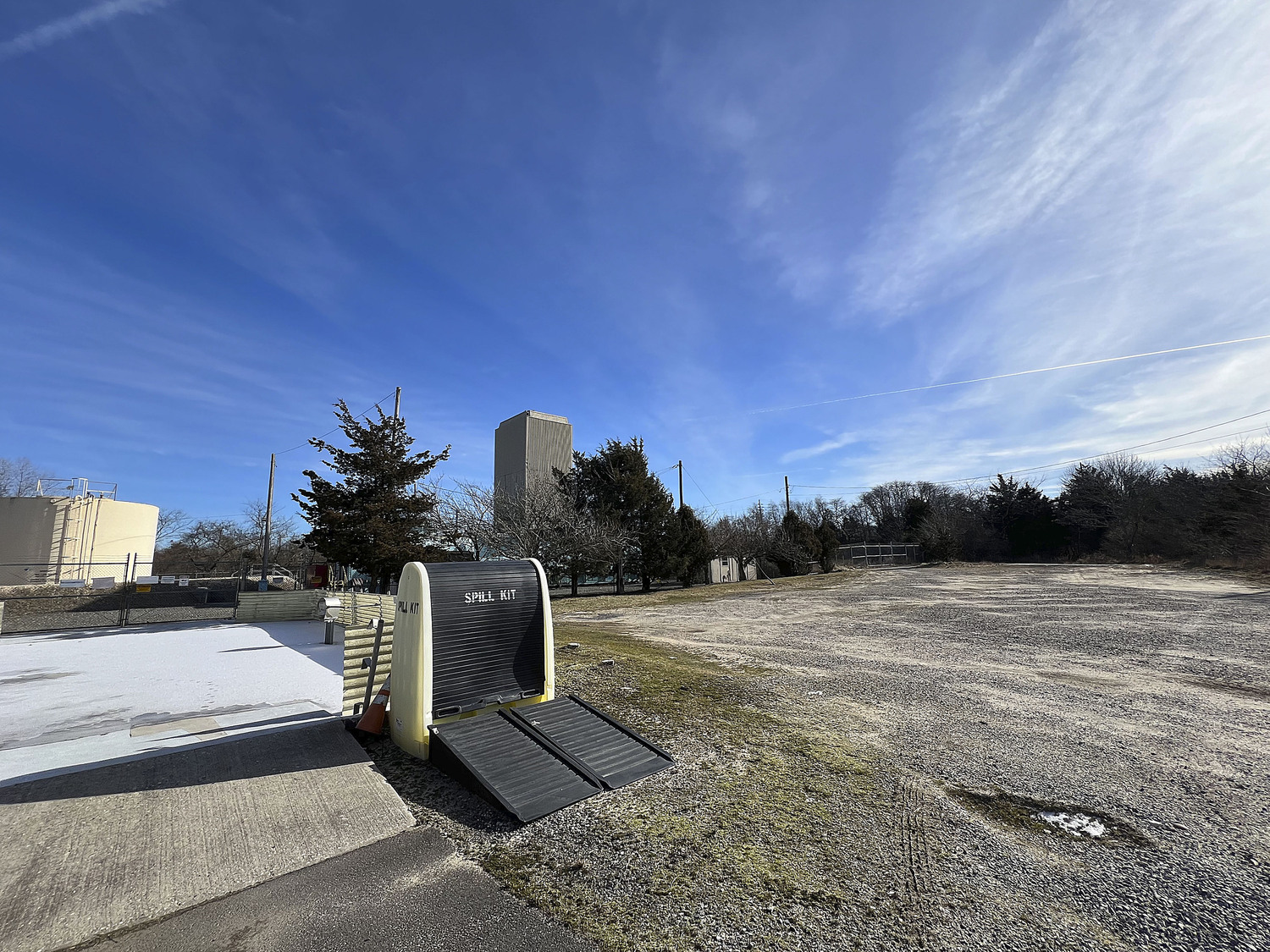
National Grid natural gas plant at 280 David Whites Lane in Southampton. DANA SHAW
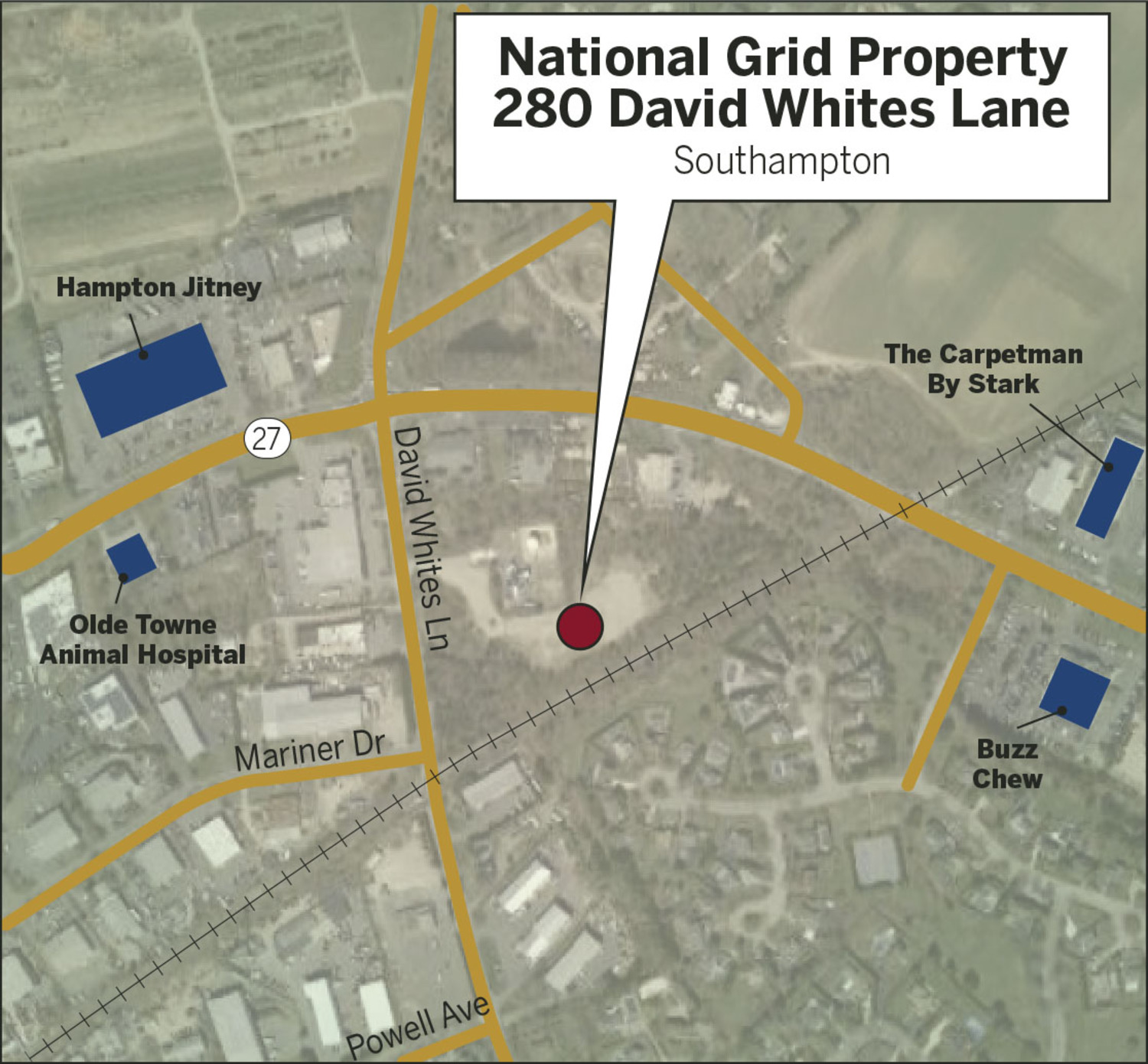
The National Grid property at 280 David Whites Lane.
It’s at least five years off, but Southampton Town officials said this week that the former National Grid natural gas plant at 280 David Whites Lane in Southampton may be decommissioned.
A handful of adaptive reuse options have emerged for a future use or uses of the site — including the possibility that a solar-panel array could be built there under a state program called the Just Transition Site Reuse Planning Program.
The 9-acre site is also under consideration for a sewage treatment plant to serve the Village of Southampton, which would need just 4 acres for that plant.
Meanwhile, the town applied for and received a grant from the New York State Energy Research & Development Authority last year under the Just Transition program, which assists municipalities in finding ways to reuse fossil-fuel plants when they are decommissioned, with an eye toward preserving jobs and transitioning to renewable energy uses.
That grant provided funding to Ramboll Engineering for what was basically a free planning scope-out of what could work at the site without changing the zoning from the current 1-acre light industrial.
That review has taken place with buy-in from National Grid, according to Planning and Development Administrator Janice Scherer, and the Town Board was presented with the findings at a recent work session.
“This is a kickoff,” Scherer said, noting that the grant provided the town with “free planning services” to figure out what the various options could be once the facility is decommissioned. “National Grid is in partnership with us,” Scherer said. “They are at the table.”
A sewage treatment plant was identified as one of the options for half of the parcel in the planning report, but Scherer acknowledged that there was “significant opposition from the neighbors to the south,” and that a plant was an unlikely outcome.
National Grid “may want to do a solar project” she said. “They could do that today.”
The company may want to retain half of the parcel, she added, and subdivide the rest to perhaps accommodate a sewage treatment plant — again noting that this option had not met with approval from surrounding homeowners.
Other uses involving renewable energy could also be considered, but Scherer was quick to bat back a question from Councilman Bill Pell about whether that could include a battery energy storage system.
Scherer noted the moratorium on BESS facilities in town and said that she was “not getting into that.”
The entire parcel also could be divided into seven or eight 1-acre parcels for other light industrial uses once the plant is decommissioned.
Other options, said Scherer, should result from a process laid out by NYSERDA and Ramboll Engineering that will include public hearings in the spring and summer, along with the formation of a steering committee whose membership will be coming into focus in coming days and weeks.
Scherer said that “certain people have been identified” to be on the committee by town planners and would be recommended to the board, and that the steering committee also may include neighbors of the site, or that the neighbors might be a part of another advisory committee set up to determine a path forward, with an eye toward maximum community engagement and buy-in on whatever comes next.
A community survey is also afoot for this year. Scherer told the board that Southampton Village Mayor Bill Manger wants to be on the steering committee, and that the village put forward its clean water committee chairman, Paul Travis, as someone it would like to see on the committee.
Manger confirmed that this week and said that since Travis is head of the village task force that’s trying to site a sewage treatment plant, “he would be a good representative for the village.”
Manger noted that the village was “still looking at multiple locations for the treatment plant,” and that the National Grid parcel was “not the only site that’s being contemplated.” He said it was too soon to make any determination about where a plant may be recommended.
The village would need 4 acres for its sewage treatment plant, which he further added was going to be cutting-edge technology and a “closed” system, unlike the one in Sag Harbor.
Manger also said that he has already heard from neighbors who live near the National Grid site who have expressed concern about a sewage treatment plant being located there, but again stressed that the village hadn’t made a determination yet, and that any plant that was introduced would “not be putting off fumes or things that would be bothersome to the neighbors.”
A solar array, he said, would most likely not engender much in the way of pushback from people who would live near it. As a “passive operation,” Manger said he didn’t “see how that would have an impact on residents in the village.”
The National Grid lot, Manger added, “is wholly on the town side” of the north-south demarcation line of the Long Island Rail Road tracks that provide a border between village and town. Even though the plant is in the town, he said, village officials had also been talking with National Grid. “We’ve been kept in the loop, and obviously we want to be in the loop.”
The facility is under contract with the Long Island Power Authority until 2028 “and operates at the direction of the LIPA transmission operator,” said National Grid spokeswoman Molly Gilson.
“There have been discussions with the Village of Southampton and the Town of Southampton regarding the future potential use,” Gilson added. “National Grid is also evaluating future use of the site to support the clean energy transition.”


