


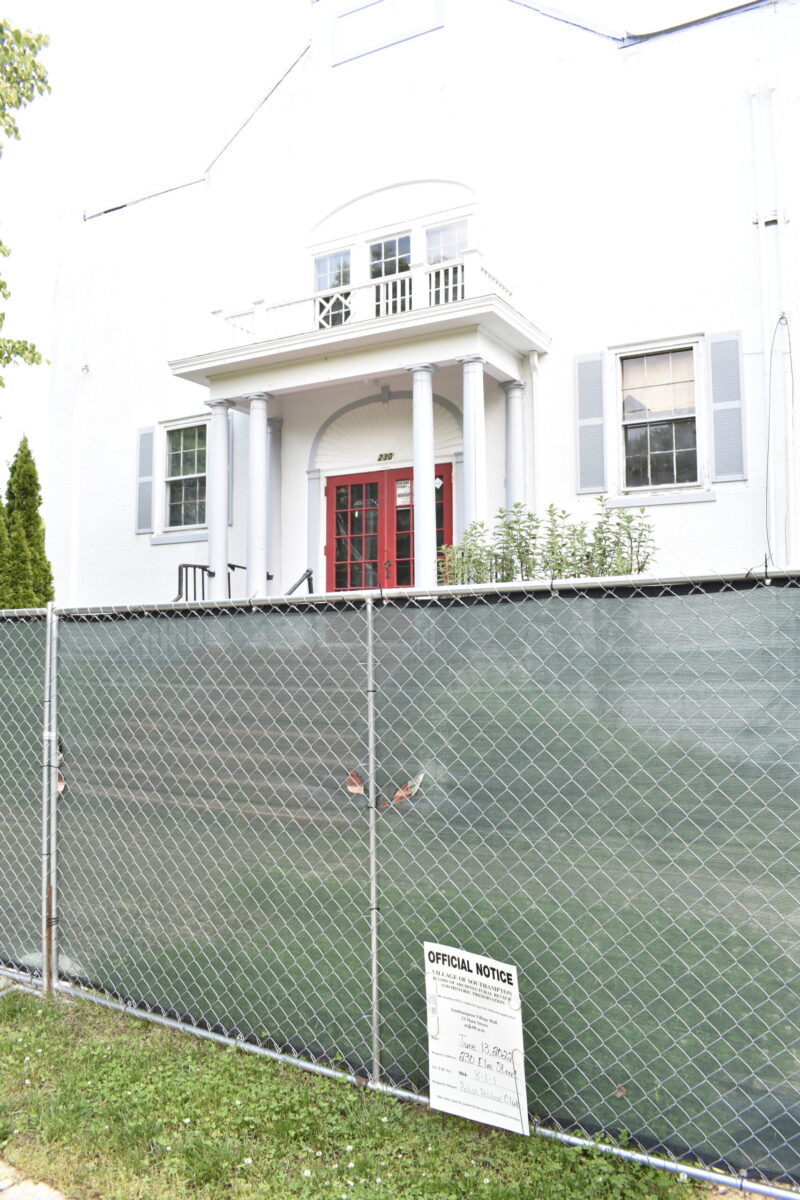
 4 Photos
The former Southampton Polish Hall at 230 Elm Street, where Elegant Affairs plans to operate a catering business. BRENDAN J. O'REILLY
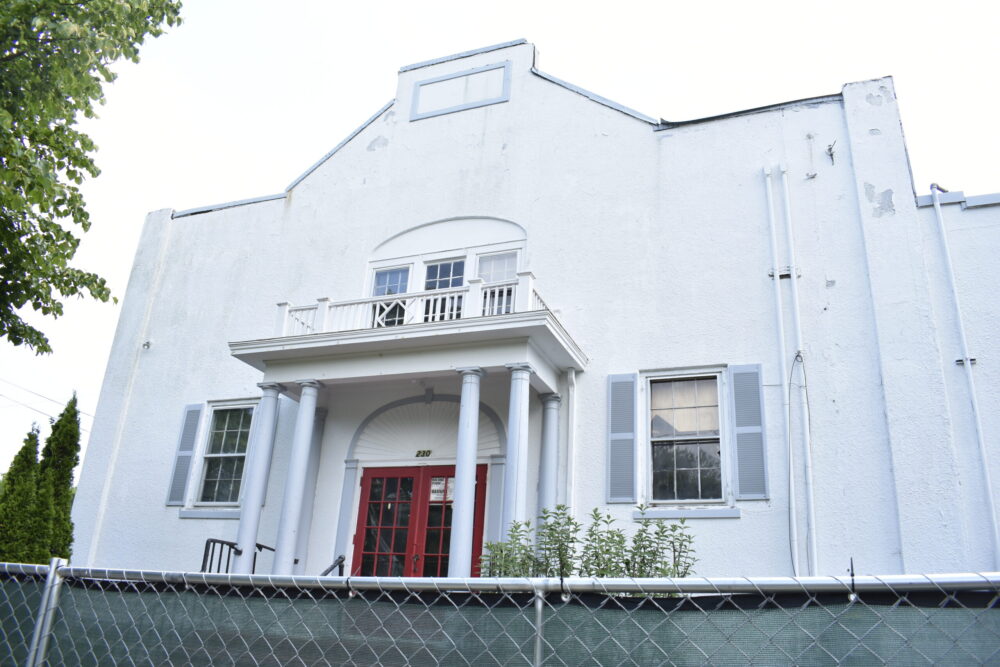
The former Southampton Polish Hall at 230 Elm Street, where Elegant Affairs plans to operate a catering business. BRENDAN J. O'REILLY
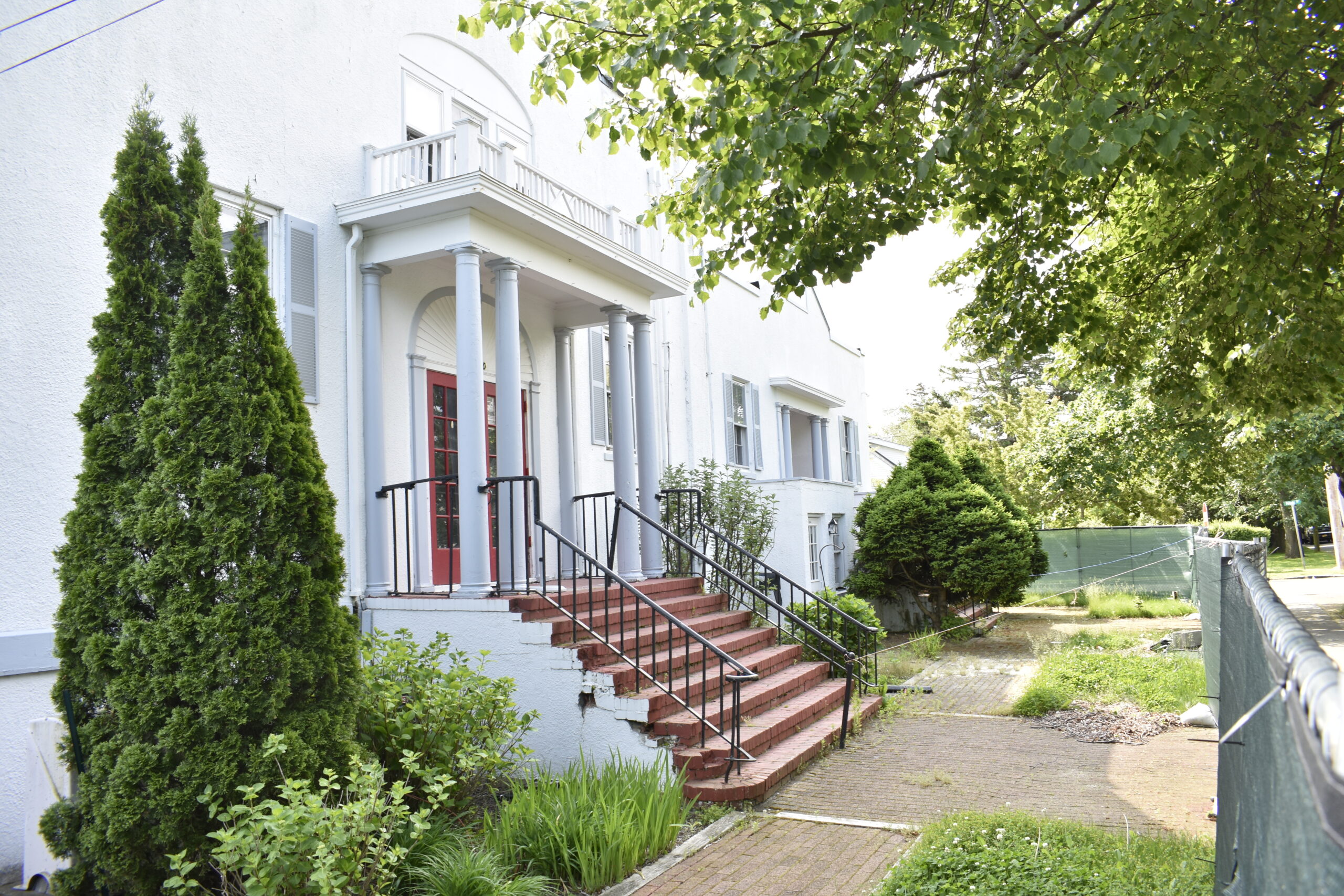
The former Southampton Polish Hall at 230 Elm Street, where Elegant Affairs plans to operate a catering business. BRENDAN J. O'REILLY
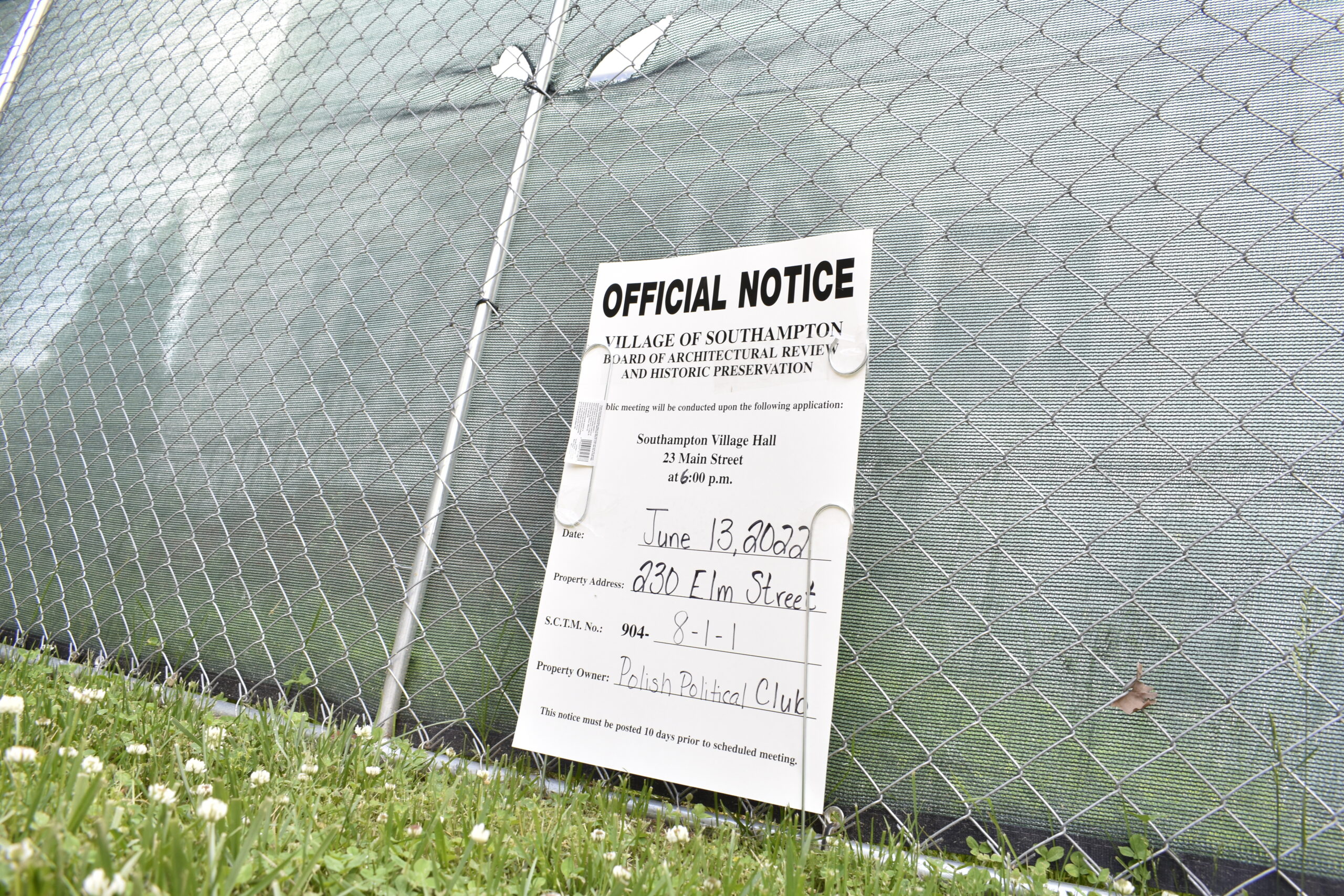
The former Southampton Polish Hall at 230 Elm Street, where Elegant Affairs plans to operate a catering business. BRENDAN J. O'REILLY
Neighbors of 230 Elm Street who wish to prevent Elegant Affairs from operating its catering business out of the location have taken their case to the Southampton Village Zoning Board of Appeals.
Jay Fitzpatrick — with the support of a number of neighbors who share his concerns about noise, traffic, parked cars, garbage and other issues — filed an appeal that challenges the 2000 certificate of occupancy for the property, as well as a building permit issued last year. The goal is to get the ZBA to determine that the certificate of occupancy only allows catering as an incidental use at the former Southampton Polish Hall and to invalidate the building permit.
The certificate approves the use of the main floor for a “catering hall and kitchen.” If the ZBA were to agree with the neighbors’ narrow interpretation of the certificate of occupancy, or were to invalidate the certificate altogether, it would prevent Elegant Affairs from opening at the location.
The ZBA heard initial arguments on May 26 concerning both the merits of the appeal and the timeliness — such appeals are supposed to be made within 60 days of a permit or certificate’s issuance.
Still owned by the Polish-American Political Club of Southampton, 230 Elm Street was built in 1928.
Anton Borovina, the attorney for Fitzpatrick’s group, noted that when the village’s zoning code was adopted in 1973, a commercial catering hall was a prohibited use at 230 Elm Street.
He said that when Elegant Affairs applied for a building permit for interior renovations to the building in 2020, the village code, at the time, stated that no permit be issued unless the changes have been approved by the Planning Board.
“It’s rather, I must tell you, an anomaly,” he said. “That was strange, but that’s how the building code read.”
The village code was not interpreted that way historically, but under Mayor Jesse Warren’s administration, the Building Department began to refuse to issue building permits for interior changes until the Planning Board approved the site plan.
Borovina noted that the building inspector issued Elegant Affairs a stop-work order in March 2021 to halt the work. Then, in March 2022, the Village Board amended the code to no longer require Planning Board review. Borovina argued that March 2022 is when the window to file an appeal opened.
Alex Wallach, the village planner, clarified that though the Village Board did amend the code concerning when site plan review is required, the change to the law did not affect 230 Elm Street’s application for interior changes; the stop-work order was lifted because 230 Elm Street received site plan approval and not because of anything the Village Board did.
Having defended the timeliness of the appeal, Borovina defended the merits of the appeal, arguing that the building permit was issued in furtherance of a catering use that is not allowed. “The issuance of the building permit for that intended purpose, frankly, was unlawful,” he said.
Borovina noted that a representative for Elegant Affairs once publicly stated the business’s desire to host events 365 days a year, which he provided as evidence that the intended use of the property is out of line with what it’s been used for in the past.
Later in the meeting, an attorney for Elegant Affairs said that statement had been a joke and contended that, in reality, the catering hall would host about as many weddings as the Southampton Polish Hall did historically.
Borovina said the hall was established as a social club for Polish Americans, their families and their guests. “Its principal use was always as a social club,” he said. “It did have, no doubt, parties for its members and guests. It had wedding receptions for its members and guests. It had charity events there — nothing of a commercial use whatsoever.”
The building permits for 1934, 1963 and 1966 described the Polish Hall as a social club, he pointed out, adding that records of events prior to 2003 show “not a single reference to a commercial business use at any time.”
Reading from the village code on the issuance of building permits, Borovina said no building permit shall be issued unless “the plans and intended use” for the structure conform to the code. He called the use of 230 Elm Street as a commercial catering establishment “unprecedented” prior to 1973, when zoning code was adopted, and prior to the 2000 certificate of occupancy.
From 2003 on, the building was used as a disco operation and an entertainment facility for commercial purposes, Borovina said.
He contended that the 2000 certificate of occupancy issued by the village building inspector was only intended to recognize catering as an incidental use — and did not recognize it as a commercial catering establishment. He argued that would have been a change of use. “The building inspector did not have the authority, we respectfully submit, to change the use,” he said, noting that only the Village Board or ZBA could have done that.
Charles Dobrowolski, who lives across from 230 Elm Street and was a member at the Polish Hall, told the board, “The Polish Hall was never commercially used as a catering hall. It was a bar and a bowling alley used as a social club for members and friends of the Polish American community.”
Events included dances, weddings and charity events, and there was nothing commercial about the events, and they did not happen every day or every weekend, he said.
Fitzpatrick, who lives at another house across from the former Polish Hall, recounted how the tenant preceding Elegant Affairs, Tim Burke’s 230 Elm, used the venue for parties and as a nightclub operating until 4 a.m. It’s a return to that kind of use that the neighbors are trying to prevent.
Michael Zinder of Pulaski Street called Elegant Affairs’ plans for the hall a “fundamental change” and “substantial.” “Catering is a prohibited use in the village,” he said.
He said the Polish Club “got lucky” when the certificate of occupancy changed in 2000, when “nobody noticed, because there was never that many big-time events.”
ZBA member Luke Ferran asked Borovina to address whether this is an enforcement issue rather than an issue for the ZBA. “Insomuch as the current building permit is concerned, there has been no catering on site yet, and the building owner does have a right to build and renovate their building as they see fit,” Ferran said. “You can’t automatically, I think, infer what the future use will be based upon the permitted changes in the current application. … It may be a bridge too far for us to predict what it will be used for when it hasn’t been used that way yet.”
Borovina agreed it is a code enforcement issue but said the ZBA’s function is to determine what the code says, and that there is no doubt that commercial catering is being proposed.
Attorney Richard Hamburger, representing the Polish-American Political Club, said the building is certified for a catering hall and kitchen, and that the building permit does not change the use of the building. He noted that Fitzpatrick’s appeal does not challenge any of the alterations approved by the building permit, such as a wall or work made to bathrooms. “The work itself is all within the code and is unobjectionable,” he said.
“The law is very clear that you can’t use a building permit that’s consistent with the certificate of occupancy issued years and years ago to challenge that certificate of occupancy, which should have been challenged years and years ago,” Hamburger said. “The certificate of occupancy can be appealed within 60 days to the Zoning Board of Appeals. A building permit can be appealed within 60 days to the Zoning Board of Appeals.”
A later-issued certificate of occupancy that restates the use does not restart the clock, Hamburger said, citing case law.
“The certificate of occupancy says what it says. The building permit application said what it said, and there is no distinction in the code between primary use, accessory use, incidental use, subordinate use — whatever Mr. Borovina wants to call it — there’s no distinction when it comes to preexisting, nonconforming uses,” he said.
He also contended that the Polish Hall was always “in the commercial business,” hosting events, for both members and nonmembers, in exchange for money to pay the club’s bills.
Hamburger went on to read affidavits from a number of octogenarians and near-octogenarians who gave accounts of the hall being used for large events and receptions frequently.
According to the agenda for the meeting, the appeal is being made under Section 116-26 of the village code. However, the appeal does not fall within the scope of that section, titled “Appeals on interpretation of chapter and map,” which allows for an applicant to file an appeal when the building inspector has refused to issue a permit or a certificate of occupancy or when the building inspector’s determination of a district boundary line is in dispute. A third option allows the building inspector himself to appeal for an interpretation when he doubts the intent of the code or the location of a district boundary.
Jeff Blinkoff, the ZBA’s attorney, noted at the meeting: “This board does have the power, as an appellate board, to review, interpret, modify, amend or reverse determinations of officials who are charged with code enforcement.”


