


 4 Photos
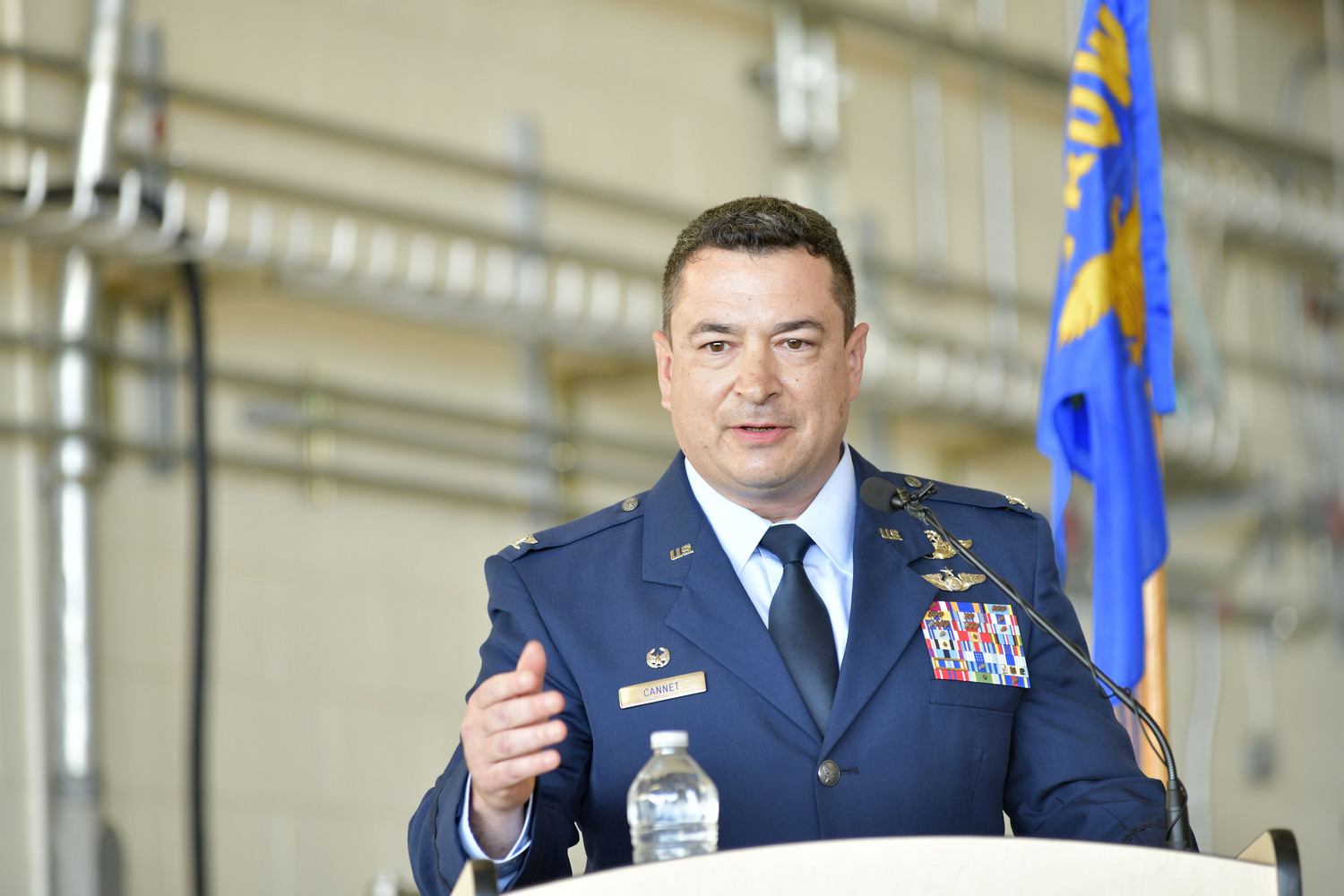
Colonel Jeffrey Cannet, the new Commander of the 106th Rescue Wing. DANA SHAW
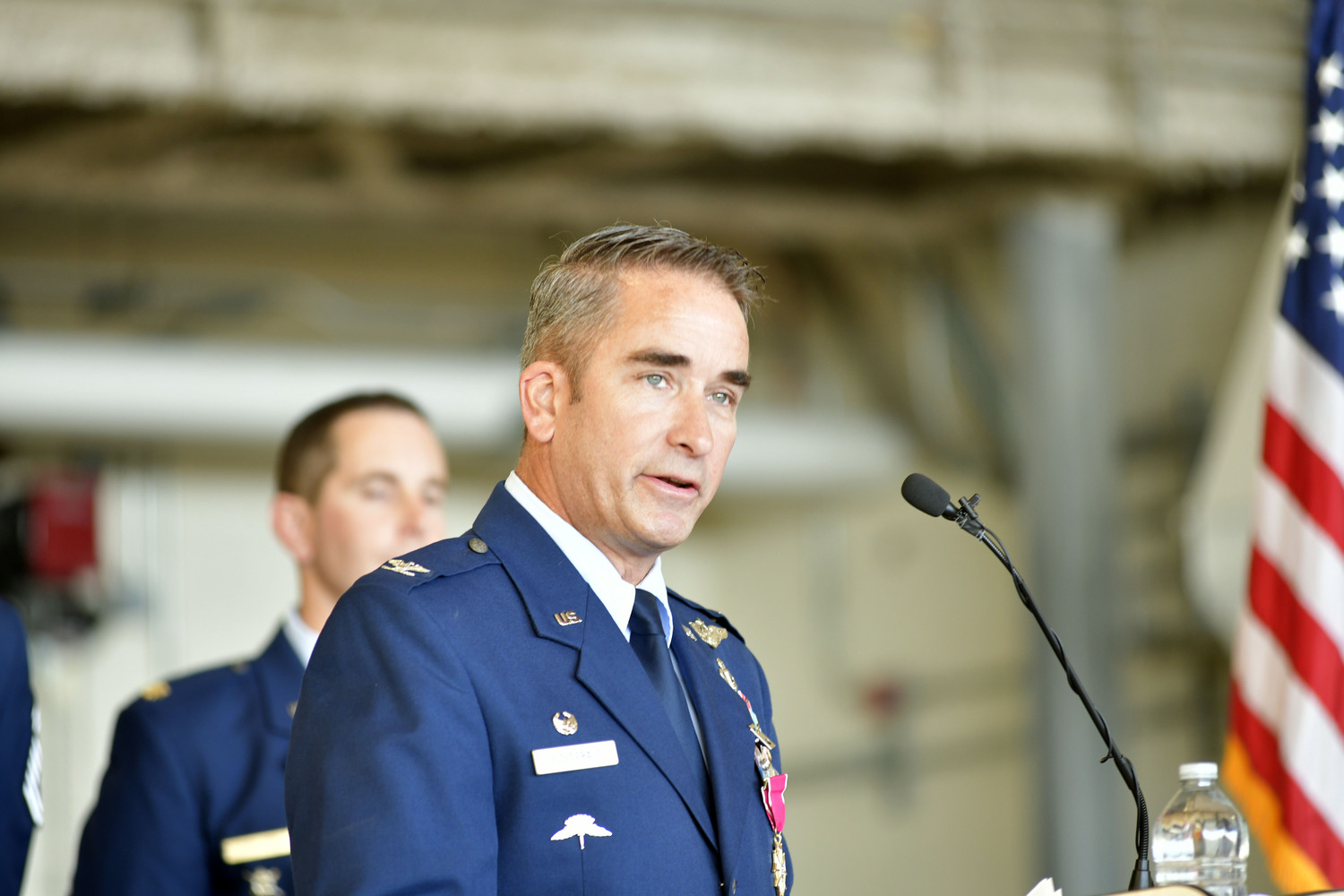
Outgoing 106th Rescue Wing Commander Colonel Shaw Fitzgerald. DANA SHAW
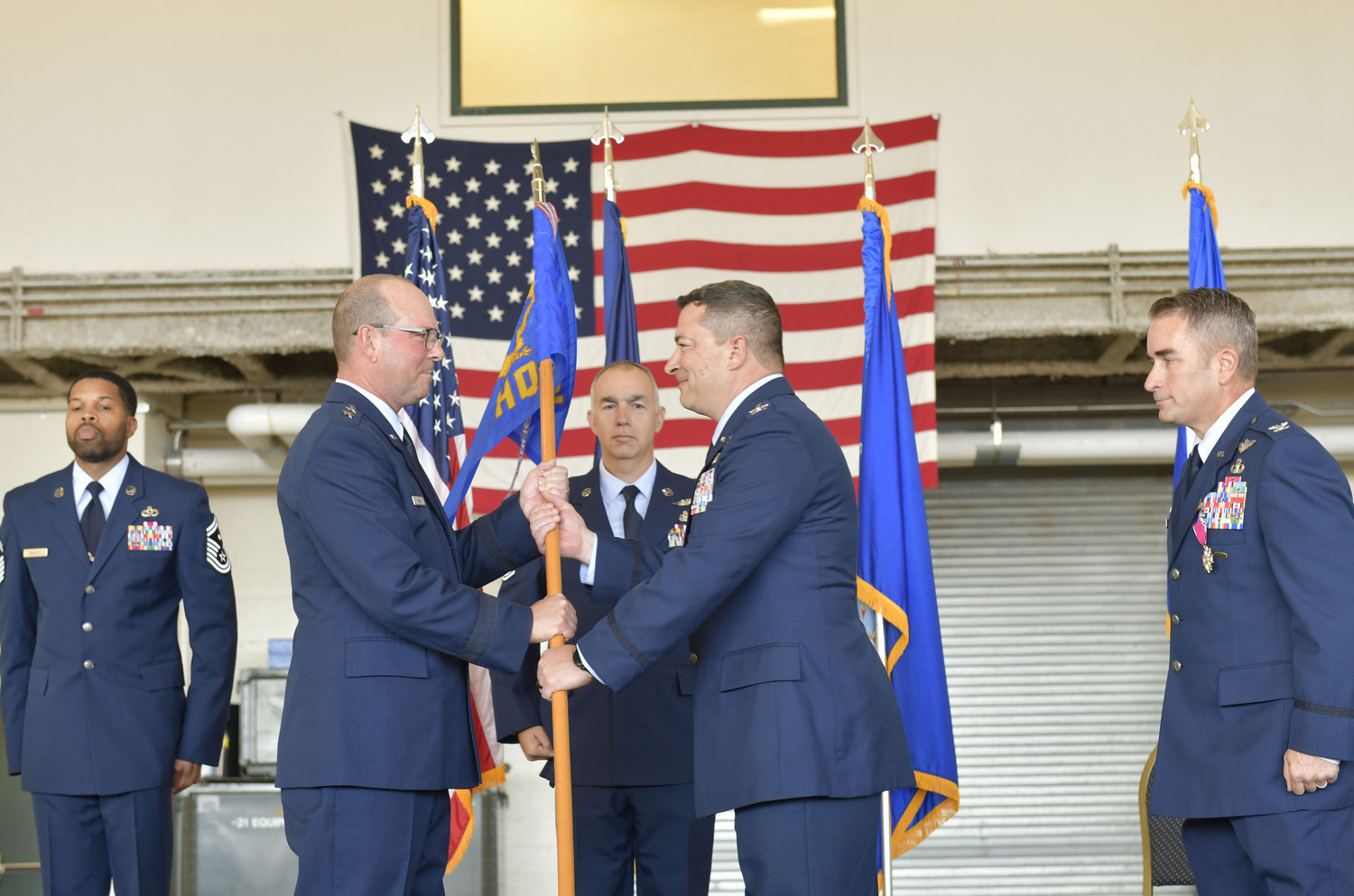
Commander of the New York Air National Guard, Major General Michael Bank, left, passes the flag of the 106th Rescue Wind to Colonel Jeffrey Cannet, signifying the change of command. DANA SHAW
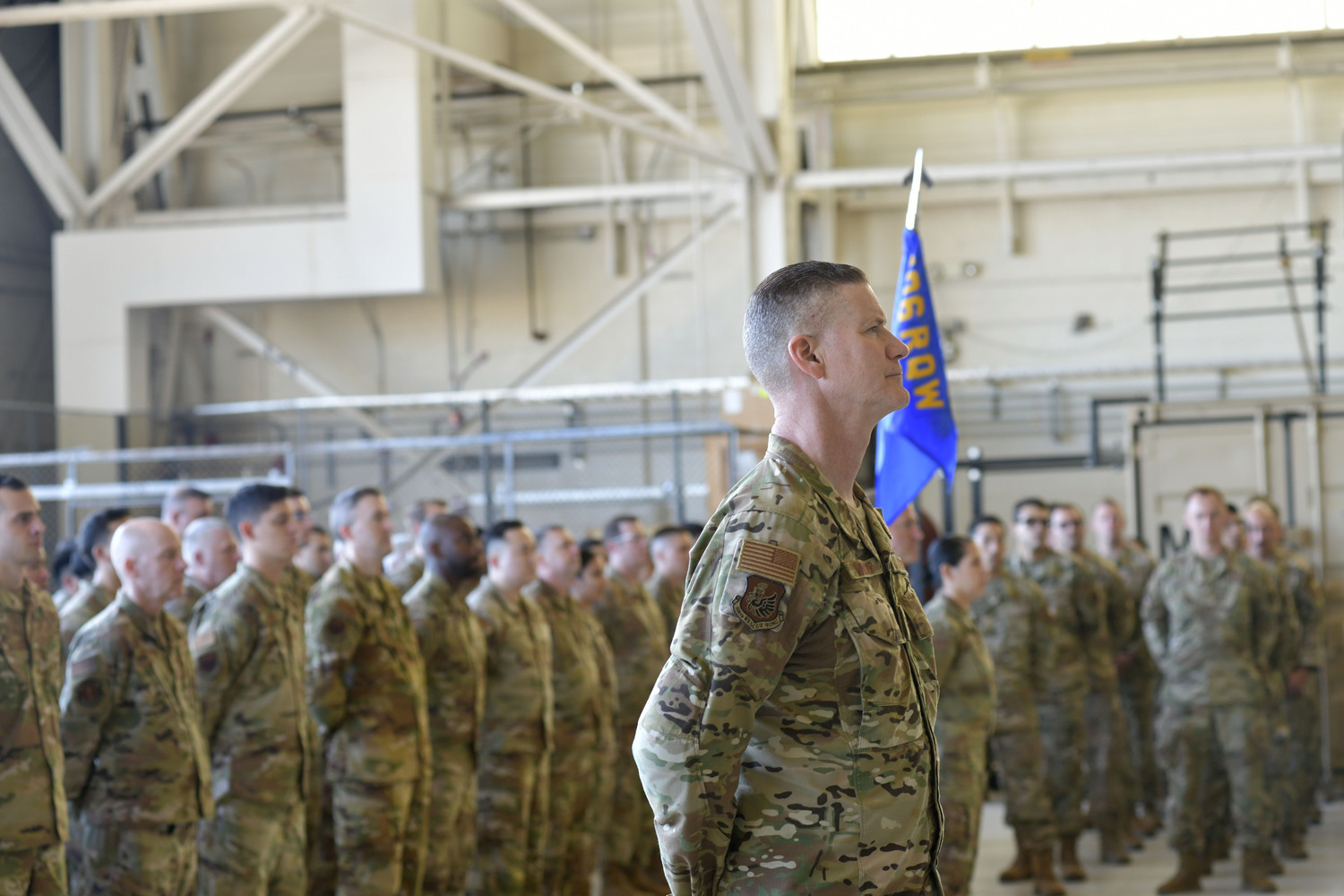
Members of the 106th Rescue Wing at the change of command ceremony on November 1. DANA SHAW
For the better part of the last 20 years, the United States has been the unipolar power on the world stage, doing essentially whatever it has wanted to do without any serious competition or challenge from another country.
Anyone who pays attention to the news and world politics knows that has changed, drastically, recently, with the rise in power and capability of countries like China, Russia and Iran.
That shifting dynamic has meant the United States military has had to proactively take steps to ensure it can continue to protect itself and its citizens, analyzing new ways of operating and training to prepare for the future.
It will require effort and coordination in all branches of the military, at all levels, and will be the primary focus for Colonel Jeffrey Cannet, as he steps into a new role as commander of the Air National Guard’s 106th Rescue Wing, stationed at Gabreski Airport in Westhampton Beach.
Cannet, 50, a Mastic Beach resident and graduate of William Floyd High School, officially took command of the 106th at the Air National Guard Base on Friday, November 1. The afternoon included a change-of-command ceremony in which the guidon, or flag, of the 106th Rescue Wing was transferred from the former commander, Colonel Shawn Fitzgerald of Cutchogue, to Cannet by Major General Michael Bank — the commander of the New York Air National Guard, who was the presiding officer for the ceremony — signifying the transfer of authority and responsibility for the wing’s 1,000 airmen and its search and recovery mission. Cannet served as the 106th Operations Group commander before his promotion.
Fitzgerald retired after 28 years of service in both the Army and Air Force.
Cannet brings plenty of experience to his new role and a deep familiarity with and love for the 106th Rescue Wing. After spending eight years on active duty with the Air Force, he came over to the Air National Guard in 2000, and has been part of the 106th for more than 22 years. Most of his time in the wing has been spent in the operations group, mainly with the 102nd Rescue Squadron.
He said he has always admired Fitzgerald, and jumped at the chance to replace him when Fitzgerald announced his retirement.
“This wing is amazing,” he said. “I’ve seen all the great things we can do and where we’re going as an organization, and I wanted to be part of that.”
In his new role, Cannet will be part of the military and Air Force’s larger effort to facilitate the changes necessary in light of the emergence of world powers like China, Russia and Iran. Cannet likened this period in time to the Cold War, and explained how the Air Force and, by extension, the Air National Guard have a big role to play.
“One of the things that makes us dominant as a military is that we generally have air superiority,” he said. “We’ve had the luxury of establishing dominance in the skies, and if we can control the skies, our ground forces can control the surface.”
With a bigger challenge to that dominance from other nations in recent years, it has become incumbent on the military to ensure it can maintain that control, Cannet said.
“We have to find new, innovative ways to employ our force,” he said, which involves planning for how to operate if and when the country goes to war. “It’s really challenging us to rethink how we’re going to go to war, how do we want to deploy.”
Cannet said that higher-ups in the Air Force are still in the process of disseminating those newer ways of operating on down the chain of command, but when it comes to his unit of command, he said he expects that they will reconstitute into a deployable combat wing, which would represent a significant change in the way it is structured, making it more akin to an active duty Air Force unit. He said that guiding the rescue wing through what he termed a “massive overhaul” will likely be his biggest challenge in his new role.
That’s fine with Cannet, who, over the course of his career, has not shied away from a challenge. In 2017, Cannet piloted the rescue wing’s HC-130 aircraft on a trip roughly 1,700 miles out in the North Atlantic Ocean to locate the Slovenian freight ship Tamar. An explosion had occurred in the ship’s boiler room, leaving two sailors dead and two other badly injured and in need of immediate medical attention. Upon locating the ship, seven of the wing’s pararescue men and combat rescue officers jumped into the ocean, in the dark, clambered aboard the ship, and saved the lives of the two sailors. Once on board, the officers had to set up a full trauma room on board and employ advanced medical techniques to keep them alive for the next 36 hours, before a ship was able to arrive with a helicopter and take them to safety.
Cannet explained that the mission was high-risk, stretching the fuel capacity of the aircraft to its max. The ship was essentially in “no-man’s land,” Cannet said, meaning the 106th was the only unit that could even attempt the mission. He said when they first received the call, they were unsure if it would be possible to pull it off. He spoke about the planning and execution of the mission and what it meant to him and the rest of the unit.
“It was like looking for a needle in a haystack and it had to be done right the first time,” he said of the mission and the challenges it presented.
Cannet spoke about the big lesson he took away from being the mission commander on that harrowing rescue.
“If you empower people to do great things, they will accomplish great things,” he said. “If you lay the foundation, when the big, hard tasks come along, they will step up.
“I was very proud to be part of that one,” he continued, speaking about what pulling off a high risk mission does for the unit. “It’s a real shot in the arm. It’s what we live for, it’s what we do.”
He said that several of the men involved in the rescue that day have gotten periodic updates on the sailors they rescued, tracking them on social media.
“Those guys are living their best lives,” Cannet said. “They’re making the most of their second chance at life.”
Cannet received the Slovenian Medal for Merit from the Slovenian government for that mission.
Cannet is excited to keep doing the kind of work that will ensure the rescue unit is always prepared and ready for whatever comes its way, even in the face of big seismic shifts in the way the military will operate in this country and abroad. The key to it all, he said, comes down to the people in his command.
“If you have the right people, and you care for those people and develop and empower them, they’ll get it done every time,” he said. “We have some major changes coming, but we 100 percent have the people who can get this done. It’s going to be fun watching them excel and adapt.
“You won’t find better people in any other unit in the world,” he added.


 Cailin Riley on Nov 5, 2024