


 9 Photos
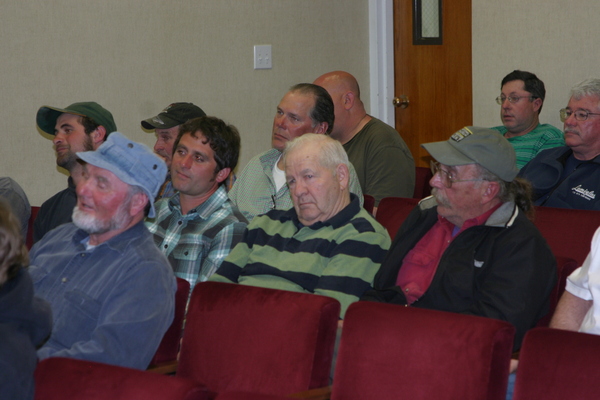
About 40 baymen

the bulk of Southampton's full-time commercial shellfish harvesting community
turned out for the meeting with the Trustees on Wednesday to discuss new restrictions on the harvest of razor clams.

Ken Mades

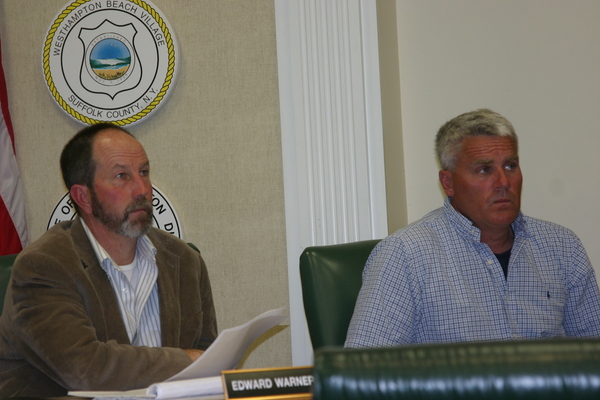
Trustees Ed Warner Jr. and Jon Semlear

Dean Colombo

Dean Colombo and Ken Mades
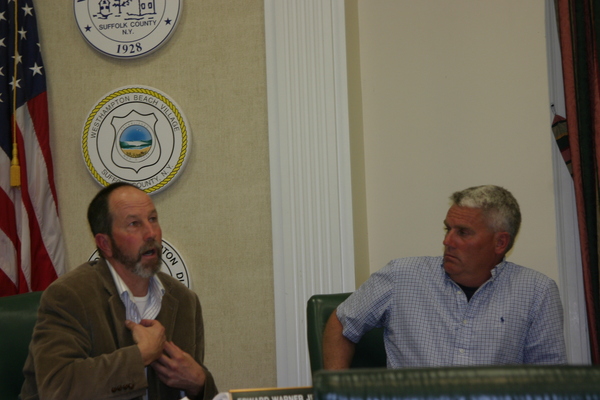
Dean Colombo and Ken Mades
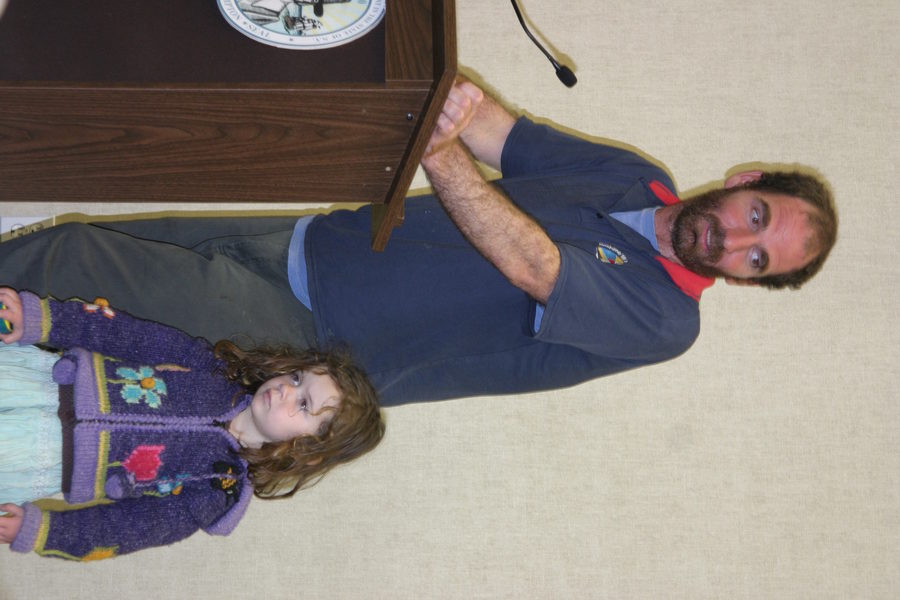
Ian Burliuk
The deep tans on the faces of the men who filed into Town Hall one evening last week were not earned lounging on a beach at a Caribbean vacation spot. They were the mid-winter tans that can be maintained in these parts only by spending long days in the sun and wind of the local bays.
The stern looks of the 40 or so baymen—some in their early 20s, others well into their 70s—was testimony to the seriousness of the rare gathering of the region’s few remaining residents who earn a living harvesting fish and shellfish in the East End’s tidal estuaries.
The issue that brought them together was a recent proposal by the Southampton Town Trustees to severely limit the harvesting of razor clams, a thin clam species that resembles a barber’s straight razor. The clams are little known to most East End residents but are hugely popular fare on the dinner tables of Asian families in New York City and have become one of the baymen’s most valuable harvests.
The fishermen said the closure of the razor clam harvest for the better part of eight months would rob them of their most important markets. They pleaded with the Trustees to take a different tack if they want to rein in the harvest of the clams, saying a shorter closure and strict limits on the number of razor clams that a bayman could harvest in a day would be preferable. They also blasted the Trustees for having adopted the closure without consulting them first.
“In the past, when decisions were made, the Trustees would call a meeting—that didn’t happen here,” said Sam Rispoli, president of the Southampton Town Baymen’s Association. The Hampton Bays bayman said that the members of the organization had agreed that some closure of the razor clam harvest was warranted, but that the one the Trustees have imposed is too long.
In January, the Trustees officially approved the closure of razor clam harvesting in Southampton waters from April 14 to December 2, citing a steep decline in the number of razor clams in town waters. They noted that historically harvesting razor clams had been only a wintertime activity, but the practice has expanded steadily as demand from the city’s Asian market burgeoned. Closing the harvest in the warmer months, when fish and other shellfish species are available and in higher demand, would preserve the razors for when other profits are scarce. The highest demand for razor clams comes in January, during the run-up to the Chinese New Year.
“It’s a very lucrative fishery, and it’s a very defined fishery, meaning it can only withstand just so much pressure,” Trustee Fred Havemeyer said. “The last thing we want to do is stand back and encourage a boom-and-bust cycle.”
But baymen countered that the number of razor clams in recent decades has ballooned from traditional levels, and that the reliability of income from other harvests—most notably bay scallops—has declined steeply, the reason the number of baymen working local waters now numbers only a few dozen.
“We have 15 times the amount of razor clams we had in the 1960s—the last set, in 2010, was enormous,” said Ken Mades, noting that large flats of sand building near the mouth of ocean inlets are prime habitat for the oceanic razor clams. “And there’s not much else for the baymen to do.”
Bayman Dean Colomob suggested that instead of the broad closure, the Trustees should turn to a daily harvest limit for each bayman to tamp down the impacts on the razor clams between spawning “sets,” which can be enormous when they happen but sometimes miss a year for various reasons. Limits might have saved the Trustees and the baymen from the pressing concern for the stock that spurred the closure in the first place, he said.
“A year ago, I pushed for a limit—I said 500 pounds per day, and I compromised to 1,000 pounds per day—but certain individuals did not want any limit,” he said. “So we went out and caught as many as we could. The more we caught, the more the price went down, and the more we had to catch. A limit would have controlled that better than anything.”
Trustee Jon Semlear, who, along with Trustee Ed Warner Jr. is a professional bayman and harvests razor clams, said that another concern is a growing doubt by the general population about the method used by baymen to harvest razor clams: a process called “churning,” in which the bayman uses a gasoline-powered outboard boat motor mounted on a bracket to blow the razor clams out of the sandy bay bottoms. The method has proven to be the only way to get at the razor clams, which bury too deeply in the sand to be reached with standard clam rakes and cannot be shoveled up since none of Southampton’s productive razor clam areas are exposed at low tide.
Mr. Semlear said he has had more and more complaints about the practice from those who believe it must have a deleterious impact on the environment of local bays—a misconception, he said, since the churning has actually been shown to boost the shellfish productivity of an area. He worried that at some point the objections would force the practice to be stopped, as it has done in other municipalities. Closing the harvest in the summer months, when more non-baymen are on local waters, would limit the visibility of the churning gear, he guessed.
“Southold lost churning completely. Four years ago, Shelter Island shut down churning,” Mr. Semlear said. “My thought was to come up with a strategy by which we could maintain the fishery.”


