


 1 Photo

Proposed legislation to create a universal single-payer plan to provide health coverage to every New York State resident likely will not become law anytime soon in Albany—and the issue puts the South Fork’s two state legislators in a rare position, on opposite sides of an issue.
The State Assembly approved the measure in mid-May. It calls for publicly funded universal health care for all state residents, regardless of wealth, income, age, immigration status or preexisting condition.
According to a press release from Assemblyman Fred W. Thiele Jr., who co-sponsored the bill and voted in favor of it, the legislation would give everyone access to comprehensive inpatient and outpatient care, primary and preventive care, maternity care, prescription drug costs, laboratory testing, rehabilitative care, and even dental, vision and hearing care, as well as provide out-of-state coverage.
Versions of this bill have been approved in the Assembly both in 2015 and 2016—but the bill never has won the approval of the State Senate. It’s not likely to be approved this time either, both Mr. Thiele and State Senator Kenneth LaValle said. In fact, the two agreed that it’s unlikely to even get to the Senate floor for a vote.
Opponents of the bill have cited major potential tax increases as a concern, although a campaign website in favor of the bill, nyhealthact.com, claims that 98 percent of all New Yorkers would save money through the single-payer health coverage compared to the costs of existing health insurance policies through employers or the federal Health Insurance Marketplace.
Mr. LaValle acknowledged that he expects the state to eventually establish a single-payer system, sometime within the next five to 10 years.
But for now, he said, he wants more information on the fiscal impact of the bill before he would consider supporting the idea of universal health care at the state level.
“I think first we need to see what happens in Washington, with the heath care act, to see how that affects New York State,” the senator said in a phone interview on Monday. “I have been asking people: What is the cost of single-payer? Is it something that we would have to increase taxes in New York to pay for? I have yet to get a direct answer.”
He added, “The cost of that is very important to me, and I think important to the people that I represent.”
Mr. Thiele agreed that it was unlikely that the bill would be voted on this year, let alone pass, but said it was important to introduce the measure again, if only to keep the idea in the minds of New Yorkers.
“Politics being what it is, I think in the current political climate, the chances of a Republican majority leadership [in the State Senate] allowing this to come up for a vote is limited. It’s probably a long shot,” Mr. Thiele said. “Even if it doesn’t pass, an important accomplishment is letting people know about this bill—that there is an alternative to what’s happening in Washington.”
Although the State Senate now has a 32-member Democratic Party majority in the 63-seat chamber after a special election in May, an alliance between several Democratic senators and the GOP still gives Republicans control over the Senate.
Mr. Thiele challenged Mr. LaValle’s concerns over the price tag of the bill. He argued that taxpayers would actually be saving money from the elimination of insurance premiums, which would balance out any tax increase.
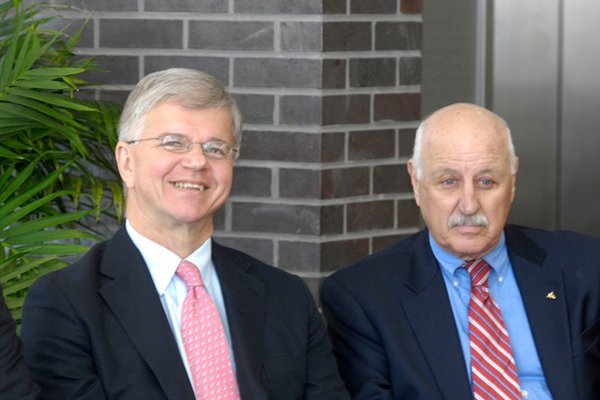
Commenting on his disagreement with Mr. LaValle on the issue, Mr. Thiele noted that although the pair work well together, they don’t always see eye to eye on every piece of legislation.
“If two people agree 100 percent of the time, it probably means one of us isn't thinking,” Mr. Thiele said with a laugh.
The state’s proposed health care act comes as the House Of Representatives voted to repeal the Affordable Care Act, commonly referred to as “Obamacare,” hoping to replace it with the Republican-backed American Health Care Act, although the bill still needs support from the U.S. Senate.


 on Jun 12, 2017