


 1 Photo
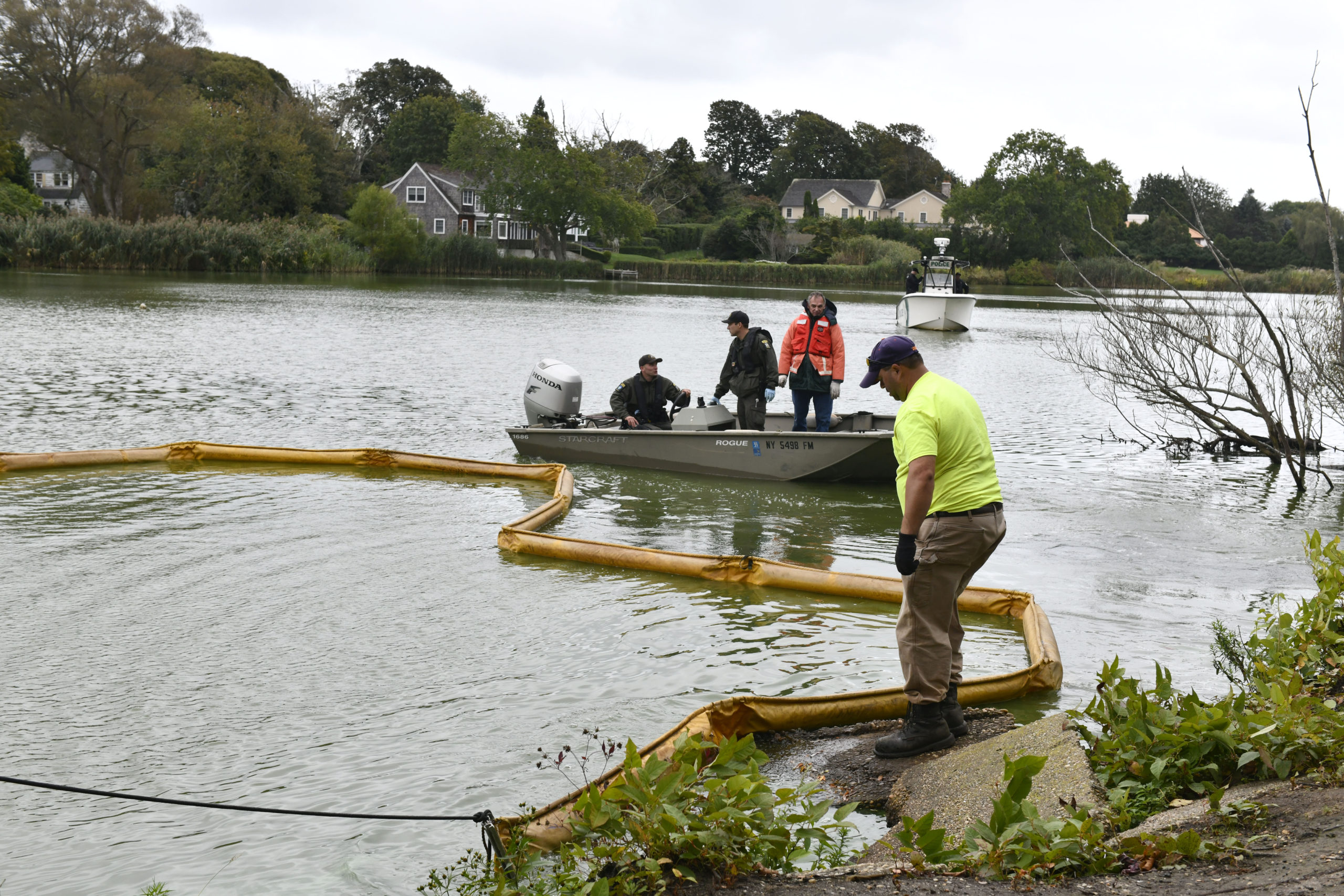
The Express News Group will host a press session to discuss the health of Lake Agawam in Southampton Village, and what can be done to clean it up. DANA SHAW
A panel of water quality experts and local officials will be on hand on Friday, January 10, at Union Cantina in Southampton Village for the latest Press Sessions event sponsored by the Express News Group, to discuss “Troubled Waters: Lake Agawam and the Region’s Freshwater Future.”
The panel will consist of Southampton Village Mayor Jesse Warren, who has made a priority of cleaning up Lake Agawam; Southampton Town Trustees President Ed Warner Jr.; Southampton Village Planning Board member Tony Piazza, who also owns the Southampton firm Piazza Horticultural Group Inc. and is an expert in organic landscaping; Pio Lombardo of P.E. Lombardo Associates, who authored the 2013 Lake Agawam Water Quality Action Plan; the founding president of Sag Harbor-based Defend H2O, Kevin McAllister; and Chuck Scarborough, a member of the Lake Agawam Conservancy and a longtime resident of the village.
Lake Agawam is the centerpiece of Southampton Village, yet it has recently been listed as one of the most polluted bodies of water in the state. Each year, the lake is plagued by blooms of blue-green algae — or cyanobacteria — which are toxic to humans and animals.
The blooms, which are triggered by a combination of warm temperatures and high nitrogen levels in the lake, look like paint on the surface of the water.
A study conducted by Dr. Christopher Gobler of Stony Brook University’s School of Marine and Atmospheric Sciences in 2017 discovered that 70 percent of the nitrogen going into Lake Agawam comes from septic systems leaching wastewater into the ground. Home septic systems, he said at the time, produced nearly 50 percent of the nitrogen entering the lake, while 20 percent came from septic systems of businesses.
In addition to leaky septic systems, nitrogen also comes from rain runoff along the roads, which the village has worked on capturing before it reaches the lake, as well as fertilizer and pesticide runoff from lawns along the lake, and duck scat.
Over the years, village residents have made efforts to improve Lake Agawam. In 2013, a plan called the Lake Agawam Water Quality Action Plan was drafted, and more recently the Lake Agawam Conservancy, a nonprofit made up of homeowners around the lake and other local citizens who are concerned about the health of the lake, was established.
In October, under the order of Governor Andrew Cuomo, the State Department of Environmental Conservation conducted a pilot program to skim the blue-green algae from the surface of the lake and filter the water before returning it to the lake, in an effort to remove or reduce the toxic algae.
In November, Mr. Warren said the program was “extremely successful,” and now the DEC is determining whether it can be expanded to accommodate the entire lake.
Still, more could be done, and is being done.
The conservancy has raised more than $400,000 to put toward lake improvement efforts — like the installation of floating wetlands that allow plants to use the nitrogen in the lake. Also under consideration is dredging the bottom of Lake Agawam to rid it of nitrogen and phosphorus, but that could prove to be costly.
But Lake Agawam is not the only lake suffering from blue-green algae blooms. In fact, nearly every freshwater body in the town, including Mill Pond and Old Town Pond, suffer from the blooms every year.
The discussion will continue to take place this week at the event sponsored by the Express News Group, part of a series of conversations to take place throughout Southampton and East Hampton towns, and in Sag Harbor, as both Press Sessions and Express Sessions events.
Friday’s discussion will take place at Union Cantina from noon to 2 p.m. Tickets are $35 and are extremely limited. They can be purchased in advance online at presssessionssouth110.eventbrite.com.


 Greg Wehner on Jan 9, 2020