


 2 Photos
Saying he hopes to put an end to longstanding legal battles with neighbors in North Sea, Jay Jacobs has submitted a draft scope for an environmental review that is part of a new application for a change of use for the property housing his day camp.
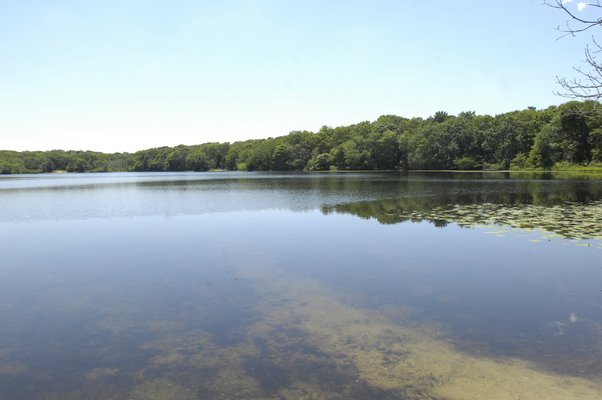
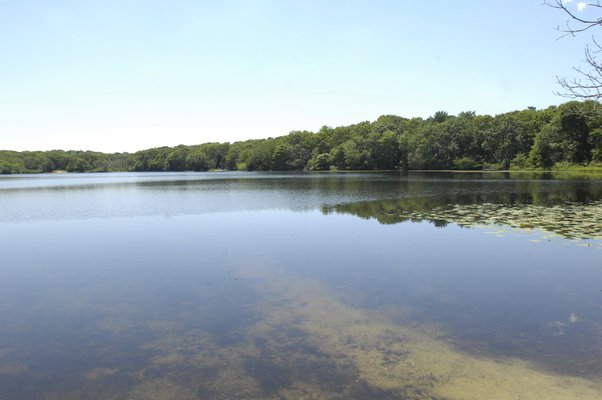
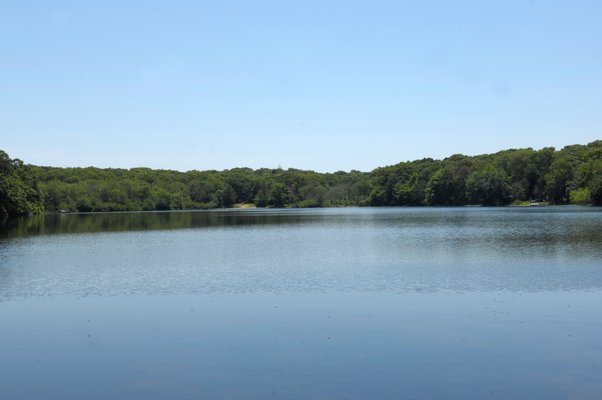
Mr. Jacobs is president and CEO of The TLC Family of Camps, which owns and operates the facility officially known as Southampton Racquet Club & Camp. Nestled on 17.4 acres in North Sea, the day camp sits on Little Fresh Pond, a body of water that is the nexus of the issue. Members of the Little Fresh Pond Association and Southampton Day Camp Realty LLC have butted heads for several years over the conversion of a former adult tennis facility into a children’s day camp, before regulatory boards and in court.
Mr. Jacobs’s new proposal calls for a change of use from “tennis club/camp” to a “tennis club and camp.” If approved, this minor linguistic rewording would permit all of the current activities being offered at the facility, sidestepping challenges in the courts by neighbors. “My client would like to enable people to not necessarily … just focus on tennis,” said Mr. Jacobs’s attorney, Wayne Bruyn, with O’Shea, Marcincuk & Bruyn in Southampton.
“The problem has been about the question of the definition of a tennis camp versus a day camp. That’s where the crux of the matter lies,” Mr. Jacobs said on Tuesday. He referred to a Southampton Town Zoning Board of Appeals decision a few years ago, in response to the neighbors’ charge that the property had been abandoned, which determined that it was, in fact, still in use. “But in writing in their opinion, they also referred to our property as a tennis camp and said if we wanted to do everything in our original proposal, we’d have to get a change of use,” he said, “The neighbors have hung onto the [term] ‘tennis camp,’ using it as a maneuvering to essentially put up legal roadblocks, he said.
Mr. Jacobs had originally taken his plan to the ZBA seeking variances to allow a number of additions to the site, including new playing fields for softball, basketball and tennis, and four swimming pools with 13 cabanas, as well as renovating an existing dining hall. He pulled that plan from review in 2011, and scaled it back to exercise his existing rights of use for the camp as a pre-existing, nonconforming facility in a residential neighborhood.
This new plan seeking renovations and upgrades was then submitted to the Planning Board. It calls for maintaining seven of the 10 tennis courts, adding two pools for a total of three, and keeping the sports courts. In addition, he proposes to remove a well house, a shed and two cottages, renovate the dining hall, and turn another cottage into a health center. The square footage of all the buildings will be the same as that which currently exists.
But neighbors say the footprint is not what concerns them—it’s the overall impact the camp has on Little Fresh Pond.
“Our concern has always been for the wellness of the lake and the quiet peacefulness of the neighborhood,” said John Barona, president of the Little Fresh Pond Association. “We test the lake every two weeks throughout the summer, and then send our results upstate” to the New York Citizens Statewide Lake Assessment Program, which analyzes the samples. In 2013, the program, overseen by the State Department of Environmental Conservation, declared the pond “threatened.”
“We’re not just trying to make a big stink over nothing,” Mr. Barona added.
Mr. Jacobs rebuts that argument by noting that he updated all of the camp’s septic systems.
The legal battles have gone on for years. The most recent was settled a few weeks ago, when the State Supreme Court dismissed the neighbors’ complaints that the camp and Southampton Town failed to abide by and enforce zoning restrictions.
“They are choosing to define [tennis camp] very narrowly,” said Mr. Jacobs, who also owns Hampton Country Day Camp in East Hampton. “Throughout the East End, we have presented numerous examples of tennis camps that do everything in addition to tennis.”
“Our concern is the 400 to 500 kids at that camp, doing all kinds of activities all day long, which will destroy our lake,” said Foster Maier, vice president of the Little Fresh Pond Association. “We look forward to seeing what he’s planning … If he’s willing to limit the number of kids who can be there, that will speak to the purpose of what the camp is.”
This property has been a camp since the 1930s, Mr. Jacobs argued. “It’s not like I took over a cemetery and turned it into a camp. I took over a camp and made it a camp,” he said.
Having issued a positive declaration for a proposal to expand the tennis camp, the Planning Board is now working to determine what the scope of the more extensive environmental review process will be. On February 26, a scoping hearing will be held, wherein the board, the applicant and the public will debate what issues should be addressed by the final environmental impact statement. The pond, neighborhood traffic and noise are sure be top among them.
The hearing is designed to seek solutions, said Mr. Bruyn, by considering such elements as monitoring wells and traffic counts.
The Planning Board will have until March 12 to vote on the final scope of the EIS. Mr. Bruyn said Mr. Jacobs would need approval by March 12 to get the camp ready for this summer.


 Carey London on Jan 28, 2015