


 2 Photos
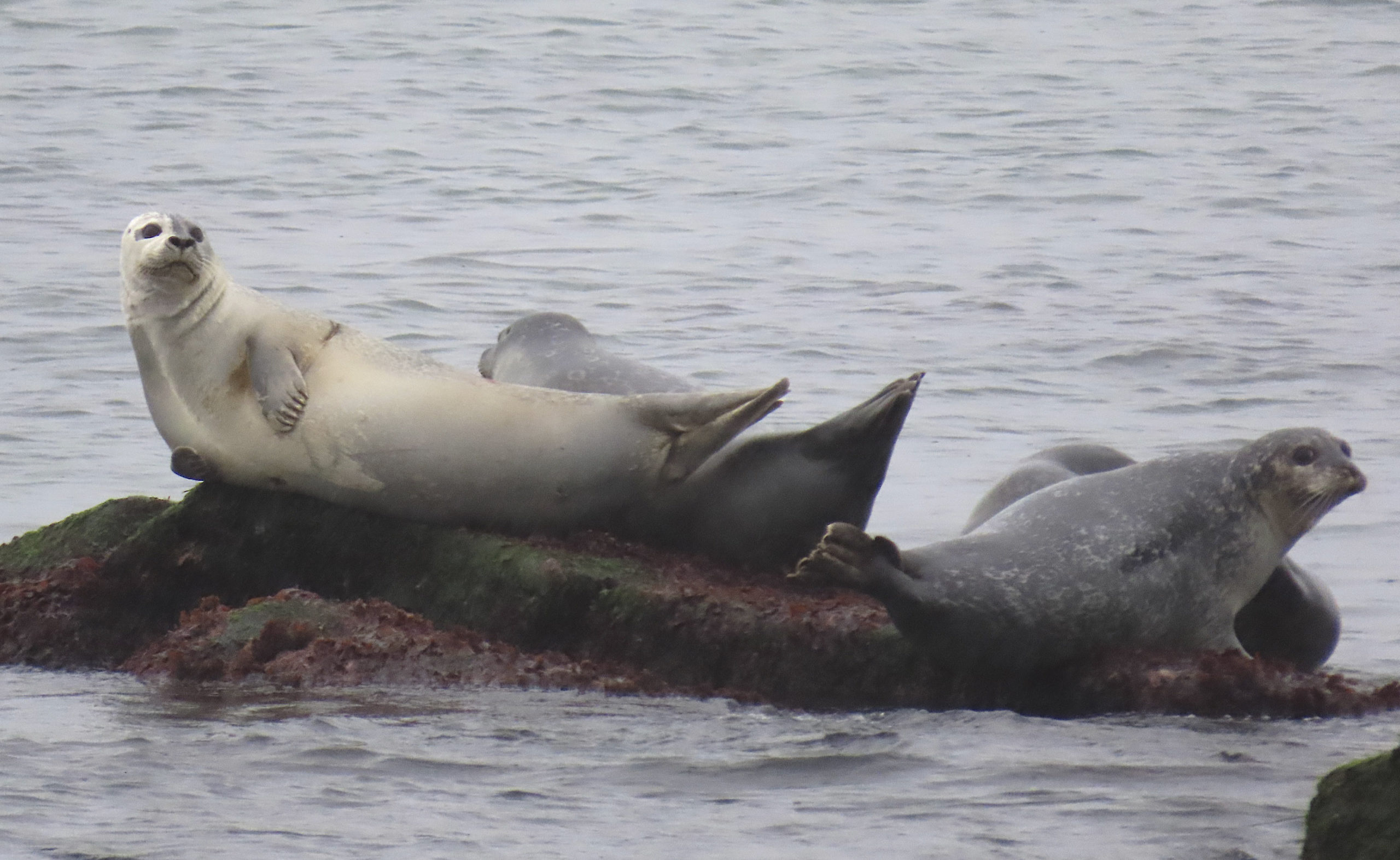
Harbor Seals basking on a calm December day. MIKE BOTTINI
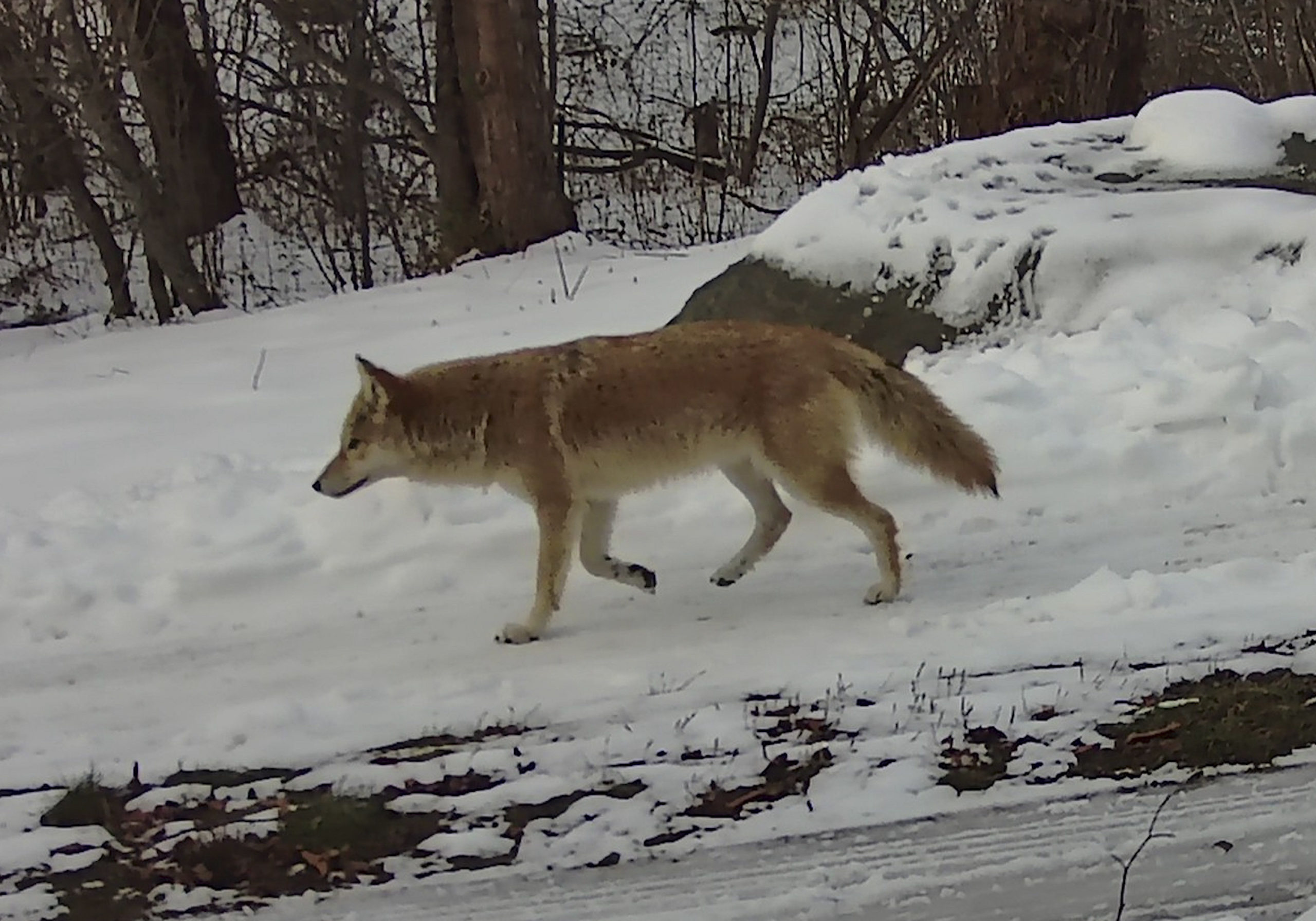
A handsome coyote photographed last month on Fishers Island. TRACY BROCK TRACY BROCK
My most recent column, published on December 16, 2020, mentioned the number of dead Atlantic menhaden, also known as bunker, washed ashore on our bay beaches from Orient west to New York City, and along the lower Hudson River shoreline. What caused the big die-off was not clear at that time, but the usual suspect, low dissolved oxygen levels in the water, was considered unlikely in late fall.
Specimens collected for analyses by the State Department of Environmental Conservation determined that the fish died from starvation.
Bunker are filter feeders. Populations of the tiny photoplankton and zooplankton that they rely on for sustenance begin to diminish as the water temperature drops in fall, a phenomenon that many boaters, paddlers and autumn swimmers indirectly take note of and comment on with the dramatic change in the clarity of the water.
Most bunker took a cue from the shortening day length and headed offshore and south to warmer, plankton-rich waters. But a surprising number seemed to be lulled into staying, perhaps reflecting an over-reliance on the unseasonably warm water this fall.
Most Long Island naturalists were busy this past month tallying birds for one of the several annual Christmas Bird Counts (or CBCs) held here. Steve Biasetti headed up the Quogue-Water Mill CBC and sent an interesting summary of this year’s tally in comparison to others since 1974, when the numbers of observers working the count area were similar.
In relation to post-1973 CBC numbers, Steve reports that the 2020 count compares favorably in terms of number of species recorded (113). He also notes, “For the fifth straight year, however, the number of individual birds recorded (15,081) was distressingly low.”
While my colleagues were birding, I took advantage of the December snowfall to track coyotes at a site in western Long Island, and learn something about our newest addition to Long Island’s fauna.
The first interesting finds were two potential den sites that the coyote investigated and spent some time cleaning leaves and other debris out of. One was an old partially covered culvert; the other the extensive root system of a large tree that had been pushed by the wind to an angle that exposed a large cavity beneath the uplifted roots.
The latter site was not far from a feral cat colony, complete with housing and food. It appeared that the coyote had helped itself to a cat, and possibly the cat food. Nothing was left in the snow except tracks and fur.
It soon became apparent that we were following not one but two coyotes, one breaking trail and the other saving energy and following in its companion’s exact footsteps. The tracks diverged near a low ridge adjacent to a creek, which they climbed and lay down for a rest atop the snow. They also diverged on the edge of a field, where one circled into a thicket and flushed a cottontail rabbit into the waiting jaws of the other.
As with the feral cat, all that remained of the rabbit were tracks, fur and one fragment of bone. Could the coyotes have consumed the entire cat and rabbit, including their respective and relatively meatless tails, feet and ears?
I suspect, as with domestic canids, the coyotes may have played with their captured prey, accounting for the track pattern around the large area of loose fur, before carrying it off to a suitable spot for dining. Many predators including coyotes and foxes also cache their prey, whole or leftover portions, for later consumption. But we did not find any evidence of that on our tracking exercise.
January begins the “rut” for coyotes, when mating bonds form, pairs travel together and territories are delineated and patrolled. By late February, most pairs will have mated. After a 63-day gestation, the pups are born, the late February coupling resulting in pups by the first of May.
On a visit to the Montauk seal haulout site last month, I counted 50 seals, all our smaller harbor seals. Where were the huge gray seals? They were all in the vicinity of Nantucket, also busy with the business of choosing mates and mating. Their pups are born this month, not the result of a December 2020 coupling but one that occurred a year ago.
This unusually long period of time between mating and parturition involves the fertilized egg developing into a blastocyst that does not immediately implant into the uterine wall and continue its development. Implantation occurs after a period of three months, and then the nine-month-long gestation period begins.
This reproductive strategy, called “delayed implantation,” supposedly evolved to ensure that the early stages of pup development coincide with abundant food resources or other key conditions are suitable. But with some species of delayed implanters, such as the river otter, it is not always clear what the benefits are.


 Mike Bottini on Jan 12, 2021