


 7 Photos



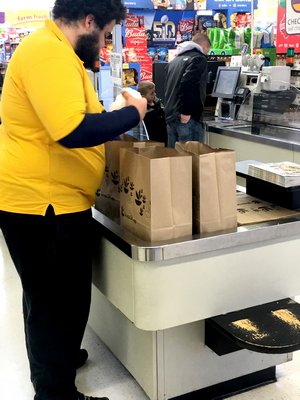
A fire in the chimney broke out at World Pie in Bridgehampton Saturday night. COURTESY CHRISTINE HOYT
The Long Island Cauliflower Association. ALEXANDRA TALTY
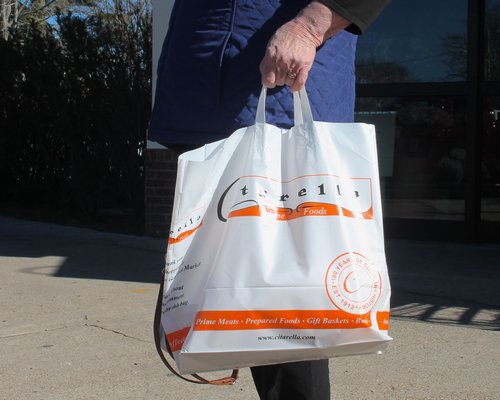
It’s been five months since the use of the once-ubiquitous plastic grocery bag was effectively banned on the South Fork. In those months, stores have adapted to the new limits in a variety of ways, but compliance has been largely universal, officials say. Customers, meanwhile, have met the ban with everything from grudging acceptance to enthusiastic embrace.
Around the South Fork this week, some residents celebrated the ban and applauded it for the changes in their habits that it has brought, while others scorned it and said they longed for the old plastic bags. Some of those who championed the bans lamented that loopholes are still feeding mountains of plastic bags to landfills.
The bans adopted on the South Fork applied only to the thin single-use plastic bags traditionally used by the billions in supermarkets and shops around the country. Bags made of plastic that is more than 2.5 millimeters thick are not banned, nor are bags made from plastics designed to biodegrade. Both of these “loopholes” have left some of those who pushed for the bans, first in Southampton and East Hampton villages and then in the broader townships, with regrets about their shortcomings.
“Mostly, we think of it as a success, because most people are complying and the supermarkets aren’t giving out so many as they were,” said Mackie Finnerty, a member of the group Southampton Advocates for the Environment, or SAVE, which pressed for the region’s first bans on the bags in Southampton Village and East Hampton Village in 2011 and 2012, respectively.
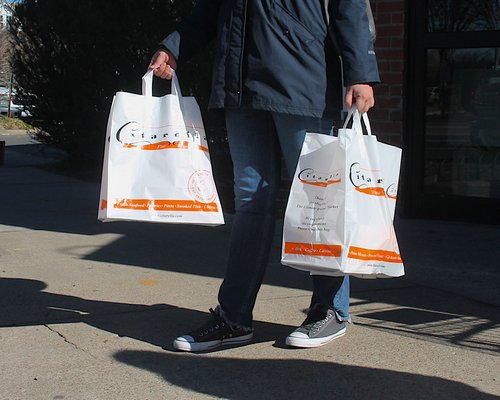
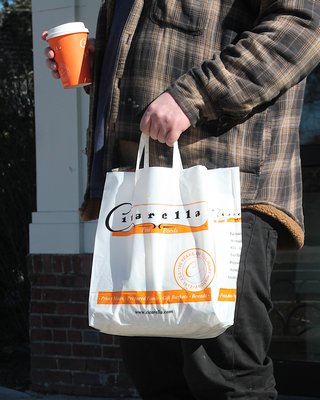
“But there are still Citarella bags in the garbage—the whole thing we were trying to prevent. We spoke to them many times; they say they encourage people to reuse them. Now, CVS has gone back to that loophole in the law that two-ply bags were allowed. I don’t understand why they would do that.”
The modes of compliance with the bans by store owners have varied. Supermarkets and grocery stores, the biggest users of the old single-use bags, have shifted almost entirely to giving customers paper bags, free of charge—the old Waldbaum’s stores had originally started charging customers 5 cents for paper bags when the village bans began, but it ultimately abandoned the practice. At the Stop & Shop supermarket in Hampton Bays, shoppers are offered the option of purchasing a heavy plastic bag with handles for 10 cents. The smaller Stop & Shop grocers in Southampton Village and East Hampton Village do not offer the heavier plastic bags.
At some large chain stores, like Kmart, the ban pressed corporate decision-makers to simply shift to heavier plastic bags, a more expensive alternative to paper bags but a more durable chassis for customers with bulky or oddly shaped items. The Kmart bags carry a request to customers to return the bags to the store for recycling.
Calls to the corporate offices of both chains requesting comment or statistics about the companies’ choice of using the heavier plastic bags were not returned.
At many small delis and retail stores, racks of thin plastic bags still hang behind the counter, and customers can walk out with five or six bags in hand. The bags, like one received at Bar Boy in Hampton Bays recently, carry a printed note on their bottoms, saying that the bag, when deposited in a landfill, will biodegrade, its materials breaking down into water and carbon dioxide—a claim that some critics met with incredulity.
“They are a little more expensive, not too much—we try to give the paper more,” said a manager at an East Hampton deli, who asked not to be identified, since he was speaking without permission of his boss. “The other ones, they were very cheap. But I don’t think it has hurt us, the costs, very much.”
Those who championed the bans had argued at the time that they would mainly push shoppers to shift to bringing their own reusable shopping bags to stores with them, a practice that observation would seem to indicate has not become universal.
On a recent Friday afternoon, of 20 customers who went through checkout lines at the Hampton Bays Stop & Shop, only two had brought their own bags. The rest all took their groceries home in paper bags, as many as 12, and none purchased the 10-cent heavy plastic bags offered at the checkout line.
“I don’t bring my own, and I’ll tell you why: They overfill them and I can’t lift them,” said a woman who asked only to be identified as Margaret outside the Stop & Shop, as she and a friend, both senior citizens, loaded their car with nine paper bags of groceries between the two of them.
She lamented the town’s ban on the single-use bags, which she said she used to line her trash cans. Their paper replacements are not as durable, she said, but are preferable to having nothing: “I use these for my trash, if they don’t rip.”
In Bridgehampton a few hours earlier, a parade of 20 shoppers leaving the store included four who had brought their own reusable bags and 16 who left with between two and 17 paper bags in their grocery carts.
At the smaller stores in Southampton Village and East Hampton Village, the number of customers who brought their own bags was higher. Outside the Southampton Stop & Shop, 12 of 20 customers leaving the store had their goods in a bag they had brought themselves. In East Hampton, on a Wednesday night, eight of 20 customers had their own bags.
“I never used to bring these until [the bans],” said Susan Desantis, pointing to the five reusable bags held by her daughter, Melanie, as the pair entered the Southampton store on a recent Friday evening. “It’s not too much of an inconvenience, really—you just have to remember to put them back in the car.”
But at the smallest stores, shops and delis, employees and observation indicate that customers bringing their own bags in is more than a rarity.
“You see most people bringing their own bag to the grocery stores, but that hasn’t transferred to other stores,” Ms. Finnerty said. “The hardware store, or CVS, they just don’t do it for some reason. We need to change that culture. In Europe, people bring their bags everywhere.”
The region’s two largest villages had banned the bags by 2012, and the towns and Sag Harbor Village followed suit last winter, with Southampton’s ban taking effect in April and East Hampton’s in September. The villages of Westhampton Beach and Quogue have not enacted bans. Riverhead Town and Southold Town, which had initially been said to be in line to enact similar bans, have also failed to follow suit.
Critics of the law during the debates over their enactment point still to scientific data about greenhouse gases given off in the production and degradation of paper bags versus plastic, as a counterpoint to the environmental-benefit claims of those in favor of the bans. Replacing thousands, perhaps millions, of plastic bags with an equal number of paper bags may not be an improvement, they say.
Doubters had also pointed to incremental increased costs for store owners, though few complaints about the bottom line have since been heard.
“The things I was worried about in the beginning are exactly what has happened—we’ve wound up with thicker plastic bags, and people have adapted in other ways than what was intended,” said Southampton Town Councilwoman Christine Scalera, who had opposed Southampton’s ban when it was adopted last winter. “There’s more paper, using more trees, releasing more methane gas as it decomposes. Nothing shows me it has had a positive effect.”


 on Feb 2, 2016